
Joseph Herbert Neill
Huron County Museum founder and first curator
The Huron County Museum has been welcoming visitors and exhibiting the stories of Huron County since 1951. Its collection is focused on the mission to engage our community in preserving, sharing, and fostering Huron County culture. It started as the dream of one man to collect the items that he felt told the stories of the settlement of Huron County and continues to this day.
Joseph Herbert Neill, known as “Herbie”, was born June 10, 1885, in Howick Twp. in Huron County. As a child Herbie suffered from a rheumatic condition that seriously interfered with his ability to do the heavy chores that a farm demanded, as well as poor vision that greatly impacted his performance in school. Despite his poor performance in school, Herbie has been credited with having a unique talent for detailed visualization. He might read or hear a description of an object, then visualize it in detail to the extent that even years afterward he could set about constructing it.
His natural ability to fix things soon became apparent and he taught himself the skills necessary to become a harness maker, blacksmith, machine shop mechanic, watch repairman, and cobbler. He was a busy man and became quite the tinkerer.
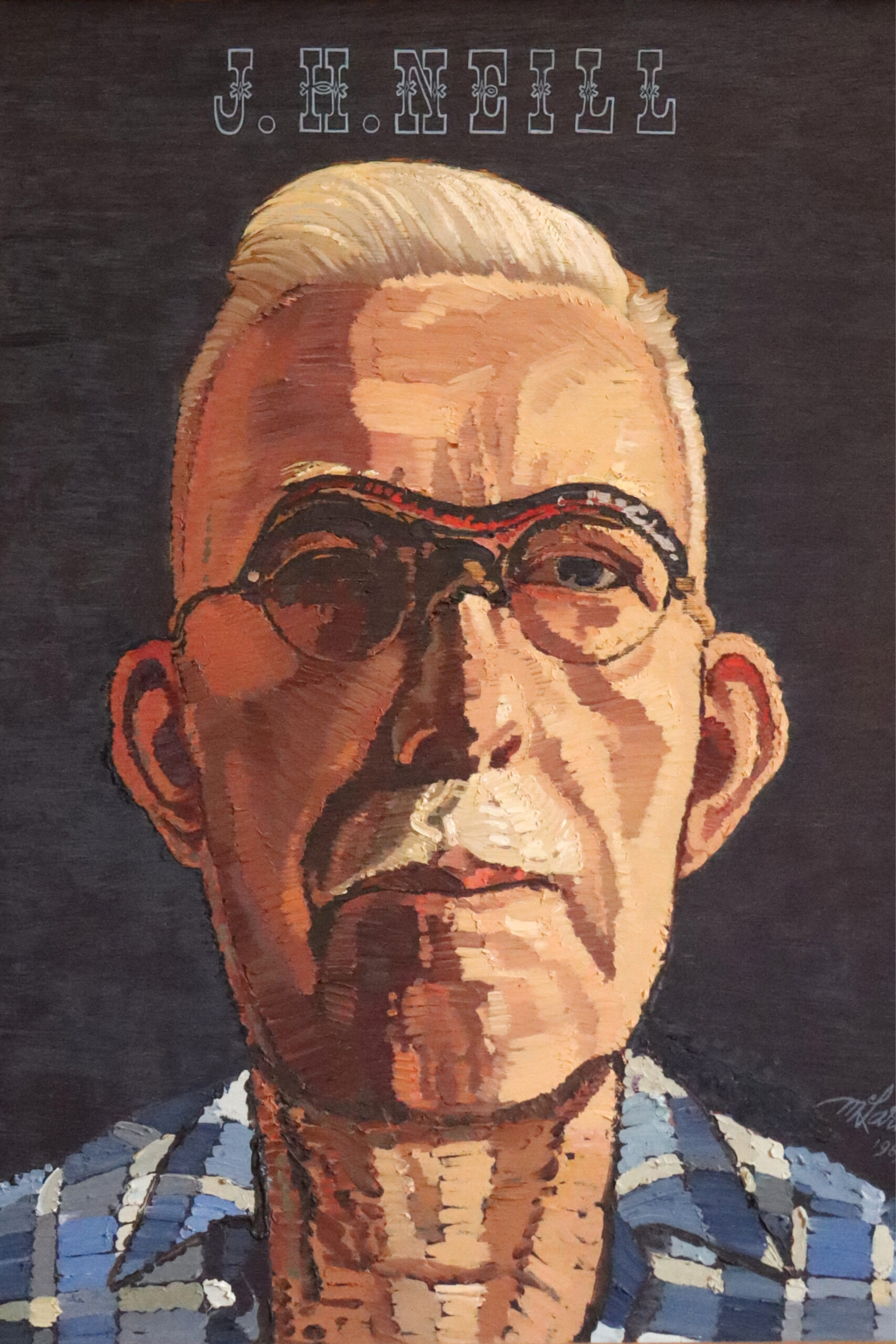
Mr. Neill’s Collection
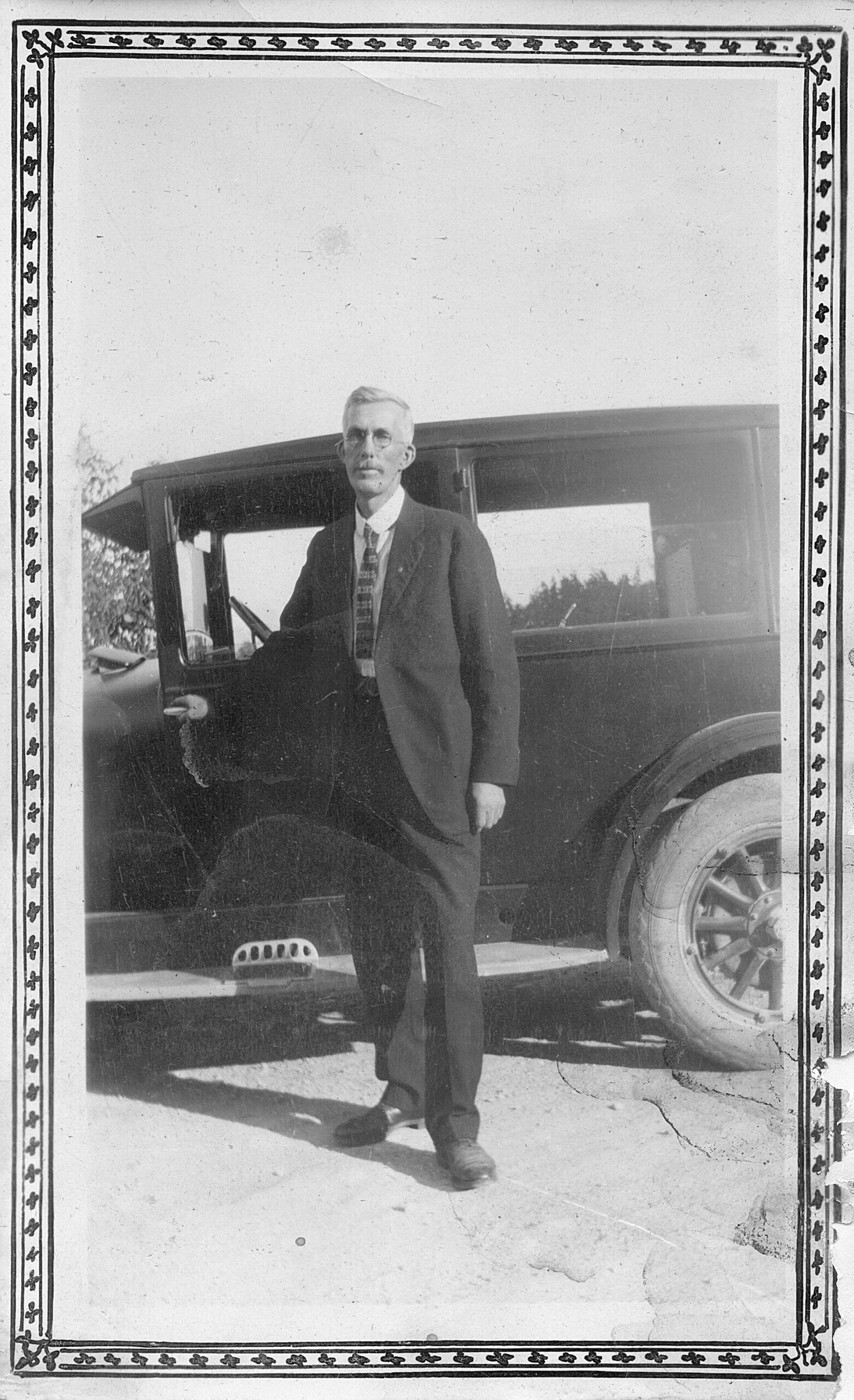
The 1925-26 Essex that carried Mr. Neill and his growing collection across the country in the late 1930s. The car is on display in the History Hall.
Mr. Neill began collecting through an interest in how old things worked. A 1930s visit to an abandoned mill, where he studied the use of water power, yielded Herbie’s first acquisition – a tallow candle lantern which later came to be known as the “acorn” from which the “great oak grew.”
His collection grew as did community interest in his collections. He traveled, collected, and created displays of artifacts. His interests often took him outside of the borders of Huron County as he sought out items he felt people would be interested in.
“Fall Fair boards began to see that my growing collection might attract some visitors at the fairs. So there really began my exhibits. The Women’s Institutes soon were anxious to have my antiques at their meetings and conventions. Also plowing matches were occasions where folk showed increasing interest in what I was gathering. Larger and larger trucks and trailers became necessary. My search for old historical items all over the province and even across the border into the USA meant that I was adding bigger and bigger items – farm machinery, as well as household articles of all kinds, large and small.”
With trailers not only outgrown, but unable to be taken on the roads due to insurance problems, Neill sought a permanent public home. In 1949 Mr. Neill offered his whole collection, eventually totaling more than 1,000 objects, to the County of Huron on the condition that they create a museum. He negotiated well and was named Curator for Life and moved into the selected building to start the historic venture.
A permanent home for Neill’s collection
The old red brick eight room Central School on North Street in Goderich offered the space both Neill and his collection required. “It was a real good building, a magnificent place for a museum.” Overcoming opposition to the notion of the now-vacant school’s conversion to a museum, the “crazy idea” was put into effect, and thankfully the threat to dump the whole lot into the lake once his back was turned never came to fruition. The Huron County Pioneer Museum opened in the old school on July 4, 1951.
In the first five weeks, 1,000 people visited the new Pioneer Museum, two years later saw annual attendance at 8,285, and by 1963 annual attendance had increased to 22,262. Huron County Museum staff still hear personal stories of how children could visit the Museum on a rainy day for a dime and Mr. Neill would let them explore until it was time to head home.
With increasing visitation and interest in the Museum, the collection also grew. Mr. Neill’s original collection brought to the Museum included items of various sizes including household artifacts, agricultural artifacts, textiles, taxidermy and models that he built himself to display various aspects of history. By the end of 1964 he had accumulated about 6,000 more artifacts to add to the collection.
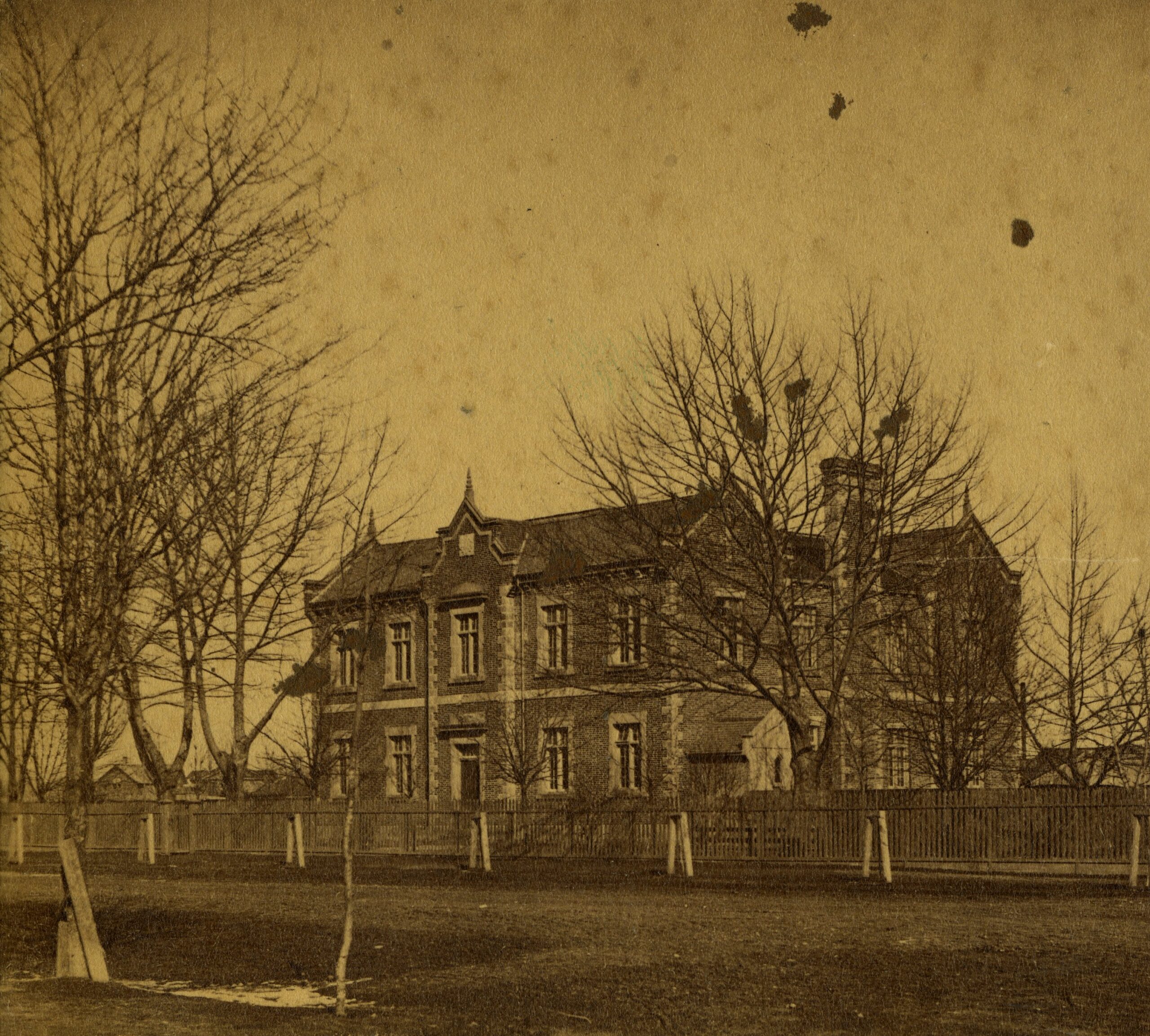
Built in 1856, Central School served Goderich’s elementary school students for almost 100 years.
“Wednesday, warm, some rain, placing tickets, arranging, cleaning and getting ready for opening. The official opening took place after 2 pm. There was L. F. Cardiff, Thomas Pride, J. Hanna, George Baker and Norman Wade the founders of the Museum. It is hard to realise what a small beginning has developed into. There is over 1200 articles at present. There was 119 people for the opening day….I got away with my speech better than I expected to. It had been a worry for fear I would go speechless as I am completely stuck at times. On the whole it was a great day never to be forgotten.” – excerpt from Herbie’s diary, opening day, July 4, 1951
A home for the curator
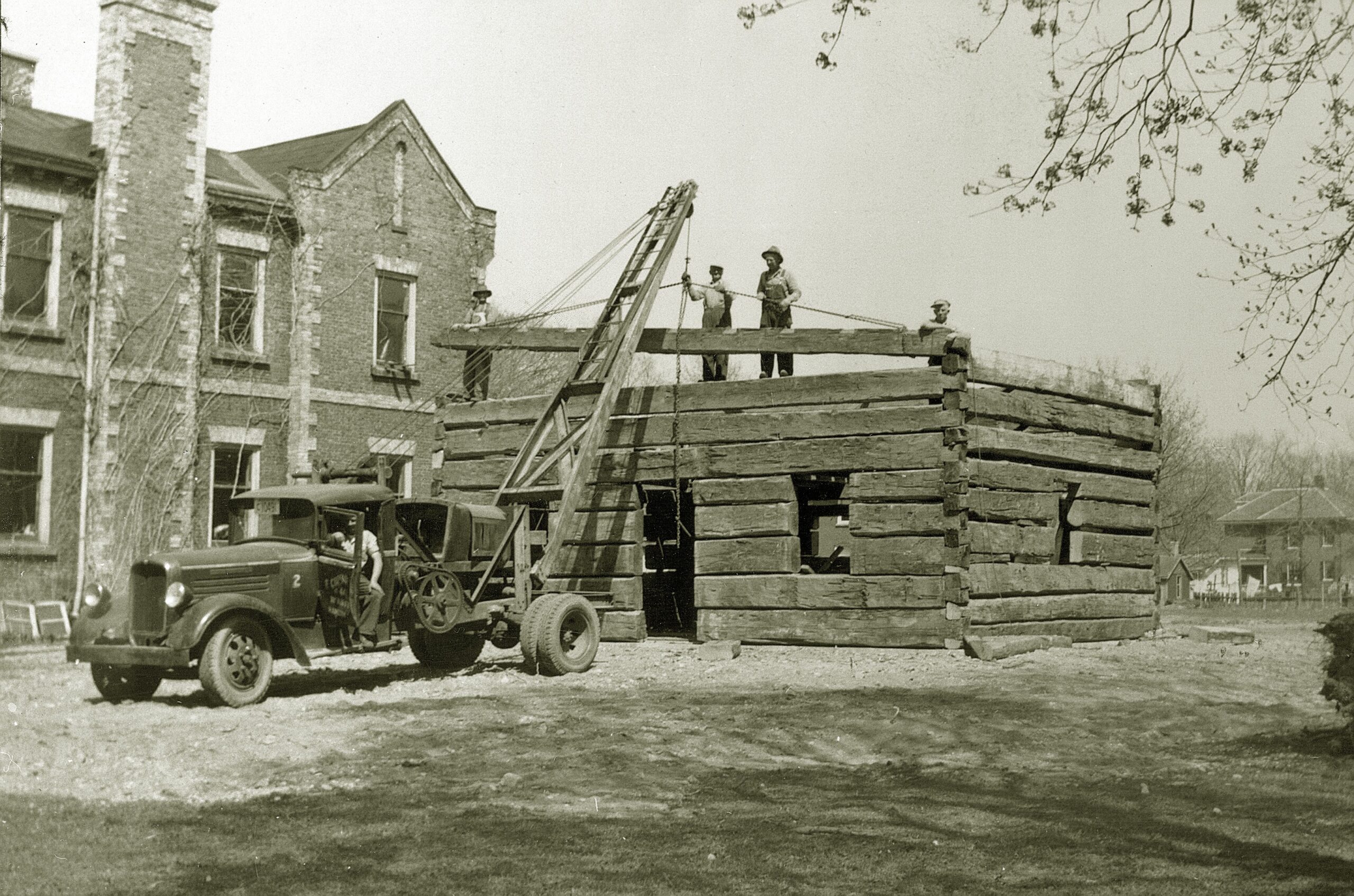
Rebuilding the log cabin that still stands today on the grounds of the Huron County Museum.
One larger addition was the early settler log cabin from near Bluevale in Turnberry Twp., which was relocated to the entrance of the Huron County Museum. The cabin was brought to Goderich log by log and carefully reconstructed to become Mr. Neill’s home.
The log cabin reflected Mr. Neill’s sense of humour. He made a sign near the path to the cabin which joked, “If ye canna walk yon narrow path, stay oot.”. Looking in the front windows you could see Mr. Neill’s cats – either brown or grey – which upon closer inspection was found to be a wooden two-sided creation.
Mr. Neill continued to work at the Museum as Curator until 1964 but even after stayed on to work at the Museum making improvements. He made the cabin his home until 1967 and passed away in 1969. Since that time the next generations of Museum staff have continued his dream of a community museum.
Learn more

Visit the J.H. Neill Gallery
Mr. Neill’s museum was far ahead of its time. At a time when most museums were strictly “hands-off”, Herbie created a museum filled with hand-crafted models and encouraged visitors to “pump that lever”, or “turn this wheel”. His models are on permanent display in the J.H. Neill Gallery and visitors are encouraged to give them a try!
Step back in time
See inside the Huron County Pioneer Museum. Mr. Neill can be seen in the video, as can steam locomotive 6275. This video was filmed by Wingham-based media company CKNX. This video has no sound.