
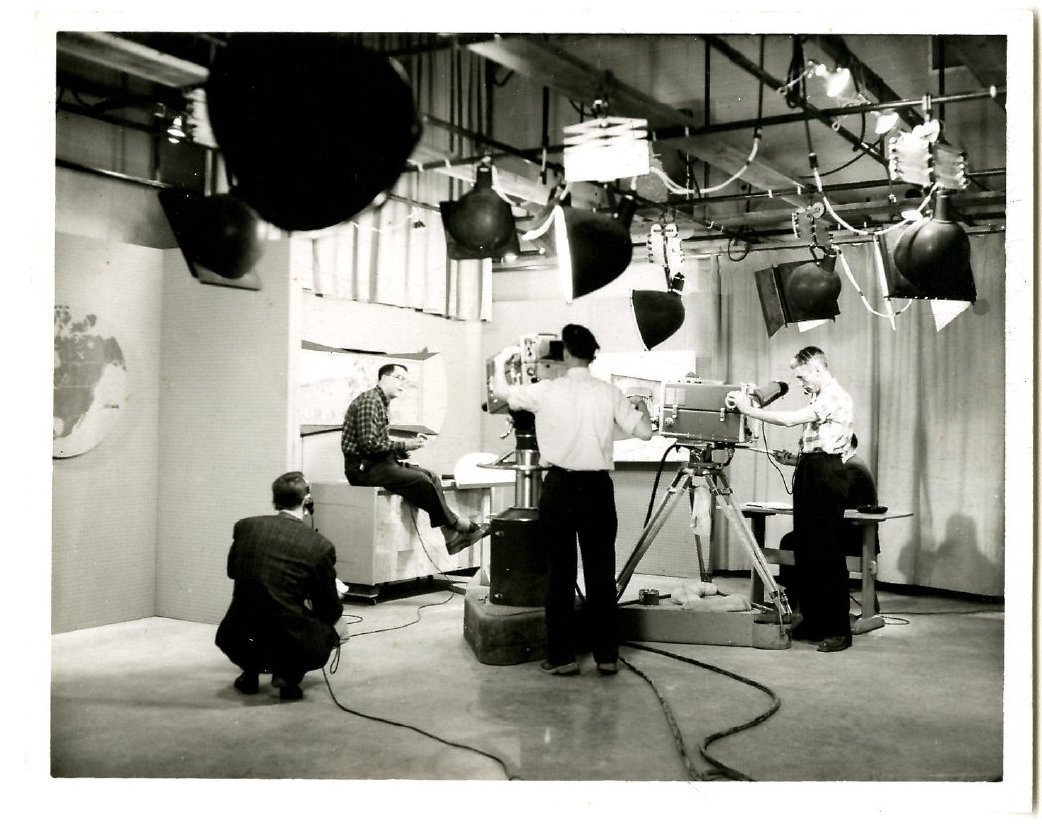
The following blog post was written by former Museum Assistant Claire Howard.
If you speak to someone who grew up in the region of southwestern Ontario from the 1920s up until a few years ago, they could probably tell you a thing or two about CKNX-TV. Many can likely remember Saturday nights listening to Barn Dance on AM 920. Or later, tuning into NHL hockey on Channel 8. Whether you’ve never heard of CKNX, or you’ve been inside the studio itself, let’s take a trip down memory lane to revisit the history of television in Huron County.
For those that are unfamiliar, CKNX is a radio company located in Wingham, ON. In 1926, the station opened under the name 10BP by W.T. “Doc” Cruickshank. They began operating under their current name in 1935, with the “CK” call numbers assigned and “NX” chosen for clarity. Twenty years later, in 1955, the station would undergo a large change when Doc Cruickshank applied for a TV license. This allowed the station to broadcast television to Huron County and the surrounding area, and soon enough, their application was approved. The company moved from their small building on Josephine Street to the recently closed Wingham High School. The former principal of the building would sell it to Doc for just $1.
On Nov. 18, 1955, the station would begin its first test programming. Thanks to an affiliation with the CBC, the station could run both its own programs and that of the CBC. This meant that among originals like M’Lady and Circle 8 Ranch, viewers could also tune into CBC News, CFL football, and other major programs. Whether you were looking for Focus on the Farm or The Jackie Rae Show, CKNX had it all. They even gained a partnership with America’s CBS, which would allow the station to broadcast shows like The Ed Sullivan Show and Howdy Doody. Originally, the station would broadcast from Wednesday to Sunday only. The programming would start at 3:55 p.m. from Wednesday to Saturday, and at 1:55 p.m. on Sunday. It would then play late into the evening, finishing at 11:55 p.m. each night. Viewers could find this information in the newspaper, or in various CKNX newsletters and programs .
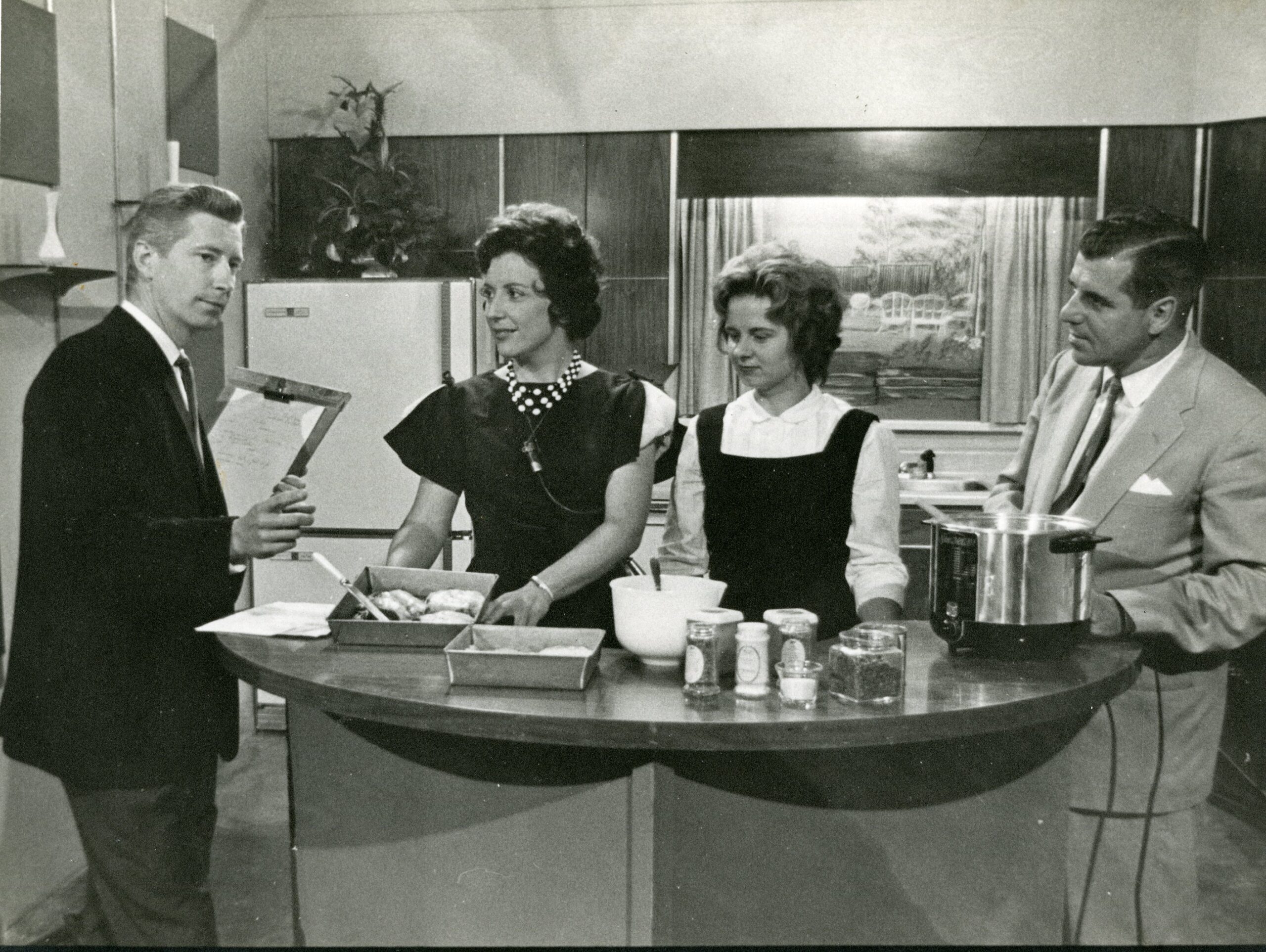
2023.0076.712 – A snapshot of the “M’Lady” “The Anna Meyer Show” Television Broadcast
As technology advanced and CKNX grew more profitable, the station would run television programs every day. However, unfortunately for the station, things would take a turn for the worse. March, 1962, saw a major fire in the old high school building where the television and radio station broadcasted from. This would prove to be detrimental to the company as they not only lost almost the entire building, but also the original transmitter that Doc Cruickshank used back in the station’s early days. However, even a devastating fire would not keep CKNX down. Thanks to other stations in the area, CKNX was able to broadcast the same day that the fire happened. Construction then started in August for a new building. It would incorporate the remaining wing that had survived the fire with the addition of a lengthy extension. The building was finally completed in September of the next year. Between the time of the fire and the new building’s opening, the station operated out of various temporary locations until they could access the new studios.
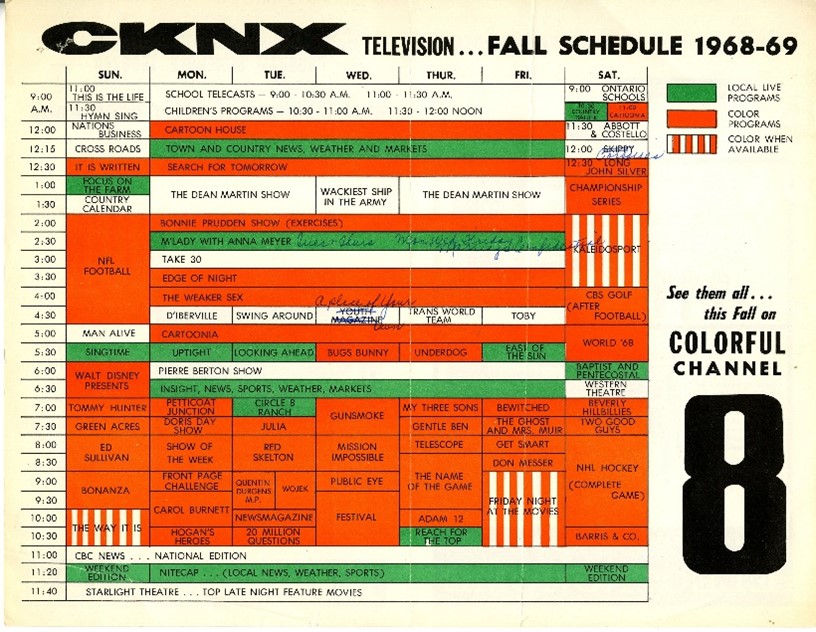
2013.0010.001 – Television Schedule
Four years after the fire, CKNX announced that they would be bringing colour television to Huron County. This would push residents to purchase colour televisions as less than 1 per cent of Canadians owned a set before colour programs began to air on CBC. Airing colour television programs was important for CKNX as many private corporations and stations in other rural areas would not have access to this technology until years later. The station not only played the CBC programming in colour but would have colour technology installed in the studio to produce colour programs of their own. As colour became available, everything transitioned. From TV dramas, to live sports, almost everything was filmed in colour. Even though colour was not accessible to every family with a television at the time, by the mid-1970s, colour televisions became more affordable for more families. In 1976, a new colour television would start at $525, roughly $2,700 today – so it was still quite the investment, but attainable.
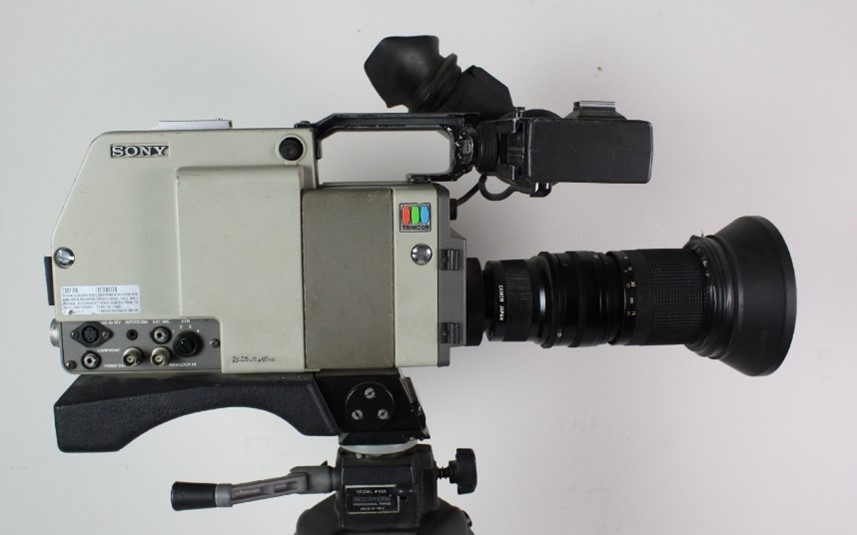
2025.0002.115a – Tricolour Television Camera used by CKNX
CKNX would continue to thrive through the mid-1980s for television and radio. Unfortunately, after this, live television would begin to die out. Due to new developments like cable, satellite and internet television, CKNX would no longer have the user base to justify the company. The Blackburn family decided to sell the station to Baton Broadcasting in 1993. Baton would hold onto it for a few years before selling it to CHUM. CHUM was a company comprised of different news stations. They rebranded the station to NewNX, with most programming coming from CFPL in London. CHUM was then bought by CTV in 2006, meaning that all their stations would now provide CTV programming. Finally, in 2009, CTV announced that they would not renew the license for the CKNX television station, and it was closed shortly after.
CKNX still operates as a radio station out of Wingham, in the same location since its move in 1955. Owned by Blackburn Media, there are three stations that operate out of the building: AM920, 94.5 FM, and 101.7 FM. These stations continue the legacy of Doc Cruickshank and the many other employees who contributed to the success of CKNX-TV.
CKNX-TV was not only a source of entertainment – it was also one of the most profitable and well-known businesses in the entire county. The station created a culture, and it helped define the lives of its consumers.
Learn more:
- Visit the CKNX exhibit on permanent display at the Huron County Museum. Included with regular admission and open during regular business hours.
- Watch a series of digitized video clips that aired on CKNX