Explore Southwestern Ontario in the 1960s and 1970s Through Historical Videos

Written by Jacob Smith, Digitization Coordinator for the Huron County Museum.

Cliquez ici pour le Français

A series of short films to the Huron County Museum’s YouTube channel that were filmed by local media company CKNX in the 1960s and 1970s. The clips range from news clips, commercials, and local events throughout southwestern Ontario. These videos were donated to the Museum by a former CKNX employee in 2009. In 2022, a portion of the film reels, selected based on relevance to the area, were sent to a third-party company in Toronto to be digitized. In late 2023 and early 2024, staff uploaded the videos to YouTube.

The first video published to YouTube is a tour inside the Huron County Museum in the early 1960s.  The brief video features Museum founder, Joseph Herbert Neill, as well as visitors touring the building.  You may notice that the present-day History Hall looks different.  That is because the video was filmed prior to the extensive renovations that occurred in the late 1980s.

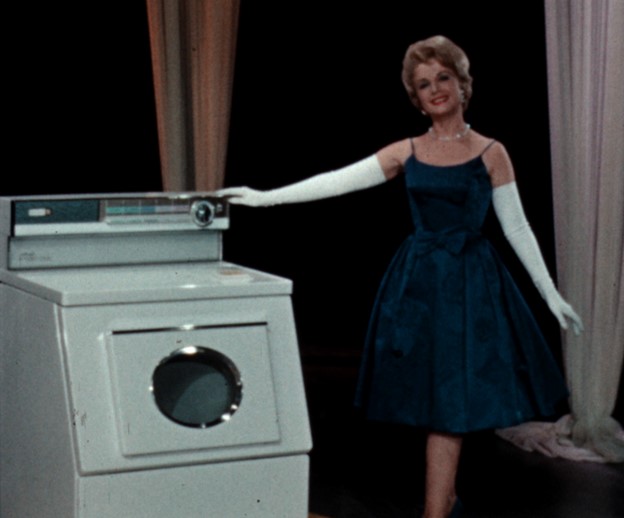
We often groan at the thought of having to sit through yet another commercial or advertisement.  However, old commercials can be interesting!  They allow us to see defunct businesses, old technology, and popular fashion trends from the time period. Advertisements for Superior Propane, Canadian Tire, Fashions by Westinghouse, and Black Flag insect repellant are just a few that are available for viewing on our YouTube channel.  Some of the advertisements are for local businesses, such as Hunt Club Cream Lager, which was made in Formosa, ON.

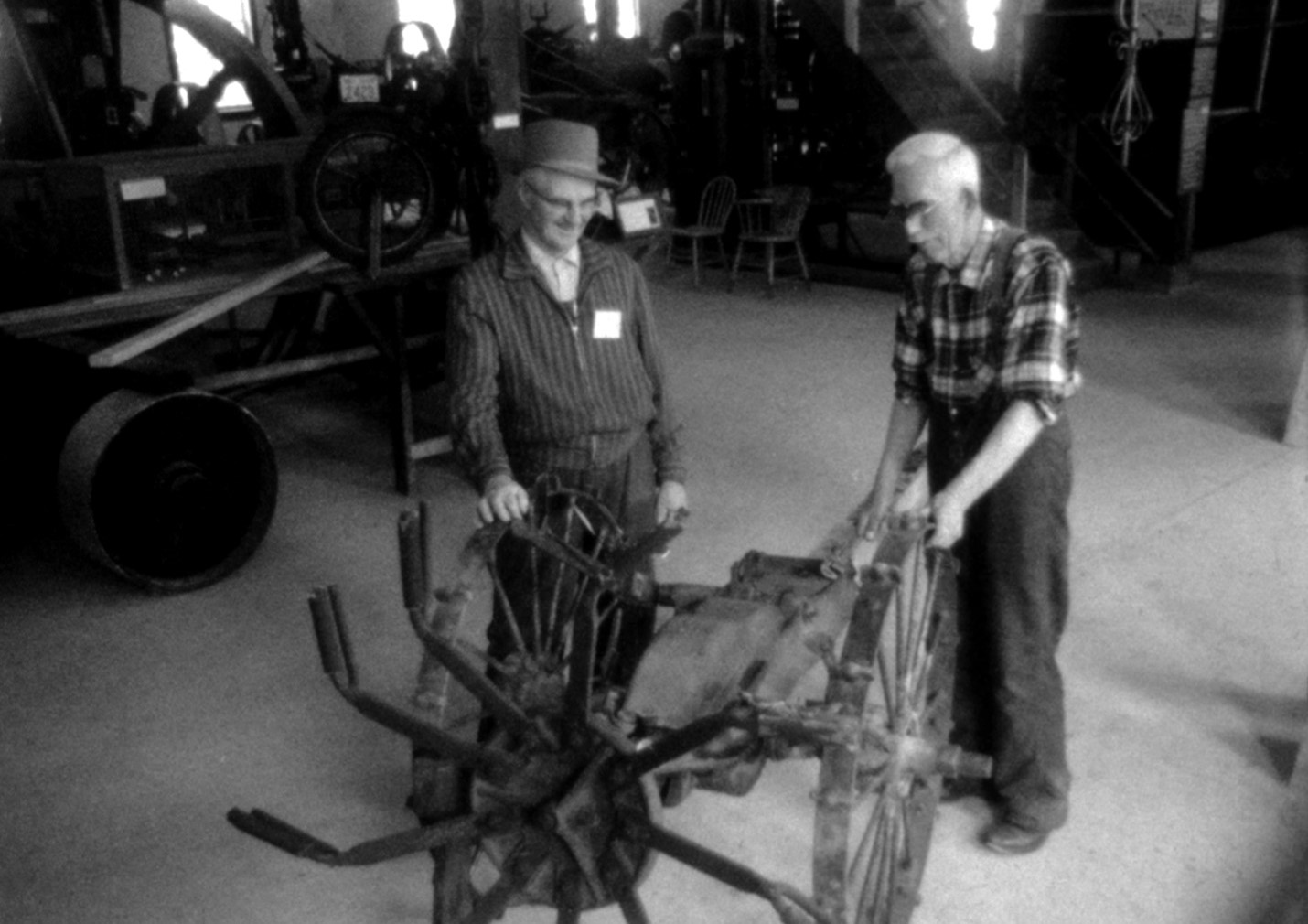
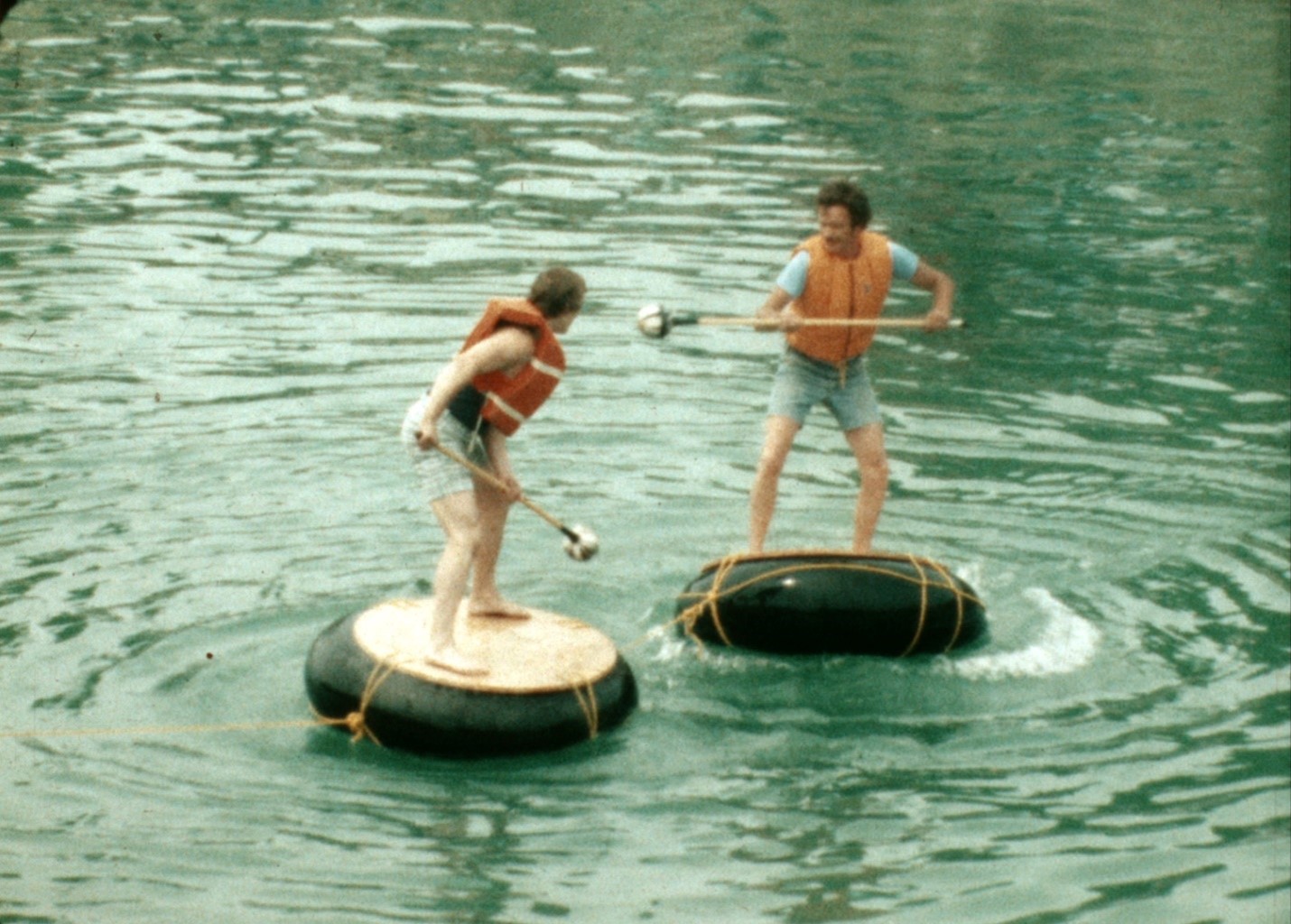
CKNX staff also captured local news and events within Southwestern Ontario, such as the Huron Pioneer Thresher & Hobby Association’s reunion in Blyth, local hockey games, and Kincardine water sports.

Still from a video advertising washing machines from the 1960s
Still of two kids in the water standing on floaties
Government of Canada logo

This project is funded (in part) in part by the Government of Canada

Ce projet est financé (en partie) par le gouvernement du Canada.

Huron County Museum Staff Complete Henderson Digitization Project

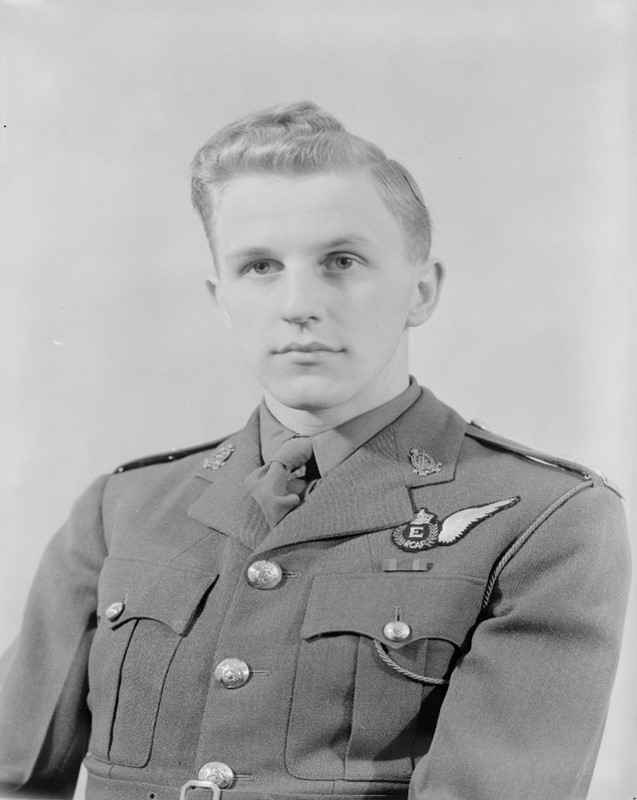
Written by Jacob Smith, Digitization Coordinator for the Huron County Museum. The photo above is a portrait of World War II serviceman Leon Prosser. A992.1040c 

Cliquez ici pour le Français

500 additional photographs of World War II servicemen have been catalogued, scanned, and uploaded to the Henderson Digitization Project’s virtual exhibit.  You can access these photographs through the Museum’s website or by clicking here.  These photographs were taken by Mr. J. Gordon Henderson (1913-1989), a Goderich-based photographer for over 40 years. During World War II, Mr. Henderson travelled to air training schools in Clinton, Goderich, and Port Albert, taking class pictures and photographing other activities on the bases.  During the war, military personnel would visit his studio in Goderich to have their portraits taken.  After the war, Mr. Henderson continued his professional photography business until his retirement in 1980.  In 1992, his family donated his professional work and equipment to the Huron County Museum.  

To increase awareness of Mr. Henderson, and Huron County’s role in World War II, the Henderson Digitization Project was created.  The project was a one-year, grant-funded project in 2013 to digitize his photographs of World War II air training in Huron County.  In 2021 and 2023, the project was revisited. During that time period, digitization staff catalogued and scanned the remaining photographs, and added the object information into the Museum’s database, PastPerfect. Then, staff uploaded the scanned images to the Henderson Digitization Project’s virtual exhibition page.  At the same time, the virtual exhibition was reorganized to ensure that multiple portraits of the same airmen were linked together. The project was completed in October 2023. 

The Huron County Archives has not been able to identify every man in Mr. Henderson’s World War II airmen photographs. This portrait is of an unknown serviceman (A992.3.242). Do you recognize him?

If you have additional information about these servicemen, please contact us at museum@huroncounty.ca.

 Want to see more of Mr. Henderson’s work?  Please contact the Huron County Archives for more information.

Government of Canada logo

This project is funded (in part) in part by the Government of Canada

Ce projet est financé (en partie) par le gouvernement du Canada.

Huron County Museum Research in Action: Unidentified Military Photo

Written by Collections Assistant Noah Chapman.

Recently, the Huron County Museum began the transfer of artifacts from the (now-closed) North Huron Museum. Among the items was this image of a group of World War One soldiers (object number 2023.0067.352). Unfortunately, the original label has worn off and the North Huron documentation did not have in-depth detail. The only information was the name of one of the photographed soldiers, his wife, and the donor’s name.

A mystery was at hand. One of the most important goals of the museum is to restore lost context to items in the collections. For us, this was an opportunity to conduct some practical historical research. In doing this, we were able to recall the memory of one of Huron County’s World War One servicemen.

The North Huron documents had these clues:

  1. The name of the donor that brought the picture to the North Huron Museum.
  2. The picture had belonged to Mrs. Emily Elston; she was an English War bride.
  3. Emily Elston had two husbands. The first was Bert Thomas, who she had met in a hospital during the war. He later died from the effects of a mustard gas attack.
  4. Emily’s second husband was named William Elston.

The person of most interest was Bert Thomas. We wanted to find out what unit he had served in and in what role. The problem is that “Bert” is a nickname that can be short for a lot of different names! Finding him would not be easy, as we did not even know what Huron community he had come from.

The first place we looked was online. Online obituaries and websites are a great place to find birth and death dates, spouses, and family members. Unfortunately, searches of the four available names did not yield much information; adding “Wingham” or “Huron County” to the search did not help with finding a lot about Bert or Emily. However, we were able to find records online for a William “Bill” Elston who served in World War Two.  This was a good start, but it was unclear if this was the same William Elston that was married to Emily Elston.

The next clue we found was the obituaries of several members of the Elston families. Here, several clues came together to form a better picture of this family. From the obituary of Edwin Elston, we learned that most of the family was from Wingham. We also learned that Edwin and Bill were siblings. Edwin and Bill were sons of Emily (Thomas) Elston and William Elston. This helped to clarify that there were two William Elstons. The man I found the service record for was William Jr., “Bill”. Bill also had a half brother named Bernard Thomas, who was the son of one Albert Thomas. Albert Thomas is the “Bert” Thomas who served in World War One and was in the unidentified photo.

Even with a full name, it was still difficult to find information on Albert’s military service online. We tried another great free online resource, the Huron County Digitized Newspapers. Finally! We were able to find some evidence of his military service.

Albert had been a farmer in Bluevale and had four children with his first wife, who had passed away in February 1915. On June 24, 1915, the Wingham Advance-Times reported that Albert Thomas of Bluevale had auctioned off his farm stock and implements. At the age of 32, he left for London to enlist with the third Canadian Expeditionary contingent. This explained why Albert Thomas wasn’t listed as a member of the Huron CEF units (like the 161st Battalion). Such units were not formed until late 1915. While Huron County did have existing military units like the 33rd Regiment, recruitment had been slow. The Canadian Expeditionary Force had focused on urban recruits, rather than rural communities. This did not stop Huron County men, like Albert, from enlisting with urban regiments. On Feb. 2, 1916, the Wingham Advance-Times reported that Albert had enlisted with a Battalion in Woodstock. He returned home for a short visit before shipping out.

Now that we knew that Albert had been born in Bluevale, we were able to find Albert’s grave record. He enlisted with the 168th Oxford County Battalion. The 168th is the unit pictured in the North Huron Photograph. This is further proven by the remains of the label on the photograph. Part of a word- “ock” is still visible- “Woodstock”.  We reached out to the Woodstock Museum. They also had a copy of this photograph, and that it was the 168th “Oxfords” Battalion.

The 168th (and Albert) embarked on Sept. 12, 1916 from Halifax, Nova Scotia, Canada. They disembarked on Sept. 22, 1916 at Liverpool, England. They deployed on Jan. 13, 1917 to France, where the unit reinforced other British regiments. Albert transferred to the Canadian Overseas Railway Construction Corps (C.O.R.C.C.) as a sapper. The role of the C.O.R.C.C. was to repair and expand railways in France. They supported the supply chain to the front lines, and dug trenches and fortifications. They would see action at Arras, Ypres, and Amiens; we believe that Albert took part in these actions.

Albert had a number of interesting experiences during the war. He caught trench fever early into his deployment and returned to England. While recovering from this illness, we believe he met his wife Emily Kate Austen, a nurse serving in a British hospital. Their son Bernard Thomas was born in 1917.

Albert briefly returned to France, but his fever relapsed shortly after. He was ordered back to England. While on passage back through the English Channel, the steamer in front of Albert’s vessel would be torpedoed by an enemy submarine. The passengers were transferred to Albert’s boat, which capsized due to being overloaded. Albert would be thrown overboard and would lose consciousness; he was unable to account for his rescue. Due to the cold water, he would contract malaria fever, which caused hip paralysis.

On Oct. 24, 1918, the Wingham Advance-Times reported that Albert was invalidated back to Canada, reuniting with his family. He began treatment for mustard poisoning in Burlington. His wife Emily and son Bernard would emigrate to Canada in 1919. The Wingham Advance-Times reported that Albert was still undergoing treatment in late 1919. On July 15, 1920, Albert “Bert” Thomas succumbed to diphtheria, a complication of his poisoning and previous illnesses. The 1921 census shows Emily and all five children still living in the area.  Emily would move to Wingham, marry William Elston, and have three more children. Some of her children would also have military careers, serving in the Second World War and the Korean War.

We hope this look into the research that goes into our incoming collections was interesting! Through our ongoing research, we aim to recover, retell, and showcase these kinds of stories. As our research into the collection continues, keep an eye out for more expanded histories on our social media, at the Museum, and around the community.

Museum launches mural by Anishinaabe artist Jeannette Ladd

The Huron County Museum celebrated the launch of a new mural in the Museum’s lobby created by Anishinaabe artist Jeannette Ladd.The launch was celebrated on Saturday, March 9, with Ladd, who is an Anishinaabe-kwe from Saugeen First Nation in the Saugeen Ojibway Territory. She graduated from the University of Toronto with a Bachelor’s Degree in Architecture. Throughout her life she was always drawn to expressing her thoughts and experiences through art.


“I love creating pieces of art, it gives me an outlet to express myself and I love learning and working on pieces to honour my culture,” said Ladd, who continued, “Through the mural, I wanted to show that our love and respect for Mother Earth, Turtle Island, is necessary to ensure that we have a world for future generations.”

About the Mural

The mural’s imagery shows that everything is connected to the sun, moon, stars, nature, and water, which need to work in harmony to provide a good life for all. An Indigenous woman (protector) is wearing a traditional ribbon skirt and is connected to the sun (giizis) which gives life. Women represent the wisdom and strength required to help get back to a balanced Mother Earth.

Lake Huron once provided bountiful white fish that sustained life. Water is life and respect is needed to ensure clean waters for all living things.

The sun is connected to the stars, to the moon (dibiki-giizis) and to the water (nibi). The hearts represent that to have love, there must be balance and harmony in order to offer love to others. Love is one of the grandfather teachings. The flowers represent nature and all the medicines received from a healthy environment.

The mural was commissioned by the Museum, which specifically sought out an Indigenous artist for the project to build on the Museum’s goal of providing space to share local Indigenous culture.

“Indigenous people have called this land home for millennia and the Huron County Museum is focused on growing our understanding of local Indigenous cultures and histories by providing space to share their stories,” said Huron County Museum & Historic Gaol Senior Curator Elizabeth French-Gibson.

To celebrate the mural, prints of Ladd’s art are available for purchase in the Museum gift shop, along with the children’s book and colouring book Memengwaa: The Monarch Butterfly, which were illustrated by Ladd and written by her mother Dorothy Ladd.

Huron County Census Records from the 1840s to the 1870s now available online

Huron County Census Records from the 1840s to the 1870s now available online

Written by Jacob Smith, Digitization Coordinator for the Huron County Museum.

Cliquez ici pour le Français

As part of the Huron County Museum’s ongoing digitization project, I have been busy scanning and uploading census records called Return of Inhabitants to the Museum’s online collection (which you can click here to view). The Return of Inhabitants are informative documents for genealogists.  Information ranging from ages of family members to the types of livestock on each property are just two pieces of information that these documents provide.  As someone who has a keen interest in genealogy, I was thrilled to find information about my ancestors.  For example, I was able to find information on the Smith family in the 1850 Return of Inhabitants for Wawanosh Township, which can be seen in the image below.

Photo of a page from the Return of Inhabitants for Wawanosh Township, 1850

The Return of Inhabitants are in book-like format.  To read the information, you must follow the line numbers on the far-left side of the page.  In the case of my ancestors, the Smith family, I must follow line number 10.  Upon reading across the page, it is stated that James Smith and his family lived at Lot 16, Concession 5 of Wawanosh Township, they were non-proprietors of the land, and they were a family of four.

Looking at the next page, again looking for number 10 and reading across, we see that the Smith family lived on agricultural land, were natives of Ireland, belonged to the Church of Scotland, and had two children, a boy, and a girl, between the ages of 2 and 5.

Photo of Return of Inhabitants, Wawanosh Township, 1850

The next page shows that James Smith was married, and was between the ages of 30 and 40, and his wife was between the ages of 14 and 30.  Also noted on this page was the death of a young girl.  Upon further research of the Smith family, I learned a daughter of James and Margaret Smith had died of an illness while immigrating from Ireland to Canada.

Photo of Return of Inhabitants, Wawanosh Township, 1850

The next few pages document information about their property.  James Smith and his family lived on a 50-acre plot of land.  However, as seen in the image below, all agricultural information regarding their farm is left blank.  I know from genealogy research that the Smiths immigrated to Canada in 1850, the same year this Return of Inhabitants was taken.  It is possible that their farm was not agriculturally productive at the time this census was recorded.

Photo of Return of Inhabitants, Wawanosh Township, 1850

Through the Return of Inhabitants, I was able to learn about my family history.  Scanning and uploading these documents was a rewarding experience.  My goal throughout the project was to digitize as many documents as possible, giving the opportunity for researchers to work from the comfort of their homes.  I hope you find the Return of Inhabitants to be a useful source of information.  Happy researching!

Looking for census records from the 1860s and 1870s?  Click here to view digitized Assessment Rolls.

The Huron County Archives has additional census records that have not been digitized.  Please contact the Archives for more information.

Government of Canada logo

This project is funded (in part) in part by the Government of Canada

Ce projet est financé (en partie) par le gouvernement du Canada.