by Sinead Cox | Aug 13, 2026
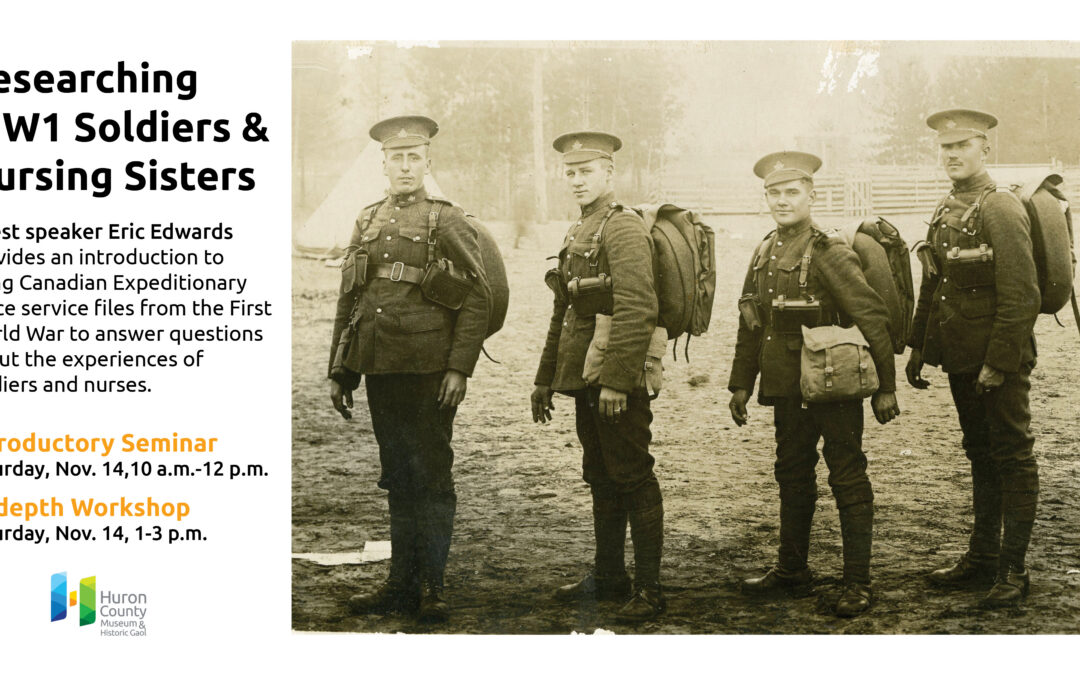
Are you trying to research a Canadian soldier or nursing sister of the First World War, but don’t know where to start? Guest speaker Eric Edwards will provide an introduction to using Canadian Expeditionary Force service files from the First World War to answer questions about the experiences of soldiers and nurses in WWI. Including how to search and access resources, and how to understand what you are reading.
A 2-hour session with a 10 – 15-minute break half-way during the presentation, includes Q&A with the presenter with your research questions. Coffee and tea will be provided during the break.
Attending this seminar in the museum theatre is included with regular admission (FREE with a Huron County library card or museum membership). RSVP to let us know you are coming!
This introductory seminar for a larger audience will be followed by a more in-depth workshop with direct research help and tips at 1 p.m. Attending both sessions is not mandatory. The follow-up workshop is ticketed as spots are limited and pre-registration required.
About the Presenter:
Eric Edwards has been researching and recording the history of the 18th Battalion since 2009. He has transcribed the 18th Battalion War Diary (minus appendices) and recorded these entries at his blog and uploaded a PDF version at Archive.org. He has also recorded approximately 3,700 Soldier’s Pages at his blog, has written hundreds articles relating to the social, economic, political, and military history of the members of the 18th Battalion, and curates a Facebook Group with 500 members, focusing on the 18th Battalion.
by Sinead Cox | Aug 13, 2026
Canadian Expeditionary Force service record(s) are springboard to better understand the context in which the men and women of the Canadian Armed Forces, and a key primary source to learn about an ancestor who served in the First World War. Using real-world examples, the participants will be given a grounding on how to access, read, interpret, and record a Canadian Expeditionary Force service record with guest instructor Eric Edwards.
This 1 p.m. workshop will follow a seminar at 10 a.m. with the same instructor presenting a basic introduction to WWI research. This follow-up workshop will build upon the information in the seminar to help with hands-on research. Workshop participants will learn how to use specific tools and data (service file and other digital resources) applying the knowledge from Part 1 to put this information in a cogent form allowing participants to “fill in the blanks” of the person being researched. This Workshop will be of value to those people interested in exploring and learning about the men and women of the Canadian Expeditionary Forces.
The workshop is ticketed with limited spots. It is recommended participants attend the 10 a.m. seminar before attending Part 2. However, attending both sessions is not mandatory. The morning seminar is open to a larger audience and included with regular admission (FREE with a Huron County library card).
The workshop is $7 + HST to participate (or FREE for Huron County Museum members, not included with regular admission or library cards).
Participants are encouraged to bring their own laptop computer, tablet or other device to follow along and receive live research assistance.
About the Presenter:
Eric Edwards has been researching and recording the history of the 18th Battalion since 2009. He has transcribed the 18th Battalion War Diary (minus appendices) and recorded these entries at his blog and uploaded a PDF version at Archive.org. He has also recorded approximately 3,700 Soldier’s Pages at his blog, has written hundreds articles relating to the social, economic, political, and military history of the members of the 18th Battalion, and curates a Facebook Group with 500 members, focusing on the 18th Battalion.
by Sinead Cox | Oct 11, 2021 | Blog, Collection highlights, Exhibits, For Teachers and Students
If you are a teacher or student looking for local stories from Huron County for your Remembrance Day lessons or assignments, you can access the Huron County Museum’s collection from home and your classroom through our virtual offerings! These resources speak both to Huron County’s military history and to the home front during the First and Second World Wars.
Videos
Our War: Home Front
Our War: Nursing Sisters
Young Canuckstorians: The Maud Stirling Story
Jack McLaren: A Soldier of Song features a presentation and performance from author and musician Jason Wilson, based on the original works of the Dumbells, a Canadian concert party that entertained the troops on the front lines in World War I and featured Jack McLaren (later a resident of Benmiller).
The History of Drag Makeup Tutorial with Lita explains how drag performers improvised wigs, makeup and clothing at the front lines.
A reading of a WWII letter from R.C.A.F Pilot Officer Alan H. Durnin to Mrs. C. Blake of RR 1 Dungannon
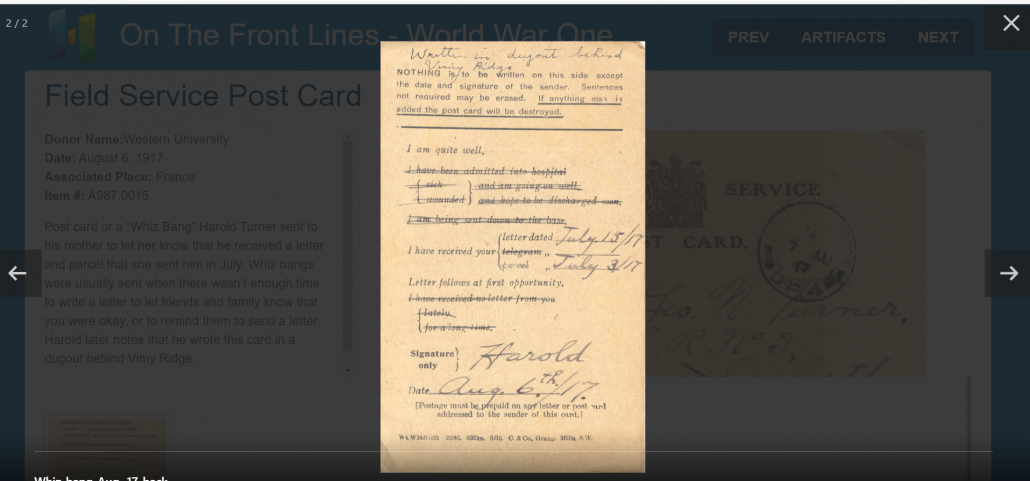
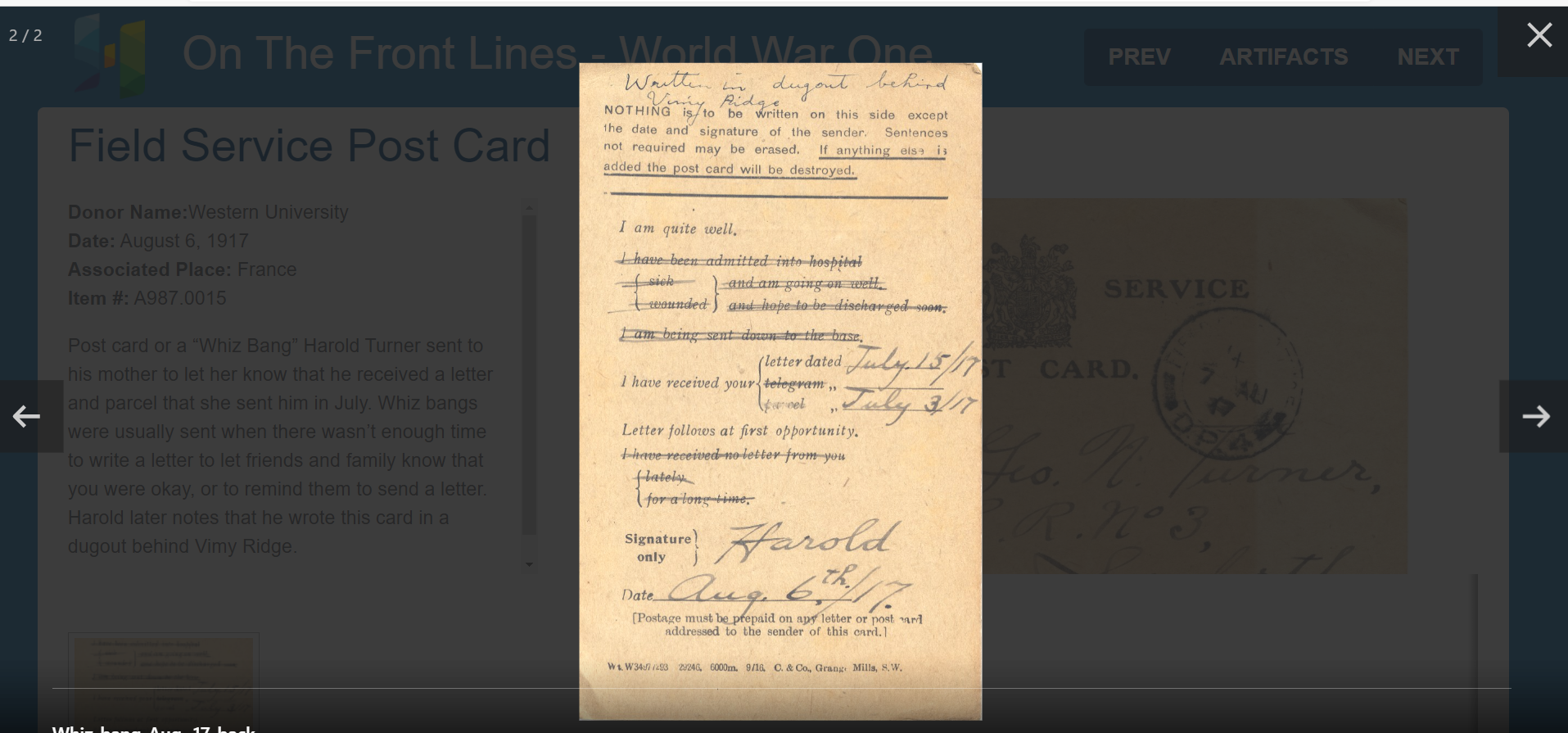
On the Front Lines: Word War One virtual exhibit.
Virtual Exhibits
Part of the museum’s collection of photographs by local photographer J. Gordon Henderson have been digitized. During World War II, he travelled to air training schools in Goderich, Port Albert, and Clinton taking pictures of classes and other base activities. Many airmen came to his studio in Goderich to have their portraits taken to send home to family and friends. The Henderson Collection also includes wedding portraits, candid shots, correspondence and interviews with airmen related to WWII air training in Huron County. Access the virtual Henderson collection by clicking here!
You can also browse more photographs via our Flickr page!
See archival documents from the Huron County Museum’s collection in our Military Gallery virtual exhibits:
On the Front Lines: Word War One
The Home Front: World War One
Prominent artist and Benmiller resident J. W. (Jack) McLaren fought with the Princess Patricia Canadian Light Infantry in WWI, and entertained troops at Ypres Salient, Vimy Ridge and many other locations on the Western Front with the PPCLI Comedy Company and the 3rd Division Dumbells Comedy Troupe. Find out more about Jack and entertaining at the front through the virtual version of our 2020 Reflections exhibit, which was presented in partnership with the Huron Historical Society.
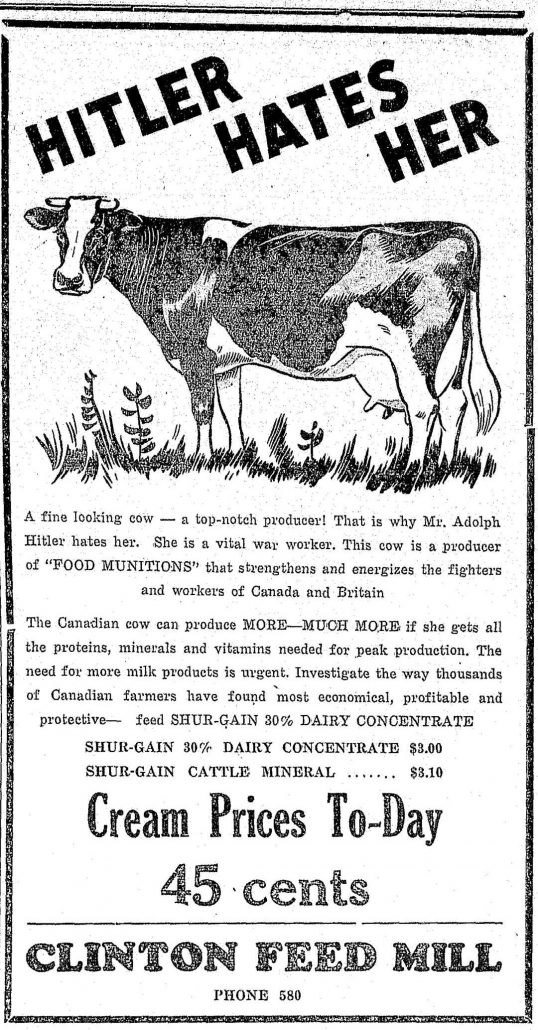
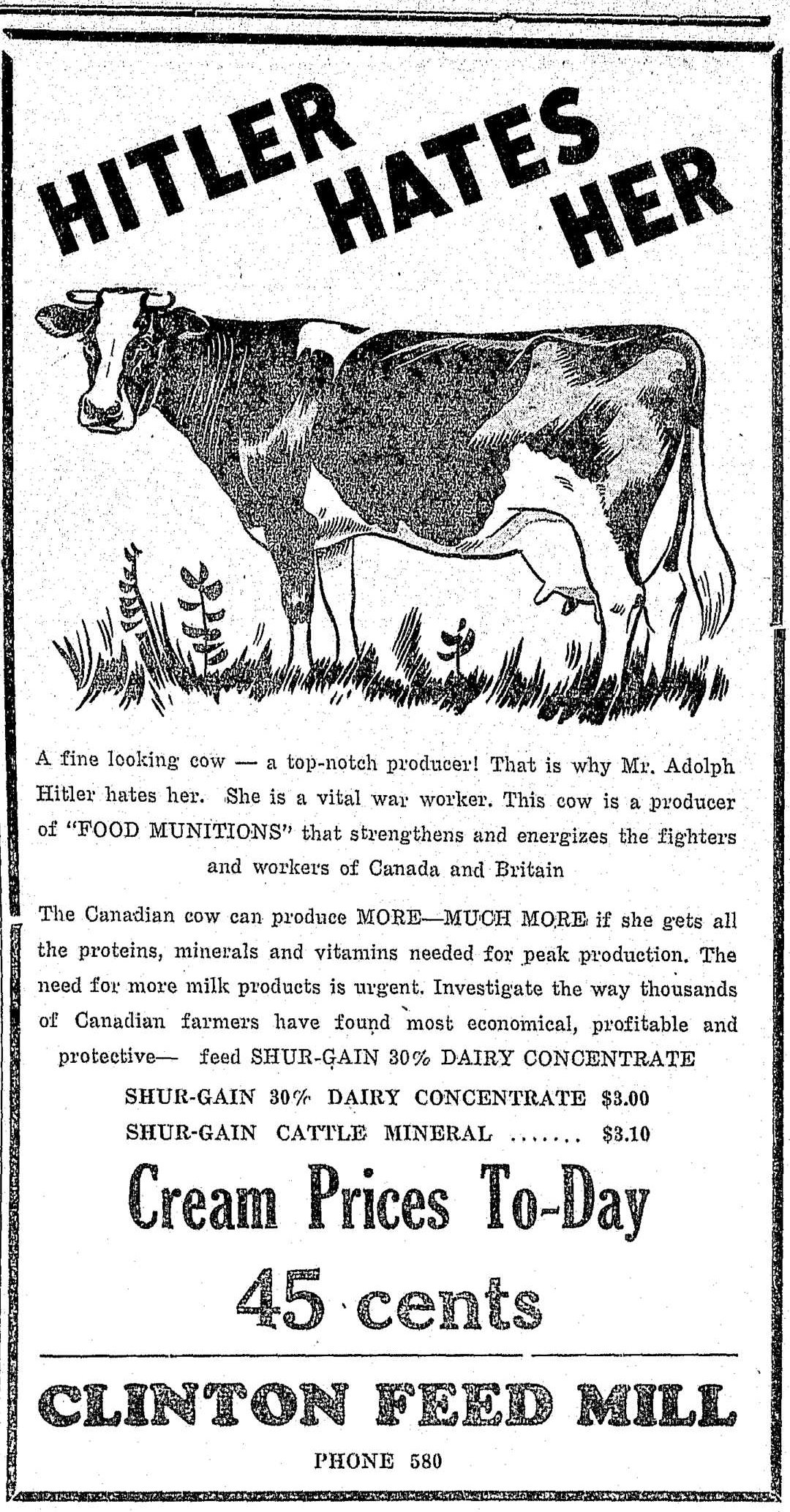
Clipping from Huron County’s digitized newspapers. This ad appeared in the Clinton News-Record in 1942 and 1943.
Articles & Short Posts
A Closer Look: The M4A2E8 Sherman Tank
The Huron Jail & the Second World War Part 2: A STRANGE MUTINY ON THE GREAT LAKES
The Huron Jail & the Second World War Part I: THE ‘DEFENCE OF CANADA’ IN HURON COUNTY
Newspaper Man Enlists: Huron County and the First World War in Black & White
Collection Highlights from Remembrance Day 2014
The Mystery of the 4th Toe on the Left Foot
Local Girl Leaves for the Front
Love is in the Air
Dogs of Air Training (Part 2)
Dogs of Air Training (Part 1)
Education Programs
The Huron County Museum’s ‘Huron County and the World Wars’ program is recommended for grades 5-10, and is offered as both an in-person and virtual field trip. There is also public outreach available by request with our Huron County home front reminiscence kits. Click here to find out more about our Education Programs.
Email museum@huroncounty.ca to inquire about booking an in-person or virtual program.
Research Resources
Click to search more than a century of history via Huron County’s digitized newspapers: free, online and keyword searchable. The newspapers provide a wealth of information on local soldiers and nursing sisters, including casualty reports and letters from the front. You’ll also find detailed information about life and work on the home front, including wartime advertising.
Or Click here to search a selection of the museum’s archives and artifacts via our online collection. Relevant artifacts include uniforms, photographs, medals and memorabilia from British Commonwealth Air Training bases in Huron.
Book List Check out this reading list related to local WW1 and WW2 history, available through the Huron County Library.
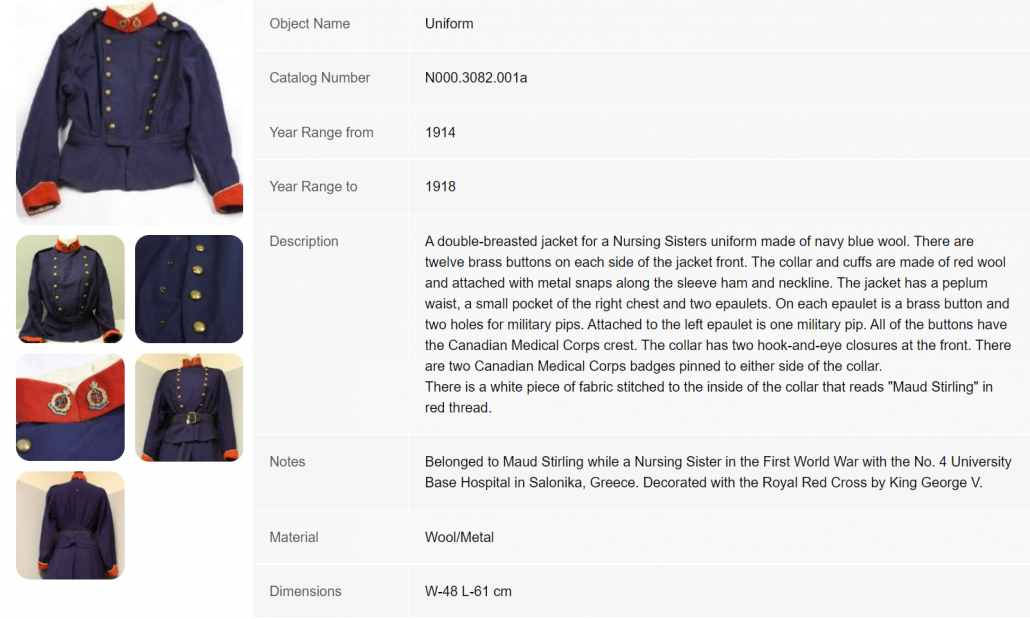
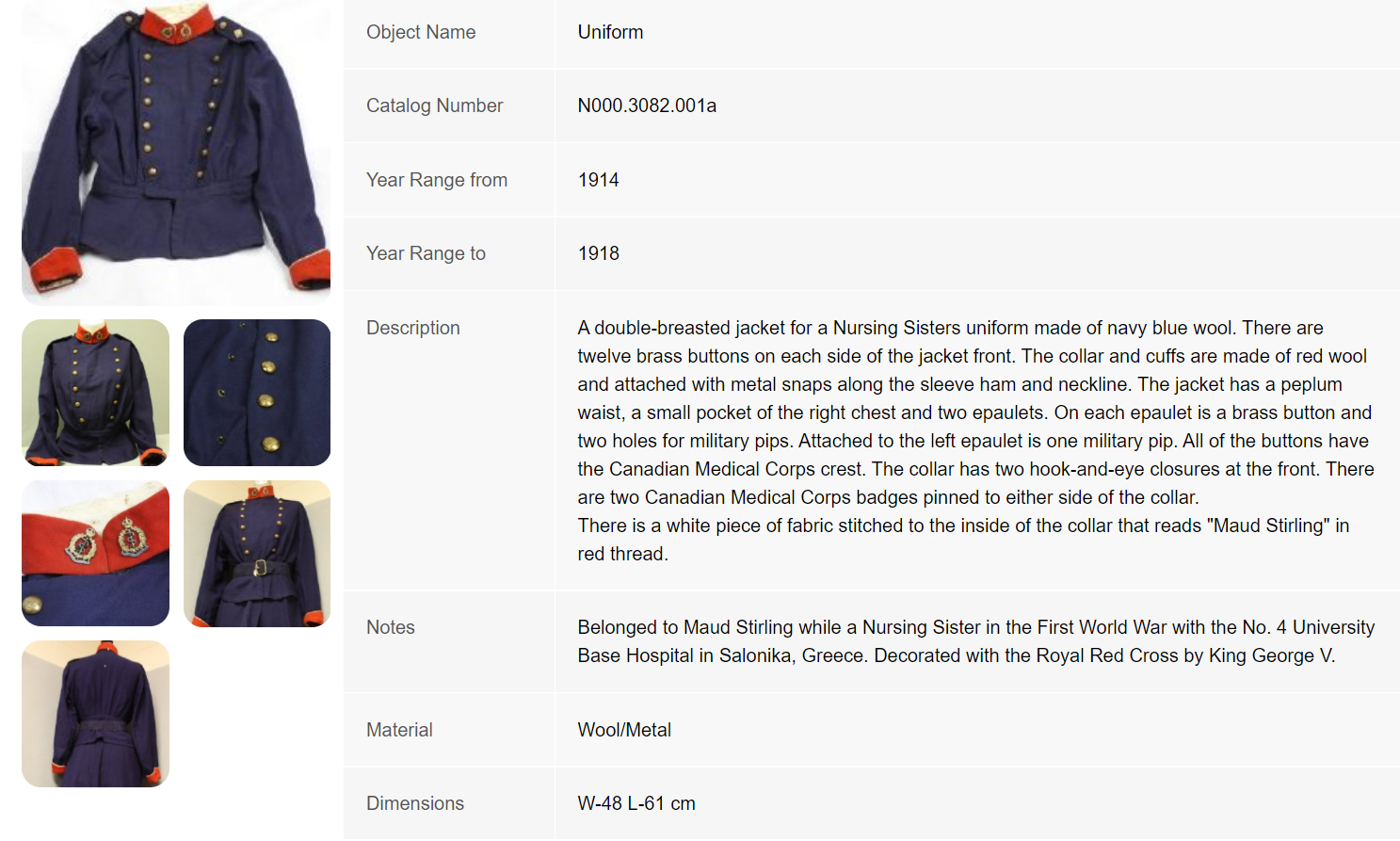
Nursing Sister Maud Stirling’s uniform in the Huron County Museum’s searchable online collection.
by Sinead Cox | Jun 4, 2020 | Investigating Huron County History
Curator of Engagement and Dialogue Sinead Cox shares the story of a historical quarantine in the summer of 1916.
Although you may have heard (to the point of cliché) that we are living in ‘unprecedented times’ during today’s COVID-19 pandemic, communities across Huron County have seen quarantines and the temporary closure of schools and businesses before. Although usually on a much smaller and localized scale, these actions in the nineteenth and twentieth centuries were in response to contagious illnesses that included influenza, measles, diphtheria, scarlet fever, smallpox, whooping cough and typhoid among others.
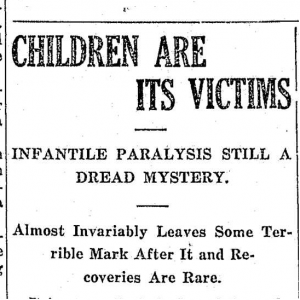
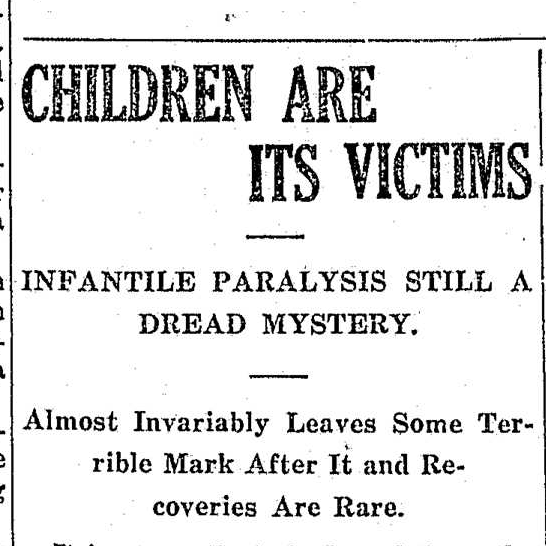
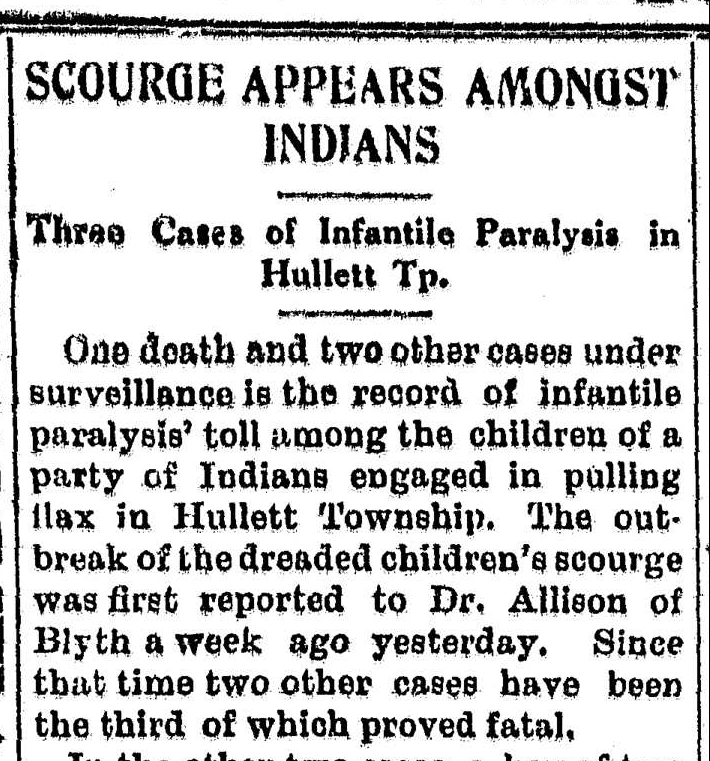
From The Brussels Post, July 27th, 1916.
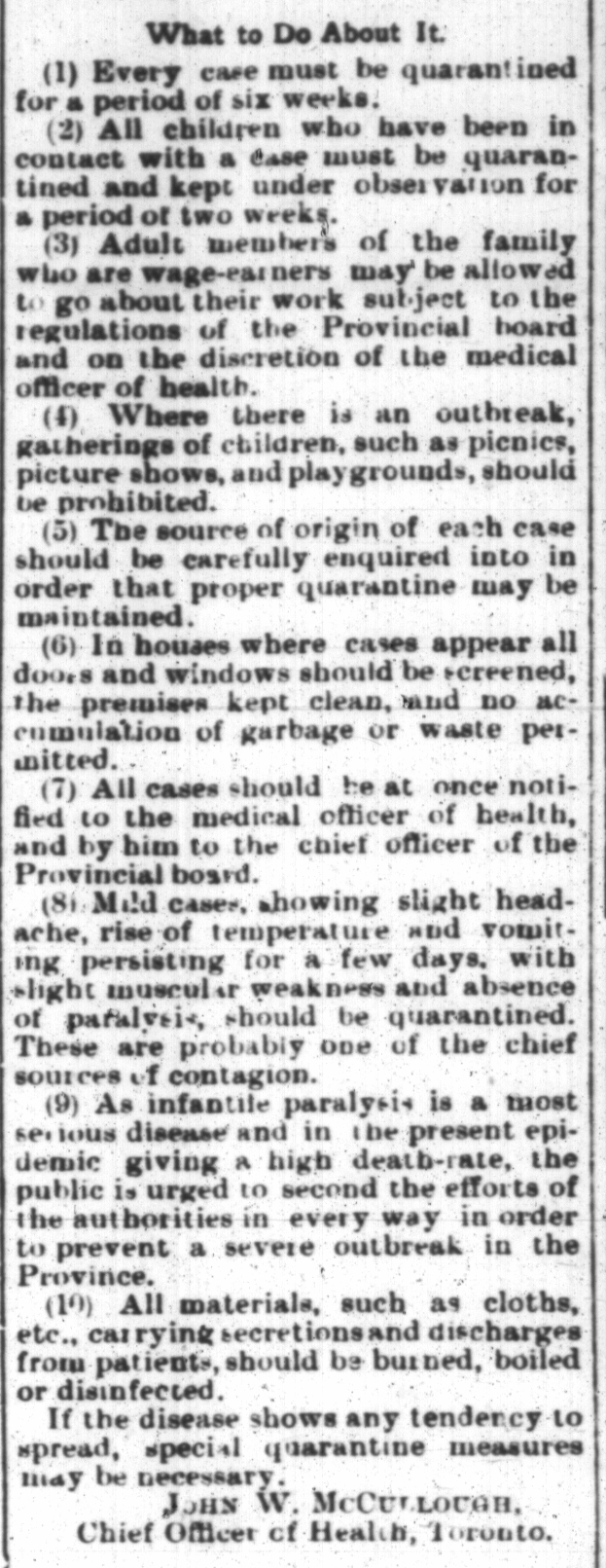
In 1916 an outbreak of infantile paralysis (polio or poliomyelitis) hit North America. The poliovirus is most dangerous to children under five years of age and in serious cases can cause permanent and debilitating nerve and muscle damage to survivors if non-fatal. The 1916 epidemic was particularly devastating in New York and then appeared in Canadian cities like Montreal before eventually arriving in southern Ontario. In Ontario, the provincial Medical Board of Health enacted quarantine regulations and required doctors to report all cases or face prosecution.
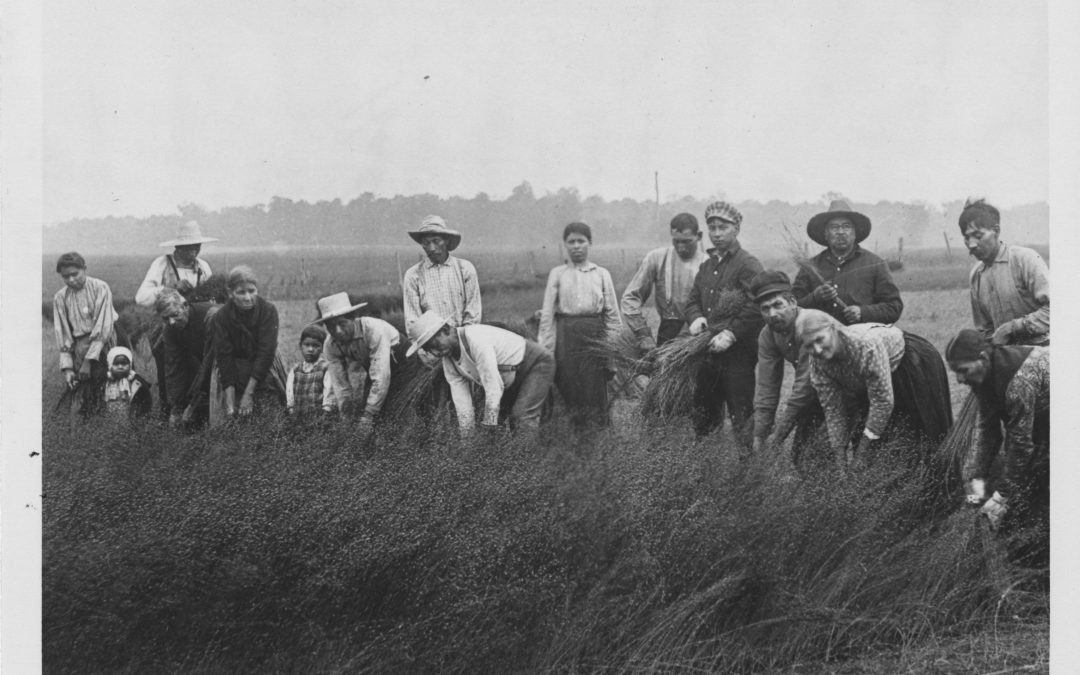
The outbreak had reached Huron County by July, when a fourteen-month-old girl in Varna died: only the second fatal case confirmed in Ontario up to that point. Panic hit the next month when three young children in Hullett Township contracted the much-feared disease. The children had come to live temporarily in Hullett (now part of the Municipality of Central Huron) with their parents during the flax harvest, but their permanent home was reported as ‘Muncey Reserve.’ Indigenous families from Southwestern Ontario reserve communities, including those on the shore of the Thames River south of London and also Saugeen First Nation to the north, were a crucial labour force for annual flax harvests in the early twentieth century. Entire families moved seasonally to pull flax for Huron growers; they worked and lived in close contact with each other, camping alongside their worksites.
The sick children belonged to a group of about 15 families living in tents roughly six miles from Clinton when the infantile paralysis struck-eventually infecting two five-year-olds and a two-year-old. A local Blyth doctor treated the first cases and told the area newspapers that the farm workers’ living situation presented a challenge for protecting the lives of the other 23 children in the camp: “Isolation and quarantine, so necessary for the treatment of infantile paralysis, are something hard to enforce in any Indian reservation or encampment…We are doing what we can to prevent any spread of the disease, and watching for further symptoms, but it is next to impossible to enforce the requisite isolation.” The vast majority of poliovirus cases are completely asymptomatic. The disease can spread through direct contact or via contamination by human waste.
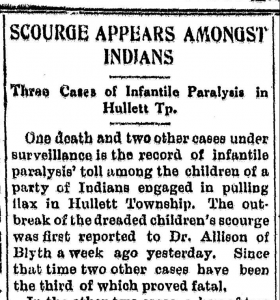
From the Wingham Advance, August 31st, 1916.
For one of the five-year-olds, the virus was tragically fatal on August 25th, but the other two children soon appeared to be recovering. Local newspapers did not identify any of the camp members by name, but a death registration reveals that the little girl who lost her life was Annie Corneolus, the five-year-old daughter of Abram and Elizabeth. She was ill only one day, but the polio had caused lethal ‘paralysis of respiration.’ Her birthplace is recorded as Oneida Reserve (Oneida Nation of the Thames). Annie’s burial took place at Burns Cemetery, Hullett. Local health officials separated the families with sick children from the rest of their neighbours and they proceeded to quarantine at a farmer’s house on the 11th Concession. School Section # 11 at Londesborough cancelled classes for all students as a precaution.
Fortunately, their quarantine appeared successful and there were no further cases reported. The Clinton New Era announced that “the infantile paralysis scare in Hullett Township has pretty well blown over.” When health authorities lifted quarantine the families impacted returned to their reserve community, and the rest of the camp moved on to Blyth to continue their flax-pulling work. The Huron newspapers make no mention of whether or not the surviving children suffered any long-term health effects. Later reports listed the total number of province-wide infantile paralysis cases at 64 for July and August of 1916, with 8 resulting deaths–meaning that 25% of those total polio deaths occurred in Huron County.
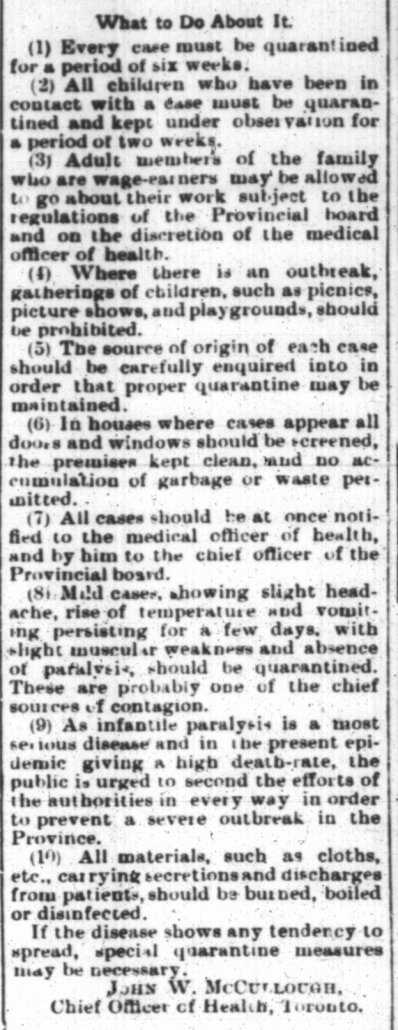
From the Signal (Goderich), July 20th, 1916.
There is no cure for polio, but the Salk vaccine of 1955 would eventually be effective and widely used to prevent the disease; after continuous deadly outbreaks throughout the first half of the twentieth century, childhood vaccinations have eradicated polio in Canada.
The living and working conditions of temporary farm workers in 1916 would have made following advice about precautionary hygiene and social distancing almost impossible to follow-and many people in Canada are facing those same challenges today, without equal housing or opportunities to practice self-isolation under novel coronavirus. Although the 2020 COVID-19 pandemic is not the same as polio, the reality that Indigenous communities continue to be disproportionately impacted by pandemics, and that temporary and migrant workers are at a higher risk because of a lack of resources and opportunities to safely distance is absolutely precedented.
More Info about the history of polio in Canada: https://www.cpha.ca/story-polio
*Note: I wrote this blog post using contemporary newspaper accounts including the Wingham Times, The Wingham Advance, The Lucknow Sentinel, The Clinton New Era, The Clinton News-Record, the Signal (Goderich) and others, all accessed from Huron’s free historical newspaper database: https://www.huroncountymuseum.ca/digitized-newspapers/ Annie’s death documentation was accessed via Ancestry.ca (Archives of Ontario; Toronto, Ontario, Canada; Collection: MS935; Reel: 220). All of these accounts were written from a settler point of view (as is my own), and the newspapers did not include the voices or even the names of the community members impacted. If you have any further information you’d like to share about this outbreak or similar outbreaks in the past contact museum@huroncounty.ca.
by Sinead Cox | Mar 30, 2020 | Artefacts, Collection highlights, Exhibits, For Teachers and Students, Uncategorized
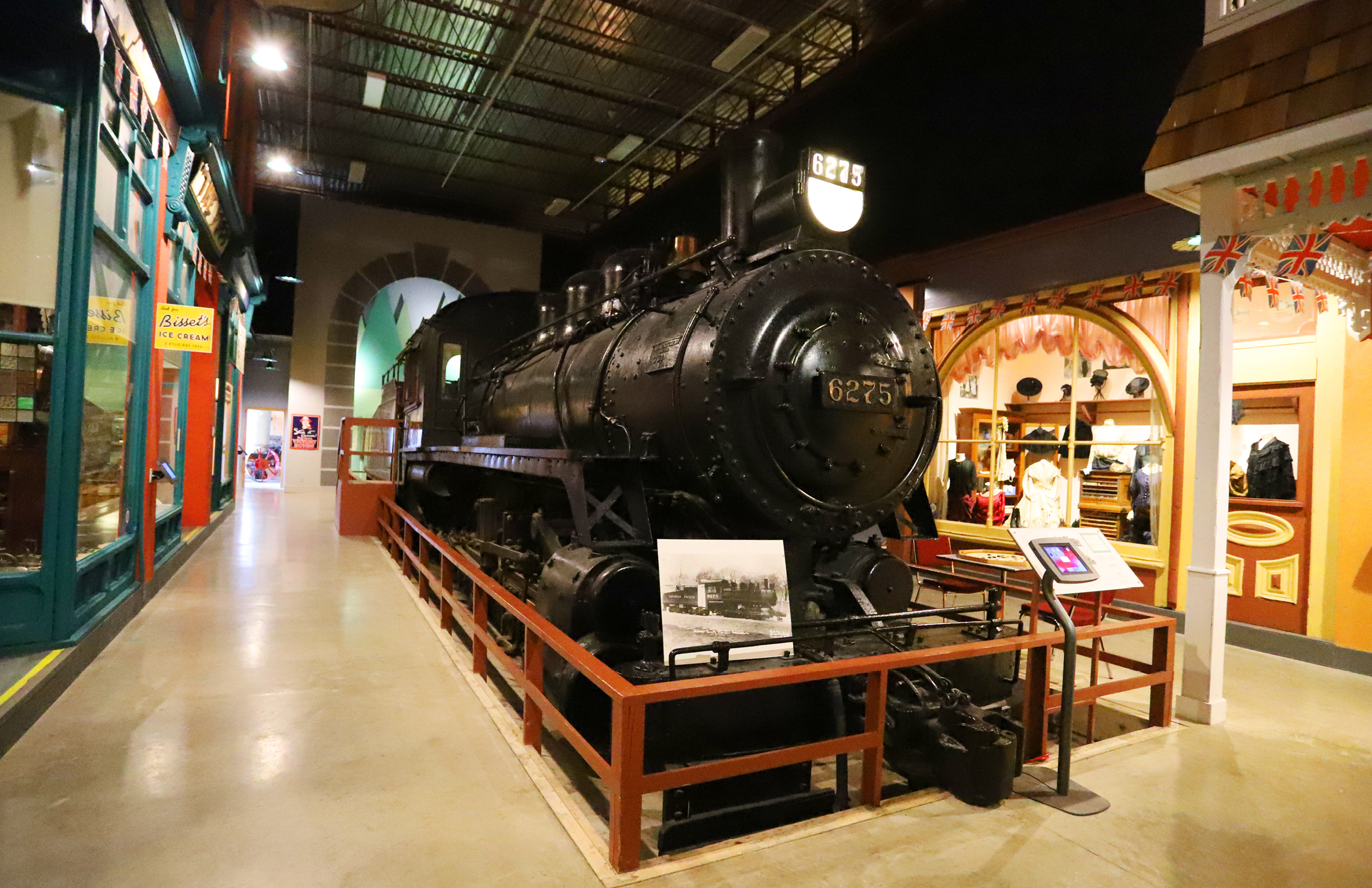
Huron County Museum: Virtual Permanent Galleries
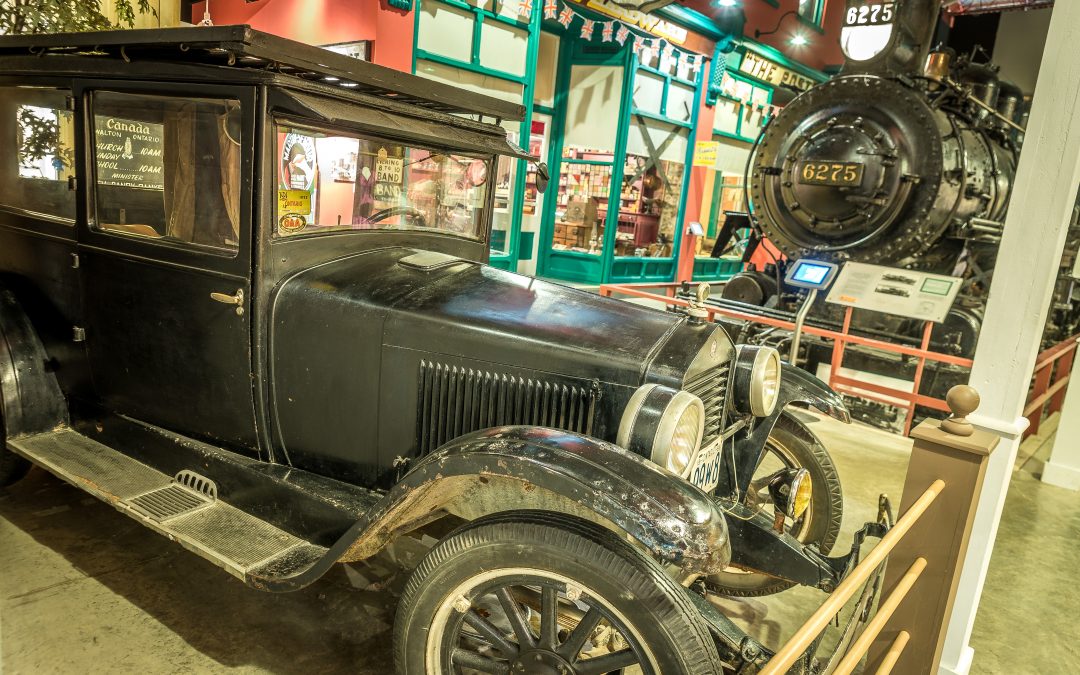
The Huron County Museum’s virtual exhibits grant a close-up glimpse of select artifacts on permanent display in our galleries, as well as information that you can’t guess with just a look. The featured objects represent a small sampling of the thousands of artifacts in the museum’s collection. Updating the online exhibits is an ongoing project; in the future, student employees will be refreshing the images and providing even more information. These exhibits are also available via ipads onsite when the museum is open.
Huron County Main Street
Our Main Street features real storefronts and objects from across the county of Huron.
Click the storefront names to step inside and see artifact highlights!
Military Gallery
Click the titles below to see archival documents and more related to Huron County and the First World War.
Huron County Museum Feature Gallery: Virtual Exhibits
The Huron County Museum rotates exhibits of special interest through the year in our Feature Galleries. Click to explore past temporary exhibits that you may have missed or want to rediscover.