Eight Historical Diaries Now Available Online

Written by Jacob Smith, Digitization Coordinator for the Huron County Museum. Photo: Robert Watson diary, pages 8-9.

Cliquez ici pour le Français

The Museum’s digitization collection has grown to include scanned and uploaded eight historical diaries.  They were written by Douglas McTavish, Mary Longmore Green, Robert Watson, and Thomas Rowe between the mid-1800s and early 1900s, and detail rural life across Huron County, such as farming activities, the weather, and local news. These historical diaries were chosen for digitization due to their deterioration, as bits of paper on some of the diaries peel off when handled.
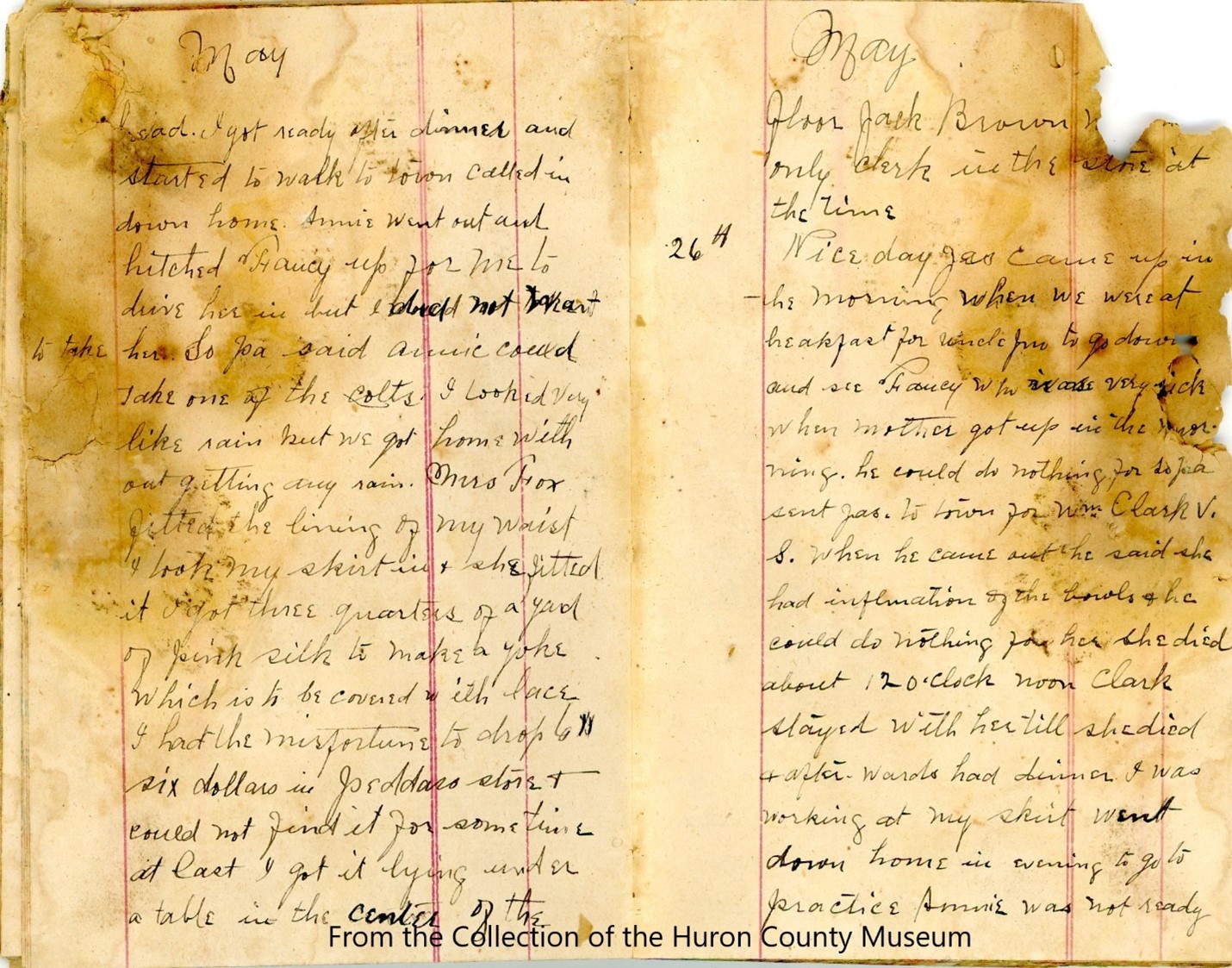
Photo of scanned pages from an historic diary

Photo: Mary Longmore Green Diary 1, pages 83-84 have clear examples of deterioration.

Out of the eight digitized diaries, three were written by Mary Longmore Green. Mary was born in 1870 to Andrew Green and Mary McHardy Green, and grew up on a farm in Dunlop, Colborne Township.  Throughout her three diaries in the Museum’s collection, which were written between 1899 and 1901, she documents her rural Huron County life, visits with friends and family, and her time at school.  She discusses her time studying at the Ontario Agricultural College (O.A.C.) in Guelph in the early 1900s, which you can read in Diary 3.  In her studies, she focused on dairy: how to make milk, cream, butter, and cheese, and the science behind it. Mary goes into detail about her friends and instructors at the institution, and her travels between Dunlop and Guelph. In later years, she married Robert Dures. Mary passed away in 1946, and is buried in Colborne Township.
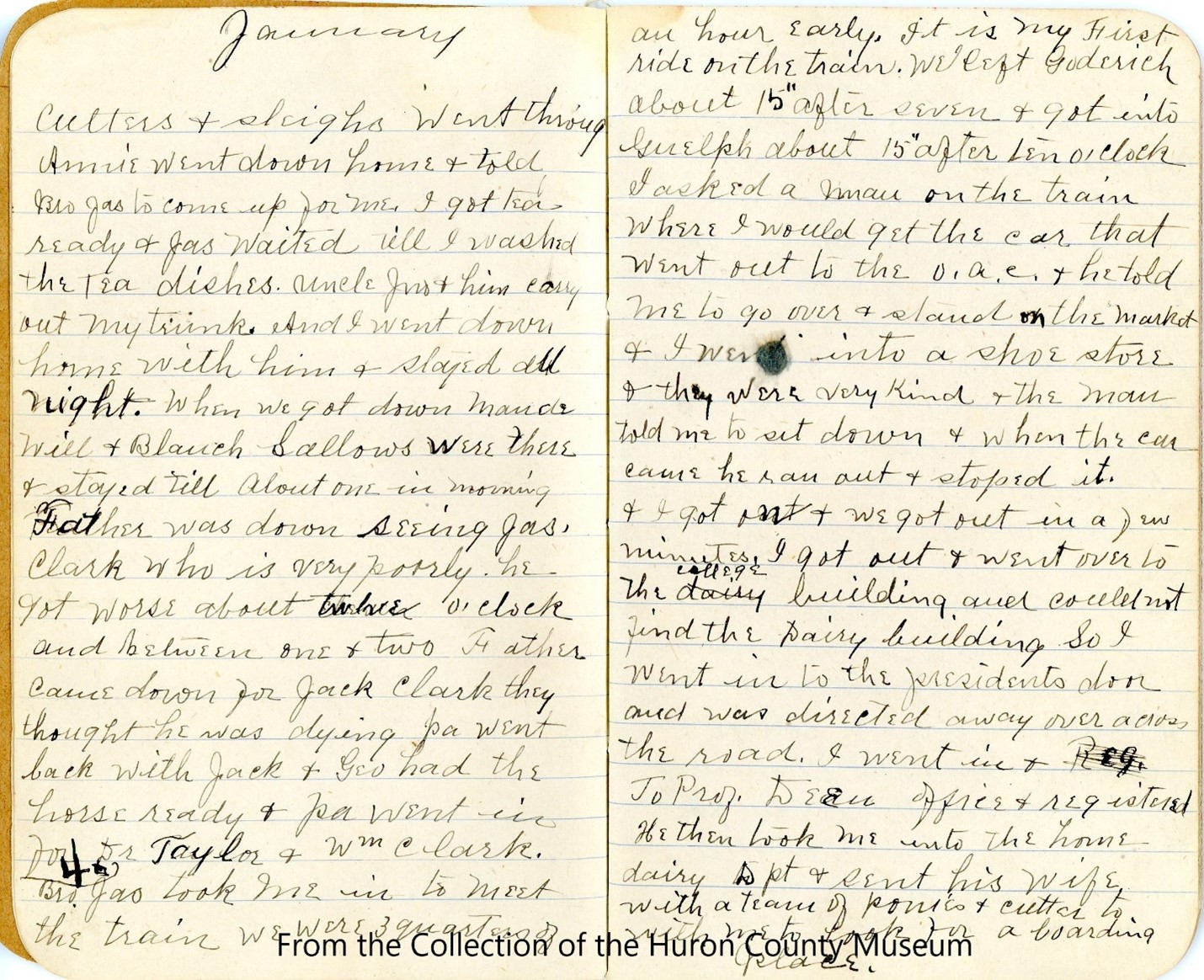
Photo of scanned pages from an historic diary written by Mary Longmore Green

Photo: Mary Longmore Green writes about travelling to Guelph to attend school. 2023.70.3, pages 5-6.

Transcriptions of the historical diaries are available upon request.  Please contact the Huron County Archives for more information.

Government of Canada logo

This project is funded (in part) in part by the Government of Canada

Ce projet est financé (en partie) par le gouvernement du Canada.
Explore Southwestern Ontario in the 1960s and 1970s Through Historical Videos

Written by Jacob Smith, Digitization Coordinator for the Huron County Museum.

Cliquez ici pour le Français

A series of short films to the Huron County Museum’s YouTube channel that were filmed by local media company CKNX in the 1960s and 1970s. The clips range from news clips, commercials, and local events throughout southwestern Ontario. These videos were donated to the Museum by a former CKNX employee in 2009. In 2022, a portion of the film reels, selected based on relevance to the area, were sent to a third-party company in Toronto to be digitized. In late 2023 and early 2024, staff uploaded the videos to YouTube.

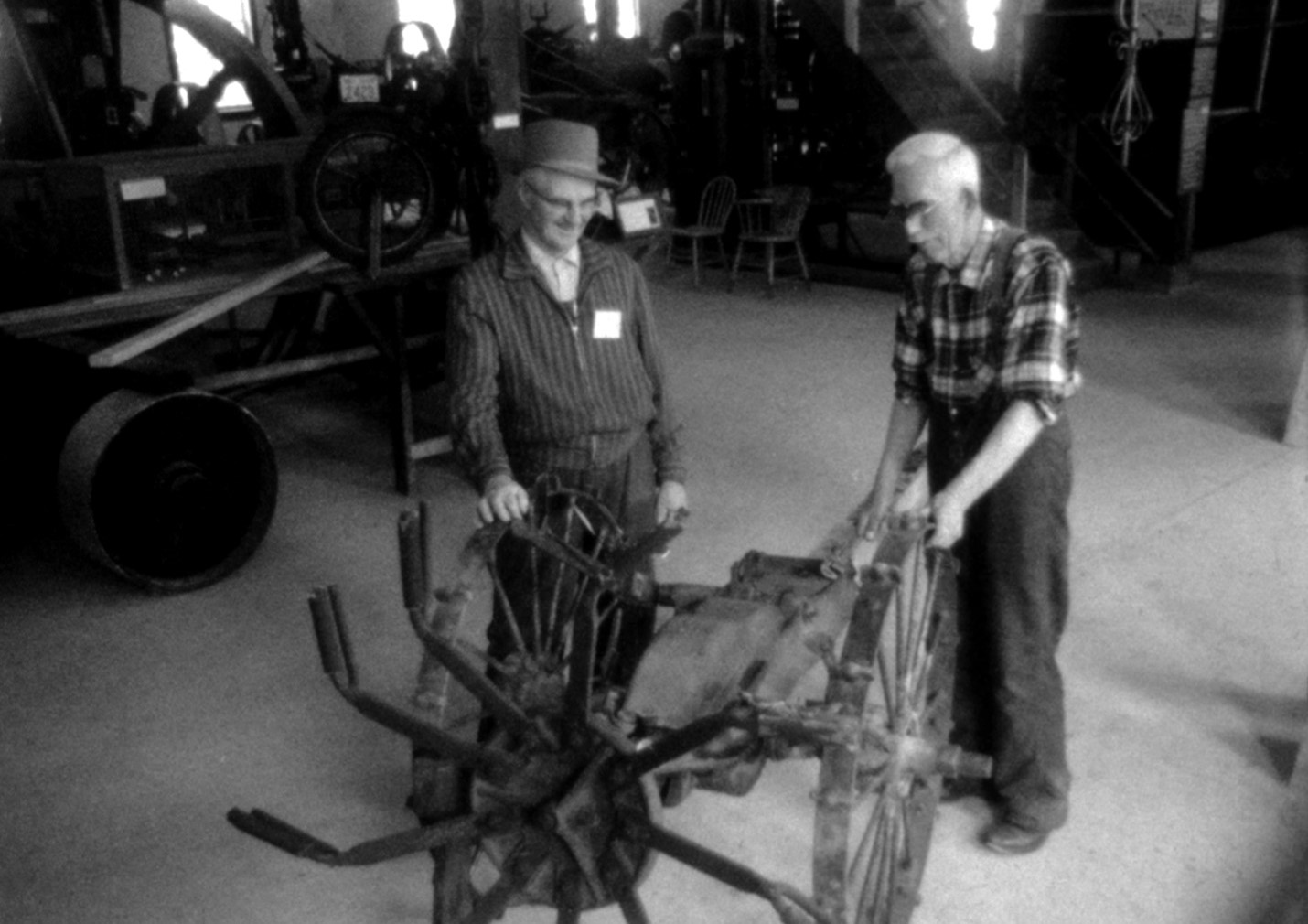
The first video published to YouTube is a tour inside the Huron County Museum in the early 1960s.  The brief video features Museum founder, Joseph Herbert Neill, as well as visitors touring the building.  You may notice that the present-day History Hall looks different.  That is because the video was filmed prior to the extensive renovations that occurred in the late 1980s.

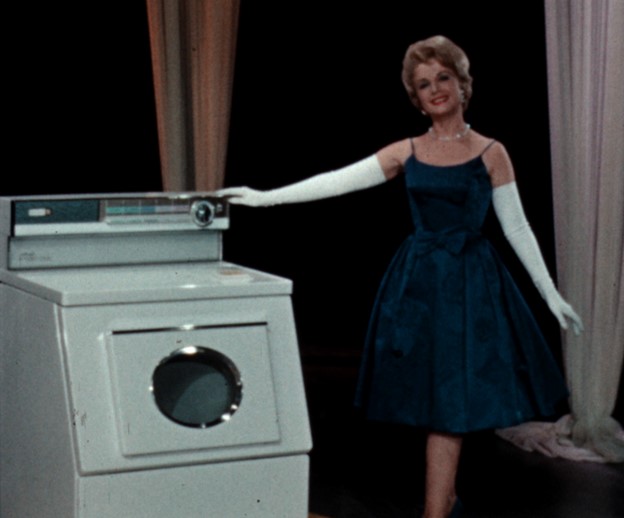
We often groan at the thought of having to sit through yet another commercial or advertisement.  However, old commercials can be interesting!  They allow us to see defunct businesses, old technology, and popular fashion trends from the time period. Advertisements for Superior Propane, Canadian Tire, Fashions by Westinghouse, and Black Flag insect repellant are just a few that are available for viewing on our YouTube channel.  Some of the advertisements are for local businesses, such as Hunt Club Cream Lager, which was made in Formosa, ON.

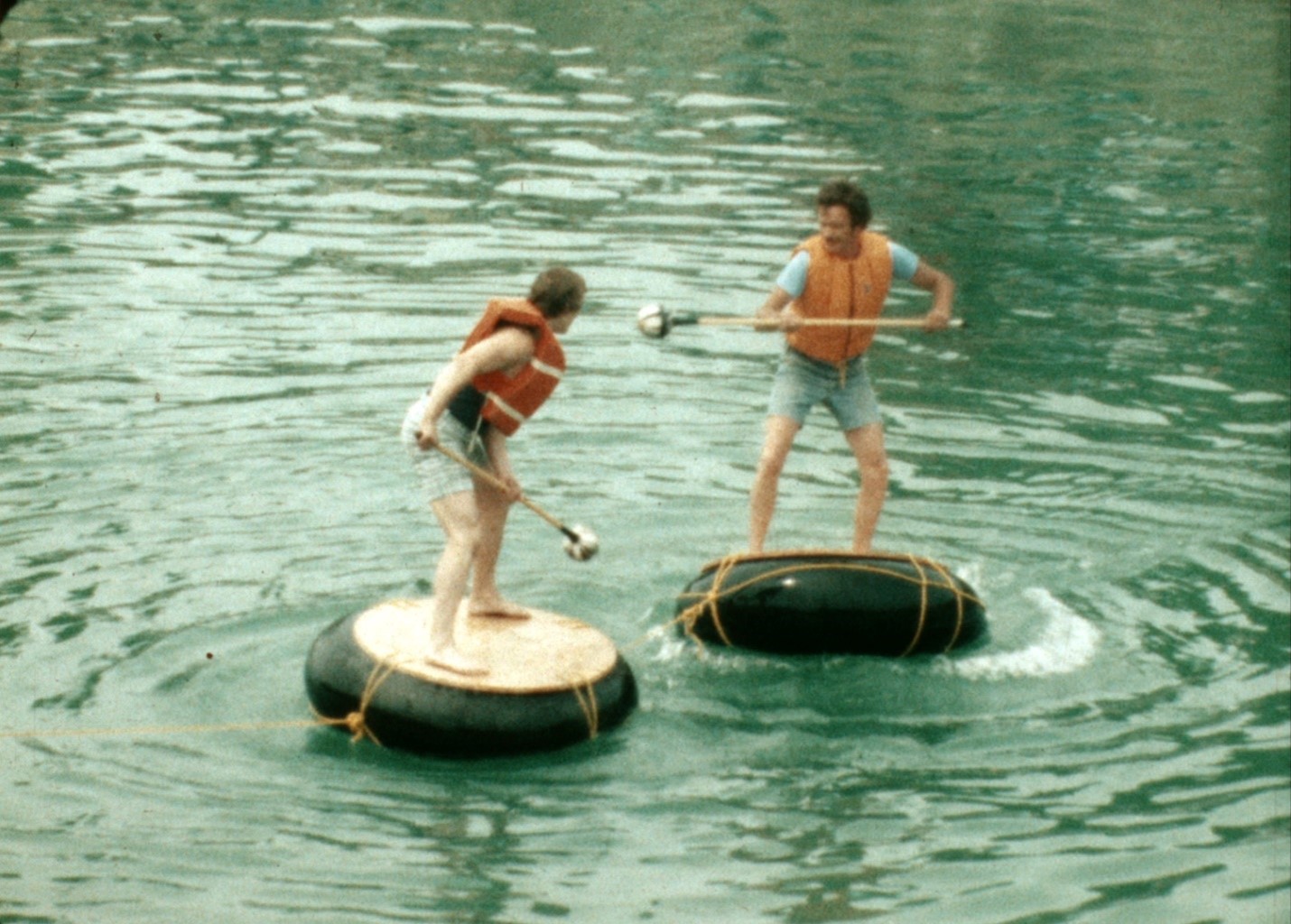
CKNX staff also captured local news and events within Southwestern Ontario, such as the Huron Pioneer Thresher & Hobby Association’s reunion in Blyth, local hockey games, and Kincardine water sports.

Still from a video advertising washing machines from the 1960s
Still of two kids in the water standing on floaties
Government of Canada logo

This project is funded (in part) in part by the Government of Canada

Ce projet est financé (en partie) par le gouvernement du Canada.
Huron County Museum Staff Complete Henderson Digitization Project

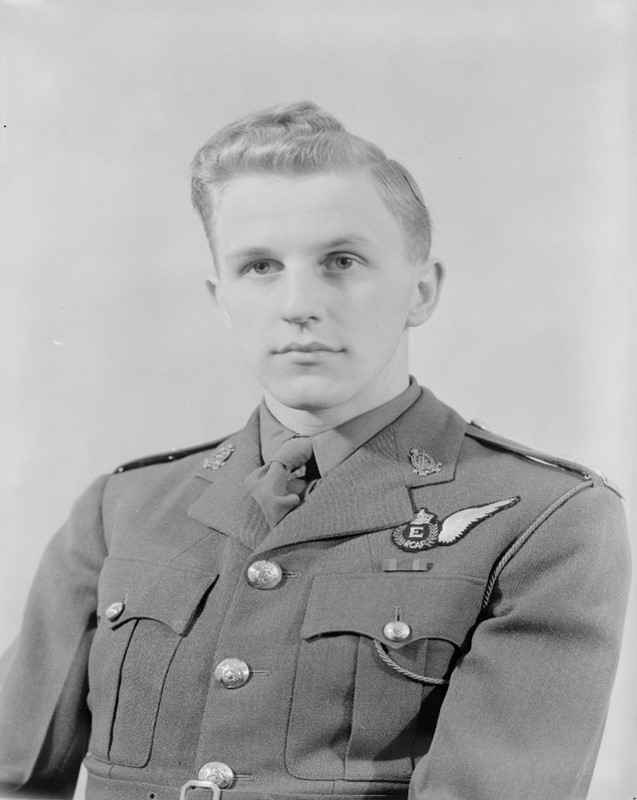
Written by Jacob Smith, Digitization Coordinator for the Huron County Museum. The photo above is a portrait of World War II serviceman Leon Prosser. A992.1040c 

Cliquez ici pour le Français

500 additional photographs of World War II servicemen have been catalogued, scanned, and uploaded to the Henderson Digitization Project’s virtual exhibit.  You can access these photographs through the Museum’s website or by clicking here.  These photographs were taken by Mr. J. Gordon Henderson (1913-1989), a Goderich-based photographer for over 40 years. During World War II, Mr. Henderson travelled to air training schools in Clinton, Goderich, and Port Albert, taking class pictures and photographing other activities on the bases.  During the war, military personnel would visit his studio in Goderich to have their portraits taken.  After the war, Mr. Henderson continued his professional photography business until his retirement in 1980.  In 1992, his family donated his professional work and equipment to the Huron County Museum.  

To increase awareness of Mr. Henderson, and Huron County’s role in World War II, the Henderson Digitization Project was created.  The project was a one-year, grant-funded project in 2013 to digitize his photographs of World War II air training in Huron County.  In 2021 and 2023, the project was revisited. During that time period, digitization staff catalogued and scanned the remaining photographs, and added the object information into the Museum’s database, PastPerfect. Then, staff uploaded the scanned images to the Henderson Digitization Project’s virtual exhibition page.  At the same time, the virtual exhibition was reorganized to ensure that multiple portraits of the same airmen were linked together. The project was completed in October 2023. 

The Huron County Archives has not been able to identify every man in Mr. Henderson’s World War II airmen photographs. This portrait is of an unknown serviceman (A992.3.242). Do you recognize him?

If you have additional information about these servicemen, please contact us at museum@huroncounty.ca.

 Want to see more of Mr. Henderson’s work?  Please contact the Huron County Archives for more information.

Government of Canada logo

This project is funded (in part) in part by the Government of Canada

Ce projet est financé (en partie) par le gouvernement du Canada.
Huron County Census Records from the 1840s to the 1870s now available online

Huron County Census Records from the 1840s to the 1870s now available online

Written by Jacob Smith, Digitization Coordinator for the Huron County Museum.

Cliquez ici pour le Français

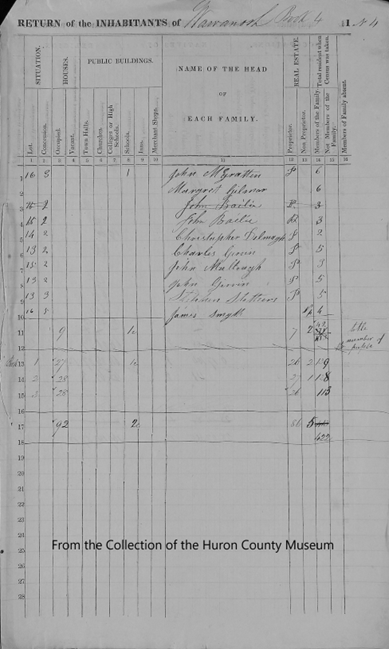
As part of the Huron County Museum’s ongoing digitization project, I have been busy scanning and uploading census records called Return of Inhabitants to the Museum’s online collection (which you can click here to view). The Return of Inhabitants are informative documents for genealogists.  Information ranging from ages of family members to the types of livestock on each property are just two pieces of information that these documents provide.  As someone who has a keen interest in genealogy, I was thrilled to find information about my ancestors.  For example, I was able to find information on the Smith family in the 1850 Return of Inhabitants for Wawanosh Township, which can be seen in the image below.

Photo of a page from the Return of Inhabitants for Wawanosh Township, 1850

The Return of Inhabitants are in book-like format.  To read the information, you must follow the line numbers on the far-left side of the page.  In the case of my ancestors, the Smith family, I must follow line number 10.  Upon reading across the page, it is stated that James Smith and his family lived at Lot 16, Concession 5 of Wawanosh Township, they were non-proprietors of the land, and they were a family of four.

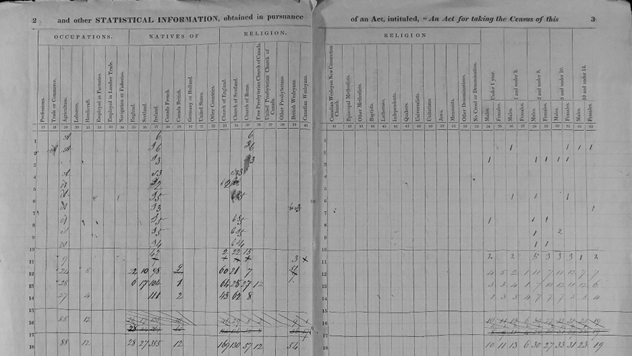
Looking at the next page, again looking for number 10 and reading across, we see that the Smith family lived on agricultural land, were natives of Ireland, belonged to the Church of Scotland, and had two children, a boy, and a girl, between the ages of 2 and 5.

Photo of Return of Inhabitants, Wawanosh Township, 1850

The next page shows that James Smith was married, and was between the ages of 30 and 40, and his wife was between the ages of 14 and 30.  Also noted on this page was the death of a young girl.  Upon further research of the Smith family, I learned a daughter of James and Margaret Smith had died of an illness while immigrating from Ireland to Canada.

Photo of Return of Inhabitants, Wawanosh Township, 1850

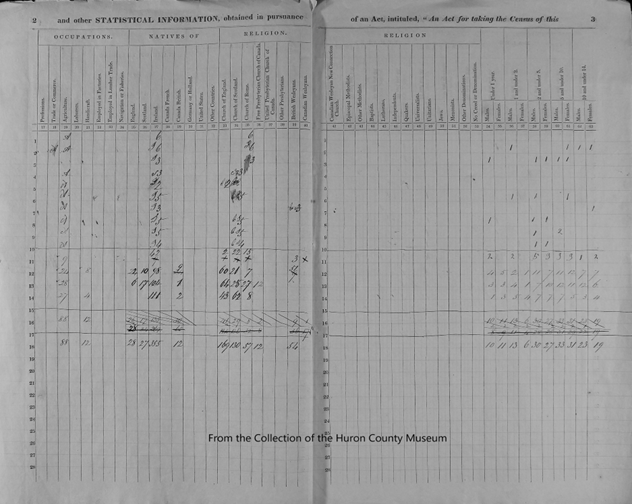
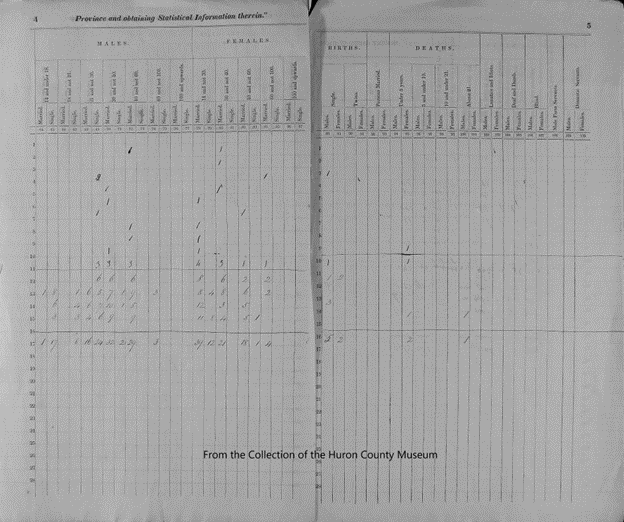
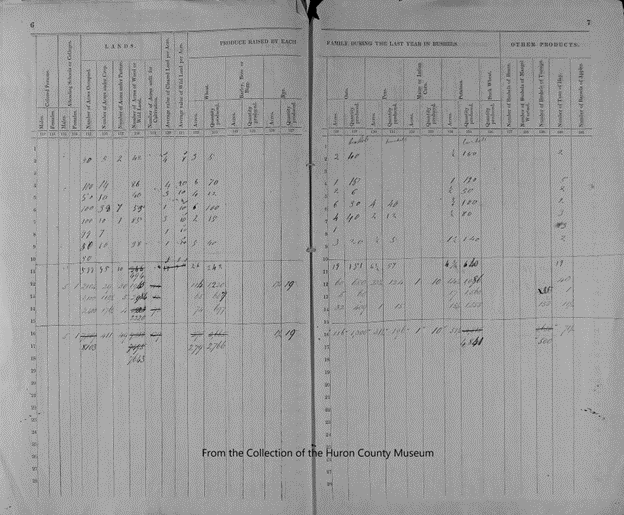
The next few pages document information about their property.  James Smith and his family lived on a 50-acre plot of land.  However, as seen in the image below, all agricultural information regarding their farm is left blank.  I know from genealogy research that the Smiths immigrated to Canada in 1850, the same year this Return of Inhabitants was taken.  It is possible that their farm was not agriculturally productive at the time this census was recorded.

Photo of Return of Inhabitants, Wawanosh Township, 1850

Through the Return of Inhabitants, I was able to learn about my family history.  Scanning and uploading these documents was a rewarding experience.  My goal throughout the project was to digitize as many documents as possible, giving the opportunity for researchers to work from the comfort of their homes.  I hope you find the Return of Inhabitants to be a useful source of information.  Happy researching!

Looking for census records from the 1860s and 1870s?  Click here to view digitized Assessment Rolls.

The Huron County Archives has additional census records that have not been digitized.  Please contact the Archives for more information.

Government of Canada logo

This project is funded (in part) in part by the Government of Canada

Ce projet est financé (en partie) par le gouvernement du Canada.