

An Unconquered Crime: Infanticide in Huron County

An Unconquered Crime: Infanticide in Huron County

According to the Criminal Code of Canada, “a female person commits infanticide when by a wilful act or omission she causes the death of her newly-born child.” Using local resources, student Kevin den Dunnen explores local cases of infanticide in the late 19th and 20th century (the period for which Gaol records are readily available), and the contemporary attitudes towards this act at home and abroad.

Through the 19th and 20th centuries, Huron County newspapers printed cases of infanticide, or the act of killing an infant, allegedly taking place in other countries and cultures. These articles often framed this the context of the supposed inferiority of cultures without the influence of Western Christianity. (1) However, the prevalence of infanticide in Huron County and surrounding areas during this same time period disproves any claims of cultural immunity to infanticide in southwestern Ontario’s Christian-dominated communities.

There are many social factors that contributed to the infanticides that occurred in Huron County. In the 19th and 20th centuries, a birth outside wedlock threatened an unmarried woman’s status in society. Many known infanticide cases in Huron County involved these young, unmarried women. Contributing to the devastating decision to commit infanticide was the lack of local social services available to single women needing help to provide for their child. As such, infanticide has been present in Huron County for much of its history.

The story of a Huron County woman called Catherine and her child exemplifies many of these themes. Catherine was a 30-year-old servant and unmarried woman working in Goderich Township in 1870. She had gone to her doctor that year claiming her body was swelling. The doctor suspected that she might be pregnant, but Catherine did not agree. Later on, her employer came home to find some of her work unfinished and could not find her. Upon searching, they found her sitting in a privy. After telling her to leave the privy several times, Catherine went to the house. Upon inspection of the privy the next morning, the house-owner and a doctor found a dead child in the privy vault covered by paper and a board. In his subsequent report, the coroner believed that the baby was born alive. (2) Upon first reading, this story appears to be a cold-blooded case of infanticide, but the reality of the society around Catherine makes the situation far more complex.

Turn of the 20th century newspapers in Huron County printed or reprinted articles from larger news agencies about non-Christian societies in India, China, and Hawaii and touted their supposed propensity of infanticide. These stories promoted the positive influence of Christian conversion outside of Canada, even though infanticide was also a local issue. Figure 1 is one such article from The Exeter Times, published on Feb. 1, 1894. This article states that the work of missionaries converting foreign societies to Christianity would “introduce the mercy of the Gospel among the down-trodden of heathenism.” The uncredited author claimed non-Christian cultures frequently committed infanticide but stopped when they converted to Christianity. (3) There is an apparent hypocrisy in these newspapers portraying other societies as uncivilized while the same issues were happing contemporaneously in their own Ontario communities. Figure 2 shows an article from The Brussels Post, dated Nov. 20, 1902. In this article, the author argues the need for laws restricting the distribution of alcohol. They state that such opportunities to change society are “the call of God” whose influence had already “conquered great evils, such as infanticide.” Yet, infanticide still occurred in the paper’s own region.

How prevalent an issue infanticide was throughout Huron County’s history is difficult to know, because many cases likely went unreported. A large proportion of the known cases involved single mothers of illegitimate children. However, some scholars suggest that more cases of undocumented infanticide frequently occurred in Western societies. These theories argue that hidden infanticide by married couples might partly explain changing gender ratios in select western societies. They claim this was a way of tailoring gender to fit family needs, like wanting males to help with farming. (4) Single women living and working away from their families would face greater difficulties concealing a birth without detection. Hidden infanticide drew attention from journals like the Upper Canada Journal of Medical, Surgical and Physical Science in 1852. This journal argued that women should have to register their children immediately after birth to lessen the chance of hidden infanticide. (5) This call for registration suggests that the journal suspected or knew of infanticide cases where the mother did not register their child to hide its birth. This research indicates that communities like Huron County could have many cases of infanticide that county records do not include.

One record that is available for study is the “Huron County Gaol Registry.” The portion of the Registry currently available for research includes entries for every person who stayed at the Gaol from 1841-1922. There are at least 12 cases that list infanticide, concealment of birth, child exposure, or a related charge as the reason for committal (Figure 3 and 4). While not a staggeringly high number, these records only include the people sentenced to gaol for allegedly killing their infant or related crimes. If they were not apprehended or not committed to jail, they would not appear in the registry. Additional cases do appear in the local newspaper accounts (Figure 5) and coroner’s inquest records , including Catherine’s story .  The registry shows that the first prisoner committed for infanticide came to the Gaol in 1846 and that a prisoner was committed for procuring drugs for an illegal abortion in 1920. While not demonstrating frequency with complete accuracy, the registry clearly does indicate that infanticide and other crimes resulting from unwanted pregnancies occurred in Huron County throughout the entire period documented from 1841-1922. These instances of infanticide would increase when including the records of nearby counties like Middlesex, Bruce, and Perth, which also had reported infanticide cases during the same period. There was therefore no reason to look to other countries to find the circumstances that fostered infanticide: Huron County residents could see the evidence in their own towns and the surrounding counties.
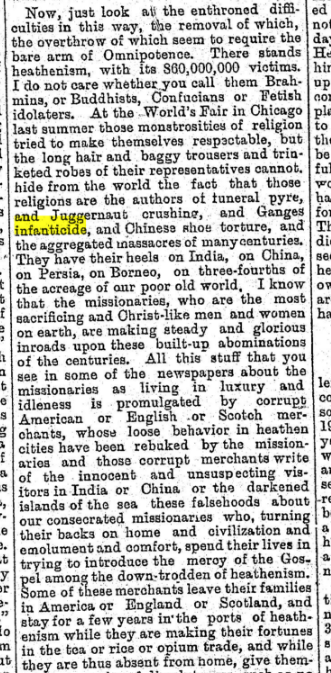
image of a newspaper clipping

Figure 1: “The Safe Arm of God,” The Exeter Times, 1894-2-1, Page 6 
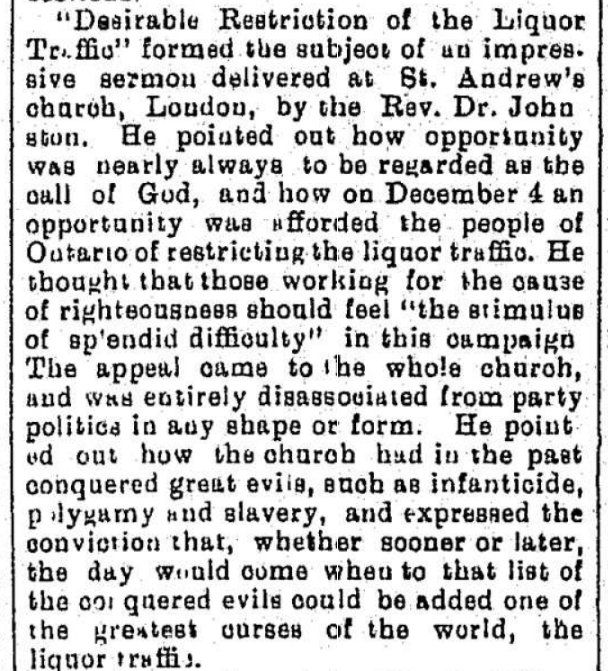
Image of figure 2 - newspaper clipping from Brussels Post

Figure 2: “Prohibition Notes,” The Brussels Post, 1902-11-20, Page 4
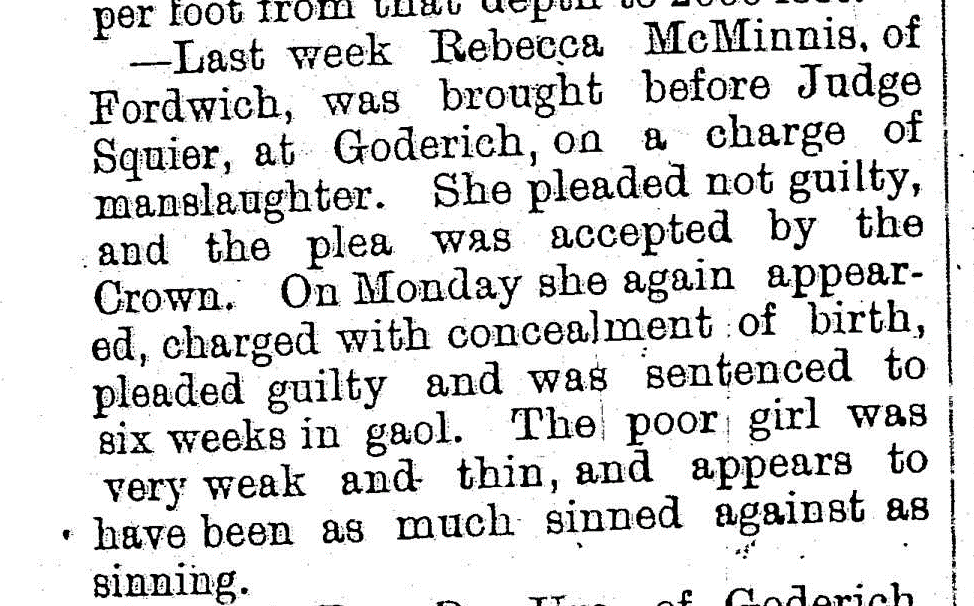
Figure 3: Newspaper clipping from The Huron Expositor, 07-22-1881, pg 5.
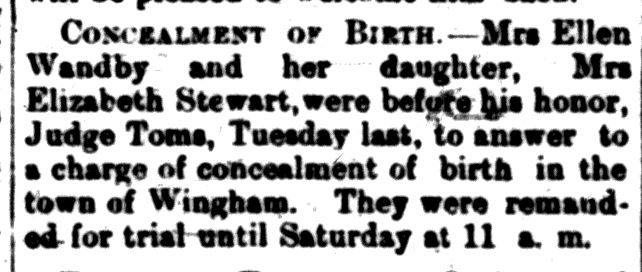
Figure 3: The Huron Expositor, 07-22-1881, pg 5.

Newspaper clipping: "Concealment of a Birth" Mrs. Ellen Wandby and her daughter, Mrs. Elizabeth Stewart, were before his honour Judge Toms, Tuesday last, to answer to a charge of concealment of birth in the town of Wingham.

Figure 4:The Huron Signal, 06-10-1887, pg 4.
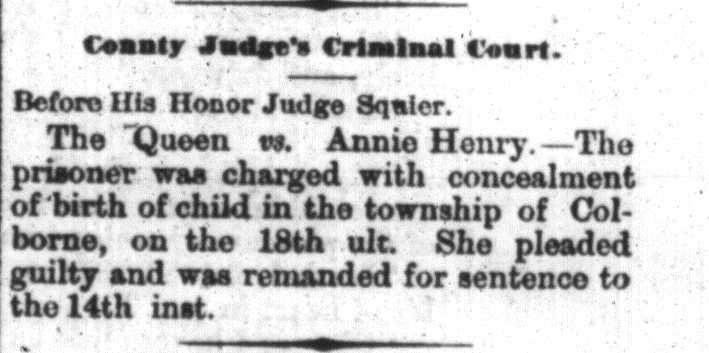
Figure 3: Newspaper clipping from The Huron Expositor, 07-22-1881, pg 5.

Figure 5: The Huron Signal, 12-10-1880, pg 1.
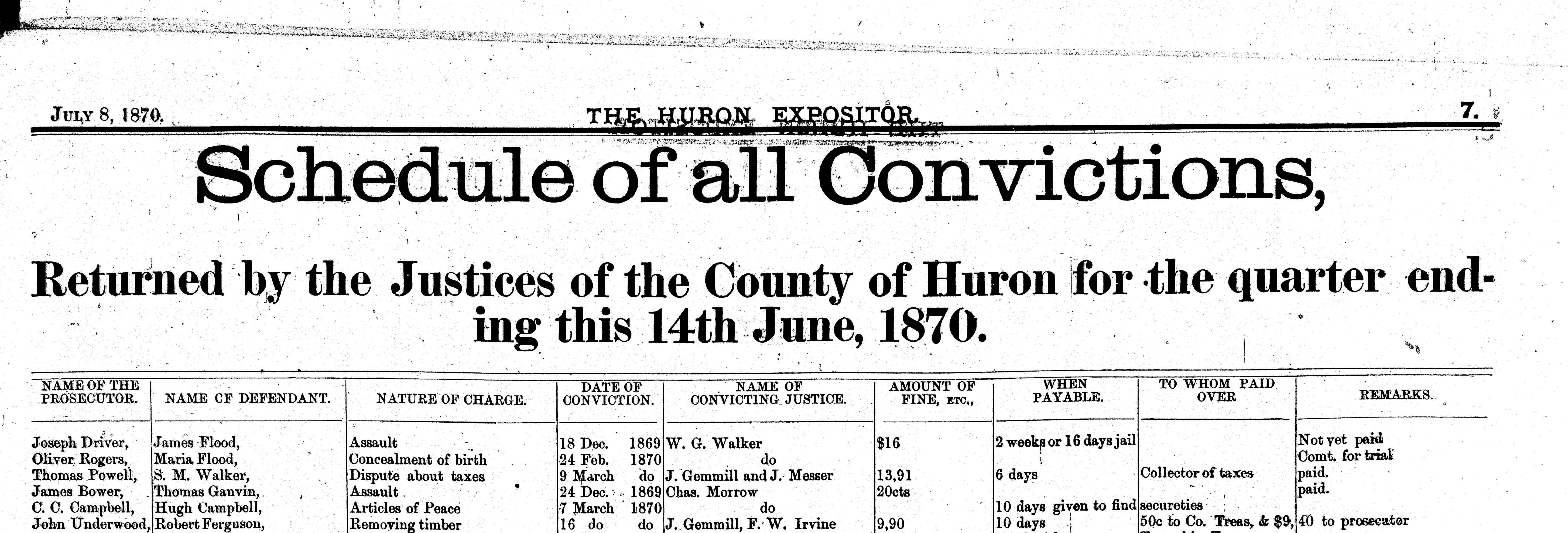
Image of newspaper clipping from 1870 Schedule of Convictions featuring prosecution of Maria Flood for “concealment of birth.” The Huron Expositor, 07/08/1870, pg 1.

Mothers faced most of the blame for infanticide from the legal system and contemporary journalists for reported cases. However, this viewpoint often neglects to consider both the devastating judgements placed upon these women for their unwanted pregnancies, and the lack of support available to help struggling mothers. Of the cases involving infanticide, concealment of birth, or abortion found in the Huron County newspapers and Gaol records, a large number involve young women under 25 years old and illegitimate children (the offspring of a couple not married to each other).  For example, a case from 1864 involves a 15-year-old unmarried female servant; a case from 1877 involves a 22-year-old single female servant; a case from 1880 involves a 17-year-old female servant. As servants, these women were dependent on wage labour. With the birth of a child, the woman would have to give up employment to care for the baby, as without the security of legal marriage the father would often refuse any support. Her ability to care for herself, let alone the child, declined greatly after giving birth. In addition, women faced religious and societal pressures to remain chaste until marriage. Bearing an illegitimate child proved to society that a woman was unchaste. (6) Women who gave birth to illegitimate children, no matter the circumstances of their conception, would face harsh judgement from their communities, which could impact their ability to find new work or to be married. These women with illegitimate children immediately became outcasts. This happened because Christian societies at the time judged much of a single woman’s morality and value according to her chastity. (7) As such, women of this period faced significant social judgement if they had an illegitimate child. The idea of concealing the child’s birth may have appeared to be the only choice for single mothers hoping to retain their ability to earn a living, maintain their place in society and avoid becoming an outcast, which could lead to cases of infanticide and child abandonment. 

The lack of available social services in Huron County before the 20th century could also factor into these cases of infanticide. Before Huron County’s House of Refuge opened near Clinton in 1895, the only municipal building available for social services was the Huron County Gaol. There was no local lying-in hospital or home for unwed mothers. During this period, the Gaol often housed the elderly, destitute, and sick. Some lower tier municipalities made the choice to commit unwed mothers to gaol to give birth, and multiple women would have their babies behind bars at the Huron Gaol. This was an inexpensive way to house the mother and child until such a time she could return to the labour market. A young woman faced with the birth of an illegitimate child in Huron County would therefore have little support and few options available should she struggle to care and provide for her baby, and may have to bear the stigma of being committed to gaol regardless of committing a crime.

While newspapers like The Exeter Times and Lucknow Sentinel reprinted articles featuring infanticide as a cautionary tale to criticize and condemn outside cultures and to promote the positive influence of western Christianity, infanticide remained prevalent in their own communities. Stories like that of Catherine demonstrate the difficult circumstances that sometimes drove women to commit infanticide. Having an illegitimate child immediately lessened the perceived status and life options of a young woman in respectable Christian Southwestern Ontario society. Also contributing to the devastating decision by some of these young women to commit infanticide was the lack of social services available to help them provide for a child. As such, infanticide was not a conquered issue for the residents of Huron County in the 19th and early 20th century.

Sources:

  • (1) Nicola Goc, Women, Infanticide, and the Press, 1822-1922: News Narratives in England and Australia (New York, NY: Routledge, 2016), 28.
  • (2) Coroner’s Report #365 Huron County Archives,  Unnamed baby of  Catherine J.  
  • (3 “The Safe Arm of God,” The Exeter Times, February 1, 1894, p. 6.
  • (4) Gregory Hanlon, “Routine Infanticide in the West 1500-1800,” History Compass 14, no. 11 (2016): pp. 535-548, https://doi.org/10.1111/hic3.12361, 537. 
  • (5) Kirsten Johnson Kramar, Unwilling Mothers, Unwanted Babies: Infanticide in Canada (Vancouver, BC: UBC Press, 2006), 97.
  • (6) Nicolá, Women, Infanticide, and the Press, 21.
  • (7) Nicolá, Women, Infanticide, and the Press, 21.

Further Reading

Find an index of coroner’s inquests on our Archives page (scroll to the bottom to find indexes and finding aids).

Find more stories from Huron’s past through a search of Huron County’s historical newspapers online!
I Know Where the Bodies are Buried: Deaths at the Huron Jail

I Know Where the Bodies are Buried: Deaths at the Huron Jail

“Is this place haunted?”: it’s one of the most common questions fielded by front desk staff at the Huron Historic Gaol. I’ve never set eyes on a ghost myself, but at least fifty-eight prisoners at the Huron Gaol died during their imprisonment. The jail’s four-cell-block design was intended for short stays—prisoners with multi-year sentences received transfers to larger institutions like Kingston Penitentiary—but for some Huron County inmates, theirs was indeed a death sentence in practice. Whether or not prisoners choose to revisit the grounds as ghosts, the recently launched online repository of Huron County newspapers has made it a little easier to research and shed light on their lives and deaths inside the Huron jail.

Edward Jardine-Hanging

The Signal, 1911-6-15, pg 1

Infamously, three men—all under the age of thirty—hanged for murder at the Huron jail in Goderich: William Mahon in 1861, Nicholas Melady in 1869 (Canada’s final public hanging) and Edward Jardine in 1911. Although these are perhaps the best remembered demises at the jail, executions were rare and not representative of the fifty-eight known inmate deaths that took place here before 1913, the vast majority of which were the result of natural causes like old age and disease. The average age of deceased prisoners was sixty-three. The oldest inmate to die in the jail with a recorded age—often merely an estimate by the gaoler or gaol surgeon—was approximately ninety; the youngest fatality was a two-month old infant named Robert Vanhorn who had been committed with his young, unmarried mother in 1879.

List of Crimes

The Signal, 1884-2-29, pg 2

Most of the inmates who died in the jail were in fact not criminals at all, but elderly persons committed as ‘vagrants’ because they were homeless, or too frail and sick to provide for themselves.  Some were itinerants, but many were long-term Huron County residents without friends and family able to support them in their old age. Unmarried, widowed or childless labourers and domestics were especially vulnerable, as well as early settlers whose closest relatives still remained in the old country. When Seaforth servant Margaret Ainley died in the jail of typhoid fever in 1883, The Huron Signal reported that “her relatives live in England.” Eighty-one-year-old Matthew Shepherd, a native of Scotland and a veteran non-commissioned officer of Her Majesty’s 93rd Foot, had seen service in the West Indies as well as British North America; the veteran soldier was a resident of Ashfield Township for three decades when he died in jail, but “had no direct relatives in this country” according to a June, 1891 obituary in The Signal. Both Ainley and Shepherd’s committals had been for vagrancy.

Other prisoners suffered from mental illness, dementia or serious health problems that their families could not cope with. Seventeen-year-old Patrick Kelleher, for example, had exhibited symptoms of mental illness or developmental issues since his childhood. His parents were newly arrived Irish emigrants in the summer of 1883, when the strain of caring for him evidently became too difficult and he was committed to the Huron jail for insanity. Patrick died there of a seizure in January, 1884 while still awaiting transfer to the Provincial Asylum.

Old Woman

The Exeter Times, 1875-12-30, pg 1

Without a safety net of organized social services, responsibility for Ontario’s rural poor fell to local municipalities in the nineteenth century. Sometimes the needy received assistance in their own communities and homes, but the gaol was one of the earliest municipal buildings with a full-time staff, and provided a convenient location for local governments to clothe, feed and supervise these ‘wards of the county.’

Starting in the late 1870s, Joseph “Big Joe” Williamson faced repeated committals to the Huron jail for vagrancy-a common pattern for homeless prisoners who had nowhere to go when their sentences ended. A Huron Tract ‘pioneer,’ seventy-four-year-old Williamson was a former contractor and once-prominent figure in local politics—so gifted at storytelling that he was called ‘Huron’s bard’. He petitioned County Council’s gaol & courthouse committee to transfer him to a hospital in December, 1883. The committee subsequently recommended that he be removed to the Middlesex County Poor House, but instead “Big Joe” died of heart disease at the Huron Jail on January 14th, 1884. The Huron Signal’s obituary deemed Williamson’s fate a “misspent life…after a tendency to drink and a liking for conviviality brought him down to penury.”

paupers die off

The Huron Signal, 1884-3-21, pg 4

In the absence of a House of Refuge in Huron County, the jail became a de facto poorhouse, hospital, lying-in-hospital for unwed mothers and long-term care home.  The jail staff*—consisting in the nineteenth-century of the gaoler, the matron (his wife or eldest daughter), the turnkey, gaol surgeon, and any servants or family members who lived on site—provided frontline care to the old and sick in addition to their duties of managing the gaol and guarding actual criminals. In 1884, when William Burgess, an inmate from Brussels with cancer in his leg, lay slowly dying in his jail cell, Jailor William Dickson and turnkey Robert Henderson took turns keeping a nightly vigil on the ward he occupied with another sick inmate. This cell-mate, Johnny Moosehead, had actually helped to nurse Burgess himself before he became too ill with erysipelas. Fellow inmates quite often helped the gaol staff provide the constant care needed for elderly or dying prisoners. In the case of George Whittaker, a seventy-year-old Brussels ‘lunatic’ who died in July 1881 of self-inflicted injuries, the gaoler also charged the man’s ward-mates to help provide vigilance against self-harm—unfortunately to little avail.

A formal coroner’s inquest with a jury of prisoners and citizens was mandatory for every inmate death.  After the death of ninety-year-old ‘indigent’ Hugh Hall in April 1887, friends of his from the Clinton area sent a hearse to Goderich to claim the body for a proper funeral, but a holiday delayed the inquest and the hearse had to return to Clinton empty until the coroner and jury could be assembled. The ‘usual verdict’ of these inquests was ‘natural causes’; over a dozen inmates had their cause of death simply recorded as some variation of ‘old age’ or ‘senile decay’. Testimony at these inquests, however, afforded the gaol staff, including the gaoler, matron and gaol surgeon, an opportunity to decry the gaol’s tragic inadequacy as a home for the insane or terminally ill.

John Morrow

The Signal, 1891-10-16, pg 1

Mary BradyJohn McCann

The plight of the jail’s long-term residents did not go completely unnoticed or forgotten by the rest of the county, as gaol staff, inquest juries, newspaper editors, and successive jail and courthouse committees demanded better care for Huron’s poor. Public reports of the Gaol and Court House Committee had recommended transferring both Matthew Shepherd and William Burgess to a poor house before their deaths. An 1884 editorial in the Huron Signal called for County Council to be ‘indicted for murder’ for neglecting to build a House of Refuge to shelter the poor in Huron County after decades of discussion. In October, 1891 the same newspaper ran an exposé on the lives of the old and sick inside the jail, describing the circumstances of each individual inmate, and lamenting the injustice that these individuals would soon perish in jail. For at least three of the prisoners profiled in that piece, this sad prophecy swiftly came to pass: octogenarian Mary Brady would die after being bedridden with a broken arm only a few months later, the blind and ill John McCann would pass away in less than a year, and John Morrow—committed 25 times for vagrancy before his death—died of heart failure exacerbated by choking in 1893.

The Signal article pronounced that the vagrants of the Huron County Jail were doomed to a ‘criminal’s funeral’-but what this entailed varied case by case. Although their fates may have been sadly predictable, the final resting place of the jail’s dead is sometimes unclear. Some, like Hugh Hall, had friends, neighbours, clubs or family members who claimed their loved ones’ bodies and paid funeral expenses; this appears to be the case for all three executed men. Despite reported rumours that victim Lizzie Anderson’s mother had asked for his body to inter beside her daughter’s, hanged murderer Edward Jardine, for example, received burial at Colborne Cemetery per his request. If no claimants came forward for a deceased ‘vagrant’, however, interment became more uncertain. The Exeter Times reported at least one prisoner, James Stinson of Hay Township, as being buried in a ‘Potter’s field’ in 1878-referring to an unmarked grave or ‘pauper’ section of a cemetery.

Inspector of Anatomy

The Huron Signal, 1887-06-03, pg 4

By the 1880s regional Anatomy Inspectors were responsible for ensuring that unclaimed bodies were not buried at all, but instead sent to medical colleges for dissection and research. In 1895, Colborne Township’s Elizabeth Sheppard perished at the jail of ‘senile decay’; according to the Wingham Times, Goderich undertaker and county Anatomy Inspector William Brophey was preparing Sheppard’s body for conveyance “to Toronto for some use in the colleges,” when at the last moment a brother materialised to retrieve her for burial in Goderich.

The Exeter Advocate, 1894-06-07, pg 8

The Exeter Advocate, 1894-06-07, pg 8

Instances of cadavers from the Huron County Jail successfully reaching Toronto medical students are unconfirmed***, but this would have followed the law. Huron County finally successfully constructed a House of Refuge in Tuckersmith Township in the 1890s, which has since evolved into the Huronview home for the aged. Today there is a monument to the residents buried there, but at the turn-of-the-century these interments at the House’s farm property were actually in conflict with legislation. By 1903, Keeper Daniel French had to be publicly reminded of the laws respecting the disposal of bodies at government institutions—all cadavers were supposed to be transferred to the regional Inspector of Anatomy within twenty-four hours if no ‘bona fide friends’ appeared to claim a corpse. French was liable for a $20 fine, but the current Huron County Warden advised him to continue burials. Local jailers, however, may have been more law-abiding.

Knowing that most deaths at the Huron Historic Gaol were due to long and lonely incarcerations caused by old age and infirmity, it’s hard to imagine many of these men and women returning to haunt the narrow corridors.  They served virtual life sentences as an unfortunate consequence of poverty and isolation, and any added time in the afterlife seems undeserved. I don’t know if you can find the ghosts of the likes of Mary Brady or William Burgess stalking the courtyards after dark, but the reports of inmate interments we do have indicate that you can find the jail’s dead in cemeteries across Huron County, including those located in Hensall, Clinton, Seaforth, Brucefield, St. Columban, Goderich, Blyth, Dungannon, and Colborne. At the very least, the jail provides another place to remember and reflect upon the lives of the others, whose graves are unmarked and unknown.


*Living onsite meant that gaoler, matron and family members also sometimes breathed their last on site, including former matron Ann Robertson, Gaoler Edward Campaigne, and two young daughters of Jailer Joseph Griffin

***Since this post was published, further research using The Brussels Post newspapers has confirmed that at least two Huron inmates were sent to medical colleges for study: Mary Brady and William Shaw. Shaw’s son had requested that his father be buried in Howick Township, but couldn’t provide the funds himself.


Research for this blog post used historical newspapers made available via Huron County’s Newspaper Digitization project, as well as the gaol registry 1841-1911 and transcribed coroner’s reports available at the Huron County Archives Reading Room, Huron County Museum.

Start searching through online historical newspapers today to learn more secrets of Huron’s past!