
by Amy Zoethout | Dec 8, 2025
“Once you overcome the one inch tall barrier of subtitles, you will be introduced to so many more amazing films” -Director Bong Joon Ho
Multilingual Movie Nights celebrate the many languages spoken in Huron County with a film and free refreshments!
All films to be screened in their original language(s) with English subtitles. Multilingual Movie Nights are the third Thursday of each month in the museum theatre this winter and spring! Movies are screened with a light snack and a hot or cold drink. Please RSVP to help us know the quantities of snacks needed! No purchase is required beforehand. Upon arrival, movie nights are included with paying regular admission to the museum, free for museum members, or free/by-donation with your Huron County Library card. Walk-ins are still welcome as capacity allows!
Snacks served at 6:45 p.m. Movie to begin promptly at 7 p.m. Refreshments available while they last! Please note that films may not be appropriate for all audiences. A rating has been provided when possible. Films should be assumed to be for a mature audience.
Jan. 15: In the Fire of War (2024) – Two teenagers are forced to take control of their own destiny amid the chaos of New Zealand’s first land wars in 1864.
- Runtime: 1 hr, 55 minutes
- Country: New Zealand
- Language(s): Māori
- Rated: not rated
Feb. 19: Sir (2018) – A Mumbai man falls in love with his house help, a widow with the dream of becoming a tailor.
- Runtime: 1 hr, 39 minutes
- Country: India
- Language(s): Hindi & English
- Rated: PG
March 19: Perro Bomba (2019) – Perro Steevens is a young Haitian immigrant living Chile. The stability of his life is disrupted when a childhood friend arrives.
- Runtime: 1 hr, 23 minutes.
- Country: Chile
- Language(s): Spanish
- Rated: unrated
April 16: Peak Everything / Amour Apocalypse (2025) – To help combat his eco-anxiety, kennel owner Adam orders a therapeutic solar lamp and falls in love with the woman at the other end of the technical support phone line.
- Runtime: 1 hr, 40 minutes
- Country: Canada
- Language(s): French
- Rated: 13+ (Quebec)
May 21: It was Just an Accident (2025) – An Azerbaijani auto mechanic, was once imprisoned by Iranian authorities, thinks he recognizes one of his former torturers.
- Runtime: 1 hr, 43 minutes
- Country: Iran
- Language(s): Persian (Farsi)
- Rated: PG
June 18: Rafiki (2018)
Despite a political rivalry between their families, love blossoms between close friends Kena and Ziki, and they are forced to choose between happiness and safety in a conservative society.
- Runtime: 1 hr, 22 minutes
- Country: Kenya
- Language(s): Swahili
- Rated: PG
by Amy Zoethout | Dec 8, 2025
“Once you overcome the one inch tall barrier of subtitles, you will be introduced to so many more amazing films” -Director Bong Joon Ho
Multilingual Movie Nights celebrate the many languages spoken in Huron County with a film and free refreshments!
All films to be screened in their original language(s) with English subtitles. Multilingual Movie Nights are the third Thursday of each month in the museum theatre this winter and spring! Movies are screened with a light snack and a hot or cold drink. Please RSVP to help us know the quantities of snacks needed! No purchase is required beforehand. Upon arrival, movie nights are included with paying regular admission to the museum, free for museum members, or free/by-donation with your Huron County Library card. Walk-ins are still welcome as capacity allows!
Snacks served at 6:45 p.m. Movie to begin promptly at 7 p.m. Refreshments available while they last! Please note that films may not be appropriate for all audiences. A rating has been provided when possible. Films should be assumed to be for a mature audience.
Jan. 15: In the Fire of War (2024) – Two teenagers are forced to take control of their own destiny amid the chaos of New Zealand’s first land wars in 1864.
- Runtime: 1 hr, 55 minutes
- Country: New Zealand
- Language(s): Māori
- Rated: not rated
Feb. 19: Sir (2018) – A Mumbai man falls in love with his house help, a widow with the dream of becoming a tailor.
- Runtime: 1 hr, 39 minutes
- Country: India
- Language(s): Hindi & English
- Rated: PG
March 19: Perro Bomba (2019) – Perro Steevens is a young Haitian immigrant living Chile. The stability of his life is disrupted when a childhood friend arrives.
- Runtime: 1 hr, 23 minutes.
- Country: Chile
- Language(s): Spanish
- Rated: unrated
April 16: Peak Everything / Amour Apocalypse (2025) – To help combat his eco-anxiety, kennel owner Adam orders a therapeutic solar lamp and falls in love with the woman at the other end of the technical support phone line.
- Runtime: 1 hr, 40 minutes
- Country: Canada
- Language(s): French
- Rated: 13+ (Quebec)
May 21: It was Just an Accident (2025) – An Azerbaijani auto mechanic, was once imprisoned by Iranian authorities, thinks he recognizes one of his former torturers.
- Runtime: 1 hr, 43 minutes
- Country: Iran
- Language(s): Persian (Farsi)
- Rated: PG
June 18: Rafiki (2018)
Despite a political rivalry between their families, love blossoms between close friends Kena and Ziki, and they are forced to choose between happiness and safety in a conservative society.
- Runtime: 1 hr, 22 minutes
- Country: Kenya
- Language(s): Swahili
- Rated: PG
by Amy Zoethout | Dec 8, 2025
“Once you overcome the one inch tall barrier of subtitles, you will be introduced to so many more amazing films” -Director Bong Joon Ho
Multilingual Movie Nights celebrate the many languages spoken in Huron County with a film and free refreshments!
All films to be screened in their original language(s) with English subtitles. Multilingual Movie Nights are the third Thursday of each month in the museum theatre this winter and spring! Movies are screened with a light snack and a hot or cold drink. Please RSVP to help us know the quantities of snacks needed! No purchase is required beforehand. Upon arrival, movie nights are included with paying regular admission to the museum, free for museum members, or free/by-donation with your Huron County Library card. Walk-ins are still welcome as capacity allows!
Snacks served at 6:45 p.m. Movie to begin promptly at 7 p.m. Refreshments available while they last! Please note that films may not be appropriate for all audiences. A rating has been provided when possible. Films should be assumed to be for a mature audience.
Jan. 15: In the Fire of War (2024) – Two teenagers are forced to take control of their own destiny amid the chaos of New Zealand’s first land wars in 1864.
- Runtime: 1 hr, 55 minutes
- Country: New Zealand
- Language(s): Māori
- Rated: not rated
Feb. 19: Sir (2018) – A Mumbai man falls in love with his house help, a widow with the dream of becoming a tailor.
- Runtime: 1 hr, 39 minutes
- Country: India
- Language(s): Hindi & English
- Rated: PG
March 19: Perro Bomba (2019) – Perro Steevens is a young Haitian immigrant living Chile. The stability of his life is disrupted when a childhood friend arrives.
- Runtime: 1 hr, 23 minutes.
- Country: Chile
- Language(s): Spanish
- Rated: unrated
April 16: Peak Everything / Amour Apocalypse (2025) – To help combat his eco-anxiety, kennel owner Adam orders a therapeutic solar lamp and falls in love with the woman at the other end of the technical support phone line.
- Runtime: 1 hr, 40 minutes
- Country: Canada
- Language(s): French
- Rated: 13+ (Quebec)
May 21: It was Just an Accident (2025) – An Azerbaijani auto mechanic, was once imprisoned by Iranian authorities, thinks he recognizes one of his former torturers.
- Runtime: 1 hr, 43 minutes
- Country: Iran
- Language(s): Persian (Farsi)
- Rated: PG
June 18: Rafiki (2018)
Despite a political rivalry between their families, love blossoms between close friends Kena and Ziki, and they are forced to choose between happiness and safety in a conservative society.
- Runtime: 1 hr, 22 minutes
- Country: Kenya
- Language(s): Swahili
- Rated: PG
by Sinead Cox | Oct 28, 2024 | Blog, Huron Historic Gaol, Investigating Huron County History
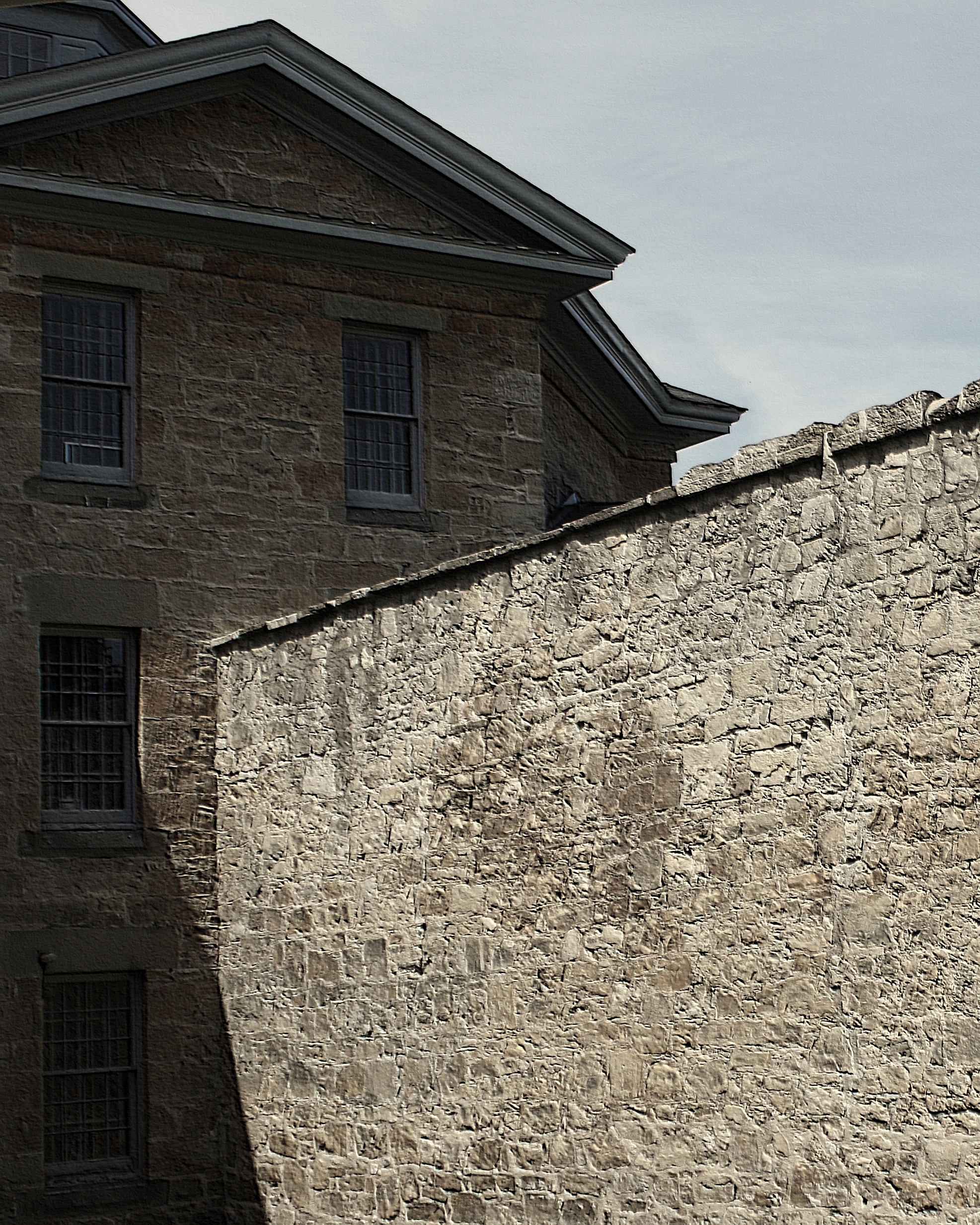
The following blog posts were originally published by Carling Marshall-Luymes on her personal blog while she was an intern for the Huron County Museum & Huron Historic Gaol in 2007. You can see the exhibit on the history of capital punishment on permanent display in Cell Block 1 when you visit the Huron Historic Gaol today.
I’ve begun my internship at the Huron County Museum and Historic Gaol and I’m currently researching public hangings in (Upper and Lower) Canada for an upcoming exhibit. Three men were hanged at the Gaol in Goderich (1861, 1861 and 1911), all for murder; the first two were public hangings. I’ve set out to answer, among other things, why people were hanged, why such large crowds of spectators came out to watch hangings and why public hangings. These began as easy questions, to which I expected to find straight forward answers, but their answers are proving less simple than I had anticipated and I intend to shift the nature of my blog by writing about my research.
I work where Steven Truscott was incarcerated at age 14 during his 1959 trial for the rape and murder of schoolmate, 12 year old Lynne Harper, and became the youngest Canadian sentenced to death before his sentence was commuted to life imprisonment. Thinking about Steven Truscott everyday and seeing the emotional response visitors have to his case, my assumption was that capital punishment (both public and behind prison walls) was abolished on the basis of humanity towards the convicted; but my research as opened my eyes to a lot of arguments for the abolishment of capital punishment.
John Radclive, Canada’s first professional hangman was appointed in 1892 after carrying out several successful hangings for various Ontario sheriffs. Most career hangmen were destroyed by their profession and Radclive was no exception. During his career Radclive began a ritual of finishing a full bottle of brandy after each execution; he drank excessively both before and after hangings. In a Star interview in Dec. 1906, Radclive spoke of himself: “I am a sick man, too sick to talk,” he said. “I have been sick a long time, very sick.” He died in February 1911, at 55, of cirrhosis of the liver at home in Toronto.
There seems to be some similarity between Radclive and the hangman hired by the Huron District gaol governor {William] Robertson [in 1861] – alcoholism. In a telegram discussing the hangman’s journey from Toronto to Goderich, Robertson is warned that the hangman is an unreliable drunkard, and a turn-key is thus being sent with him.
In an interview with psychologist Rachel MacNair, Radclive described his internal torment:
“Now at night when I lie down,” he said, “I start up with a roar as victim after victim comes up before me. I can see them on the trap, waiting a second before they meet their Maker. They haunt me and taunt me until I am nearly crazy with an unearthly fear.”
Public attitudes towards the hangman must have furthered his torment. In 1900 the Star wrote of Radclive: “If he were a man of delicate sensibilities he would not be the hangman. He is a necessity in our system, but he should be treated as if he is the hole in the floor of the gallows.” At the same time, a 1910 Globe editorial wrote on the role of the hangman: “It is an unpleasant subject, but it is a public question, and it is a public function for which all are reposnsible.” At a time when the population supported capital punishment I find it ironic that the they were so repulsed by the man carrying out their will. Countless people have to be involved in an execution by the state, directly or indirectly and in addition to the hangman, and I’ve realized the significance of acknowledging the psychological stress on these men and women as part of the case against capital punishment.
– – – – – – – – – – – – – – — – – – — – – – – – – – — – – – – – – – – – – – –
The agony of the executioner; How a Parkdale man became our first official hangman and was destroyed by it. By Patrick Cain; [ONT Edition]
PATRICK CAIN Patrick Cain. Toronto Star. Toronto, Ont.: May 20, 2007. pg. D.4
Capital Punishment in Canada. Department of Justice http://www.justice.gc.ca/en/news/fs/2003/doc_30896.html
Where was Canada’s last public hanging? This is a question I’ve been trying to answer for our upcoming exhibit; but the answer has proven less straight forward than I anticipated. Yesterday, I was excited to find an An Order-in-Council, signed by John A MacDonald legislating the end of public hangings in Canada. Though hangings continued behind prison walls until 1962, was Canada’s last public hanging at our Huron County Gaol?
The hanging of Patrick Whelan at the Carleton County Jail on February 11 1869 for the assassination of MP and Father of Confederation D’Arcy McGee [left] is mistakenly claimed to be the last public hanging in Canada. Ten months later, on December 7, 1869, Nicholas Melady was hanged in Goderich at the Huron District Gaol for the murder of his father and step-mother. A recently published book detailing the crime and hanging, by Melady’s descendant John Melady, is titled Double Trap: Canada’s Last Public Hanging.
However – in 1869, Canada only included the provinces of Ontario, Quebec, Nova Scotia and New Brunswick. Hangings continued in public in areas that had not yet entered Confederation, such as the prairie provinces and BC.
While hangings were performed behind prison walls, the public was often still able to watch.
- The Sheriff could and often did invite interested spectators and newspaper reporters.
- Spectators were known to climb any nearby structure that would allow them to see into the yard. At the Montreal execution of Timothy Candy in 1910, dozens of people viewed the hanging from the roofs of adjoining houses. In this photo of the 1904 execution of Stanislau Lacroix in Hull, you can see the crowds on the nearby rooftops and telephone poles.
- Crowds of excited spectators were hard to stop. In March 1899, 2,000 uninvited guests stormed a Montreal gaol to witness a hanging, joining the 200 witnesses already inside the prison yard.
- The law was not always followed.
- The hanging scaffold was sometimes built taller than the prison walls to allow for public viewing.
An elderly museum patron noted several years earlier that he recalls watching gallows being built in public in Hamilton while riding the streetcar. Was this a case where the gallows were built higher than the prison walls to allow curious spectators a view? or was the law simply ignored? I’m not sure I can claim for certain that the hanging of Melady in Dec. 1869 was the last public hanging even in the provinces within Confederation at the time.
A clarification on the legislation abolishing public hanging in Canada… I initially made the same error that John Melady makes in
Double Trap and attributed the move of hangings behind prison walls to Order-in-Council 1021. Upon a careful reading of the Order-In-Council, which, after I came to understand the nature of Orders-In-Council more clearly, was in accordance with an act of Parliament, “Act 32-33 Victoria c. 29,” I realized that the Order-In-Council was only supplementing the legislation by creating additional rules and regulations related to hanging, including:
- Executions were to be carried out within the walls oft he prison in which the offender was confined at the time of execution
- Executions should take place at 8 am
- Hanging should continue to be the mode of execution
- A black flag was to be raised after an execution and remain up for one hour
- The prison bell (or the bell of a neighbouring church) was to ring for 15 minutes before and 15 minutes after an execution
After receiving a copy of “Act 32-33 Victoria c. 29” from the Library of Parliament it’s clear that Section 109 of the Act, which went into effect 1 January 1870, is actually the legislation ending public hanging, declaring:
“Judgment of death to be executed on any prisoner after the coming into force of this Act, shall be carried into effect within the walls of the prison in which the offender is confined at the time of execution.”
Between the years of 1850 and 1870, public executions ended in countries such as the German states, the Netherlands, Austria, and Spain, as well as England and Canada.
The end of public hangings in Canada under Act 32-33 Victoria chapter 29 brought relief to the general public but I was surprised to find that this was not because they disagreed with the death penalty (though some did), but largely because of the crowds that came to watch the executions.
People argued that public hangings should end for many reasons, and the ‘hanging crowd’ was a significant reason. People complained about rowdy crowds that showed up to watch hangings. When public hangings ended in England, the Times of London reported:
We shall not in the future have to read how, the night before the execution, thousands of the worst characters in England, abandoned women and brutal men, met beneath the gallows to pass the night in drinking in buffoonery, in ruffianly swagger and obscene jest.
Many polite Victorians felt that ending public hangings would advance civilization and they themselves felt uncomfortable watching hangings; at the same time they found the rowdy crowds’ fascination with death, obscene language and gestures, and disrespect for authority embarrassing.
Many also felt that death wasn’t solemn enough: the carnival-like atmosphere among the crowds that watched the executions prevented people from being deterred to commit crimes. It was also argued that by watching hangings, people were familiar with death and would no longer value human life or feel compassion towards others.
What I was most surprised to find that was by ending public hangings, the perpetuation of the death penalty was actually ensured. If people did not have to deal with the crowd, they would no longer have a reason to protest hangings. By making the hangings private, the death penalty could continue.
Jesse Imeson was formally charged yesterday at the Goderich courthouse, about a two blocks away from where I was working at the Historic Gaol. By my lunch break, which I took at a shady picnic table on the courthouse grounds, the media circus had died down. Later, listening to the news, I was surprised to hear not that a crowd had gathered that morning by the courthouse, but that they had shouted at him and called out to reinstate the death penalty.
While researching the exhibit on public hanging, I was curious about what Huron County residents felt about the death penalty then, and I was surprised by a 11 Dec 1869 editorial in the Seaforth Expositor we had in our archives. The editor argued that public execution wasn’t an effective deterrent against crime, and crude and rowdy crowds had become hardened by watching public executions.
On the Melady hanging, he wrote:
We hope in the name of God – in the name of humanity – that capital punishment may soon be abolished in this ‘our Canada,’ and placed where it ought to be, with the grim relics of barbarous times.
I was hoping for a variety of letters to the editor in response, but as they were uncommon in this paper at the time, there was only one that seems to favour the death penalty:
The man that violates the law is a criminal, and is a scoundrel of whom we should get rid of in the most available way.
As legislation mandating that executions move behind gaol walls came into effect 1 January 1870, I was researching under the assumption that most hangings before this date were outside gaol walls. I was interested to find
The Globe article describing the 1868 hanging of John Hoag at the Walkerton gaol (Bruce County had only recently separated from Huron County, therefore this execution wasn’t in Goderich), where the scaffold seems to have been built higher than the walls, but not allowing to see the convicted after he had dropped:
The Sheriff then examined the fatal apparatus; the masked executioner did his work; and the body dropped within the gaol wall, depriving the gaping and motley crowd, some of them women with children in their arms, of the awful spectacle of the body quivering on the rope for a few minutes, perhaps five or six. A number of people were inside the wall and saw the whole [The Globe, 16 December 1868].
At this point I was concerned that perhaps the Melady hanging at our Huron County gaol may have also only been ‘semi-public’ and maybe not the last officially public hanging. I was found The Globe article on the Melady hanging [though blurry to read], which states that Melady was taken from ” the northern exit of the prison, ascended a temporary staircase, and took his position on the scaffold, which was on a level with the prison wall” and suggests that the hanging was entirely public.
However, there is always the possibility that though Melady ascended the stairs to the gallows publicly, because the scaffold was level with the prison wall, the trap could have been on the opposite side of the wall, and he could have dropped out of public view. It seems unlikely however that, as I mentioned in a previous post, both the Seaforth Expositor and The Globe would have made reference to it as the last public hanging if it was only ‘semi-public’ like the Hoag hanging.
by Sinead Cox | Jun 21, 2024 | Artefacts, Blog, Collection highlights, Special Events
July 9th is Cow Appreciation Day and summer student Chloe Oesch has been exploring the museum’s collection for stories about cows and delicious local dairy products from Huron County’s past! If you are interested in finding more cow-related artifacts, you can search our online collections database from home!
Andrew Dairy was a Goderich dairy company from 1949 to 1977, run out of “The Andrew Dairy Bar” located at 45 West St. Operated by Amos Andrew, Andrew Dairy provided fresh milk to many Goderich locals through their delivery service.
The dairy bar on West Street also had its own separate storefront that operated much like a café. On one of their matchbooks the Museum has in its collection, they advertise “Neilsons Ice cream” and “Light lunches”. We can also see that they accepted bottle returns from customers, as they advertise the phrase “Drink up, we need the empties.”
Their operation was completely local as well, their milk being “supplied by your local neighbors” as seen in their 1959 newspaper advertisement. The Huron County Museum is in possession of many items from this local business. In addition to several glass milk bottles, the Museum was able to preserve one of Andrew Dairy’s milk delivery wagons.
This red and white milk wagon, pictured below, was used for deliveries by Andrew Dairy until 1961. The wagon was possibly built by John Pedersen, a blacksmith from London from about 1939. This wagon was the last of the horse-drawn milk wagons to be used in this part of Huron County. The wagon was pulled by a single horse and had a 20 lb tethering weight used to stop the wagon and horse when delivering milk to customer’s homes.
Although the days of the milk man have long gone past, the Huron County Museum will still be celebrating our local dairy industry on Tuesday, July 9, for Cow Appreciation Day in 2024! The museum will have a local dairy educator from the Dairy Farmers of Ontario, and several dairy and cow related items on display from our collection. And, as always, our iconic two headed calves will be on display at the museum for you to visit!
M963.0005.001. This artifact is stored at the museums offsite storage.
2020.0027.029. Advertising the milk bar in Goderich.