by Amy Zoethout | Oct 21, 2021 | Blog
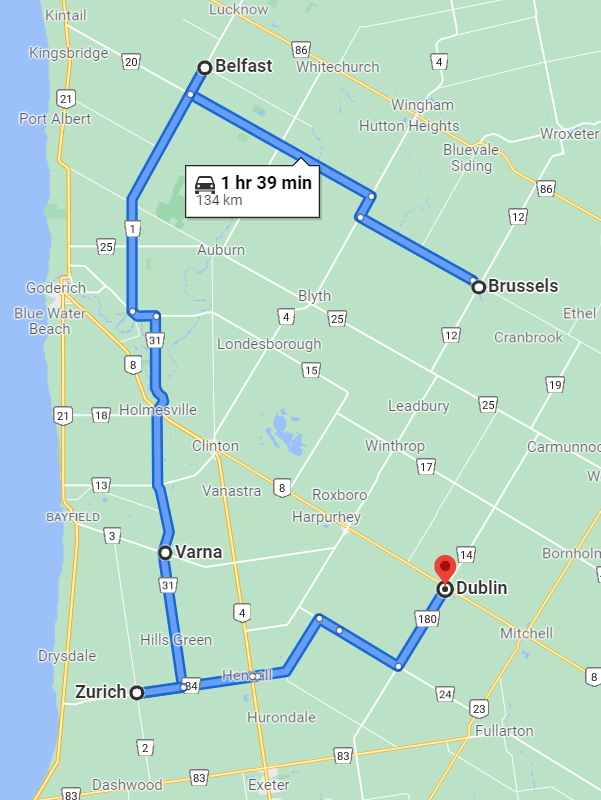
Google Maps, 2021
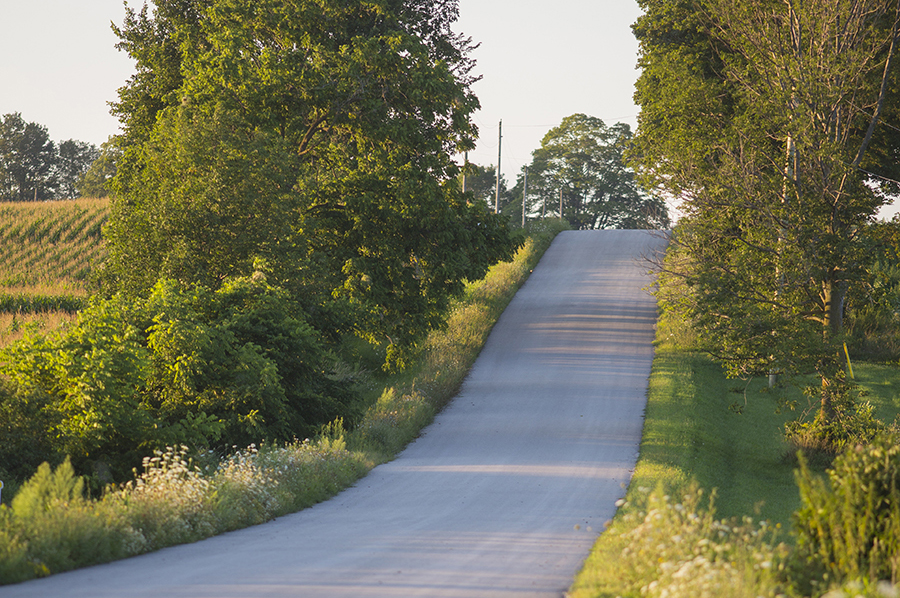
Although some travel is beginning to return, many people are not ready for a full European vacation just yet. But did you know that you can take a European city tour without leaving Huron County? The Huron County Museum’s acting Education & Programming Coordinator Dan Genis has put together a great fall road trip around the County where you can visit our local ‘European’ cities.
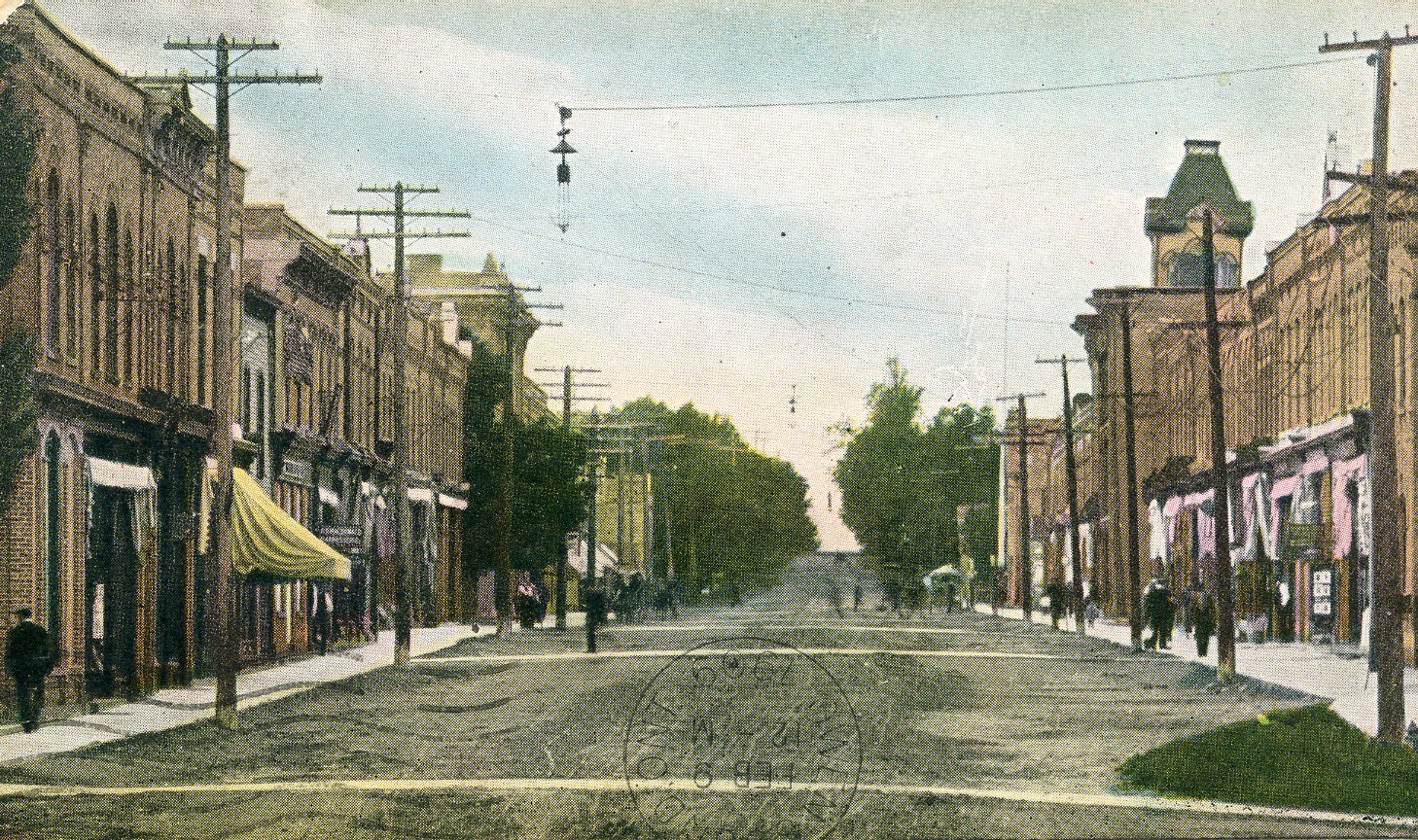
Postcard of Main Street, Brussels, ON. Huron County Archives
Brussels, Huron East, Huron County, ON: Founded as Ainleyville in 1855, Brussels was chosen by railway workers as the name for the new train station when the railway came to town. In 1872 the village was officially incorporated as Brussels and it quickly grew into a prosperous community with many industries, churches, and a main street of fine brick blocks. For more on the history of Ainleyville/Brussels, see Maddy Gilbert’s blog. Today Brussels features fantastic accommodations, delicious restaurants, and unique shops and studios. Take a Historic Walking Tour, stroll through the Brussels Conservation Area, or picnic by the dam in this enchanting village.
European version: Brussels, Belgium: The capital city of Belgium, the headquarters for NATO, and the de facto capital of the European Union, Brussels is one of the most important and multicultural cities in the world. The city is also lined with art galleries and cafes, with beautiful art nouveau streetscapes and a charming medieval town centre.
Better version? Brussels, Huron County – Too many politicians in the Belgian version.
Belfast, Ashfield-Colborne-Wawanosh, Huron County, ON: First called Newcastle, the name was changed to Altonville when the settlement was registered in 1858. Soon after many families from the north of Ireland settled in the area, and by 1879 the village name was recorded as Belfast. At one time Belfast had a post office, general store, blacksmith shop, hotel and tavern, and one of the first Orange Lodges in the county. Although only a few structures remain in this four-corner community, it lies in the centre of an oasis of quiet country and cottage life. Explore the picturesque countryside, check out the fall colours in the Lake Wawanosh Conservation Area (parking at 85442 Creek Line), or if it is the end of the day, enjoy a breathtaking Huron County sunset.
European version: Belfast, Northern Ireland, United Kingdom: The capital and largest city in Northern Ireland, Belfast has shaken off its industrial and troubled past to become known as a hip and vibrant party town. It also boasts a state-of-the art museum that tells the story of the ill-fated RMS Titanic, which was built in the shipyards there.
Better version? Belfast, Huron County – Huron County’s Belfast was in no way connected to the Titanic sinking.
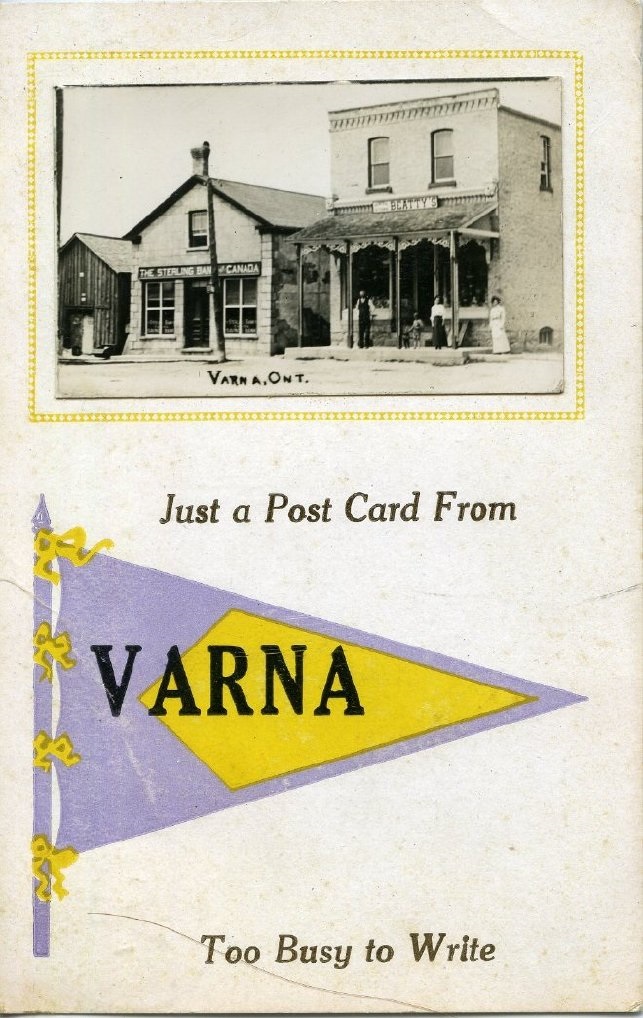
“Just a Post Card from Varna…Too Busy to Write”, dated Feb 5, 1914. Black and white photo of Beatty’s store and the Sterling Bank of Canada. Huron County Archives, 2008.0032
Varna, Bluewater, Huron County, ON: Varna was named by settler Josiah Secord after the Black Sea city that was home to the French and British fleets during the Crimean War. Although there already existed a log school and tavern when Secord arrived in 1854, he opened the first store and post office in the village. It was not long before a cooper, hotel, blacksmith, saw mill, and Anglican church opened and Varna was a bustling community. Today Varna is home to an outstanding craft brewery, picturesque hiking trails at Bannockburn Conservation Area and the Varna Nature Trails, all within 10 minutes of beautiful Lake Huron.
European version: Varna, Bulgaria: Bulgaria’s third largest city sits on the Black Sea and dates back to Ancient Greek and Roman times. Part port city and part seaside resort, Varna has vast parks, large beaches, and an impressive archeological museum and Roman bath complex.
Better version? Varna, Huron County – The Black Sea is too salty.
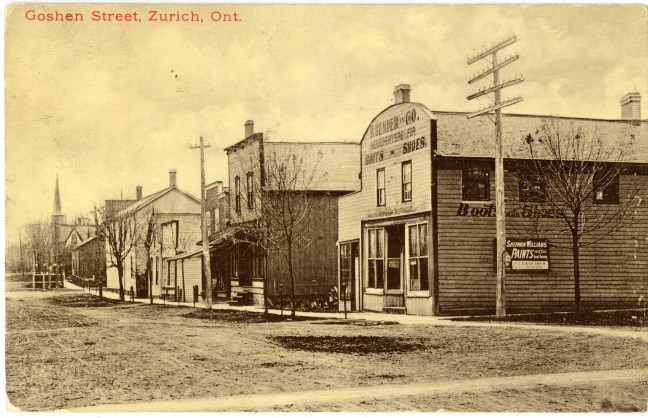
Postcard of Goshen Street, Zurich, ON, dated July 4, 1910. Visible businesses P. Benders and Co. headquarters for Boots and Shoes. The steeple in the background is the Lutheran Church. Huron County Archives, A991.0052
Zurich, Bluewater, Huron County, ON: Zurich was founded in 1856 and soon boasted a mill, hotel, schoolhouse, and the Hay Township Hall. Known for its Swiss and German heritage, this influence can be seen in the impressive clock tower at St. Peter’s Lutheran Church, which was designed by George Hess and was completed in 1878. Today it is one of only three “Canadiana Tower Clocks” in Canada still operating as it was designed to run. The nearby artisan boutiques, wineries, fruit markets, and craft brewery make Zurich a charming and unique stop.
European version: Zürich, Switzerland: One of Europe’s financial centres and the largest and wealthiest city in Switzerland, although not the capital (that would be Bern). Zürich manages to combine a historic city centre full of winding streets and churches with a modern hip and artsy culture.
Better version? Zurich, Huron County – Switzerland is notoriously hilly – no thanks.
Honourable Mention: Dublin, Perth County, ON: Founded as Carronbrook in 1854, settler Joseph Kidd changed the name to Dublin in 1878 after his hometown. When salt was discovered down the road in Seaforth, Kidd piped the salt brine to an evaporation plant he had built in Dublin. He also constructed a sawmill and a business block on the main street. Today, Dublin is known as “Ontario’s Furniture Village”, and predictably has some great shops selling furniture and housewares. Although technically just over the border in neighbouring Perth County, Dublin has historical ties to Huron County and gets an honourable mention here.
European version: Dublin, Republic of Ireland: From its Gaelic and Viking beginnings to its 18th century heyday, all of the medieval castles and cathedrals make Dublin feel like an open-air museum. It also features over 1000 pubs along with Guinness’ famous St. James’s Gate Brewery, and has a world class live music scene to boot.
Better version? Dublin, ON– Far fewer U2 cover bands here.
by Amy Zoethout | Oct 7, 2021 | Blog
If you’re out touring County Roads this fall, you may notice some new brown and white heritage signs marking Huron County’s historic settlements. The project was initiated by the County’s Public Works Department as a way to remember these communities that once existed in Huron. To date, 23 signs have been erected, including three signs marking communities that still exist, but under a different name. Our student Maddy Gilbert explores the history of some of these settlements.
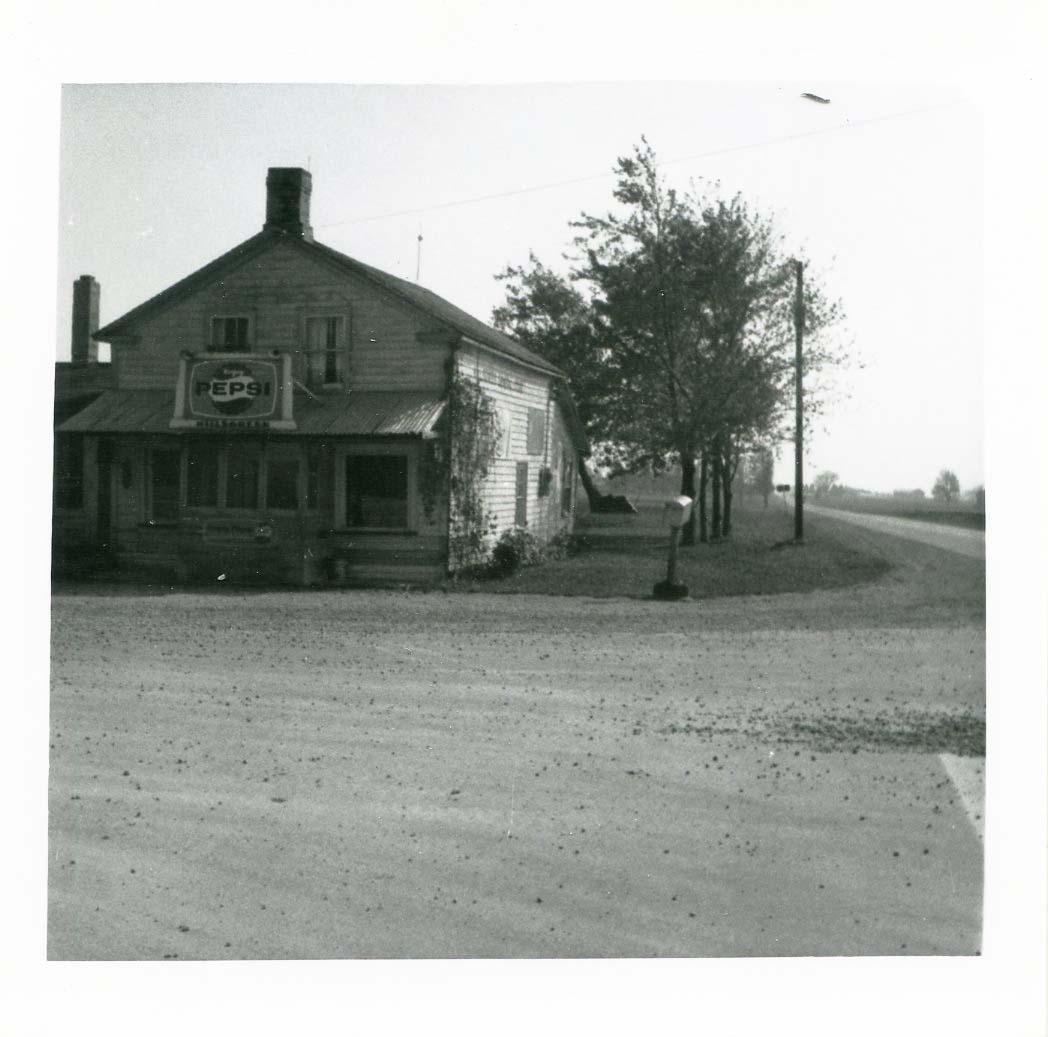
Black and white photograph of a two story general store with wooden siding. Written on the back of the photo is: “Hillsgreen Store North Boundary Pt. Lot 11.”
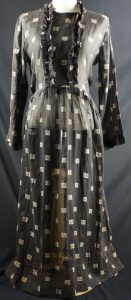
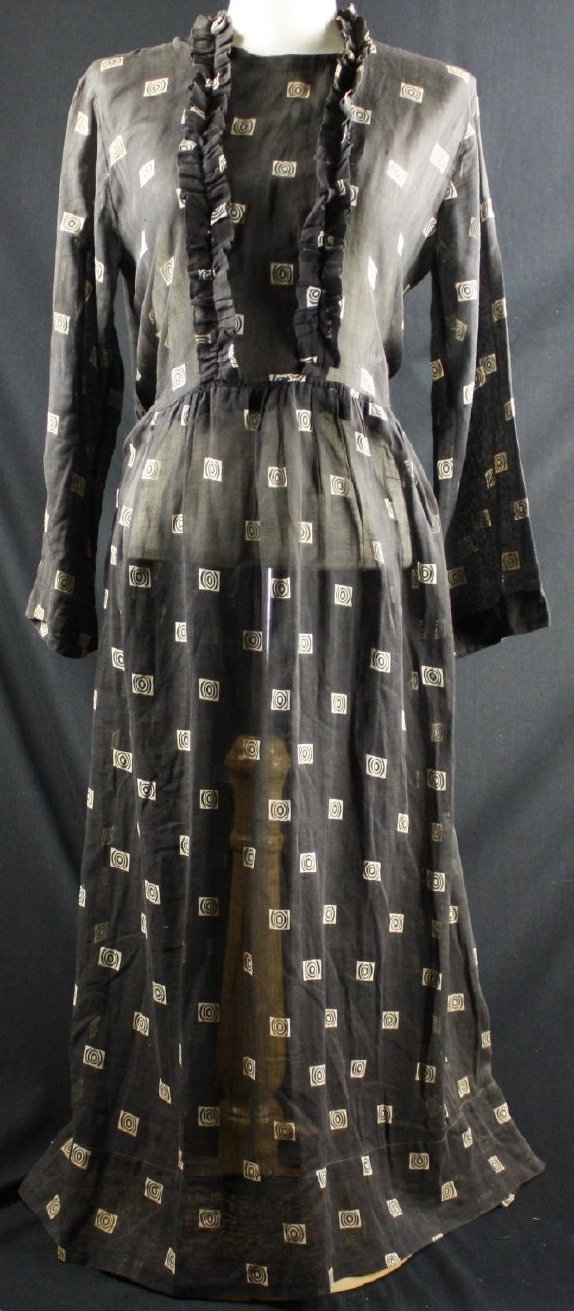
Lady’s dress worn by Catherine (Clausius) Reichert, Hillsgreen, ON. M981.0027.001
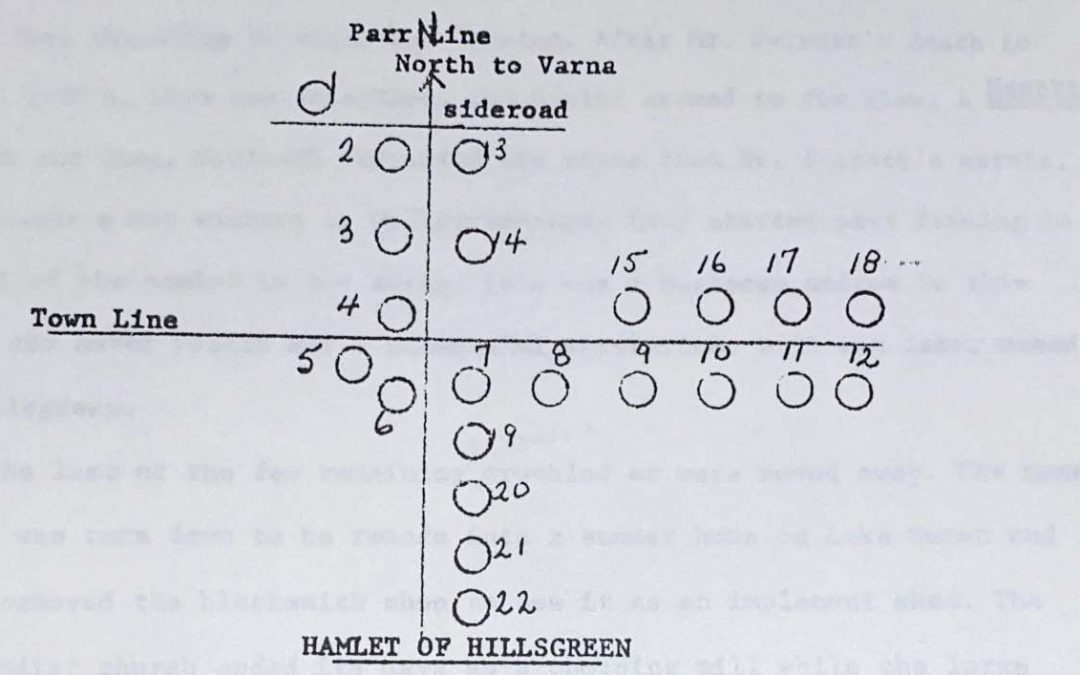
Hillsgreen, which has also been spelled as two words, was located at the crossroads of Parr Line (County Road 31) and Kippen Road. It is on the route from Seaforth to Highway 21 and Lake Huron.
Hillsgreen was settled by the Hills family, and the hamlet kept the family’s name. The settlement had a population of 50 people by 1876, and was the community centre up until the advent of rural mail delivery.
Sir John Wilson was the most famous one-time resident of Hillsgreen, leaving to become the Chief Editor of the Toronto Globe. Sir John was knighted by His Majesty King George V in 1913, and received an honourary degree from Queen’s University.
The reason for the settlement’s decline came as the residents of Stephen and Hay Townships no longer needed to travel all the way to Hillsgreen to pick up their mail. With the ease of automobile travel, residents could pass Hillsgreen on the way to it’s larger neighbours, Dashwood, Zurich, Hensall, and Exeter.
Hillsgreen is just an intersection now, with nothing to show what once was, except for the historic sign to remember its past.
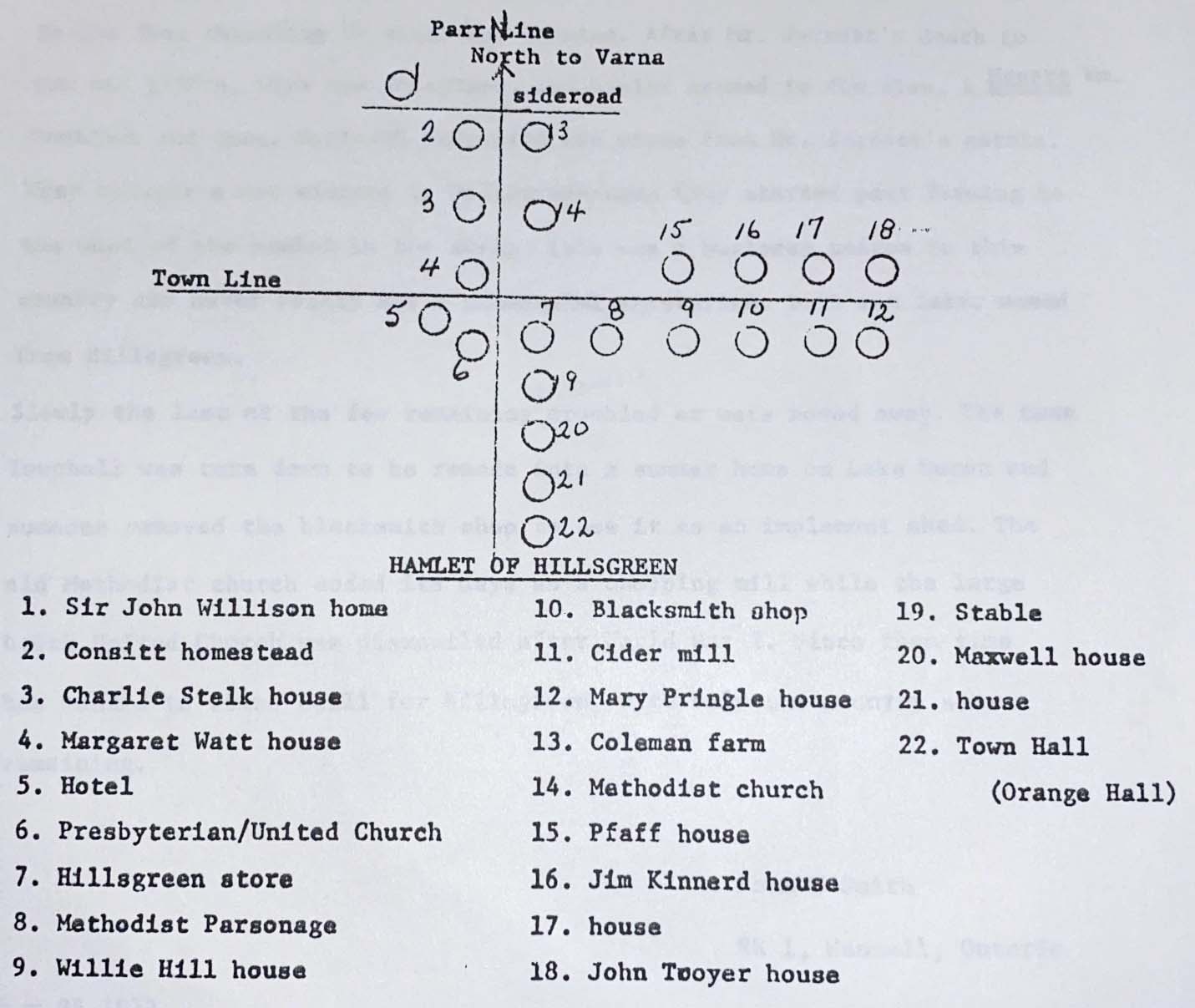
This Hillsgreen Town Plan was made by John W Smith, with help from Annie Consitt in 1973.
Sources:
- Hillsgreen Research from Jack Smith, May 1973. Kept in the Huron County Museum Archival Collection, 110 North St., Goderich, ON.
- Gibb, Alice. “Hillsgreen May Be Tiny, but It Had a Lively Store.” The Huron Expositor , 19 July 1971. From the Digitized Newspaper Collection at the Huron County Museum
by Amy Zoethout | Aug 26, 2021 | Blog, Investigating Huron County History
Written by Exhibit & Programs Assistant Karsten
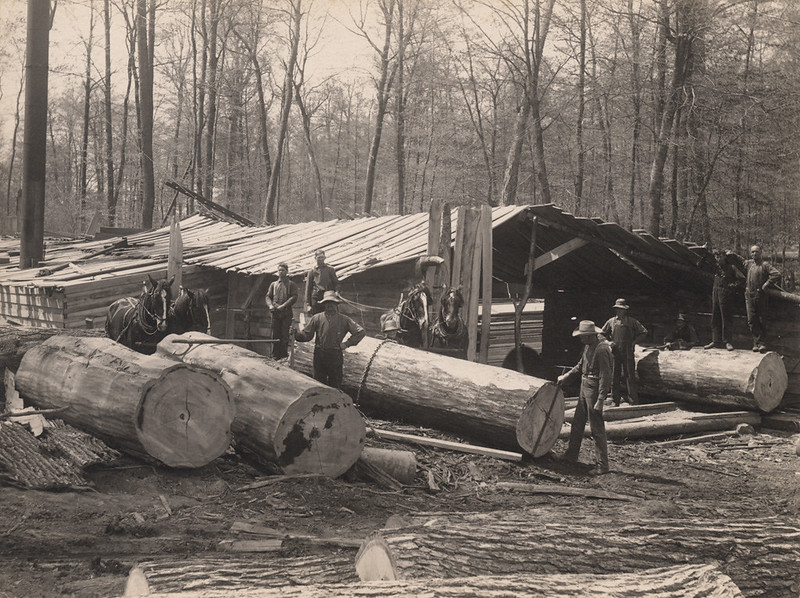
When hiking through or even driving past any of Huron County’s forests, you could easily believe that these forests have remained relatively unchanged for time immemorial. However, Huron County’s forests have had a long and, at times, tumultuous history.
Most of southwestern Ontario’s native tree species were in place by around 9000 BP, and until fairly recently, there was minimal disturbance of the local environment. The Anishinaabe inhabitants of what is now Huron County lived a primarily hunter-gatherer lifestyle, taking from the land only what was needed. This was supplemented with small garden plots in the summer. They also made extensive use of canoes, which of course did not require the forest clearing that roads do. Hunting, gathering, and navigating via the waterways are examples of a way of living which developed over centuries to work with the land, not against it. This is in stark contrast to how the land was used after European arrival.
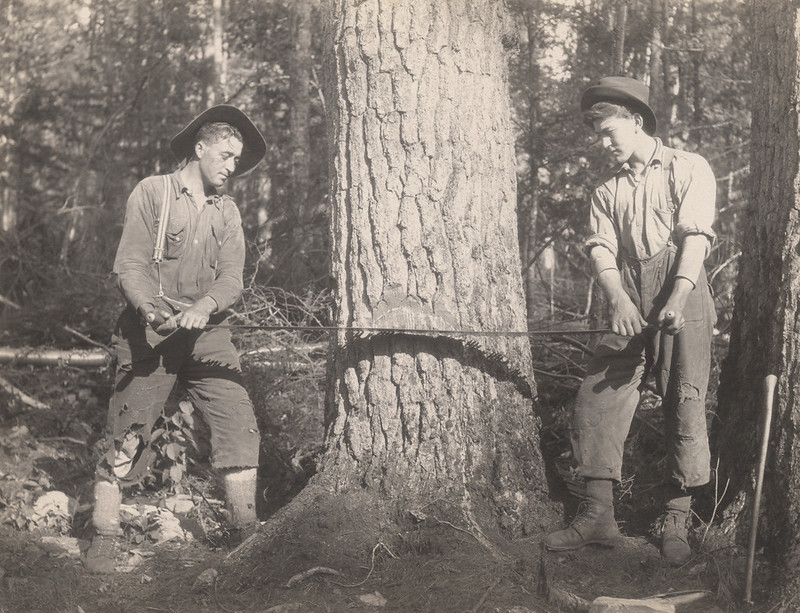
RR Sallows photograph of two men cutting a pine tree with a cross saw, 1917. 0362-rrs-ogohc-ph
European settlers began to arrive in the early 1800s. At that time the forests displayed a great diversity of species including oak, pine, cedar, sugar maple, yellow birch, swamp elm, beech-tree, white ash, black elm, red elm, viscous elm, walnut, butternut, “hollow-tree”, and cherry tree. In addition to having a great diversity of species, many of the trees are described as measuring 50 to 60 feet from the base to the lowest branches. The settlers quickly set about clearing the land to harvest timber and make farms, taking advantage of the “rights and responsibilities granted them as private landowners”. By the end of the 19th century, in an effort to build profitable farms and better lives for themselves and their families, European immigrants had cut down the vast majority of old growth forests throughout southern Ontario. Approximately 15 percent of Huron County is now forested, and much of that is the result of later conservation efforts.
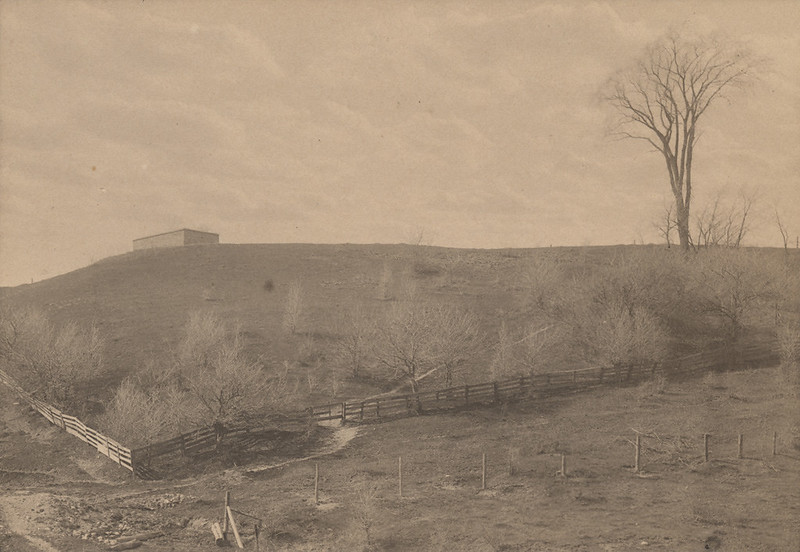
RR Sallows photo of Tiger Dunlop Tomb, Gairbraid. Date unkown. 0346-rrs-ogohc-ph
By the late 19th century, the removal of forest cover, particularly around watersheds, was beginning to have harmful effects on agriculture in southern Ontario. In the summer, droughts would often last two to three weeks; in the winter, roads would have to be redirected over fields as they became impassible due to unimpeded blowing snow and drifting, which could bring about serious loss for the farmer. Realizing the necessity of forests, a few groups such as the Fruit Grower’s Association of Ontario (FGAO) began encouraging farmers to plant trees on their property, as well as lobbying for greater restrictions on cutting trees. In the case of the FGAO, attention was often placed on planting “natural fences” on the edges of farms. With an increasing popularity of scientific agriculture and growing influence of the Ontario Agriculture College, the following century would prove to show increased conservation efforts as understandings of ecosystems became more common. Moving into the first half of the 20th century, more groups formed and began working to increase the amount of forest cover in Ontario. Two of the most important were the Ontario Conservation and Reforestation Association (OCRA) and the Ontario Crop Improvement Association (OCIA), both forming in 1937 after a devastatingly warm summer.
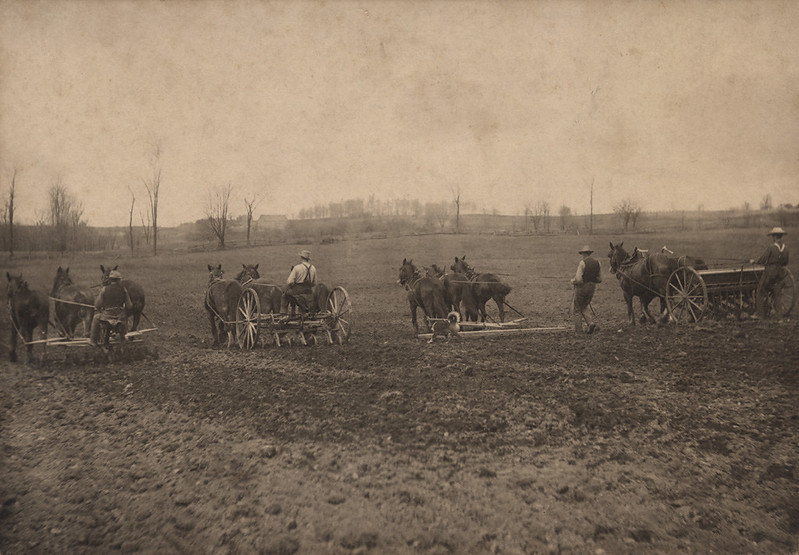
RR Sallows photo of four farmers with teams of horses and implements working in field of peas from 1908. 0335-rrs-ogohc-ph
In Huron County, a testament to 20th century reforestation efforts is the 13 county forest tracts which total over 1,500 acres. Many of these tracts were donated by private landowners who were aware of the importance of the forests. These tracts provide environmental protection, as well as recreation for local residents. Another lasting result of these efforts is the tree bylaw, which was passed in 1947 with the support of farmers and landowners. This bylaw regulates the harvesting of trees in all woodlots which measure over half an acre in size.
Vast amounts of Huron County’s forests were lost in the process of colonization and farm-making. Thanks to historic and on-going conservation efforts though, approximately 15 percent of Huron County is currently forested. With that in mind, be sure not to take what you find for granted next time you visit one of Huron County’s forests.
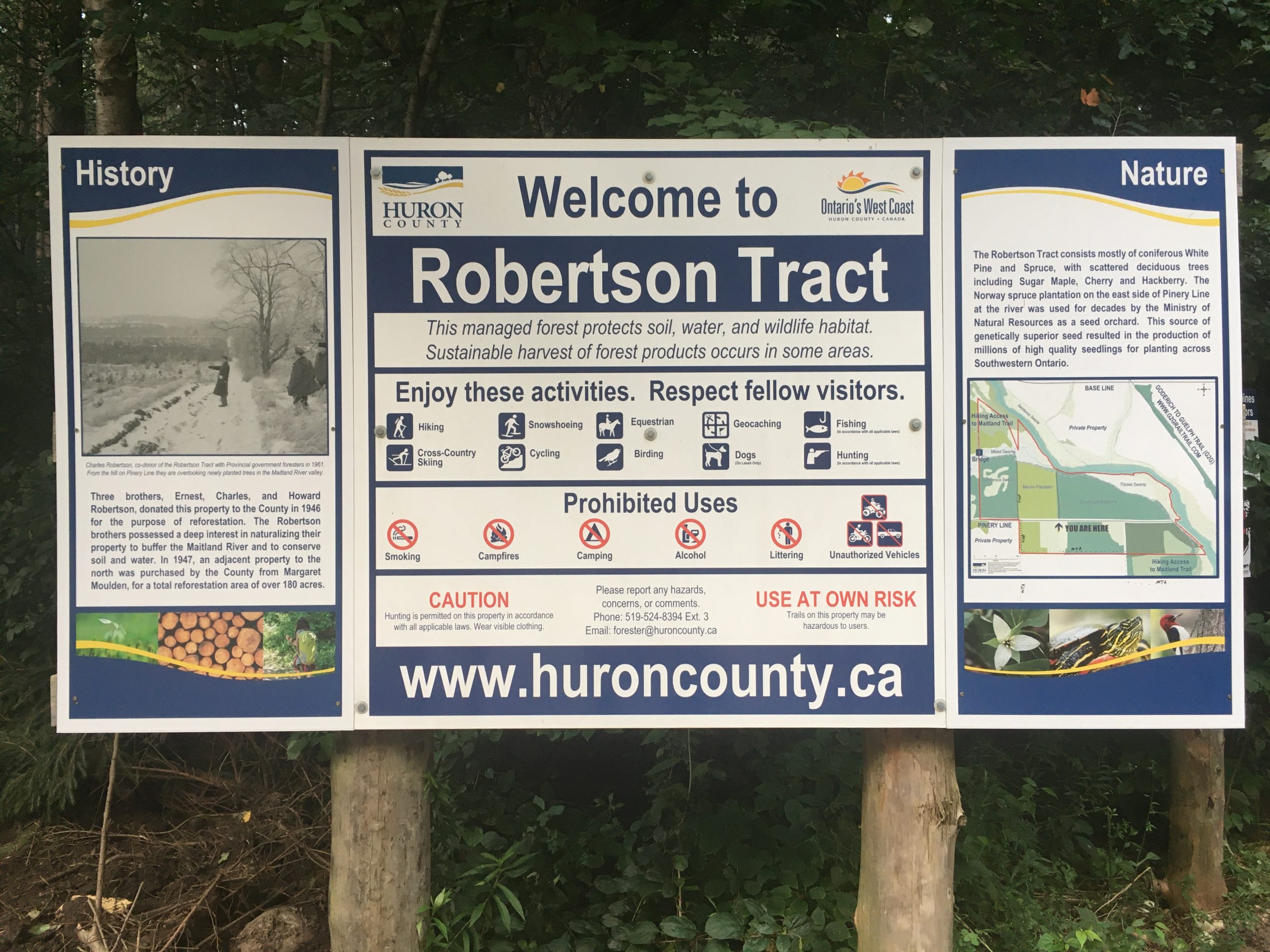
One of the County’s forest tracts, the Robertson Tract, today.
Sources
Kuhlberg, Mark, ed. “Challenges, Conflicts and Cooperation: The Ministry of Natural Resources and Forestry’s Complicated History with Ontario’s First Nations.” Forest History Society of Ontario. Ministry of Natural Resources and Forestry, 2017. http://www.ontarioforesthistory.ca/files/mnrf_history_relations_with_first_nations.pdf.
Plain, David D. A Brief History of the Saugeen Peninsula. Trafford Publishing, 2018.
Suffling, Roger, Michael Evans, and Ajith Perera. “Presettlement Forest in Southern Ontario: Ecosystems Measured through a Cultural Prism.” The Forestry Chronicle 79, no. 3 (May 2003): 486–87. https://doi.org/https://pubs.cif-ifc.org/doi/pdf/10.5558/tfc79485-3
Bowley, Patricia “Farm Forestry in Agricultural Southern Ontario, ca. 1850-1940: Evolving Strategies in the Management and Conservation of Forests, Soils and Water on Private Lands.” Scientia Canadensis 38, no. 1 (2015): 22–49. https://doi.org/10.7202/1036041ar
Pullen, David. “Forests For Our Future” Management Plan for the County Forests, Recommendations for Tree Cover Enhancement. Huron County, 2014. https://www.huroncounty.ca/wp-content/uploads/2016/05/Forest_For_Our_Future_2014-2033.pdf
Huron Stewardship Council, https://www.huronstewardship.ca/nature/forests/
Forestry Services, https://www.huroncounty.ca/plandev/forestry-services/
by Amy Zoethout | Aug 16, 2021 | Archives, Blog
Livia Picado Swan, Huron County Archives assistant, is working on the Henderson Collection this summer and highlighting some of the stories and images from the collection.
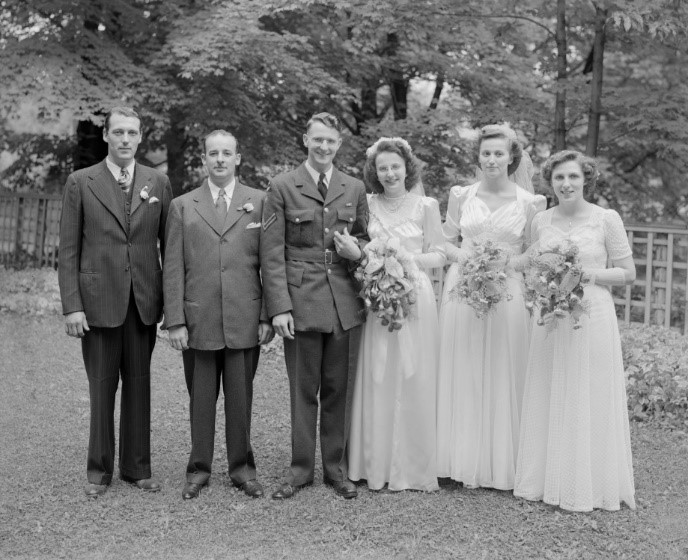
In keeping with our August theme of making lemonade from lemons, we take a look at some of the wedding photos taken by Gordon J. Henderson during the Second World War. The photographs highlight some of the men and women of the Royal Canadian Air Force who celebrated their marriages while stationed at one of Huron County’s air training schools. So far, staff know of 18 different weddings that Henderson photographed, which are all available to be viewed online.
During the Second World War, Henderson, travelled to air training schools in Goderich, Port Albert, and Clinton taking pictures of classes and other base activities. Many airmen came to his studio in Goderich to have their portraits taken to send home to family and friends. The Henderson Collection also includes wedding portraits, candid shots, and correspondence related to WWII air training in Huron County.
Haddy wedding – A992.0003.202a
Fannie Lavis and Cpl. Wesley F. Haddy, from Seaforth, were married on Aug. 6, 1945. Miss Lavis had two parties hosted for her by her friends before her wedding, including a crystal shower, according to the Huron Expositor, as found in our online collection of Huron Historic Newspapers.
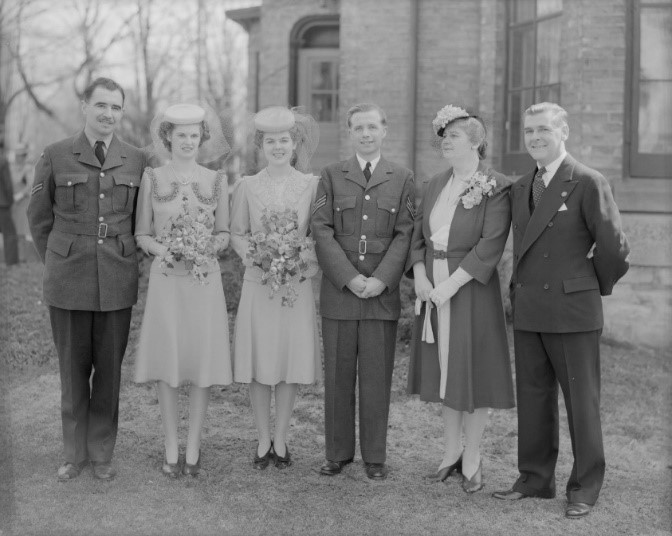
Holmes Wedding – A992.0003.179a
Sgt. Cecil R. Holmes married Lorraine Eleanor Atkinson on June 10, 1944. Their wedding was held in the Dundas Central United Church in London, and the Clinton News Record reported on the event. During the 1940s, newspapers would describe the clothing, decorations, and events at the ceremony for their readers.
“The Church was attractive with Peonies, Ferns, and Palms, and was lighted with tapers held in candelabras. C.E. Wheeler was at the organ and the soloist was Miss Edna Parsons, who sang ‘Because’. The bride was given in marriage by her Uncle. A.G. Atkinson of Detroit. She was dressed in a filmy white net with panels of brocaded net adored with bows of white velvet and orange blossoms in the full skirt, which ended in a slight train. The dress was fashioned with sweetheart neckline and long sleeves. An illusion veil fell in three lengths from a flowered Headdress and she carried American beauty roses, “ (As published in the Clinton News Record, 1944-06-15, pg. 8, from our online collection of Huron Historic Newspapers)
Note that the dress in the description doesn’t match the image. It’s likely that Mrs. Holmes wore a different gown for her wedding than she did her wedding pictures. Wedding dresses during the Second World War were often shared or passed between women to aid in the war efforts and to avoid using excess fabric when rations were in place. Other women would simply wear a fine dress from their closet instead of a dress specifically meant for the ceremony.
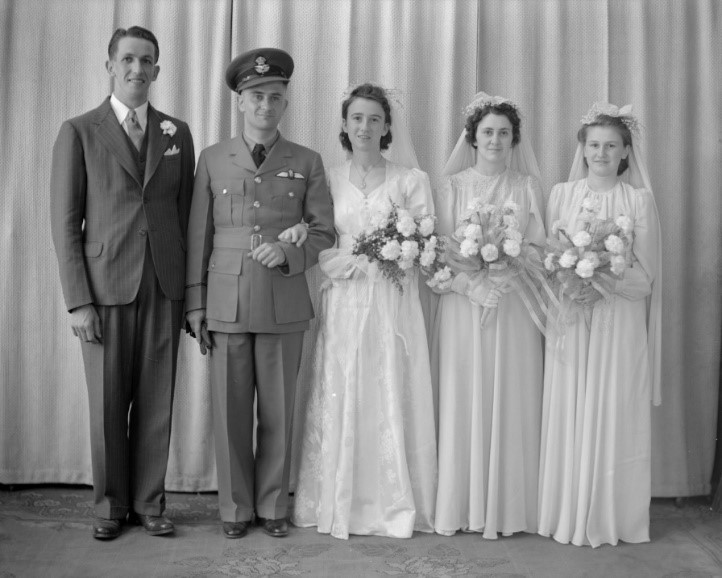
Wagner Wedding – A992.0003.178a
Helen Marguerite Miller and Roy Wagner were married on June 5th of 1945, at Wesley Willis United Church in Clinton, ON. They went to the home of the bride’s family for a buffet lunch and reception.
“The bride, given in marriage by her father, wore a floor length gown of white brocaded satin, fashioned on princess lines with a sweetheart neckline. Her embroidered floor length veil was caught with orange blossoms and lily of the valley, and she carried a bouquet of white carnations, bouvardia, and lily of the valley.” (As published in the Clinton News Record, 1943-06-10, from our online collection of Huron Historic Newspapers)
As the Huron County Museum continues to digitize more images from the Henderson Collection, perhaps we will find more weddings celebrated by the men and women of the RCAF army bases in Huron County. There were many weddings held without a notice in the paper, making it a bit harder to find public information about the ceremony. I hope that the descriptions that do exist, and the smiling faces of the wedding parties, will let you imagine these beautiful times of joy during such a difficult era.
by Amy Zoethout | Jun 29, 2021 | Blog, Image highlights, Media Releases/Announcements
Livia Picado Swan, Huron County Archives assistant, is working on the Henderson Collection this summer.
Thanks to a grant from the Young Canada Works Heritage Programme, The Digitized Henderson Gallery is getting a new home! The original photographs, digitized by former staff member Emily Beliveau and funded by the Government of Ontario, will be moved to a website that can be continuously edited by museum staff, making it easier to update information about the photos as we learn more about them. We will also be adding upwards of 600 photos to the online gallery that have never been shared before!
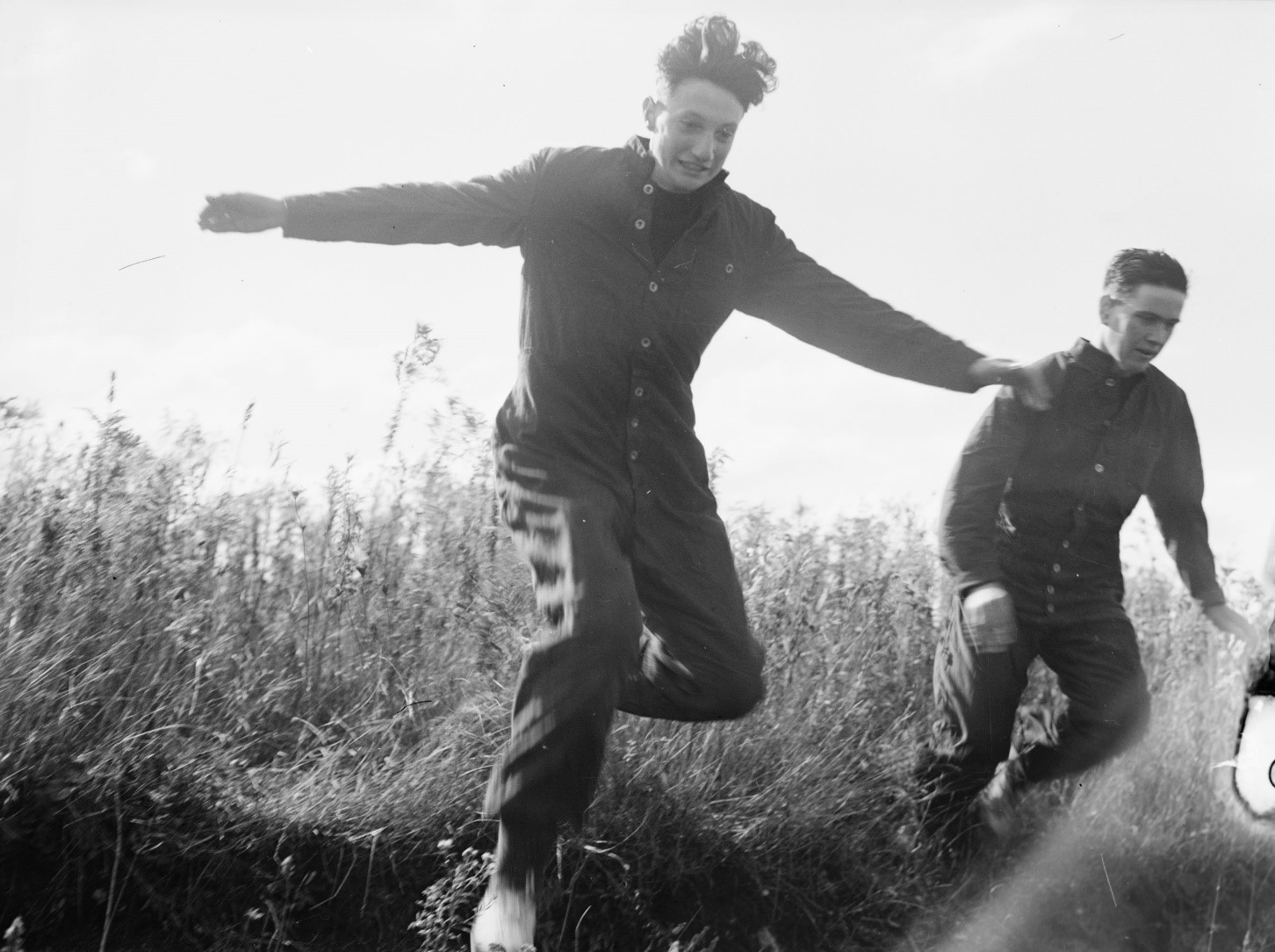
A992.0003.281- Commandos at Sky Harbour, 1943
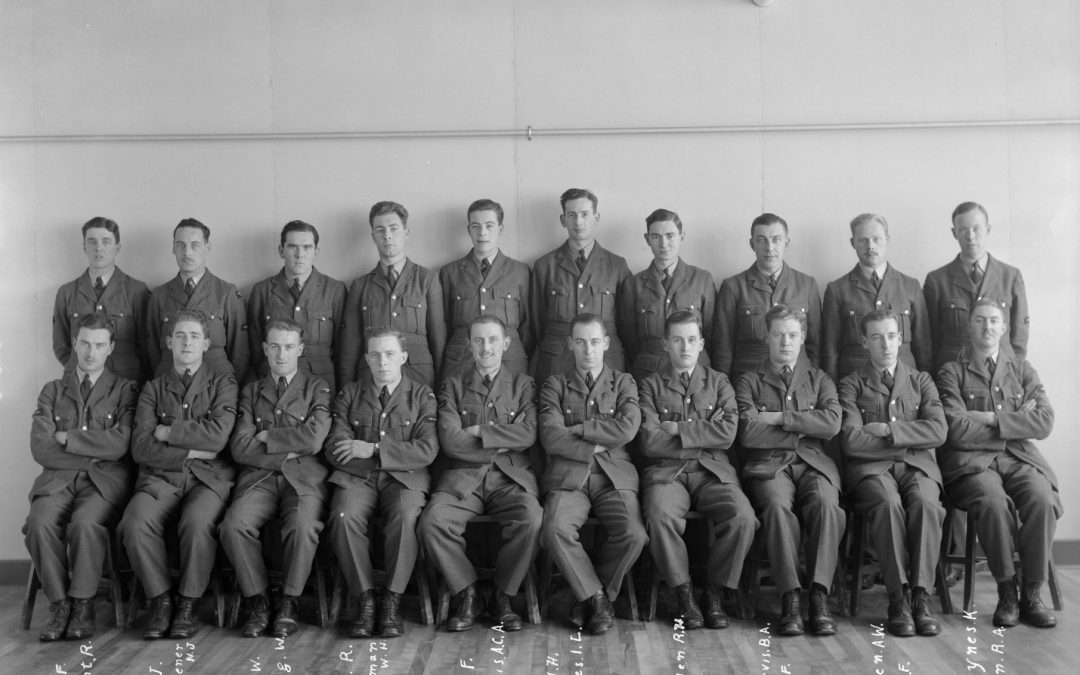
The gallery displays photographs taken by J. Gordon Henderson, a Goderich-based photographer who documented the classes and airmen at some of the Huron County’s Royal Air Force bases. The collection has more than just portraits, however. Throughout the summer, I will be sharing some interesting finds as I go through the 600 photographs that are yet to be digitized and posted to the gallery. Some of the training activities, weddings and celebrations at the bases have been documented, and give us a peek into the experiences of these airmen and their families.
To take a look at the website, visit https://kiosk.huroncounty.ca/exhibits/henderson-digitization-project/ . Keep in mind that the website is still in development and will continue to be updated throughout the summer. I can’t wait to share some interesting photos and stories with you all!