by Sinead Cox | Mar 30, 2020 | Artefacts, Collection highlights, Exhibits, For Teachers and Students, Uncategorized
Huron County Museum: Virtual Permanent Galleries
The Huron County Museum’s virtual exhibits grant a close-up glimpse of select artifacts on permanent display in our galleries, as well as information that you can’t guess with just a look. The featured objects represent a small sampling of the thousands of artifacts in the museum’s collection. Updating the online exhibits is an ongoing project; in the future, student employees will be refreshing the images and providing even more information. These exhibits are also available via ipads onsite when the museum is open.
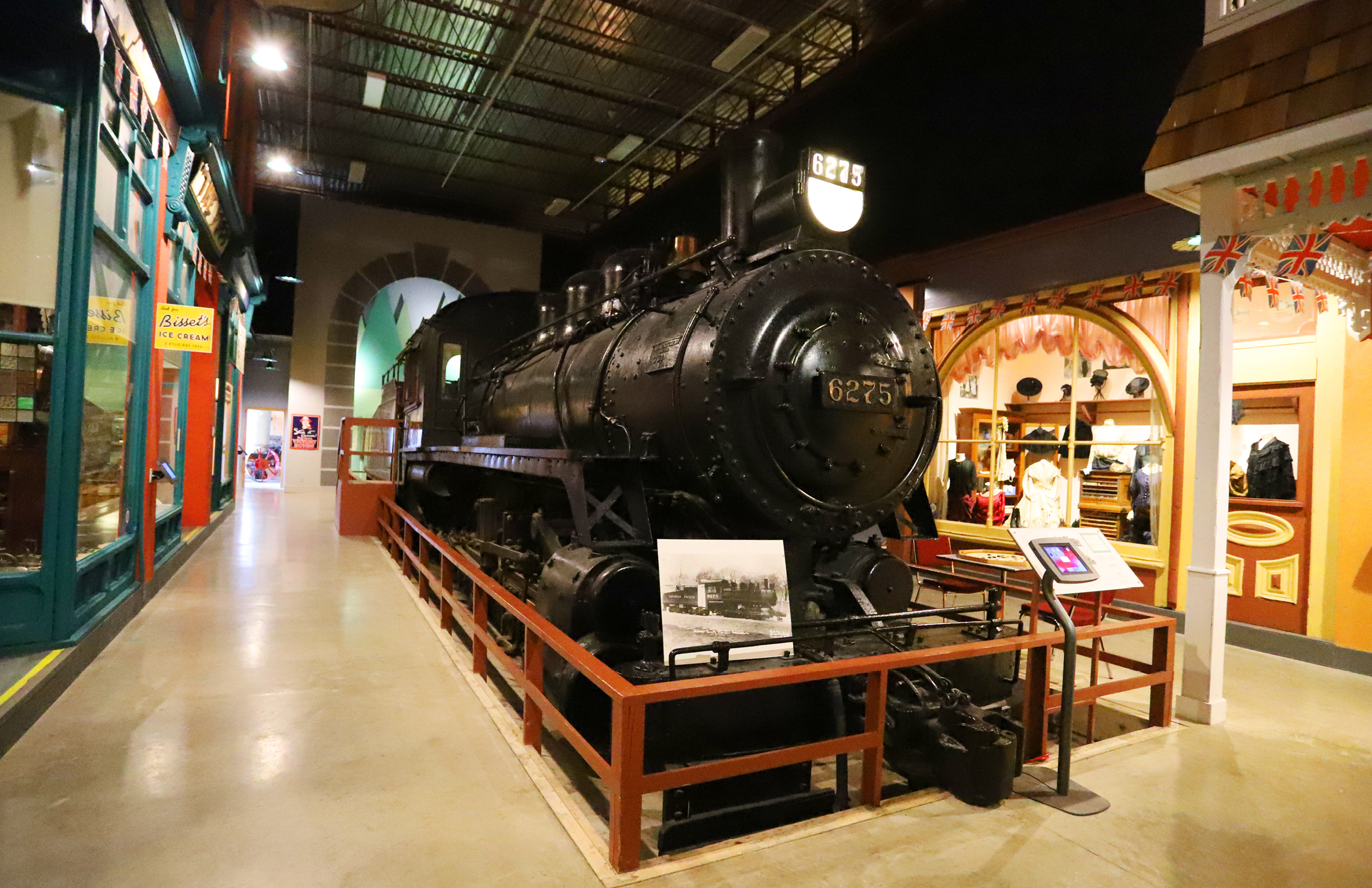
Huron County Main Street
Our Main Street features real storefronts and objects from across the county of Huron.
Click the storefront names to step inside and see artifact highlights!
Military Gallery
Click the titles below to see archival documents and more related to Huron County and the First World War.
Huron County Museum Feature Gallery: Virtual Exhibits
The Huron County Museum rotates exhibits of special interest through the year in our Feature Galleries. Click to explore past temporary exhibits that you may have missed or want to rediscover.
by Sinead Cox | Nov 6, 2017 | For Teachers and Students, Investigating Huron County History
What is now Huron County includes parts of the traditional territories of multiple Anishinaabe communities. Liz Duern is a current University Student, and worked as a Museum Assistant at the Huron County Museum & Historic Gaol during the summer of 2017. In this guest blog post for Treaties Recognition Week, Liz shares what she learned during her initial research into the treaty history of this area.
What is a Treaty? How were they created? Treaties are agreements between First Nations and the British Crown. While the Crown used treaties to gain access to land for settlement and mining, First Nations understood treaties as building nation-to-nation relationships and protecting their continued stewardship of the land. The Crown often promised to protect First Nations’ rights and to set aside tracts of land for the exclusive use of the First Nations and their members. Today, the elders of many indigenous communities hold a great amount of knowledge regarding the intent of the treaties passed down through oral history.
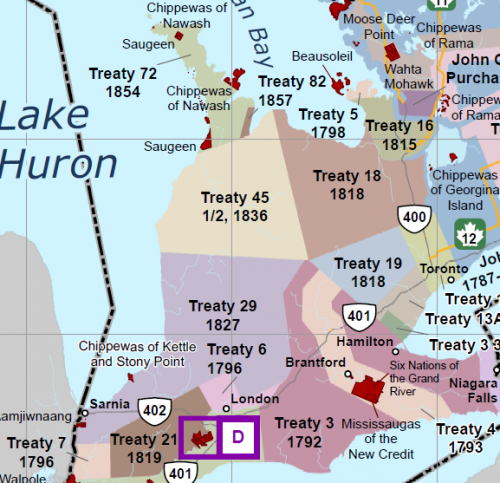
Detail from https://files.ontario.ca/firstnationsandtreaties.pdf
Treaty 29: Following earlier provisional agreements, the Huron Tract (1827) The Huron Tract Treaty was signed by eighteen Anishinaabek chiefs in 1827 in Amherstburg; in addition to what is now Lambton County and part of Wellington under settler municipal boundaries, the Huron Tract included most of what would become the Huron District-most of Huron County and parts of Perth & Middlesex. This treaty ceded 99% of the communities’ remaining lands to the British Crown, and designated four reserves: one along the south of St. Clair Township, one at Sarnia, and two on Lake Huron (Kettle and Stony Point).
Treaty 45 ½: The Saugeen Treaty (1836) Treaty 45 ½, signed on August 9, 1836, dealt with part of the Saugeen Ojibway Nation’s traditional territory. The British promised the Saugeen Ojibway Nation that they would protect the Indigenous peoples who resided on the Saugeen Peninsula and that the Saugeen Peninsula would be protected for their use. Not long after this, the British claimed that the Saugeen Peninsula could not be protected against settlers unless another treaty was negotiated. This treaty was Treaty 72, which ceded about 500,000 acres of the Saugeen Peninsula to the British Crown.
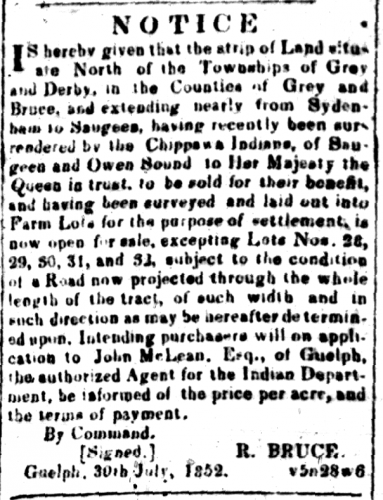
Huron Signal, 1852-09-16, page 4
via https://www.huroncountymuseum.ca/digitized-newspapers/
Treaties are not just historical documents, but outline ongoing rights and responsibilities that are protected by the Constitution Act, 1982. These rights and the spirit of the original agreements have often been violated “by colonial policies designed to exploit, assimilate and eradicate” First Nations communities and their cultures. Access teaching resources to better understand what it means to live on Treaty Land.