
An Unconquered Crime: Infanticide in Huron County

An Unconquered Crime: Infanticide in Huron County

According to the Criminal Code of Canada, “a female person commits infanticide when by a wilful act or omission she causes the death of her newly-born child.” Using local resources, student Kevin den Dunnen explores local cases of infanticide in the late 19th and 20th century (the period for which Gaol records are readily available), and the contemporary attitudes towards this act at home and abroad.

Through the 19th and 20th centuries, Huron County newspapers printed cases of infanticide, or the act of killing an infant, allegedly taking place in other countries and cultures. These articles often framed this the context of the supposed inferiority of cultures without the influence of Western Christianity. (1) However, the prevalence of infanticide in Huron County and surrounding areas during this same time period disproves any claims of cultural immunity to infanticide in southwestern Ontario’s Christian-dominated communities.

There are many social factors that contributed to the infanticides that occurred in Huron County. In the 19th and 20th centuries, a birth outside wedlock threatened an unmarried woman’s status in society. Many known infanticide cases in Huron County involved these young, unmarried women. Contributing to the devastating decision to commit infanticide was the lack of local social services available to single women needing help to provide for their child. As such, infanticide has been present in Huron County for much of its history.

The story of a Huron County woman called Catherine and her child exemplifies many of these themes. Catherine was a 30-year-old servant and unmarried woman working in Goderich Township in 1870. She had gone to her doctor that year claiming her body was swelling. The doctor suspected that she might be pregnant, but Catherine did not agree. Later on, her employer came home to find some of her work unfinished and could not find her. Upon searching, they found her sitting in a privy. After telling her to leave the privy several times, Catherine went to the house. Upon inspection of the privy the next morning, the house-owner and a doctor found a dead child in the privy vault covered by paper and a board. In his subsequent report, the coroner believed that the baby was born alive. (2) Upon first reading, this story appears to be a cold-blooded case of infanticide, but the reality of the society around Catherine makes the situation far more complex.

Turn of the 20th century newspapers in Huron County printed or reprinted articles from larger news agencies about non-Christian societies in India, China, and Hawaii and touted their supposed propensity of infanticide. These stories promoted the positive influence of Christian conversion outside of Canada, even though infanticide was also a local issue. Figure 1 is one such article from The Exeter Times, published on Feb. 1, 1894. This article states that the work of missionaries converting foreign societies to Christianity would “introduce the mercy of the Gospel among the down-trodden of heathenism.” The uncredited author claimed non-Christian cultures frequently committed infanticide but stopped when they converted to Christianity. (3) There is an apparent hypocrisy in these newspapers portraying other societies as uncivilized while the same issues were happing contemporaneously in their own Ontario communities. Figure 2 shows an article from The Brussels Post, dated Nov. 20, 1902. In this article, the author argues the need for laws restricting the distribution of alcohol. They state that such opportunities to change society are “the call of God” whose influence had already “conquered great evils, such as infanticide.” Yet, infanticide still occurred in the paper’s own region.

How prevalent an issue infanticide was throughout Huron County’s history is difficult to know, because many cases likely went unreported. A large proportion of the known cases involved single mothers of illegitimate children. However, some scholars suggest that more cases of undocumented infanticide frequently occurred in Western societies. These theories argue that hidden infanticide by married couples might partly explain changing gender ratios in select western societies. They claim this was a way of tailoring gender to fit family needs, like wanting males to help with farming. (4) Single women living and working away from their families would face greater difficulties concealing a birth without detection. Hidden infanticide drew attention from journals like the Upper Canada Journal of Medical, Surgical and Physical Science in 1852. This journal argued that women should have to register their children immediately after birth to lessen the chance of hidden infanticide. (5) This call for registration suggests that the journal suspected or knew of infanticide cases where the mother did not register their child to hide its birth. This research indicates that communities like Huron County could have many cases of infanticide that county records do not include.

One record that is available for study is the “Huron County Gaol Registry.” The portion of the Registry currently available for research includes entries for every person who stayed at the Gaol from 1841-1922. There are at least 12 cases that list infanticide, concealment of birth, child exposure, or a related charge as the reason for committal (Figure 3 and 4). While not a staggeringly high number, these records only include the people sentenced to gaol for allegedly killing their infant or related crimes. If they were not apprehended or not committed to jail, they would not appear in the registry. Additional cases do appear in the local newspaper accounts (Figure 5) and coroner’s inquest records , including Catherine’s story .  The registry shows that the first prisoner committed for infanticide came to the Gaol in 1846 and that a prisoner was committed for procuring drugs for an illegal abortion in 1920. While not demonstrating frequency with complete accuracy, the registry clearly does indicate that infanticide and other crimes resulting from unwanted pregnancies occurred in Huron County throughout the entire period documented from 1841-1922. These instances of infanticide would increase when including the records of nearby counties like Middlesex, Bruce, and Perth, which also had reported infanticide cases during the same period. There was therefore no reason to look to other countries to find the circumstances that fostered infanticide: Huron County residents could see the evidence in their own towns and the surrounding counties.
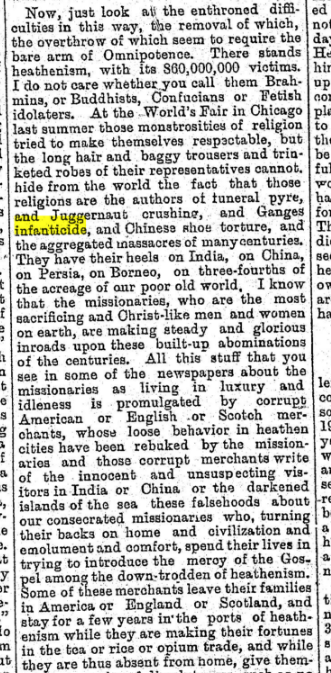
image of a newspaper clipping

Figure 1: “The Safe Arm of God,” The Exeter Times, 1894-2-1, Page 6 
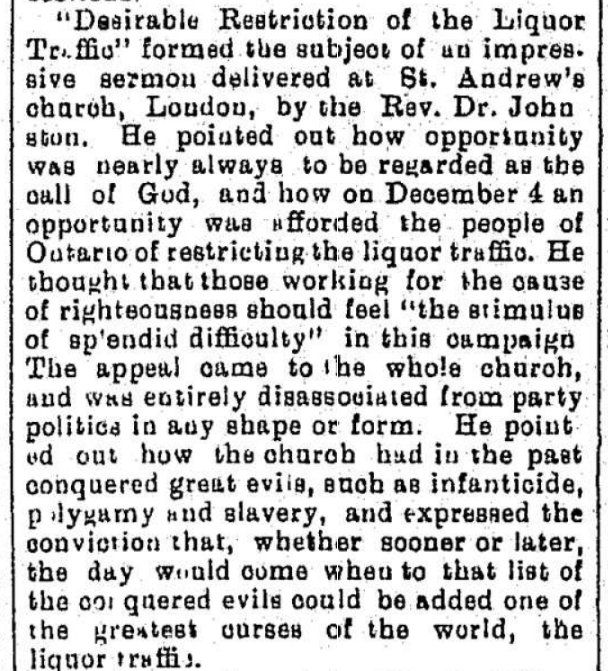
Image of figure 2 - newspaper clipping from Brussels Post

Figure 2: “Prohibition Notes,” The Brussels Post, 1902-11-20, Page 4
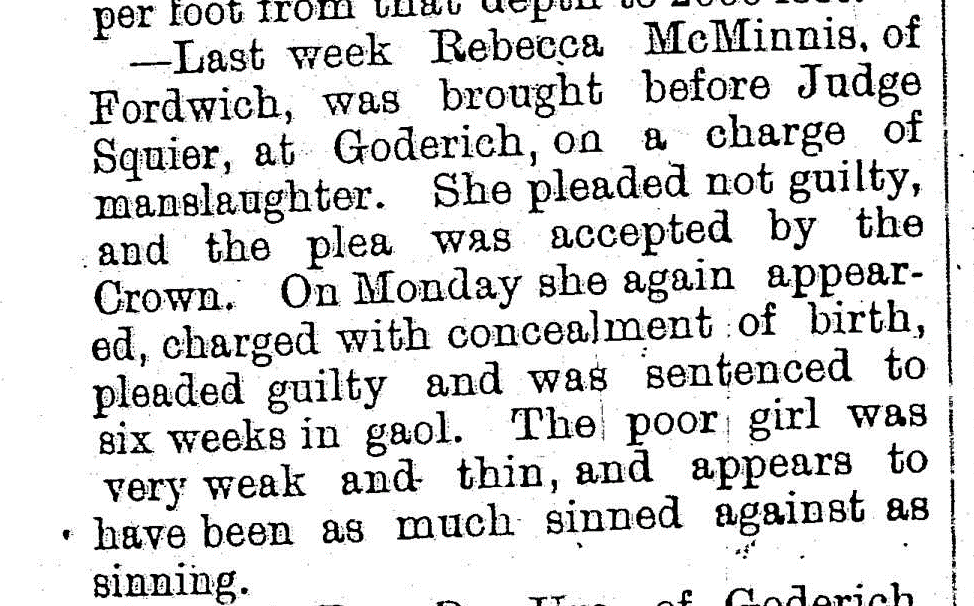
Figure 3: Newspaper clipping from The Huron Expositor, 07-22-1881, pg 5.
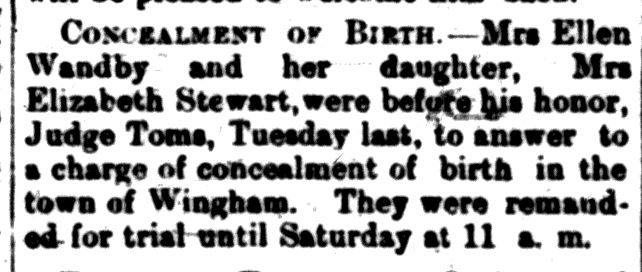
Figure 3: The Huron Expositor, 07-22-1881, pg 5.

Newspaper clipping: "Concealment of a Birth" Mrs. Ellen Wandby and her daughter, Mrs. Elizabeth Stewart, were before his honour Judge Toms, Tuesday last, to answer to a charge of concealment of birth in the town of Wingham.

Figure 4:The Huron Signal, 06-10-1887, pg 4.
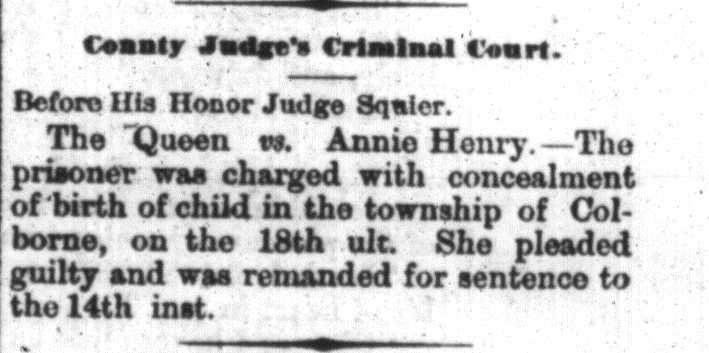
Figure 3: Newspaper clipping from The Huron Expositor, 07-22-1881, pg 5.

Figure 5: The Huron Signal, 12-10-1880, pg 1.
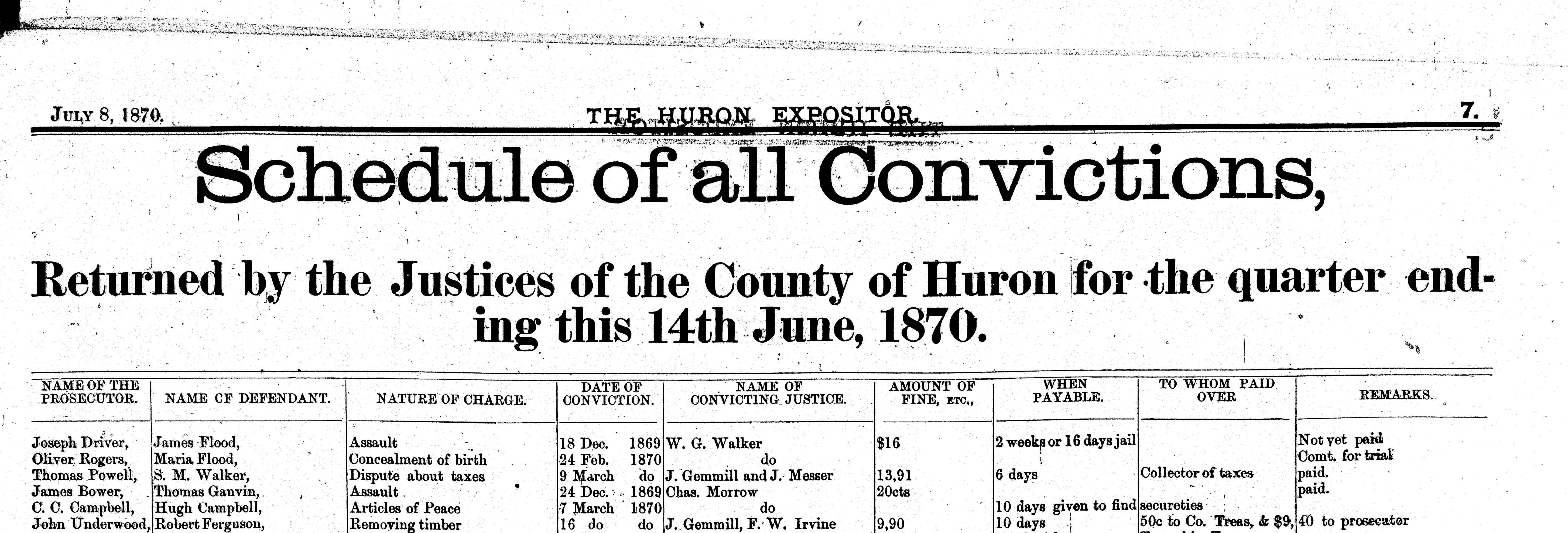
Image of newspaper clipping from 1870 Schedule of Convictions featuring prosecution of Maria Flood for “concealment of birth.” The Huron Expositor, 07/08/1870, pg 1.

Mothers faced most of the blame for infanticide from the legal system and contemporary journalists for reported cases. However, this viewpoint often neglects to consider both the devastating judgements placed upon these women for their unwanted pregnancies, and the lack of support available to help struggling mothers. Of the cases involving infanticide, concealment of birth, or abortion found in the Huron County newspapers and Gaol records, a large number involve young women under 25 years old and illegitimate children (the offspring of a couple not married to each other).  For example, a case from 1864 involves a 15-year-old unmarried female servant; a case from 1877 involves a 22-year-old single female servant; a case from 1880 involves a 17-year-old female servant. As servants, these women were dependent on wage labour. With the birth of a child, the woman would have to give up employment to care for the baby, as without the security of legal marriage the father would often refuse any support. Her ability to care for herself, let alone the child, declined greatly after giving birth. In addition, women faced religious and societal pressures to remain chaste until marriage. Bearing an illegitimate child proved to society that a woman was unchaste. (6) Women who gave birth to illegitimate children, no matter the circumstances of their conception, would face harsh judgement from their communities, which could impact their ability to find new work or to be married. These women with illegitimate children immediately became outcasts. This happened because Christian societies at the time judged much of a single woman’s morality and value according to her chastity. (7) As such, women of this period faced significant social judgement if they had an illegitimate child. The idea of concealing the child’s birth may have appeared to be the only choice for single mothers hoping to retain their ability to earn a living, maintain their place in society and avoid becoming an outcast, which could lead to cases of infanticide and child abandonment. 

The lack of available social services in Huron County before the 20th century could also factor into these cases of infanticide. Before Huron County’s House of Refuge opened near Clinton in 1895, the only municipal building available for social services was the Huron County Gaol. There was no local lying-in hospital or home for unwed mothers. During this period, the Gaol often housed the elderly, destitute, and sick. Some lower tier municipalities made the choice to commit unwed mothers to gaol to give birth, and multiple women would have their babies behind bars at the Huron Gaol. This was an inexpensive way to house the mother and child until such a time she could return to the labour market. A young woman faced with the birth of an illegitimate child in Huron County would therefore have little support and few options available should she struggle to care and provide for her baby, and may have to bear the stigma of being committed to gaol regardless of committing a crime.

While newspapers like The Exeter Times and Lucknow Sentinel reprinted articles featuring infanticide as a cautionary tale to criticize and condemn outside cultures and to promote the positive influence of western Christianity, infanticide remained prevalent in their own communities. Stories like that of Catherine demonstrate the difficult circumstances that sometimes drove women to commit infanticide. Having an illegitimate child immediately lessened the perceived status and life options of a young woman in respectable Christian Southwestern Ontario society. Also contributing to the devastating decision by some of these young women to commit infanticide was the lack of social services available to help them provide for a child. As such, infanticide was not a conquered issue for the residents of Huron County in the 19th and early 20th century.

Sources:

  • (1) Nicola Goc, Women, Infanticide, and the Press, 1822-1922: News Narratives in England and Australia (New York, NY: Routledge, 2016), 28.
  • (2) Coroner’s Report #365 Huron County Archives,  Unnamed baby of  Catherine J.  
  • (3 “The Safe Arm of God,” The Exeter Times, February 1, 1894, p. 6.
  • (4) Gregory Hanlon, “Routine Infanticide in the West 1500-1800,” History Compass 14, no. 11 (2016): pp. 535-548, https://doi.org/10.1111/hic3.12361, 537. 
  • (5) Kirsten Johnson Kramar, Unwilling Mothers, Unwanted Babies: Infanticide in Canada (Vancouver, BC: UBC Press, 2006), 97.
  • (6) Nicolá, Women, Infanticide, and the Press, 21.
  • (7) Nicolá, Women, Infanticide, and the Press, 21.

Further Reading

Find an index of coroner’s inquests on our Archives page (scroll to the bottom to find indexes and finding aids).

Find more stories from Huron’s past through a search of Huron County’s historical newspapers online!

The Huron Jail & the Second World War Part I: THE ‘DEFENCE OF CANADA’ IN HURON COUNTY

The Huron Jail & the Second World War Part I: THE ‘DEFENCE OF CANADA’ IN HURON COUNTY

In this two-part series, Curator of Engagement & Dialogue Sinead Cox illuminates how the Second World War impacted Huron County in unexpected ways at home, and even entered the walls of the Huron Historic Gaol. Click for Part Two, and the strange tale of how Dutch sailors became  wartime prisoners in Huron’s jail.

During the Second World War, Canada revived the War Measures Act: a statute from the First World War that granted the federal government extended authority, including controlling and eliminating perceived homegrown threats. The Defence of Canada Regulations implemented on September 3, 1939 increased censorship; banned particular cultural, political and religious groups outright; gave extended detainment powers to the Ministry of Justice and limited free expression. In Huron County, far from any overseas battlefields, these changes to law and order would bring the Second World War closer to home.

Regulations required Italian and German-born Canadians naturalized as citizens after 1929 (expanded to 1922 the following year) to formally register as ‘enemy aliens’ and report once a month. In Huron County, jail Governor James B. Reynolds accepted the appointment of ‘Registrar of Enemy Aliens’ in the autumn of 1939, and the registration office was to operate from the jail in Goderich. There were also offices in Wingham, Seaforth and Exeter managed by the local chief constables of the police force.

In addition to its novel function as the alien registration office, the Huron Jail also housed any prisoners charged criminally under the temporary wartime laws. Inmate records from the time period of the Second World War cannot be accessed, but Reynolds’ annual reports submitted to Huron County Council indicate that one local prisoner was committed to jail under the ‘Defence of Canada Act’ in 1939, and there were an additional four such inmates in 1940. The most common charges landing inmates behind bars during those years were still typical for the county: thefts, traffic violations, vagrancy and violations of the Liquor Control Act (Huron County being a ‘dry’ county).

Frank Edward Eickemier, the lone individual jailed under the War Measures Act’s Defence of Canada regulations in 1939, was no ‘alien,’ but the Canadian-born son of a farm family in neighbouring Perth County. Nineteen-year-old Eickemier pled guilty to ‘seditious utterances’ spoken during the Seaforth Fall Fair, and received a fine of $200 and thirty days in jail (plus an additional six months if he defaulted on the fine). The same month the Defence of Canada regulations took effect, Eickemier had publicly proclaimed that Adolph Hitler’s Nazi Germany was undefeatable, and that if it were possible to travel to Europe he would join the German military. He fled the scene when constables arrived, but was soon pursued and arrested for “statements likely to cause disaffection to His Majesty [King George VI] or interfere with the success of His Majesty’s forces.” His crime was not necessarily his political views, but his disloyalty. The prosecuting Crown Attorney conceded, “A man in this country is entitled to his own opinion, but when a country is at war you can’t go around making statements like that.”

Bruce County law enforcement prosecuted a similar case in July of 1940 against Martin Duckhorn, a Mildmay-area farm worker employed in Howick Township, and alleged Nazi sympathizer. Duckhorn had been born in Germany, and as an ‘enemy alien’ his rights were essentially suspended under the War Measures Act, and he thus received an even harsher punishment than Eickemier: to be “detained in an Ontario internment camp for the duration of the war.”

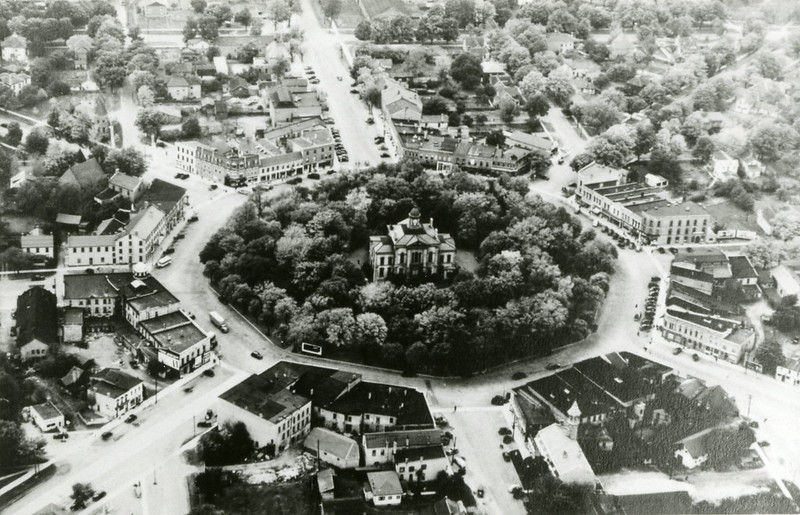
Huron County Courthouse & Courthouse Square, Goderich c1941. A991.0051.005

In July of 1940, the Canadian wartime restrictions extended to making membership in the Jehovah’s Witnesses illegal. The inmates recorded as jailed under the ‘Defence of Canada Act’ in Huron that year were likely all observers of that faith, which holds a refusal to bear arms as one its tenets, as well as discouraging patriotic behaviours.  That summer, two Jehovah’s Witnesses arrested at Bluevale and brought to jail at Goderich ultimately received fines of $10 or 13 days in jail for having church publications in their possession. Four others accused of visiting Goderich Township homes to discourage the occupants from taking “any side in the war” had their charges dismissed—due to a lack of witnesses.  In 1943, the RCMP and provincial police collaborated to arrest another three Jehovah’s Witnesses in Goderich Township for refusing to submit to medical examinations or report their current addresses (therefore avoiding possible conscription); the courts sentenced the three charged to twenty-one days in the jail, afterwards to be escorted by police to “the nearest mobilization centre.”

By August of 1940, an item in the Exeter Times-Advocate claimed that RCMP officers were present in the area to ‘look up’ those individuals who had failed to comply with the law and promptly register as enemy aliens. A few weeks later, the first Huron County resident fined for his failure to register appeared in Police Court. The ‘enemy alien’ was Charles Keller, a 72-year-old Hay Township farmer who had lived in Canada for 58 years, emigrating from Germany as a teenager in 1882. According to his 1949 obituary in the Zurich Herald, Keller was the father of nine surviving children, a member of the local Lutheran church, and had retired to Dashwood around 1929. His punishment for neglecting to register was not jail time, but the fine of $10 and costs (about $172.00 today according to the Bank of Canada’s inflation calculator).

Although incidences of prosecution under the ‘Defense of Canada Act’ in Huron County were few, the increased scrutiny and restrictions would have been felt in the wider community, especially for those minority groups and conscientious objectors directly impacted. Huron had a notable number of families with German origins, especially in areas like Hay Township where you can still see the tombstones of many early settlers written in German. The Judge who sentenced Frank Edward Eickemier for his public support of the Nazi regime in 1939 made a point of accusing him of casting a ‘slur’ on his ‘people’ and all German Canadians: the actions of the individual conflated with a much larger and diverse German community by a representative of the law. His case indicates that pro-fascist and pro-Nazi sentiment certainly did exist close to home, but a person’s place of birth or their religion was not the crucial evidence that could define who was or was not an ‘enemy.’

Next Week: Click for Part Two, and the strange tale of how stranded Dutch sailors ended up prisoners in the Huron County Jail during the Second World War.

*A note on spelling: Jail & gaol are alternative spellings of the same word, pronounced identically. Both spellings were used throughout the history of the Huron Historic Gaol fairly interchangeably. Although as a historic site the Huron Historic Gaol uses the ‘G’ spelling more common to the nineteenth century, for this article I have chosen to employ the ‘J’ spelling that appeared more consistently in the 1940s.

Further Reading
The War Measures Act via the Canadian Encyclopedia

Sources
Research for this blog post was conducted largely via Huron’s digitized historical newspapers.
“Faces Trial on Charge of Making Disloyal Remark.” Seaforth News, September 28, 1939.
“German Sympathizer Interned.” The Wingham-Advance Times, July 25, 1940.
“In Police Court.” Seaforth News, August 29, 1940.
“Jehovah’s Witnesses Charged.” Zurich Herald, October 21, 1943.
“Jehovah’s Witnesses Fined at Goderich.” The Wingham-Advance Times, August 22, 1940.
“Jehovah’s Witnesses Refused Bail.” The Wingham Advance-Times, July 18, 1940.
“Looking Up Aliens Who Failed to Register.” The Exeter Times-Advocate, August 1, 1940.
“Police Arrest ‘Jehovah’s Witnesses.’” Seaforth News, June 27, 1940.
“Statement He Would Fight for Hitler Proves Costly.” The Wingham-Advance Times, October 5, 1939.
“To Register German Aliens.” The Seaforth News, October 12, 1939.
“Twenty-One Days.” The Lucknow Sentinel, October 28, 1943.
“Would Fight for Hitler-Arrested.” The Wingham Advance-Times, September 28, 1939.

Disney Connections

Disney Connections

Patti Lamb, museum registrar, outlines Huron County’s connection to the Disney legacy. 

While most of us know the impact that Walt Disney has had on the entertainment world; whether that be through the amusement parks that bear his name or the children’s movies that we all love; few realize that his ancestral roots lie in Huron County. The connections in Huron County to Disney are rooted with his ancestors but modern day connections still exist.

Ancestral Connections

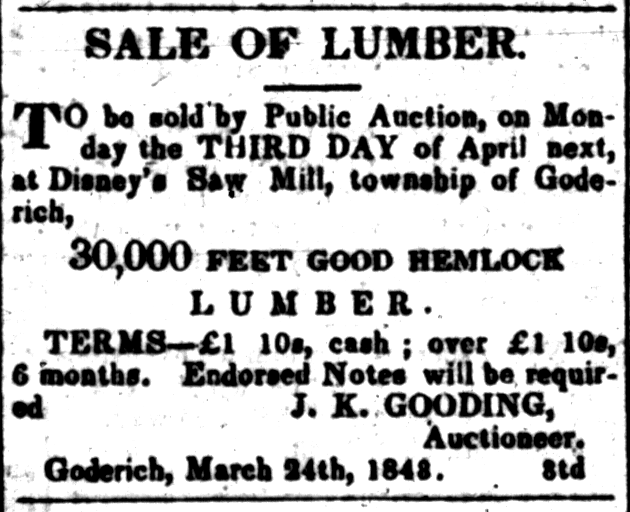
In 1834, Walt’s great grandfather Arundel Elias Disney, wife Maria Swan Disney and 2 year old Kepple Elias Disney; along with older brother Robert Disney and his wife, sold their properties in Ireland, departed from Liverpool, England and immigrated to America landing in New York on October 3, 1834. According to a written biography by Walt’s father there were 3 brothers that immigrated at the same time. The brothers went into business in New York while Elias (as he was most commonly called) made his way to Upper Canada settling in Goderich Township near Holmesville. By 1842, Elias had purchased Lots 38 and 39 on the Maitland Concession, a tract of land comprising of 149 acres. There, along the Maitland River, on Lot 38 he built one of the earliest saw and grist mills in the area. Brother Robert eventually purchased 93 acres on Lots 36 and 37 of the same concession. Elias and Maria had 16 children.

James and Ann (Swanson) Munro were among the first settlers in the Holmesville District and James was the first blacksmith in Holmesville (1834 – 1871). The base for this table is made from a birch stump that he selected from his 36 acre property (Lot 83, Maitland Concession) which he purchased August 15, 1832. The original 5 roots serve as legs. The top is of cherry lumber, sawn from some of the first logs to go through the saw mill owned by Elias Disney (great grandfather of Walt Disney). On the underside is carved the name “Emily” for one of James and Ann’s 12 children.
N7143.001b

Advertisement for the sale of lumber from the Disney Saw Mill from the Huron Signal, March 24, 1848.

On March 18, 1858, Kepple Disney (Walt’s grandfather) married Mary Richardson, whose family were also early Goderich Township settlers near Holmesville. They purchased a farm on Lots 27 and 28 of Morris Township near Bluevale. Kepple and Mary had 11 children of which Elias Charles Disney (Walt’s father) was the oldest, born on February 6, 1859 in Bluevale and baptized in St. Paul’s Church in Clinton. All 11 children would eventually attend Bluevale Public School. Kepple did not really enjoy farming. He liked to travel and became intrigued in the drilling industry so in 1864, while keeping the homestead in Morris Township, he moved his family to Lambton County. He stayed in Lambton for 2 years before arriving in Goderich.

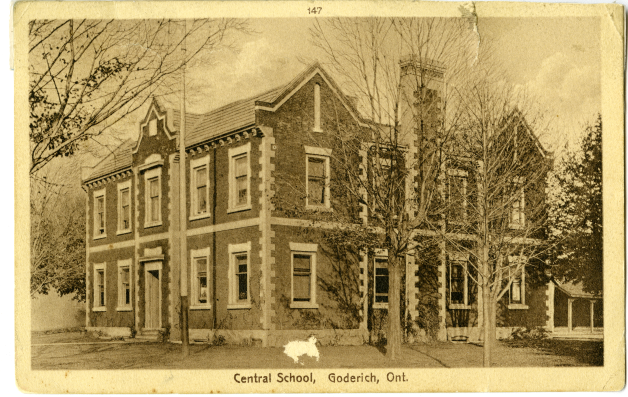
Here, Kepple was employed by Peter MacEwan and worked for him drilling for oil at a well in Saltford, just north of Goderich. Instead of oil, it was salt that was discovered, but that’s another story. In the July 1868 Voter’s List, the Disney’s appear as tenants of a house owned by James Whitely on Lot 275 in St. David’s Ward, Goderich. School records show that in 1868, 8 year old Elias and 6 year old Robert would attend Central Public School in Goderich (now part of the Huron County Museum). It appears the Disney’s left Goderich and moved back to the homestead in Morris Township sometime before 1869.

Postcard of Central School, N3103.

In 1878, Kepple left for California, where gold had been found, taking with him his oldest sons Elias and Robert. They stopped over in Ellis, Kansas and purchased 200 acres. Kepple sent for the rest of his family and his property in Morris Township was sold.

Ellis, Kansas is where Elias met neighbour Flora Call and on January 1, 1888 they were married. Kepple Disney’s family moved to Florida in 1884 and Elias, Flora and son later moved to Chicago. On December 5, 1901, Walter Elias (Walt) Disney was born, the 4th child of 5 for Elias and Flora Disney. After living in Chicago for 17 years, when Walt was 5 the family moved to Maceline, Missouri. They lived there for four years before moving onto Kansas City, Kansas.

At age 18, Walt started work as a commercial artist and from 1920 – 1922 was a cartoonist. He moved to Hollywood and opened a small studio (Walt Disney Studios) in 1923. He married Lillian Bounds on July 25, 1925 who was working for Walt Disney Studios at the time. The Disneys later had two daughters, Diane Marie and Sharon Mae. In 1928, Mickey Mouse, originally named Mortimer, was created.

In June 1947, Walt made a trip to Canada to visit his ancestral past. He stopped in at the Bluevale Post Office to enquire where the Disney homestead was located then drove to the farm that his father had spoken of so fondly. Walt drove on to Holmesville to visit the cemetery where his Disney great uncles and aunts, and his Richardson great grandparents are buried. Walt also visited Central School in Goderich and took some time to draw some cartoons for the students. He stayed the night in Goderich before travelling to Detroit and flying home.

Walt Disney died on December 15, 1966 at age 66 of lung cancer. His wife Lillian died September 16, 1997 at age 98.

Penhale Wagon

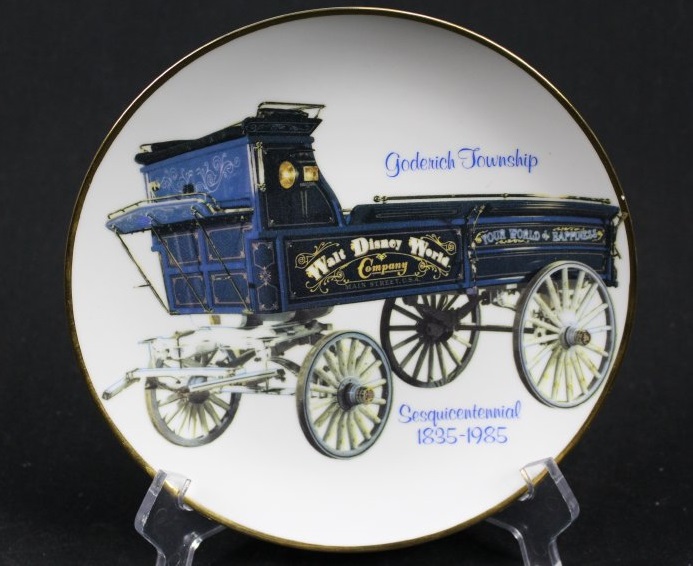
Huron County Disney connections also exist near the small village of Bayfield, Huron County. In 1974, as a hobby, Tom Penhale started building custom wagons. By 1983, it was a full time business. Tom’s business relationship with Disney started in December 1982 with the delivery of a set of hand crafted hames to the Walt Disney Ranch Fort Wilderness. In May 1983, he won the honour of building the show wagon that would compete in the 100th Anniversary of the Percheron Congress at the Calgary Stampede that coming June. He was chosen above many other craftsmen from all over North America.

Although a typical custom wagon would take about 3 months to complete, this one needed to be finished in 6 weeks. Official blueprints and a designer were flown in.

Working 16 hour days, with some local help, the wagon was completed on time. An artist came from the Disney World Studios in Florida to finish up. It was painted 4 different shades of blue, trimmed in 22 karat gold, and the lettering in silver spun with cotton.

Tom Penhale was given official recognition as the wagon builder when the Disney World Wagon was declared the World Champion Percheron Hitch during the 1983 Calgary Stampede.

Souvenir plate from the Goderich Township Sesquicentennial 1835 – 1985 featuring Tom Penhale’s Disney World wagon.
2018.0042.001

A Disney Parade

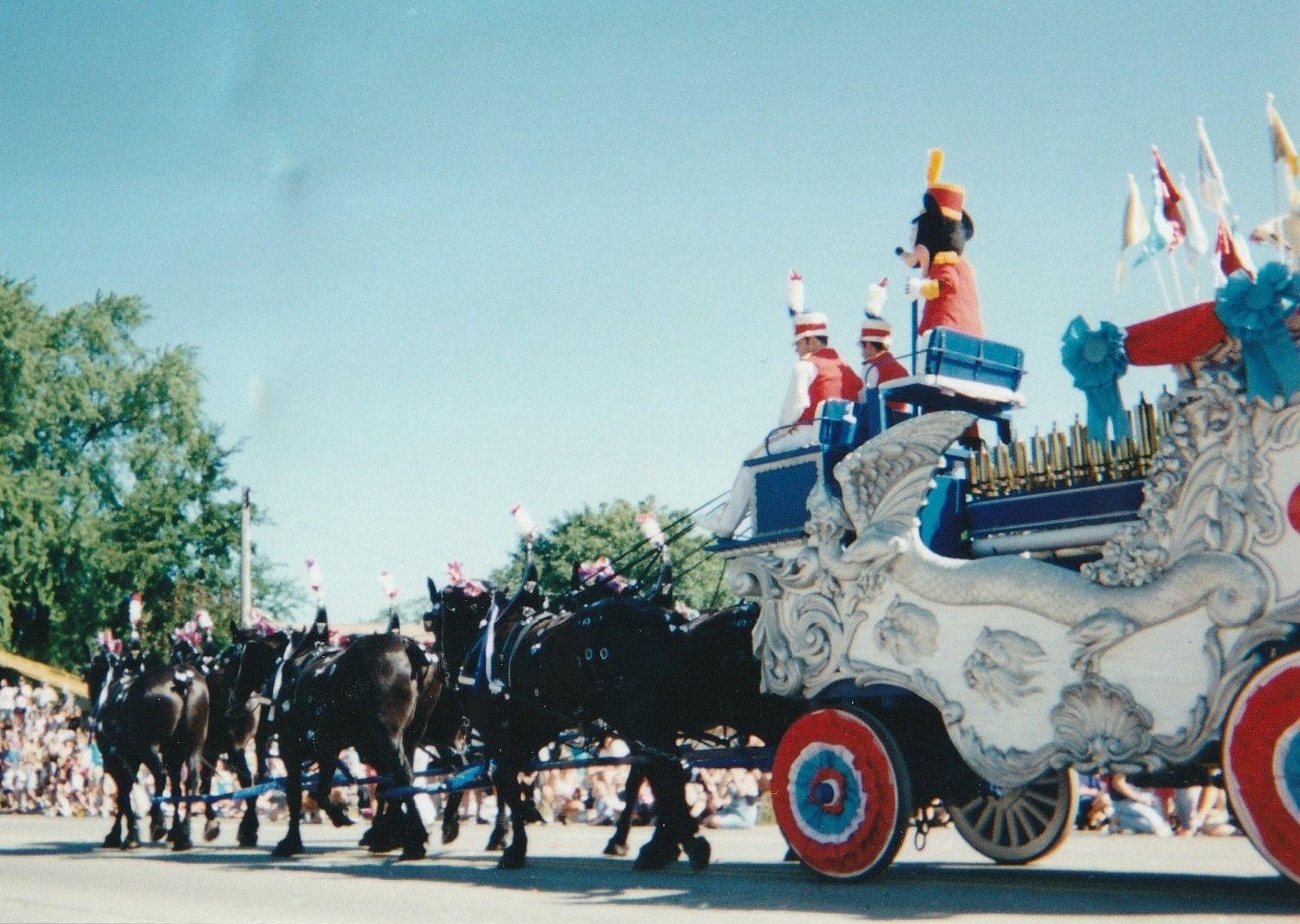
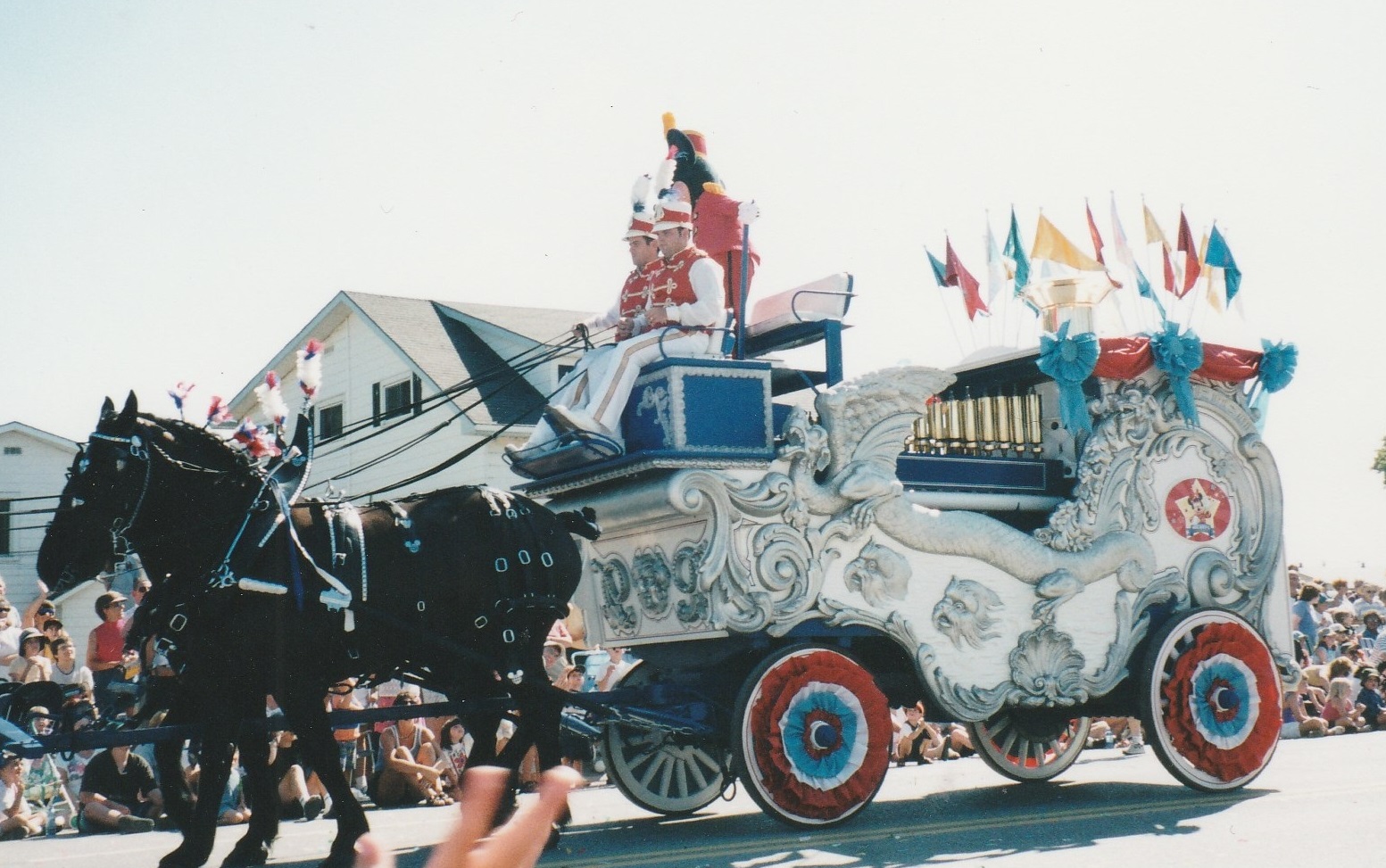
In July 1999, Goderich was the host for the first and only Canadian Hometown Disney Parade featuring Mickey Mouse, friends and characters. There were only 5 cities chosen in North America that year. Doug Fines, who was the President of the Goderich Chamber of Commerce at the time, submitted the winning essay to the contest to host the parade. The essay needed to convey true Mickey community spirit but of course having ancestral roots in Huron County helped as well. The organizers were expecting approximately 50,000 people to line the 2 ½ km route through Goderich. It is estimated that the final number was closer to 100,000.

While the connections between the famed Walt Disney and Huron County are few, their significance is no less meaningful. From ancestral roots to prize winning wagons and parades, it really is “a small world after all”.