by Sinead Cox | Jun 26, 2021
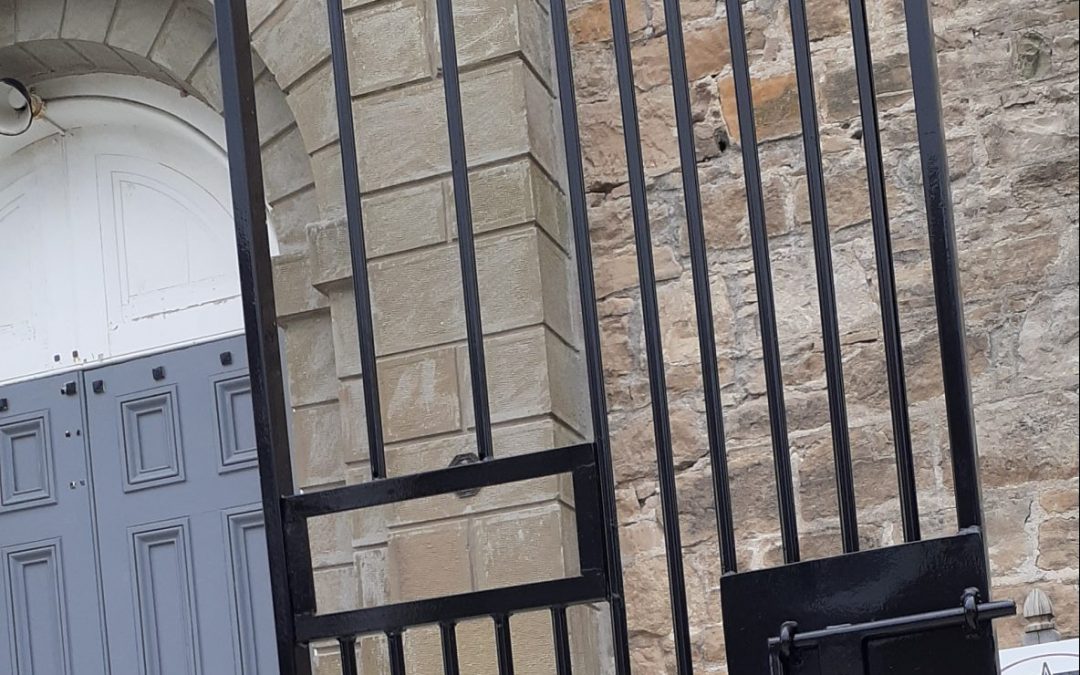
You could win $1,000 for a selfie at the Huron Historic Gaol or Huron County Museum! The National Trust is hosting its annual selfie contest between July 3rd and July 31st for National Historic Places Day. Take a selfie on the grounds in front of the buildings, use our gaol selfie station, or upload your photo to a virtual background via the National Trust’s website!
To enter:
- Share your creative selfie on Instagram, Twitter or Facebook.
2. Use the hashtag #historicplacesdays
3. Tag the participating historic place (@HuronCountyMuseum on Facebook & Instagram, @HCMuseum on Twitter)
4. Tag and follow @nationaltrustca
Contest details: Selfie Contest – Historic Places Days
by Amy Zoethout | Jun 23, 2021 | Blog, Huron Historic Gaol, Investigating Huron County History
Kyra Lewis, Huron Historic Gaol outreach and engagement assistant, explores how the Gaol dodged demolition.
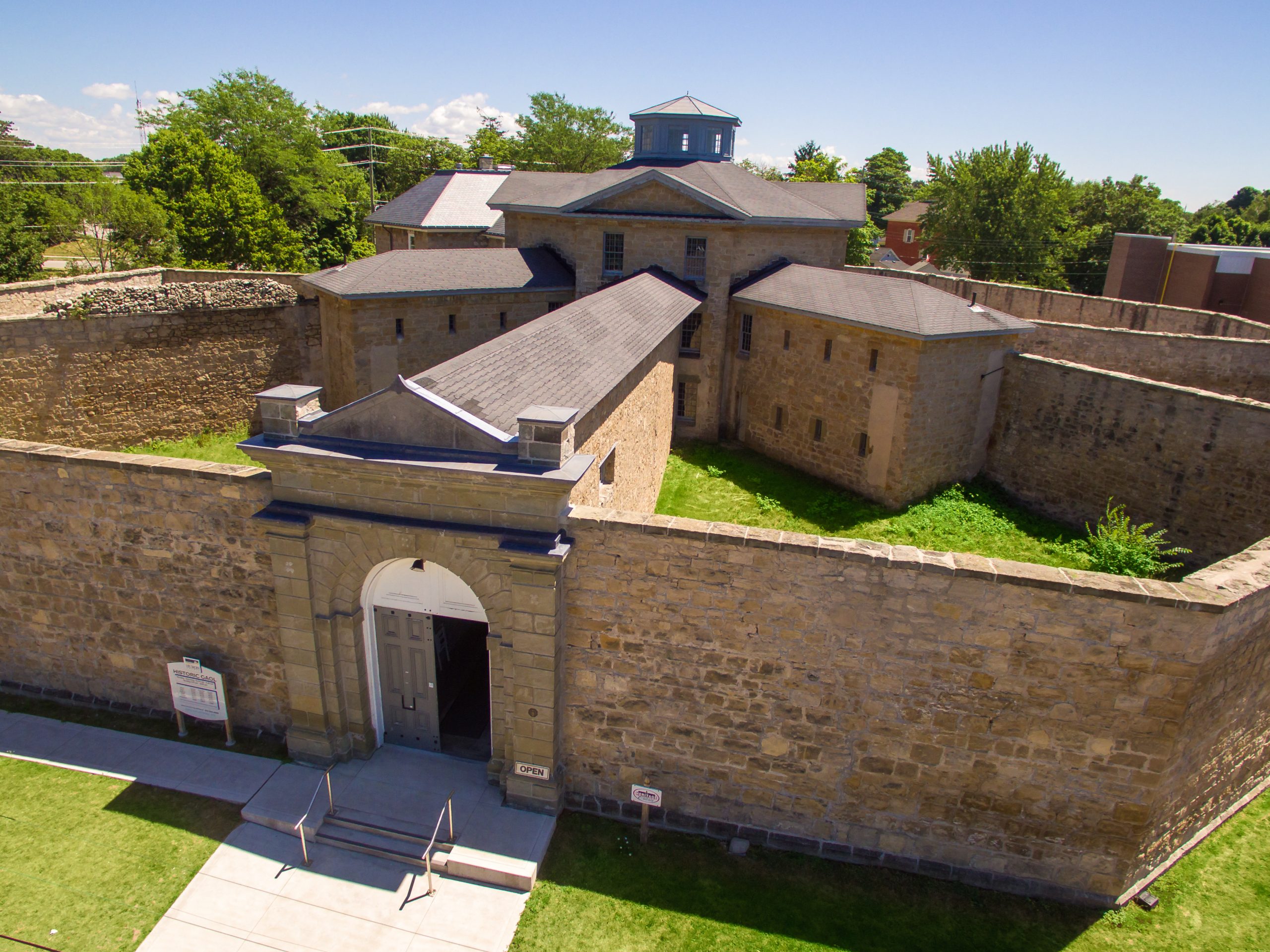
Construction of the Huron Gaol began in 1839 in the Town of Goderich making it Huron County’s first municipal building. This once essential government building served as both a prison and a courthouse once its construction was completed, with the first documented prisoner committed on Dec. 3, 1841. The Gaol held significant value to the people of Huron County, as it represented their newfound independence from London District. The Gaol served as a focal point of justice and was where the Huron District Council held its first meeting on Feb. 8, 1842.
As time went on, the Gaol’s role began to shift; when the new courthouse was constructed in the centre of Market Square Goderich, in 1856, the Gaol’s sole purpose became holding prisoners. However, not all residents of the Gaol were criminals. Many who stayed at the Gaol were homeless, or mentally or physically ill. Drunkards, thieves, debtors and murderers lived alongside the homeless, and children as young as nine years old before Huron County Council constructed a House of Refuge in 1895. As time went on, numbers began to dwindle in the Gaol.
In 1968, The Children’s Aid Society moved into the Governor’s house after the last Governor moved out in 1967. The organization had outgrown their previously occupied space in the basement of the Courthouse located downtown Goderich. During the Children’s Aid Society’s time in the Governor’s house, they witnessed the closure of the Gaol in 1972 after the final prisoner was transferred out. However, prior to the Gaol even being closed as a facility, there was a proposal presented to the Huron County Council in September, 1971, to remove two of the Gaol’s walls adjacent to Napier Street to build a parking lot to accommodate the expanding services of the Children’s Aid Society and the Gaol’s neighbour, the Huron-Perth Regional Assessment Office. On Nov. 26, 1971, County Council received a formal approval from the Provincial Department for the demolition of certain walls at the County Gaol.
This decision provoked a massive response from the community and press, especially from Goderich and the surrounding areas. Many articles began appearing in the local newspapers concerning the possible preservation of the facility, as well as public rejection of the decision to tear the Gaol walls down.
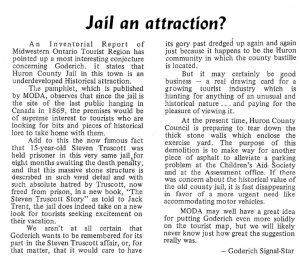
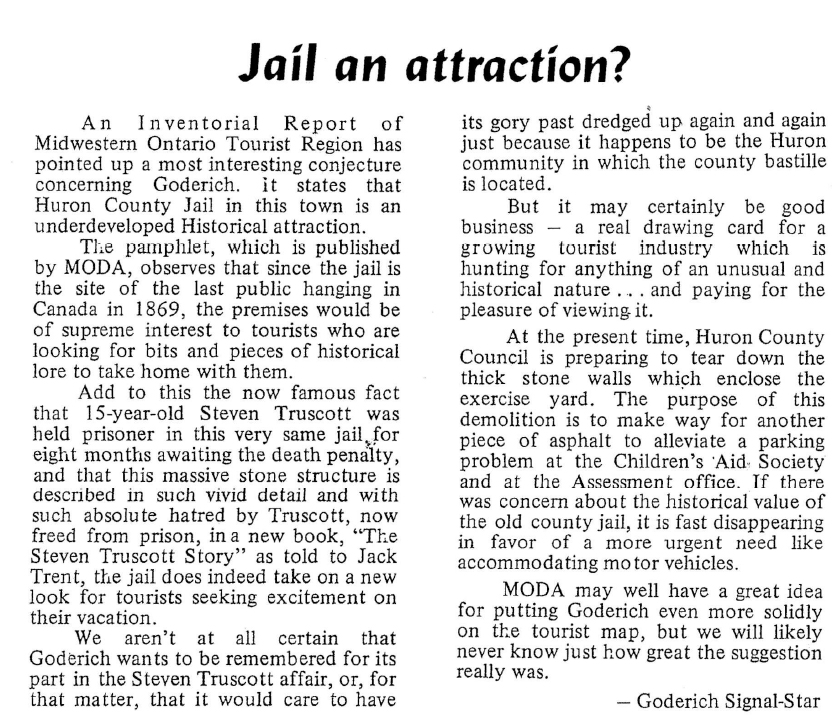
Editorial as published in the Exeter Times-Advocate, Nov. 25, 1971
The papers referred to the old facility as an “underdeveloped historical attraction”, and “a real drawing card for a growing tourist industry”. However, Council at the time had no intention of utilizing the space as a Museum of Penology. Some councillors did not condone the county spending the money to restore the building, as it was projected the restoration would cost around $25,000. Other councillors believed that if they had that much money to spend, it should be allocated around the county, and not just in Goderich. Another drawback that was suggested was the glorification of previous inmates whose actions were heavily frowned upon. The potential of immortalizing the darker aspects of Huron County’s past was a genuine concern amongst officials.
The Property Committee eventually presented the County Council with another report on Dec. 8, 1972, which detailed the idea of the old Gaol becoming a “Museum of Penology”. However, in the same report they also put forth a recommendation to construct a parking lot and an extension for the Assessment Office, costing a projected $150,000. In January, 1973, Huron County Council approved the removal of three walls at the Gaol, after considering both the Children’s Aid office and the Assessment Office’s needs. The Gaol was unfortunately placed back on the chopping block, now set to lose another wall.
When citizens caught wind of the verdict, they were none too pleased with the potential defacement of such an iconic local building. More articles and letters to the editor began showing up in the papers and a small group of concerned citizens came together to fight to save the historic building. If the Gaol walls were to be torn down, it would completely ruin the integrity of the building’s design. As the Gaol’s architect, Toronto-born Thomas Young had been inspired by famed English philosopher and prison reformist Jeremy Bentham. Thus, the loss of the Gaol walls would compromise both the value and history of the structure, as they added an irreplaceable element to the significance of its layout and design. The goal of this growing group of local politicians, historians and volunteers was to pressure the Council into reassessing their decision to tear down the walls. Their arguments were intended to bring to light the necessity of the architectural, historical and cultural conservancy of the building. And so, the Save the Jail Society was born!
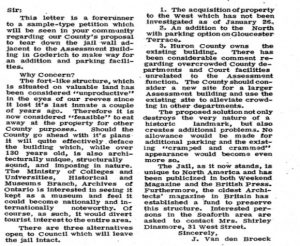
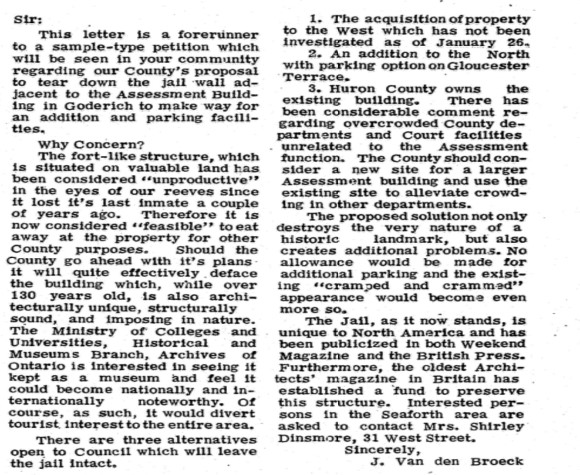
Letter to the Editor written by Joan Van den Broeck published in the Goderich Signal-Star.
With their objectives set, the group of dedicated members wrote letters to the newspaper, educating the public on their cause. A brilliant letter addressed to the editor of the Goderich Signal-Star was written by Save the Jail Society activist Mrs. Joan Van den Broeck. She advocated for the preservation of the Gaol, stating the uniqueness of the architecture as being one-of-a-kind, as well as miraculously structurally sound despite being around 130 years old, predating confederation. She also spoke of the building’s national and international notoriety, which would only enhance the tourist experience in Huron County. Van den Broeck, along with Goderich Reeve Paul Carroll and their fellow Save the Jail Society members, sought to change the fate of the iconic building.
The Save the Jail Society was extremely vocal and visible within the community, organizing campaigns at Goderich District Collegiate Institute and compiling a petition, as well as fundraising and rallies. There was a song written to commemorate the Gaol, which was written by Wingham entertainer Earl Heywood. The song was sung to the tune of Battle Hymn of the Republic, and was sung at events and rallies. They presented a petition to Huron County Council, as well as an architect’s revised plan for the parking lot to be built on the north side of the building. The group also threatened to pursue legal action if the demolition was to move forward.
One of the group’s most engaging events was an open house held at the Gaol on Feb. 19, 1973, which was initiated to motivate and engage the community in the cause to save the building. This event amassed a crowd of over 2,000 people who were all curious to explore the historic building and to find out what the big deal was about the Gaol. This event is what Save the Jail Society members would later reflect upon as a tide turner in terms of popular support. This event also made a massive impression from County Council’s perspective, as they were now aware of the appreciation the community held for the building.
Goderich Town Council met on April 12, 1973, in response to a letter issued from the County. This letter was a revision of the previous parking lot proposal designed by Nick Hill, which would allow for the Gaol walls to remain untouched. Finally, on April 26, 1973, Huron County Council agreed to the proposal by Goderich Town Council. This acceptance meant that the Save the Jail Society’s goal of saving the Gaol had been realized!
Once the safety of the Gaol had been ensured, the Save the Jail Society began to create an administration to govern the historic building. On May 1, 1974, the “Huron Historic Jail Board” was created. The Jail Board leased the building from the County for $1 per year for it to be incorporated as a Museum and Cultural Centre; it was opened to the public on June 29, 1974. The Jail board was finally legally incorporated on Oct. 13 of the same year. The Gaol was finally a Museum of Penology!
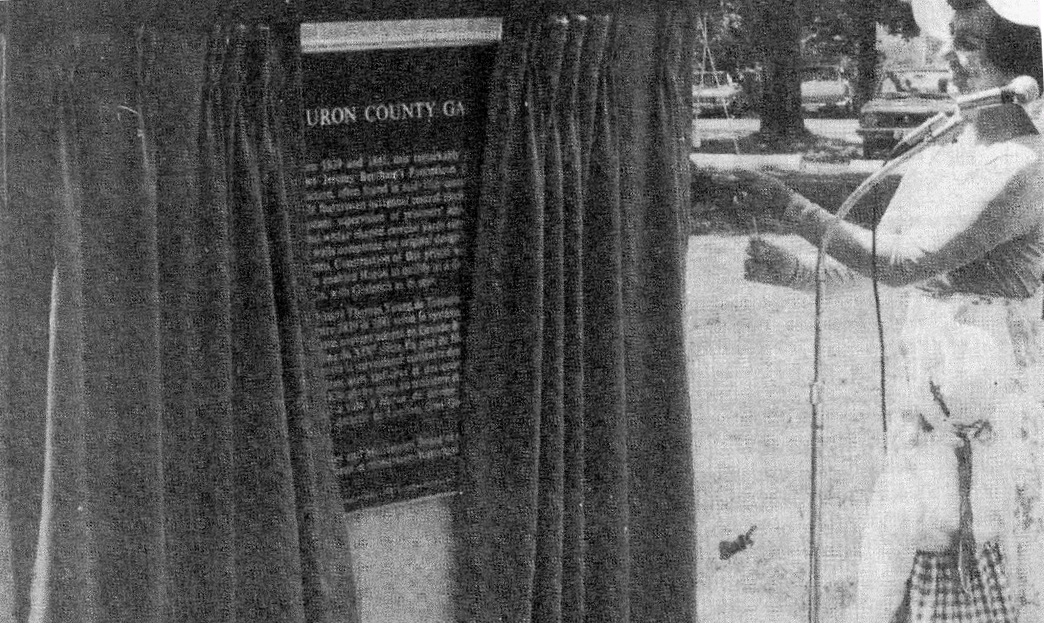
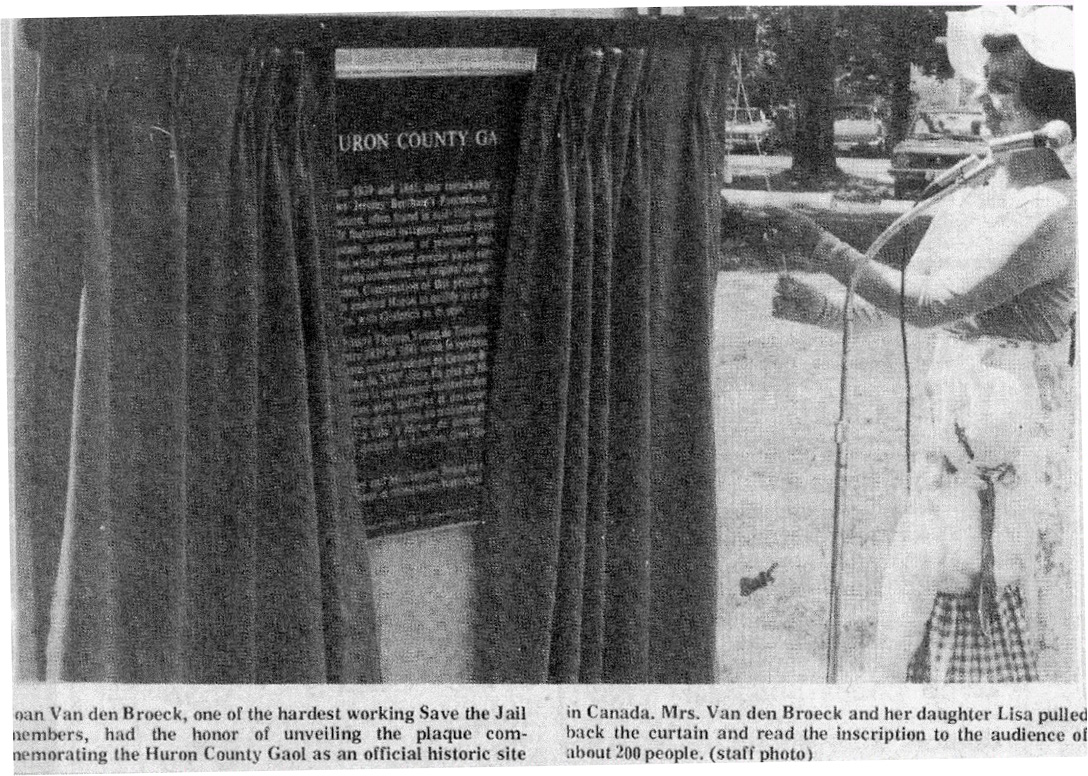 This great victory for the Save the Jail Society (now the Jail Board), was only the beginning for the Huron Gaol. On July 5, 1975, a massive celebration was held at the Gaol in Goderich to acknowledge the Gaol becoming designated a National Historic Site. The ribbon was cut to officially acknowledge the opening of the Huron Historic Gaol by Huron County Warden Mr. A. McKinley. The plaque detailing the Gaol’s historical significance was unveiled by none other than dedicated member Joan Van den Broeck.
The reason the Huron Historic Gaol stands to this day is not simply because of its historical value. This building is a symbol of the strength and dedication of the people of Huron County. Despite being sentenced to be destroyed, the Gaol was saved by the efforts of ordinary Huron County citizens who fought to preserve their history. The Gaol is not only a building which represents law and order within the County, but a reminder of how the County was incorporated and achieved its own independent settler municipal government and identity. Huron County was created by strength and unity, it seems only fitting its history was also saved by it.
Sources
Explore these sources through the online collection of Huron Historic Newspaper.
- “Jail an Attraction?”, The Exeter Times-Advocate, Nov. 25, 1971, pg 4.
- “Save Jail Wall”, The Brussels Post, Jan. 31, 1973.
- “And the Walls Came Down…Maybe”, The Exeter Times-Advocate, Feb. 8, 1972, pg 4.
- “Huron Council Clears Removal of Jail Wall”, The Huron Expositor, March 1, 1973, pg 1.
- “Letters to the Editor by Mrs. D. W. Collier Komoka”, Clinton News Record, March 15, 1973, pg 7.
- The Huron Expositor, April 12, 1973, pg 19.
- “Huron Reeves Vote to Save”, The Brussels Post, May 2, 1973, pg 9.
- “At County Council: Reeves Vote to Preserve Huron’s Historic Jail”, The Huron Expositor, May 3, 1973. Pg 1.
- “Jail House Blues Still Bother County”, Clinton News Record, June 7, 1973, pg 3.
- “Reeves Reject Bid for Use of Huron County Jail”, The Brussels Post, July 4, 1973, pg 13.
- “Tenders Let for Office”, The Blyth Standard, July 18, 1973, pg 1.
- “The Huron Gaol”, The Huron Expositor, June 1, 1978, pg 13.
Archival Material
- “Commemoration of Huron County Gaol”, July 5, 1975, pg 1-2.

by Amy Zoethout | May 26, 2021 | Media Releases/Announcements
Residents interested in helping to preserve and shape how local history is presented for the future can now make their voice heard. By joining the Museum’s Collection Committee, interested individuals will have a say in how the Huron County Museum & Historic Gaol grows, expands and diversifies the stories shared through the Museum’s unique collection.
The County of Huron invites applications for open position(s) on the Huron County Museum & Historic Gaol’s Collections Committee. The positions are for volunteer community members from Huron County. The committee welcomes applicants that represent different communities, backgrounds, age groups, and cultures across Huron County, including newcomers and generational residents. Volunteer terms are for one, two, or three years with the potential of two consecutive terms.
The Huron County Museum’s collection is built from community donations from people, homes and businesses across Huron, following a collections policy and mandate.
“This is a great opportunity for those who are passionate about Huron County’s ongoing history and heritage.” said Acting Director of Cultural Services Elizabeth French-Gibson “If you love material culture, and want to engage others with the memories, stories and community ties that can be evoked so powerfully by objects from the past then this is a great opportunity for you!”
The Collections Committee presents a volunteer opportunity that is short on time-commitment, but makes a long-term impact on how our community recognizes, prioritizes and preserves history close to home.
The purpose of the Collections Committee is to advise County Council with respect to matters pertaining to the Huron County Museum and Historic Gaol collection. Recommendations include review of short and long-term planning regarding collections, site policies in relation to collection development, and requirements of the Ministry of Heritage, Sport, Tourism and Culture Industries’ Museum standards.
“When I was a child, a visit to the pioneer museum, which is what we called it then, was a confirmation that you don’t throw anything out; there was a story or use to every item,” said Collections Committee member Rhea Hamilton-Seeger, who shared what this volunteer experience has taught her. “As a member of the Collections Committee, I now get to learn more of the stories and appreciate what people collect and donate. One of the criteria for items to be in the Collection is that they relate to our [Huron County] history. While I would like to keep everything, there are some unique pieces that simply don’t relate. The staff of the Huron County Museum and this committee work hard to ensure a home is secured where these items do relate. A very interesting committee to be a part of and I have been able to share some of the stories with friends and better understand my local museum and how it teaches us, and reminds us, of our history.”
Be an active part of the Huron County Museum and Historic Gaol’s mission to engage our community in preserving, sharing, and fostering Huron County culture! The time commitment for volunteering is limited to attendance at committee meetings held every third month, generally on Tuesday mornings as scheduled by the Committee.
Those interested in applying for the volunteer position of Huron County Museum Collections Committee Member can submit a written application by Monday, June 28, 2021 to:
Acting Senior Curator
Huron County Museum & Historic Gaol
110 North St., Goderich, ON, N7A 2T8
museum [@] huroncounty.ca
To learn more about the Huron County Museum & Historic Gaol’s collections:
by Amy Zoethout | May 18, 2021 | Blog
Take a closer look at the Huron County Museum & Historic Gaol and its collections as staff share stories about some well-known and some not-so-well-known features, artifacts, and more. In a three-part series, Registrar Patti Lamb takes a closer look at a museum’s secret codes. Read Part 2 on Collecting at the Huron County Museum and Part 3 on Deaccessioning Artifacts.
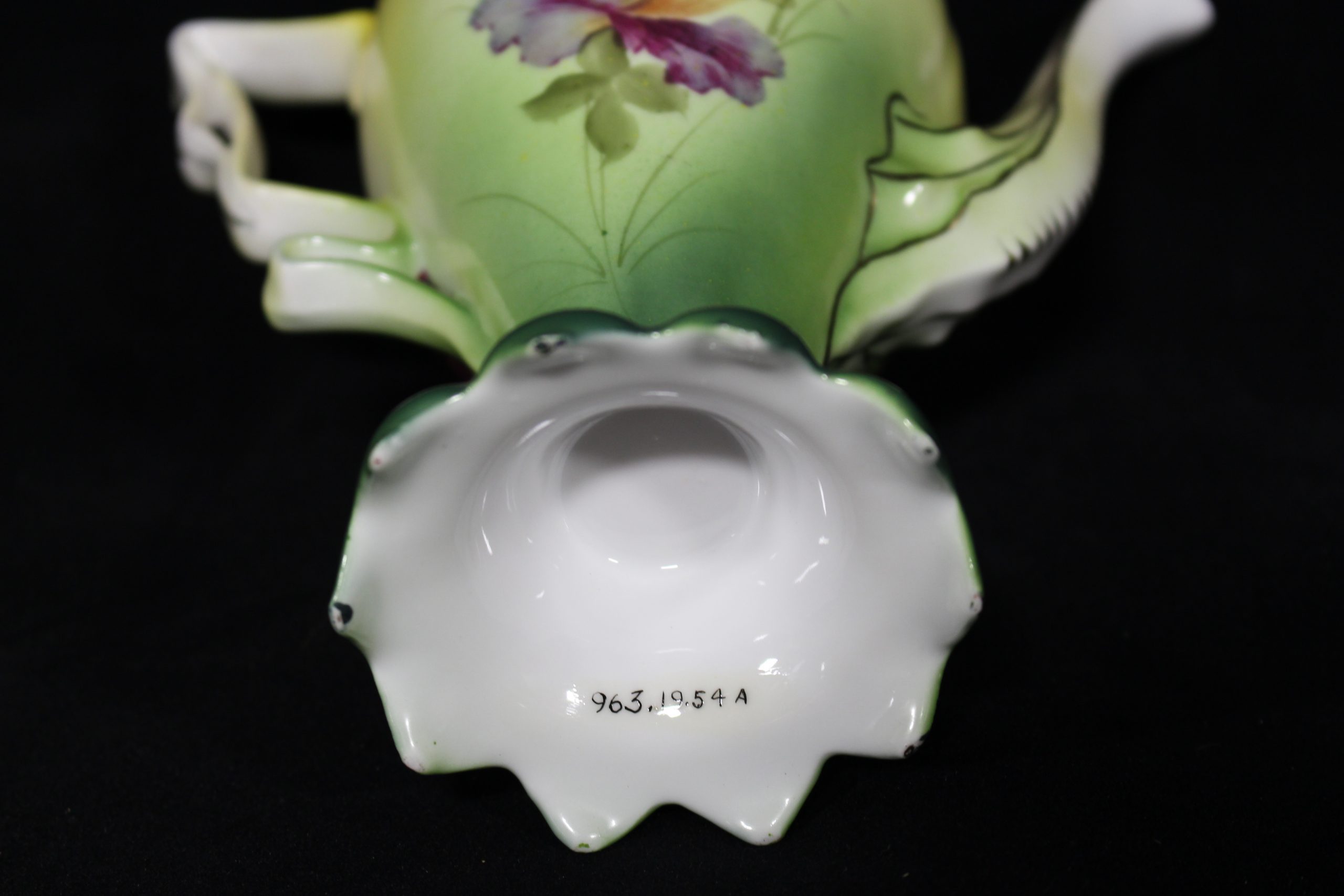
The Object Identification Number is an important part of the “secret language” used by museum professionals.
Most museum visitors are aware that the artifacts in the museum have numbers written on them. Most also know that the numbers somehow help to identify the objects. What most don’t realize, however, is what the numbers mean to the museum staff.
When museum staff look at an Object Identification Number (object ID), they can instantly tell what year the object came to the museum; if there were other objects that came in before it that particular year; whether it was part of a group of objects; and in some cases, whether or not there is a known donor. Using an object ID number to look up an object record in the museum database will show the staff everything that is known about the object. This includes physical description, donor, provenance (history), condition, use, and where in the museum the object is located.
Traditionally, museums use a three part numbering system. The first part lets staff know the year the artifact came into the museum collection; the second part indicates the group number of the artifacts that came in during a particular year; and the last number is the object number within that group. The first two parts of the number are what is known as an accession number (an object or group of objects from a single source at one time). When the third part of the number is added on, it becomes an object ID number specific to that object.
Accession and object ID numbers are an important part of the “secret language” used by museum professionals. They allow us to record and store, in one spot, important information about the artifacts as well as help track and locate them. The object ID is as important as the artifact, and without it, access to the information about the artifact would be difficult to retain and retrieve.
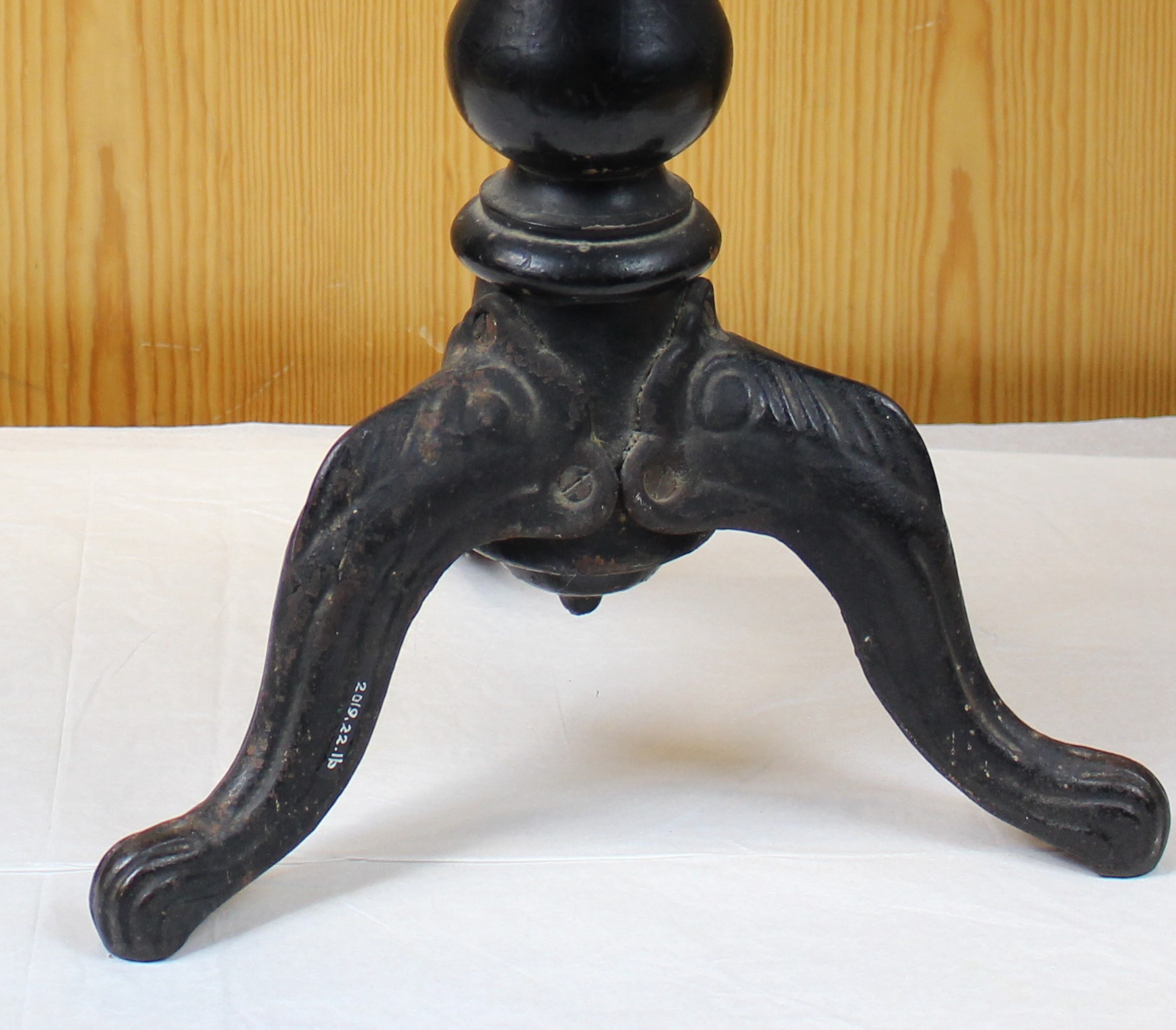
Object Identification Number shown on this Museum artifact.
by Amy Zoethout | May 4, 2021 | Artefacts, Collection highlights
Take a closer look at the Huron County Museum & Historic Gaol and its collections as staff share stories about some well-known and some not-so-well-known features, artifacts, and more. Acting Education and Programming Coordinator Dan Genis looks at the Museum’s record collection.
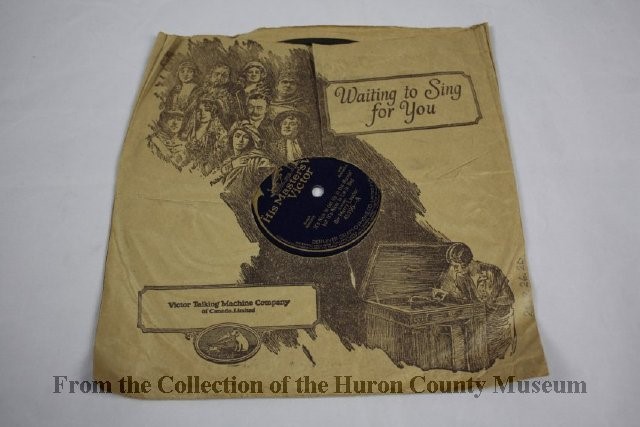
Record sleeve advertising the Victor Talking Machine Company of Canada Limited, featuring the slogan “Waiting to Sing to You.” Contains an early 1920s record by Harry Lauder. 2018.0026.002b
Did you know that Huron County Museum has a record collection?
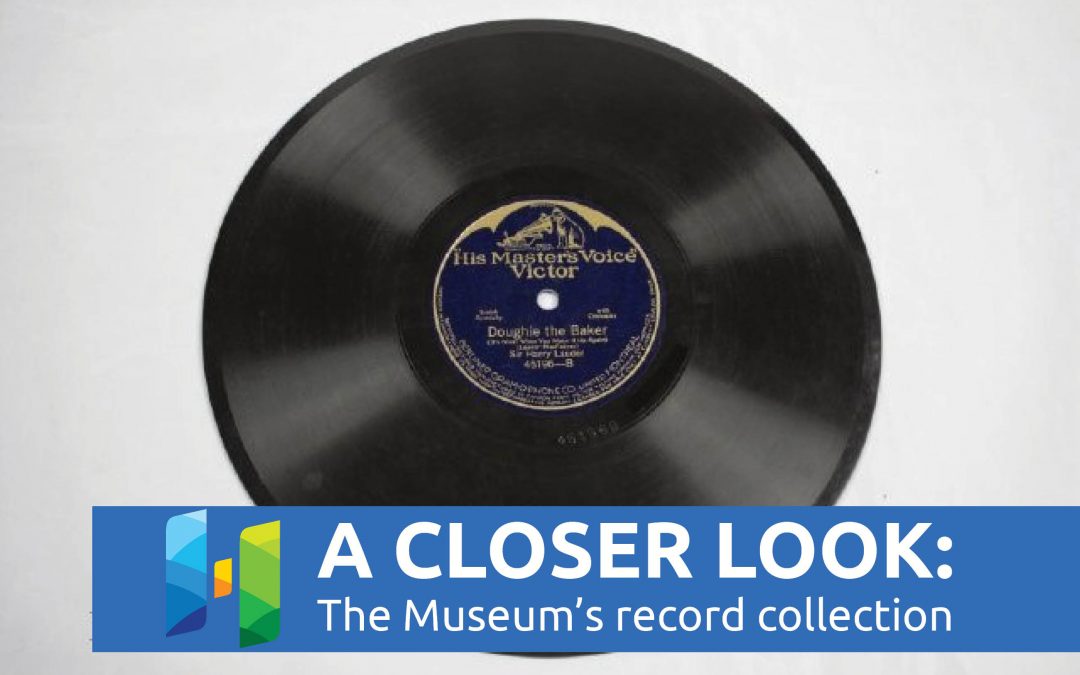
While you might assume that record collections only belong to hardcore music fans or collectors, the Huron County Museum has an impressive record collection of its own. The museum collection contains almost 200 records, largely dating from 1900-1970. Music is a vital part of a community’s culture, which makes music-related artifacts important as well.
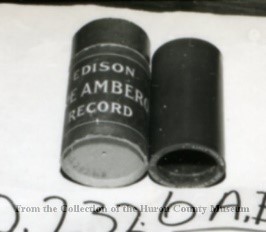
An Edison Blue Amberol phonograph record released in 1913. This 4 minute 17 second record plays “Alice Where Art Thou?” by Ernest Pike, originally composed by Joseph Ascher. M960.0232.006a
The collection begins with phonograph cylinders, commonly called “records”. Like the one in the above picture, the cylinders were meant to be played on a phonograph. Invented by Thomas Edison in 1877, early phonographs recorded sound as small grooves on a wax (later plastic) cylinder. To play the recording, the cylinder rotated and a stylus traced over the grooves and vibrated, reproducing the original sound. While in North America any sound-reproducing “talking” machine that uses records can be called a phonograph, in the United Kingdom (UK) the term more specifically refers to machines that play cylinders.
In 1889, Emile Berliner invented a phonograph that played discs records, calling it the “Gramophone.” Although disc records had been sold as early as 1889, it was not until the 1910s that they overtook phonograph cylinders as the record format of choice. Most disc records, including the “Harry Lauder” record in the picture above, were made with shellac. In the UK “Gramophone” became the term used to describe any disc-playing talking machine, but “phonograph” and “talking-machine” continued to be used in North America. This is especially confusing in Canada where all three terms had been and continue to be used interchangeably.
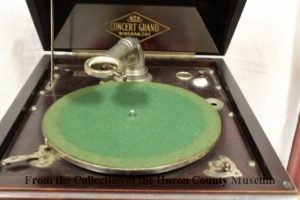
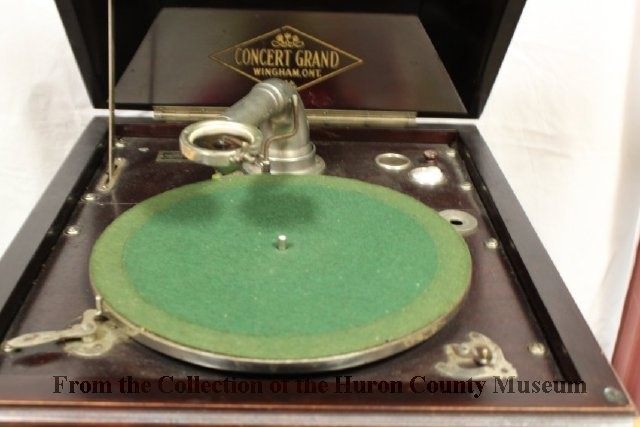
The “Concert Grand” talking machine (or gramophone), manufactured at the Gunn-Son-ola Talking Machine Co. in Wingham, Ontario. The gramophone was purchased by Lily and George McClenaghan and was always in their home at Whitechurch. 2018.0026.001a
The Gunn-Son-ola Talking Machine Company was founded in Wingham by Michigan manufacturer William Gunn in 1920. Gunn had purchased the Walker and Clegg furniture factory located on Alfred Street. Gun-son-ola churned out talking machines and cabinets for over ten years, at its peak employing 162 people. The company went bankrupt in 1931 and was taken over by Brown Bros. Manufacturing, which reverted the factory back into the manufacturing of general furniture products.
In the 1940s Polyvinyl chloride (PVC) began replacing shellac in the manufacturing of records. These new “vinyl” records were more flexible and less likely to break, which also allowed for smaller grooves (“microgrooves”) which could store more music.
By the time “The Best of Vera Lynn” was released in 1968, vinyl records were the most popular way of listening to recorded music. In the early 1980s cassette tapes had replaced vinyl in popularity, only to be itself replaced by the compact disk (CD) in the 1990s.There has been a vinyl record revival in recent years, with vinyl sales in 2020 surpassing CD sales in the US for the first time since 1986.
To check out more of the Huron County Museum’s record collection, head over to our online collections database at: https://huroncountymuseum.pastperfectonline.com/
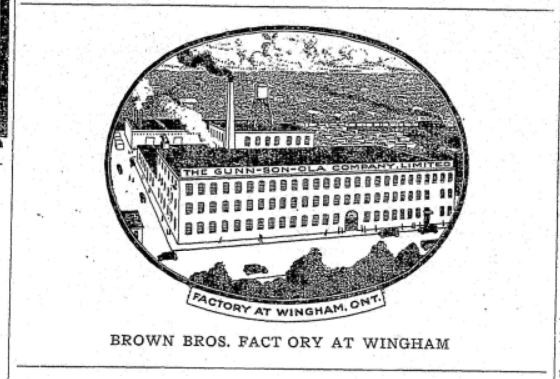
A drawing of the Gunn-son-ola factory in Wingham, which primarily made talking-machines and radio cabinets. By 1935 it was owned by the Brown Bros. Company. The Wingham Advance Times 1935-05-16