Cow Appreciation: Andrew Dairy

July 9th is Cow Appreciation Day and summer student Chloe Oesch has been exploring the museum’s collection for stories about cows and delicious local dairy products from Huron County’s past! If you are interested in finding more cow-related artifacts, you can search our online collections database from home!

Andrew Dairy was a Goderich dairy company from 1949 to 1977, run out of “The Andrew Dairy Bar” located at 45 West St. Operated by Amos Andrew, Andrew Dairy provided fresh milk to many Goderich locals through their delivery service.

The dairy bar on West Street also had its own separate storefront that operated much like a café. On one of their matchbooks the Museum has in its collection, they advertise “Neilsons Ice cream” and “Light lunches”. We can also see that they accepted bottle returns from customers, as they advertise the phrase “Drink up, we need the empties.”

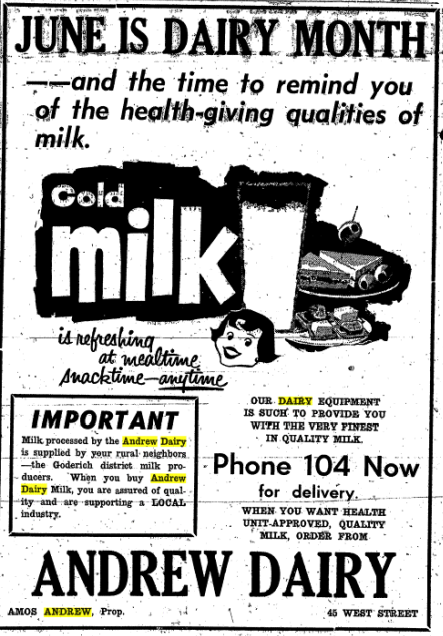
Their operation was completely local as well, their milk being “supplied by your local neighbors” as seen in their 1959 newspaper advertisement. The Huron County Museum is in possession of many items from this local business. In addition to several glass milk bottles, the Museum was able to preserve one of Andrew Dairy’s milk delivery wagons.

This red and white milk wagon, pictured below, was used for deliveries by Andrew Dairy until 1961. The wagon was possibly built by John Pedersen, a blacksmith from London from about 1939. This wagon was the last of the horse-drawn milk wagons to be used in this part of Huron County. The wagon was pulled by a single horse and had a 20 lb tethering weight used to stop the wagon and horse when delivering milk to customer’s homes.

Although the days of the milk man have long gone past, the Huron County Museum will still be celebrating our local dairy industry on Tuesday, July 9, for Cow Appreciation Day in 2024! The museum will have a local dairy educator from the Dairy Farmers of Ontario, and several dairy and cow related items on display from our collection. And, as always, our iconic two headed calves will be on display at the museum for you to visit!
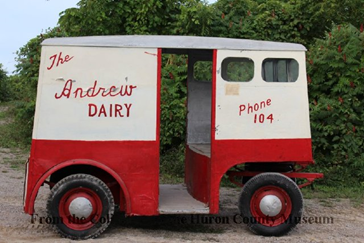
Red and white van with open sides. Text on side reads "The Andrew Dairy, Phone 104"

The Andrews Dairy delivery wagon

M963.0005.001. This artifact is stored at the museums offsite storage.
Black and white clipping of a newspaper ad. "June is Dairy Month" image of glass of milk, plate of food and cartoon girl's face.

Ad for dairy month in 1959

Goderich Signal-Star, 1959-06-25, Page 14. Find more via the museum’s digitzed newspaper collection!
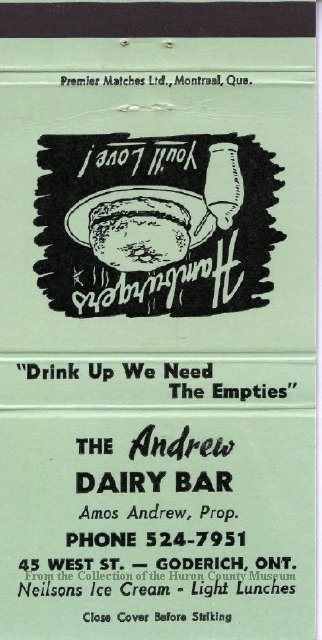
Green matchbook, unfoldeed. Top half (upside down) image of hamburger on a plate. "Hamburgers you'll love." Bottom half, location and phone number for Andrew Dairy Bar, 45 West St. Goderich Ontario.

Andrew Dairy matchbook

2020.0027.029.  Advertising the milk bar in Goderich.
 

Alice Munro: Local Resources for Teachers & Students

Alice Munro: Local Resources for Teachers & Students

Huron County is known across the world as  “Alice Munro Country.” Alice Munro (1931-2024) was born in Wingham and lived in Clinton for decades. The landscapes, culture, architecture and people of Huron County are reflected in many of her incisive stories.  Today she is honoured by the Alice Munro Branch library and literary garden in Wingham, a tribute bench outside of the library in Clinton, and the annual Alice Munro Festival of the Short Story. 

This guide provides a quick introduction and links for teachers and students to learn about this Nobel-Prize winning author and master of the shorty story through the collections of the Huron County Museum.

Video

The Young Canuckstorians: The Alice Munro Story

Thanks to the 1st Bayfield Guides who researched, scripted and recorded this video in partnership with museum staff and video producer Mickey Maple.

Research Resources


Huron County’s digitized newspapers chronicle local news from across the county! Click to search more than a century of history via Huron County’s digitized newspapers: free, online and keyword searchable.

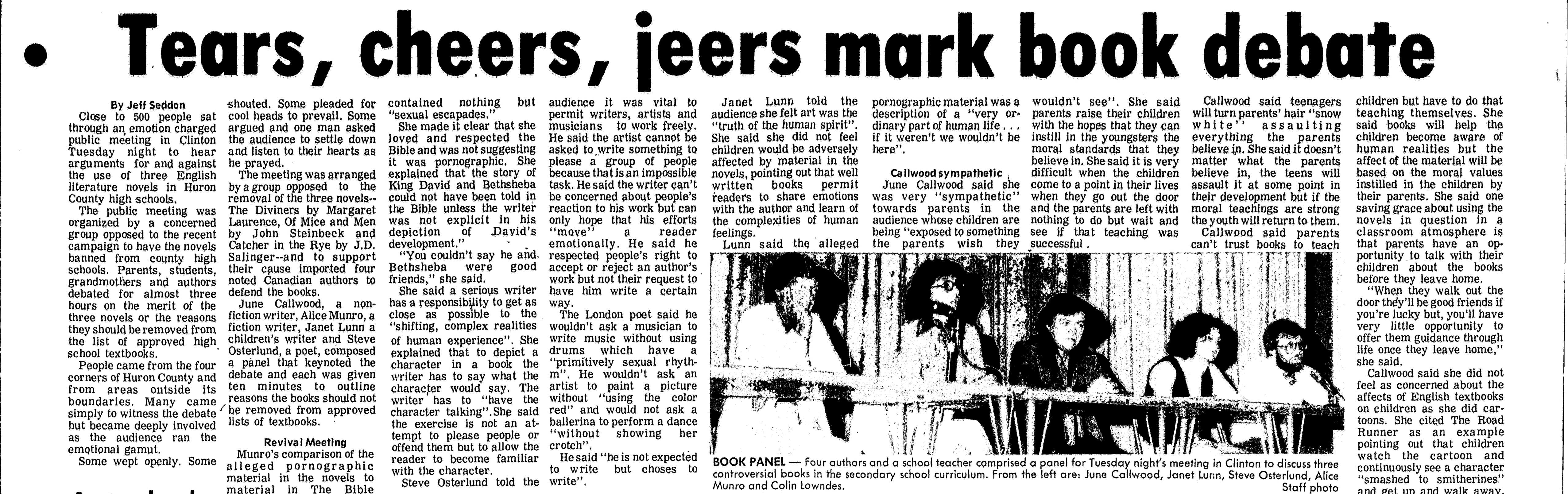
You may find many items about Alice Munro’s career accomplishments, her life in Clinton (including anti-censorship efforts) and references to her childhood in Wingham as Alice Laidlaw in the local papers. Use the search tips to help narrow by search term, community or date. 


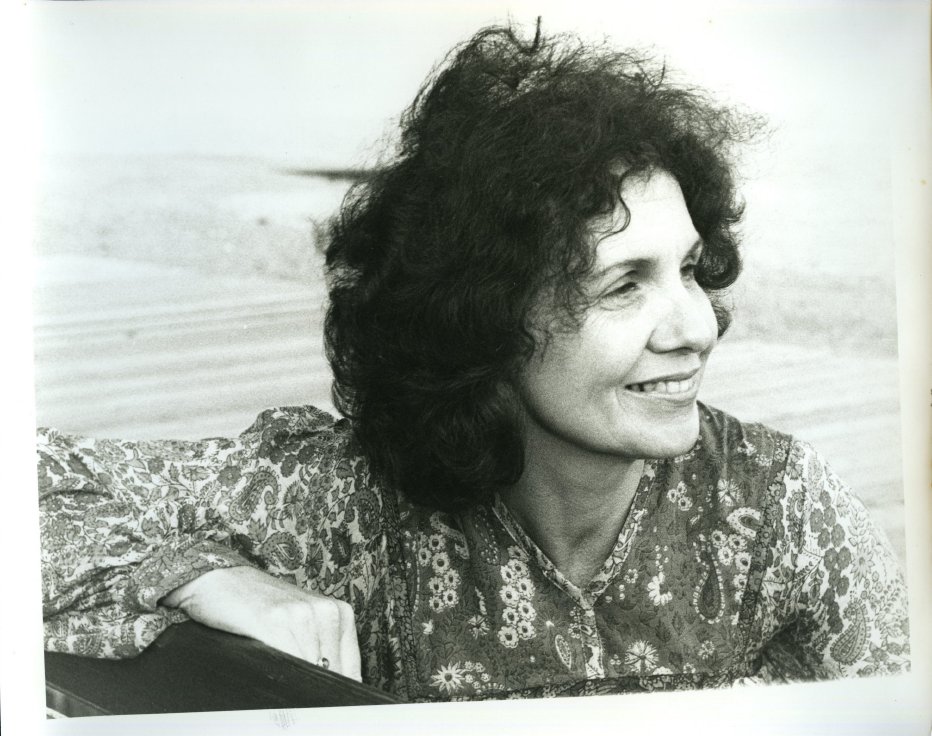
Black & white photo of a smiling Alice Munro, a middle-aged woman with dark curly hair blowing in the wind.
2023.0028.064. Alice Munro in 1978.
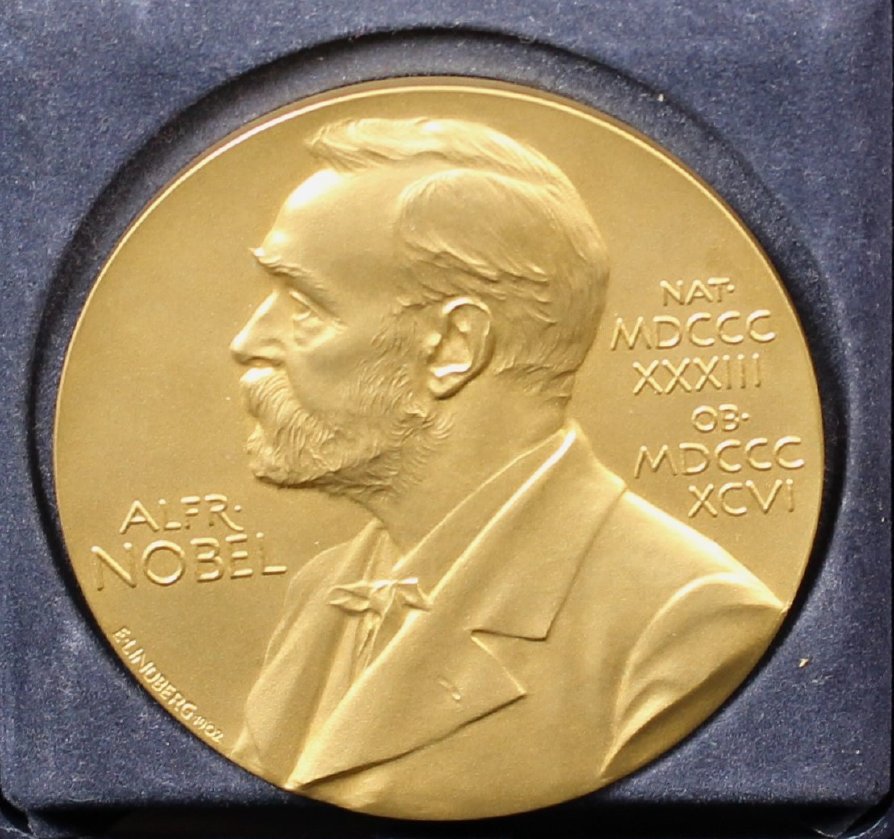
Gold coloured medallion with bearded man's face and shoulders in profile (Alfred Nobel).
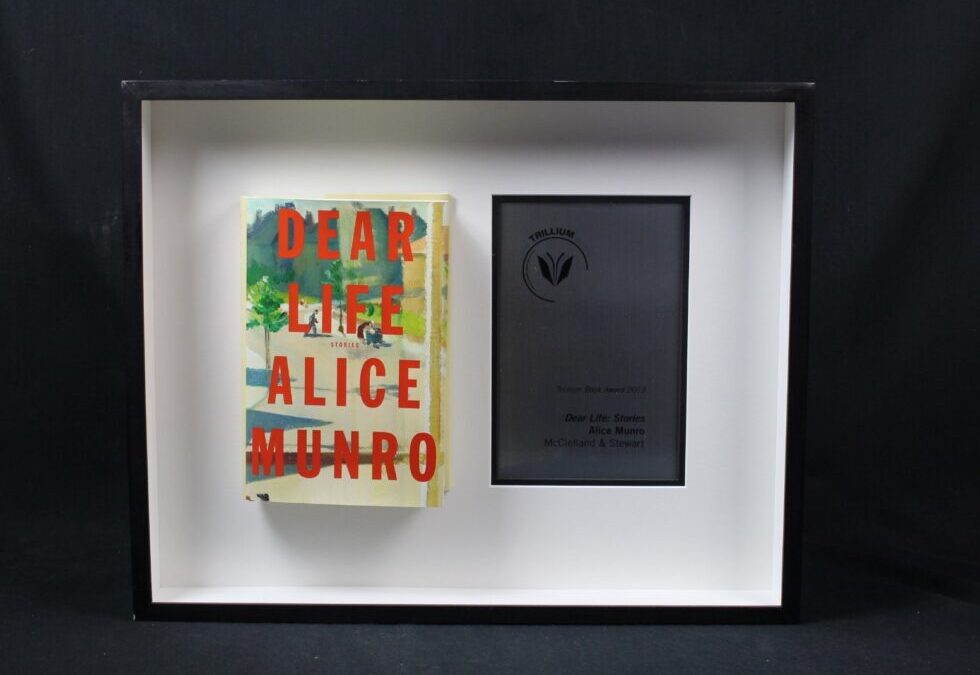
2023.0028.102b. Nobel prize for literature awarded to Alice Munro in 2013.
Newspaper clipping headlined "Tears, cheers, jeers mark book debate" Includes rectangular black and white photo in the bottom left with five figures sitting at a table.
Clipping from the Exeter Times-Advocate,1978-06-15, pg 1. “The public meeting was organized by a concerned group opposed to the recent campaign to have the novels banned from county high schools. Parents, students, grandmothers and authors debated for almost three hours on the merit of the three novels or the reasons they should be removed from the list of approved high school textbooks.”

Visual Resources

Visit our online catalogue to find museum artifacts that belonged to Alice Munro or relate to her work, now housed in the museum’s collection! Relevant items include clothing, literary prizes from around the globe, archival materials and books. 

Want to know more? If you’re interested in further research, or combining a school trip to the museum or gaol with a screening of a film adaptation of Munro’s works in our theatre, reach out to the Huron County Museum! museum [@] huroncounty.ca
This is a light purple and orange Man Booker International Prize, awarded to author Alice Munro in 2009. It is designed to look like a book with an orange bookmark and is broken into three pieces.
2023.0028.105. Man Booker Prize awarded to Alice Munro in 2009.
Eloise A. Skimings – The Poetess of Huron County

Eloise A. Skimings – The Poetess of Huron County

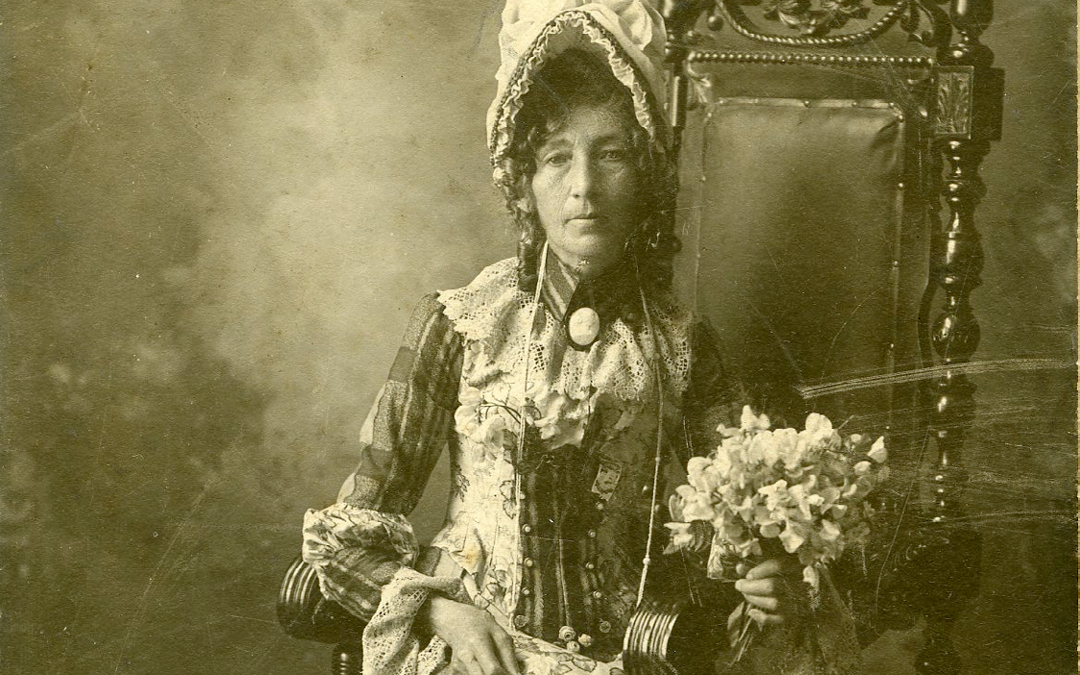
Eloise Ann Skimings was a poet, musician, music teacher, composer, newspaper columnist and author. She was described as “one of Goderich’s best-known citizens” and also “The Poetess of Lake Huron”.  She was often seen in Goderich wearing elaborate dresses, hats, gloves and a parasol, and was described, by many, as “our distinguished townswoman”. 

Eloise was born in Goderich on Dec. 29, 1837, to Mary Rielly Mason Skimings and James Skimings. She had two brothers, William and Richard, and one sister, Emma Jane, who died at two years, seven months.

Eloise was one of photographer Reuben Sallows’s favourite models. Her photos were reproduced as postcards and some can be found in the Huron County Museum’s collection as well as the prints. A large oil painting of her hangs in the Museum’s Victorian Apartment display above the fireplace.

As an author, she dedicated many poems to the people she encountered during her lifetime and the subject of many of her poems reflect the land, life and times she lived in. She published a book of poetry Golden Leaves in 1890, which was lengthened to nearly 1,000 poems when it was reprinted under the same title in 1904. Her brother, lawyer and lieutenant Richard Skimings, was also an author of poetry and prose. Twenty pages of Golden Leaves were set aside for publication of his verse versus 326 pages for hers.

Golden Leaves was exhibited in the Library of the Women’s Building at the Chicago World’s Columbian Exposition (World’s Fair) in 1893. This book was one of only two, penned by Canadian women, to be exhibited within that library building.

Also a music teacher, she composed and published music such as I think of Thee, Alice, National March, Forget Me not Waltz, and Golden Blossoms.

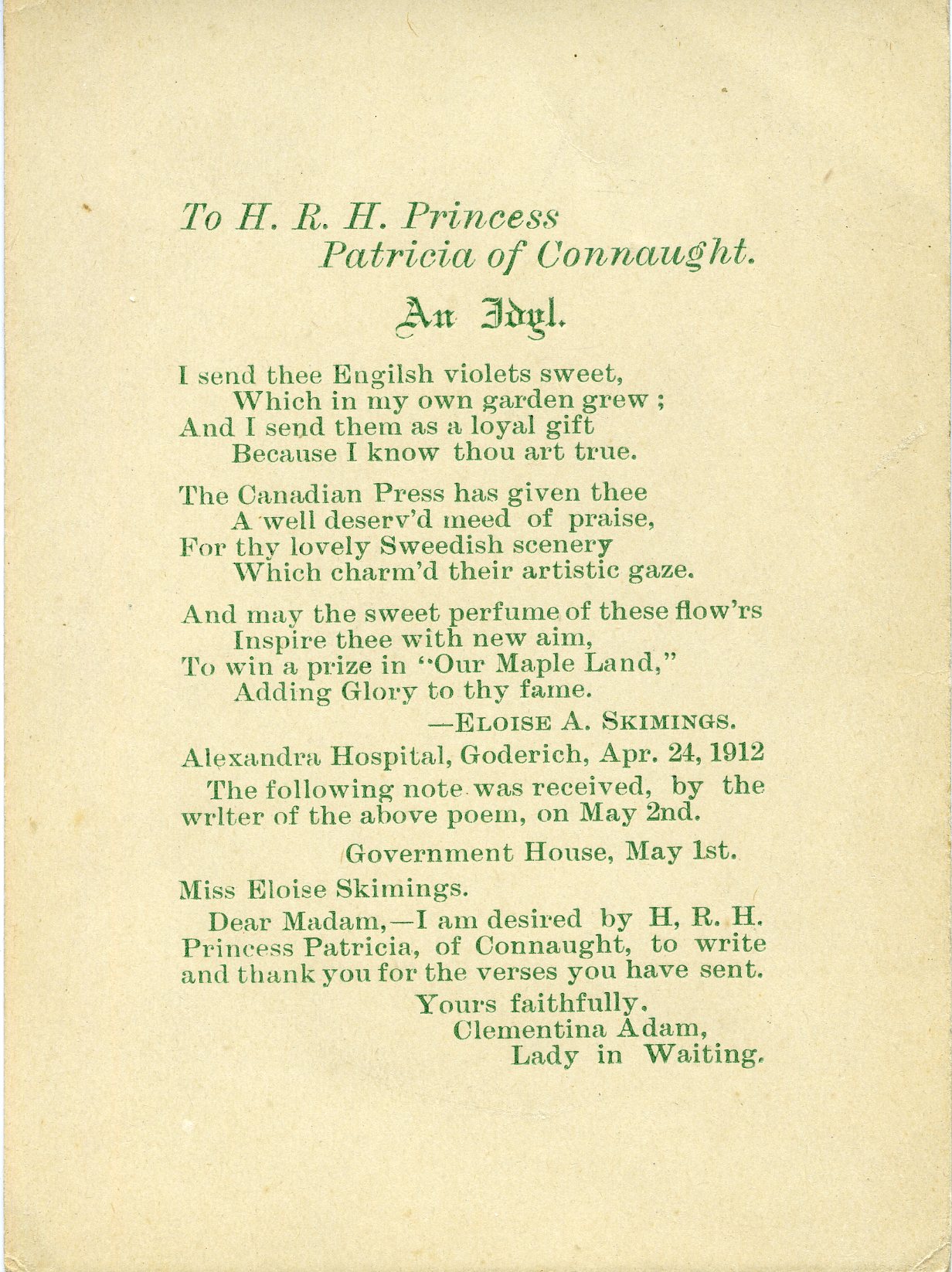
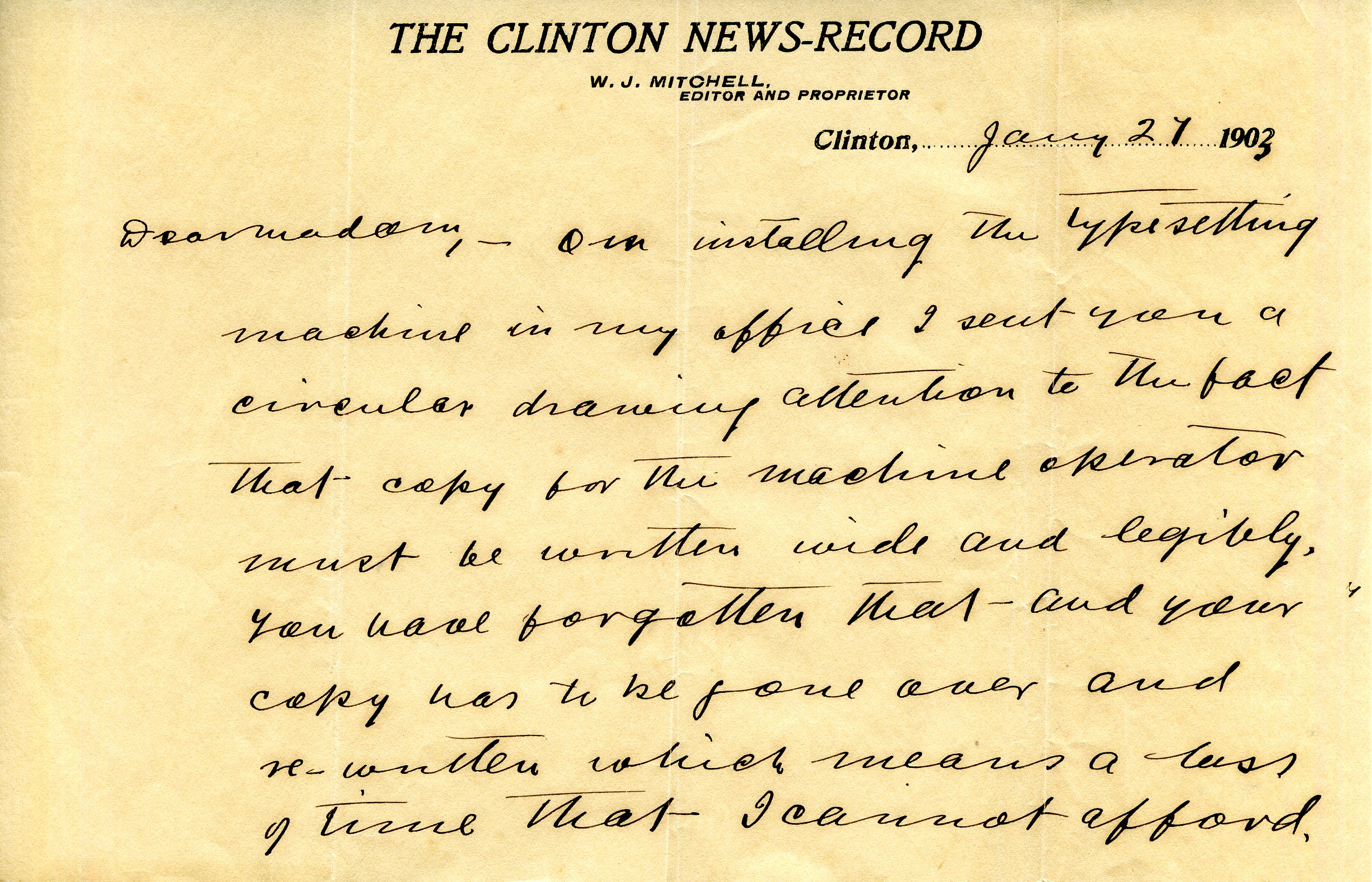
The archival fonds at the Huron County Museum consists of textual records and other material created and accumulated by Eloise A. Skimings during her career as a newspaper correspondent, teacher, poet, and composer in Goderich.  During her lifetime she received much correspondence and letters, including thank-you letters, letters from her family & friends, news correspondence from her time at the Clinton News-Record, and payments for her poetry book. Some of these letters were written by well-known people of the time, from political figures to royalty. A finding aid can be found on the Museum’s website – Huron County Archives | Huron County Museum for researchers interested in reading more. 
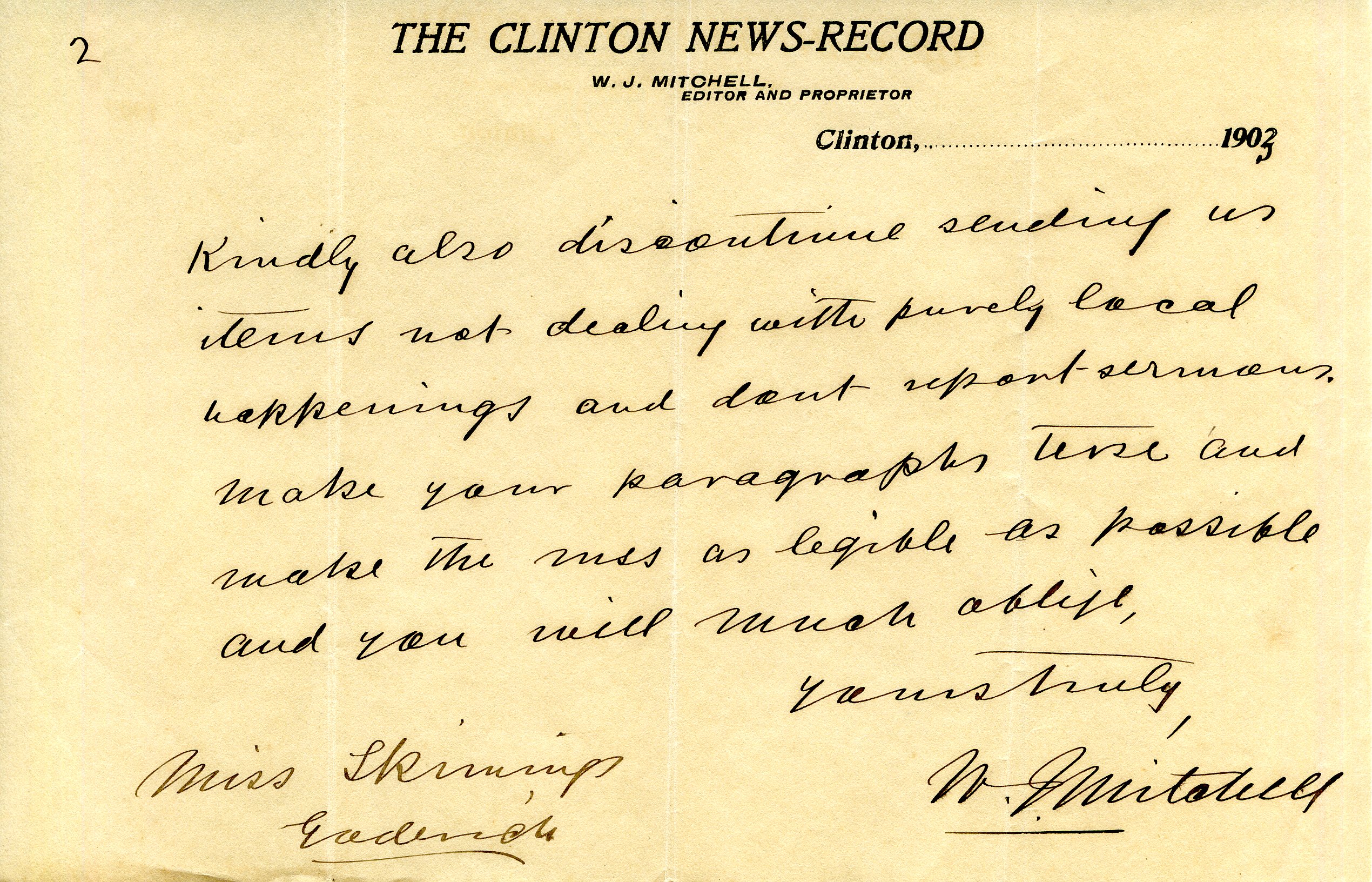
Images at left show two-page correspondence from our collection written Jan. 27, 1903 from Clinton News-Record Editor W.J. Mitchell. The full letter reads:

Dear madam,

On installing the typesetting machine in my office I sent you a circular drawing attention to the fact that copy for the machine operator must be written wide and legibly, you have forgotten that – and your copy has to be gone over and re-written which means a loss of time that I cannot afford.

Kindly also discontinue sending us items not dealing with purely local happenings and don’t report sermons. Make your paragraphs terse and make the ___ as legible as possible and you will much oblige, Yours truly, W. Mitchell

On the occasion of Eloise’s 80th birthday, it was “under consideration a proposal to mark” her 80th birthday with either “a concert or a public entertainment of some sort…doing honor to one who has for many years helped to keep Goderich before the world” (Goderich Signal Star, Thursday, May 8, 1919).

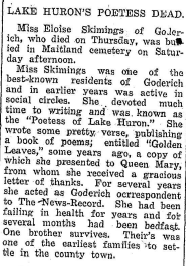
Eloise died at House of Refuge in 1921 and is buried at the Maitland Cemetery in Goderich, ON. Her death notice was published in the Clinton News-Record, April 14, 1914. From the digitized collection of Huron’s historical newspapers.

Eloise Skimings death notice as published in the Clinton News=Record, April 14, 1921

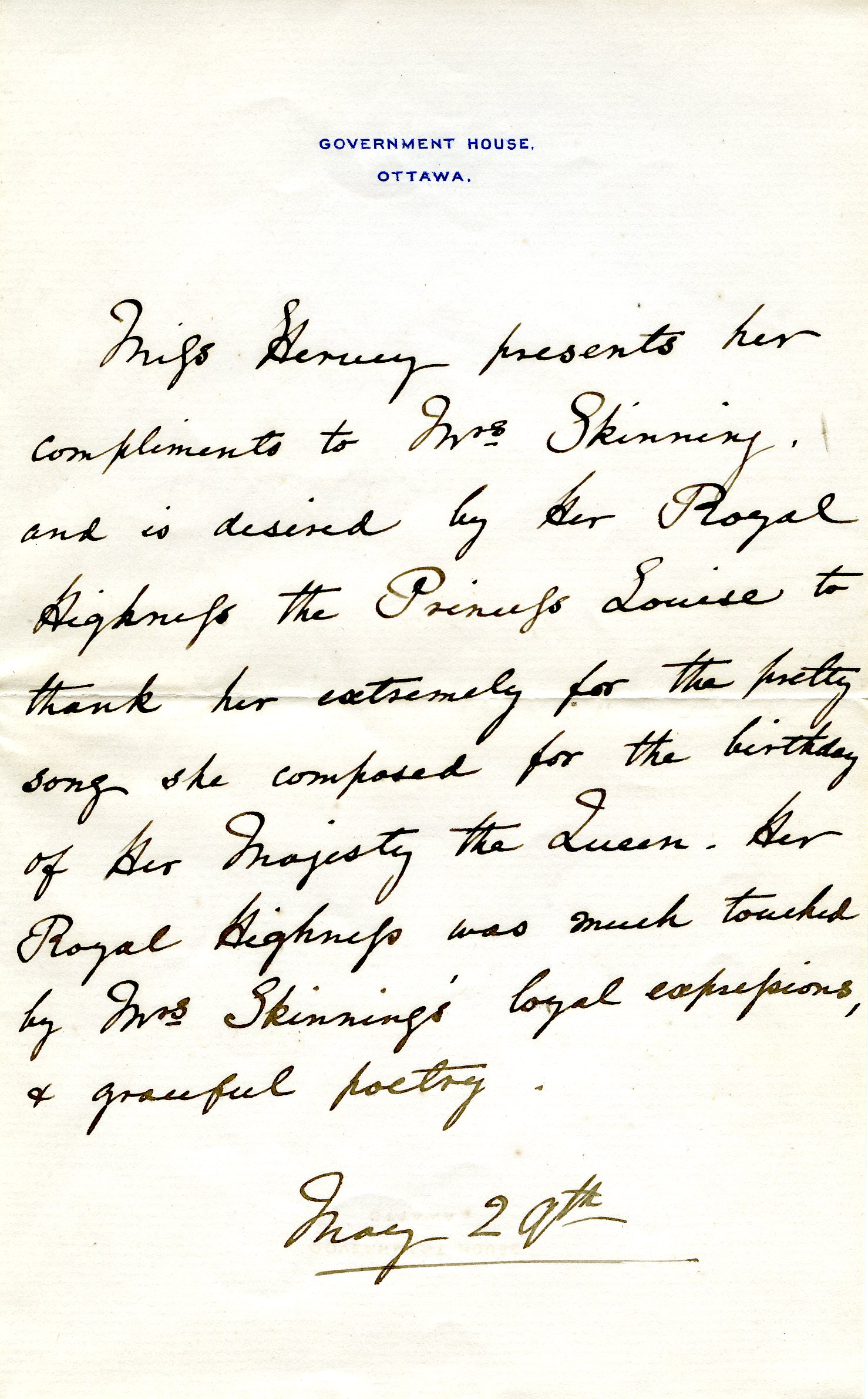
Princess Louise Margaret was the Duchess of Connaught & Strathearn and Viceregal consort of Canada while her husband Prince Arthur was Governor General from 1911 to 1916.

The full letter at left reads:

“__ presents her compliments to Mrs. Skimings, and is desired by her Royal Highness the Princess Louise to thank her extremely for the pretty song she composed for the birthday of Her Majesty the Queen. Her Royal Highness was much touched by Mrs. Skimings’ loyal expressions and graceful poetry.” 


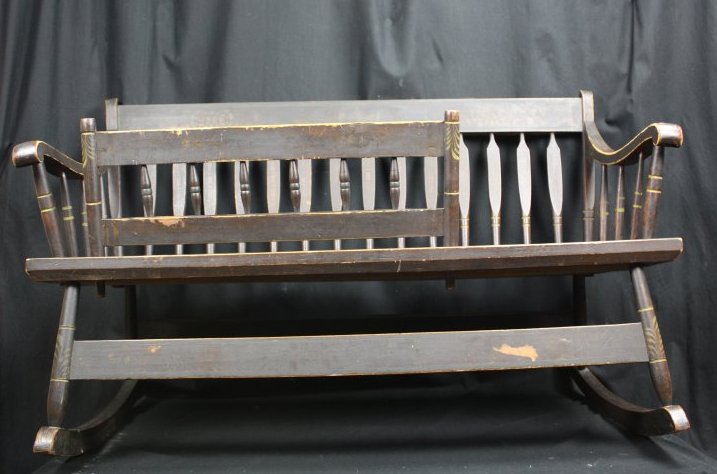
Mamma’s Bench, at right, once belonged to the Skimings family. Written on the bottom reads: “This cradle originally belonged to the Skimings family of Goderich, Ont. Eloise A. Skimings, the poetess of Lake Huron and her two brothers was rocked in this cradle.   May good luck fall on all children rocked in it. Gavin Green.” Currently on display in the Stories from Storage exhibit. 2019.0037.001 

Photo of a cradle bench that belonged to the Skimings family - from the Museum's collection.
New to the Collection: Civil War Letters

New to the Collection: Civil War Letters

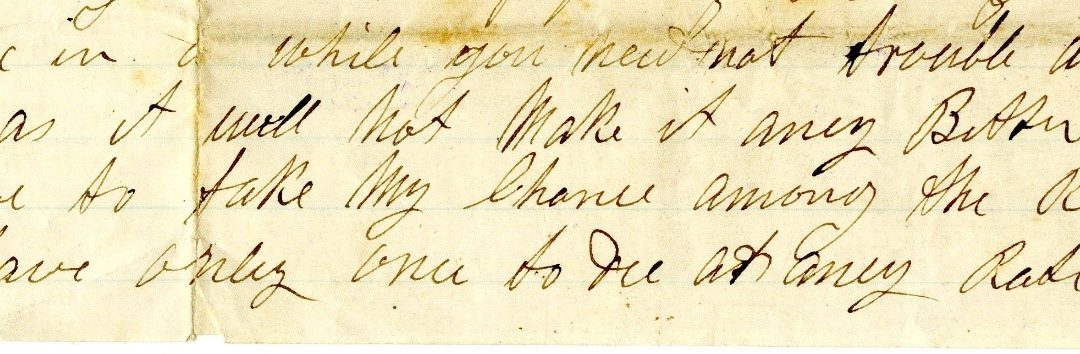
“I shall have to take my chance amongst the rest. I have only once to die at any rate.” – excerpt from a letter written by Joseph Hodskinson, March 29, 1862

The American Civil War doesn’t usually come to mind when thinking about Huron County history, but a recent donation to the Huron County Archives reveals the devastating impact the war had on a Brussels family.

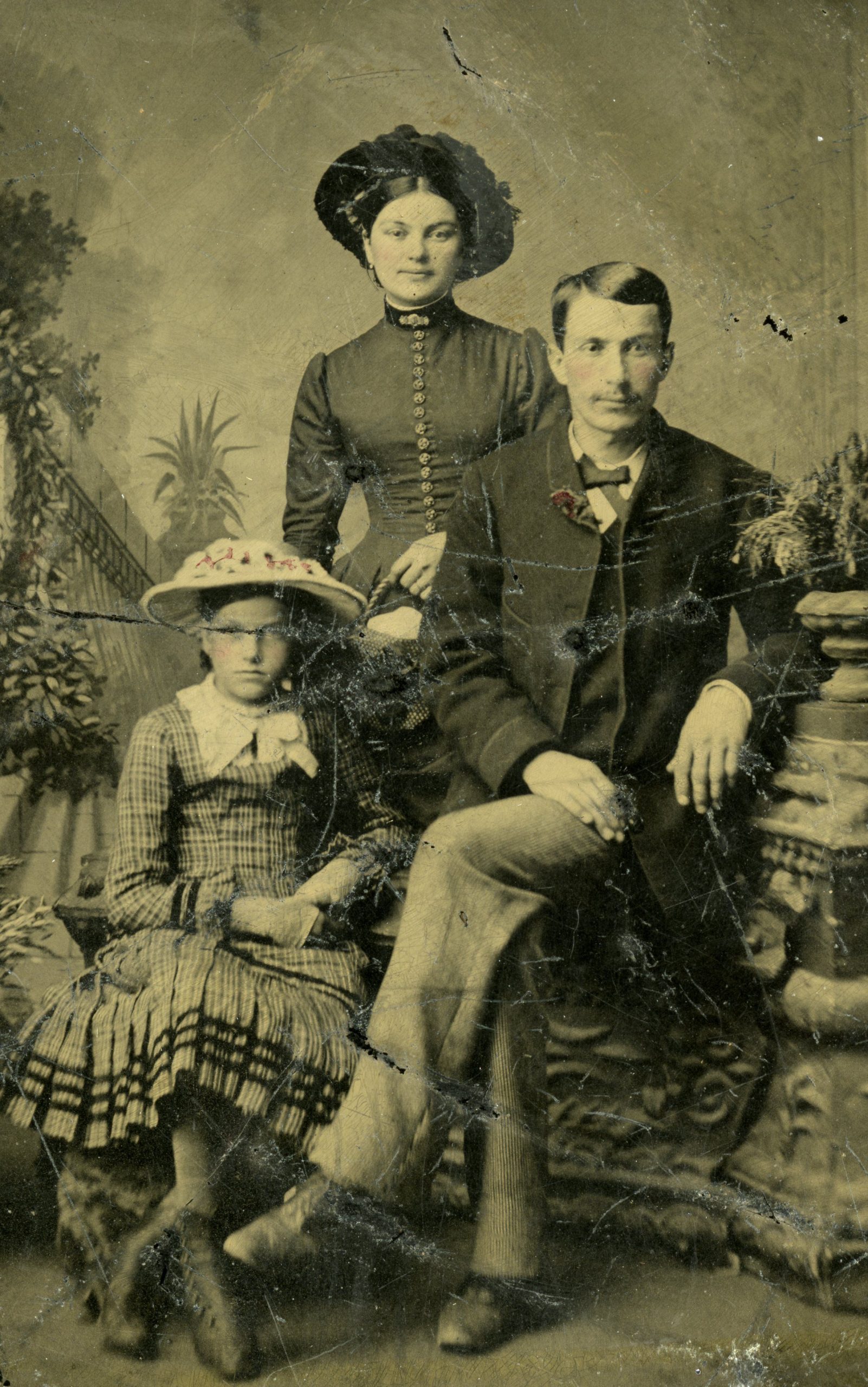
Joseph Hodskinson immigrated to Canada from Scotland around 1851 with his wife Margaret and daughter Celina. The family settled in the Brussels area where Joseph worked as a farmer before he joined the Civil War. It remains unknown why Joseph chose to leave his family in Canada to join the fight in America, but what is known is he would never return home.

The American Civil War was fought between the Union (the North) and the Confederacy (the South – formed by states that had seceded) from April 12, 1861 – May 26, 1865. According to Wikipedia, “the central cause of the war was the dispute over whether slavery would be permitted to expand into the western territories, leading to more slave states, or be prevented from doing so, which was widely believed would place slavery on a course of ultimate extinction.” 

Historic image taken in a portrait studio of Joseph Hodskinson, his wife Margaret and young daughter Celina.
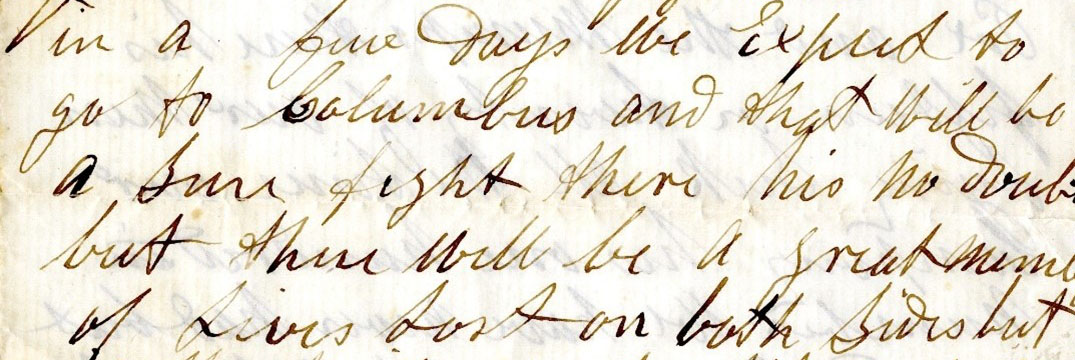
Photo of a section of an historic letter written from the American Civil War

“We expect to go to Columbus and that will be a sure fight. There is no doubt but there will be a great number of lives lost on both sides.” – excerpt of a letter written by Hodskinson on Jan. 24, 1862

Between 1862 and 1863, Joseph wrote several letters home to Margaret and Celina, describing the horrors of war. In the first winter of the war, in January 1862, he shares the great deal of sickness that hit the soldiers, including measles, small pox and mumps. In a letter home on March 1862, he describes three days of fighting at the Battle of Fort Donelson and noted that “It is the providence of the Lord that I am amongst those that was saved on the 13th Feb….the morning after the battle the field was a fearful sight. You might almost walk on dead bodies for a long distance.” A letter home on June 12, 1862, reveals that “We only have about 300 men remaining out of 1000 since I joined the army.”

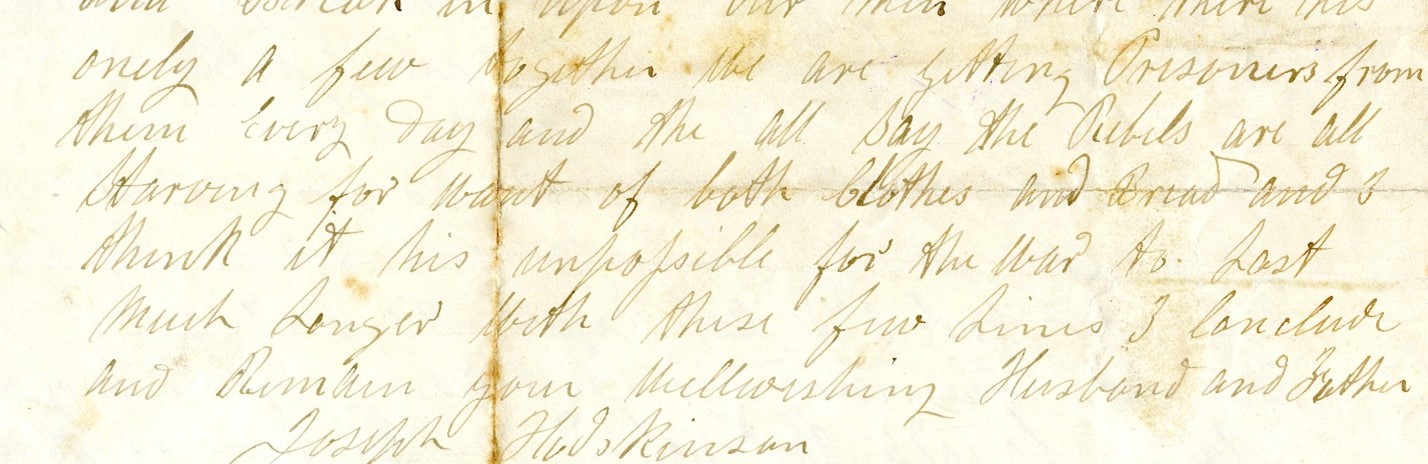
Photo of a section of an historic letter written from the American Civil War

We are getting prisoners from them every day and they all say the Rebels are all starving for want of both clothes and bread and I think it is impossible for the war to last much longer.” – excerpt from a letter dated Jan. 2, 1863

The war would continue for two more years, but Joseph would not see the end of the war, nor would he make his way home to his family in Brussels. He died later that year.

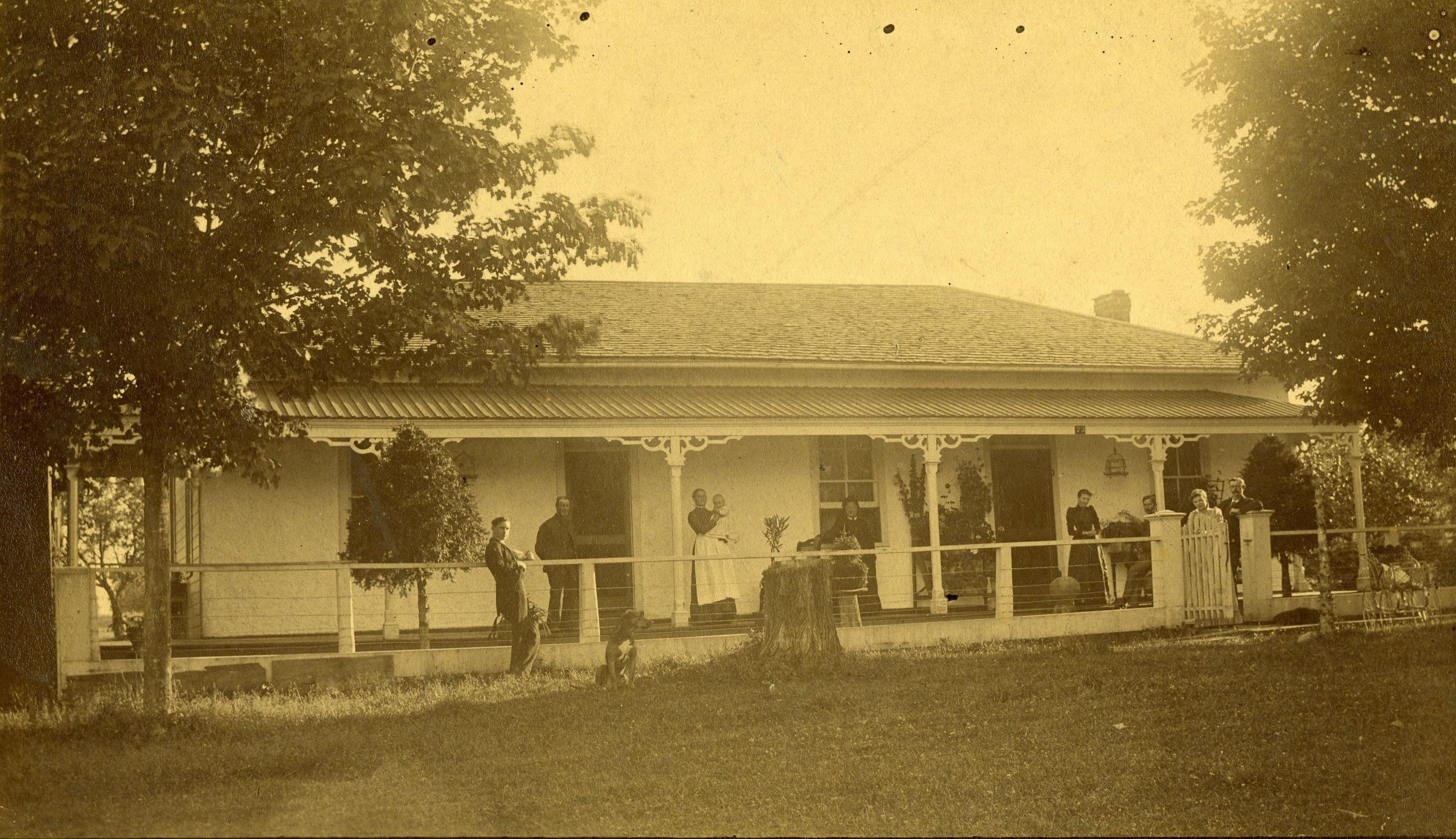
Historic image of the Ballatyne home on the bank of the Maitland River. There are a number of people standing on a wide front porch.

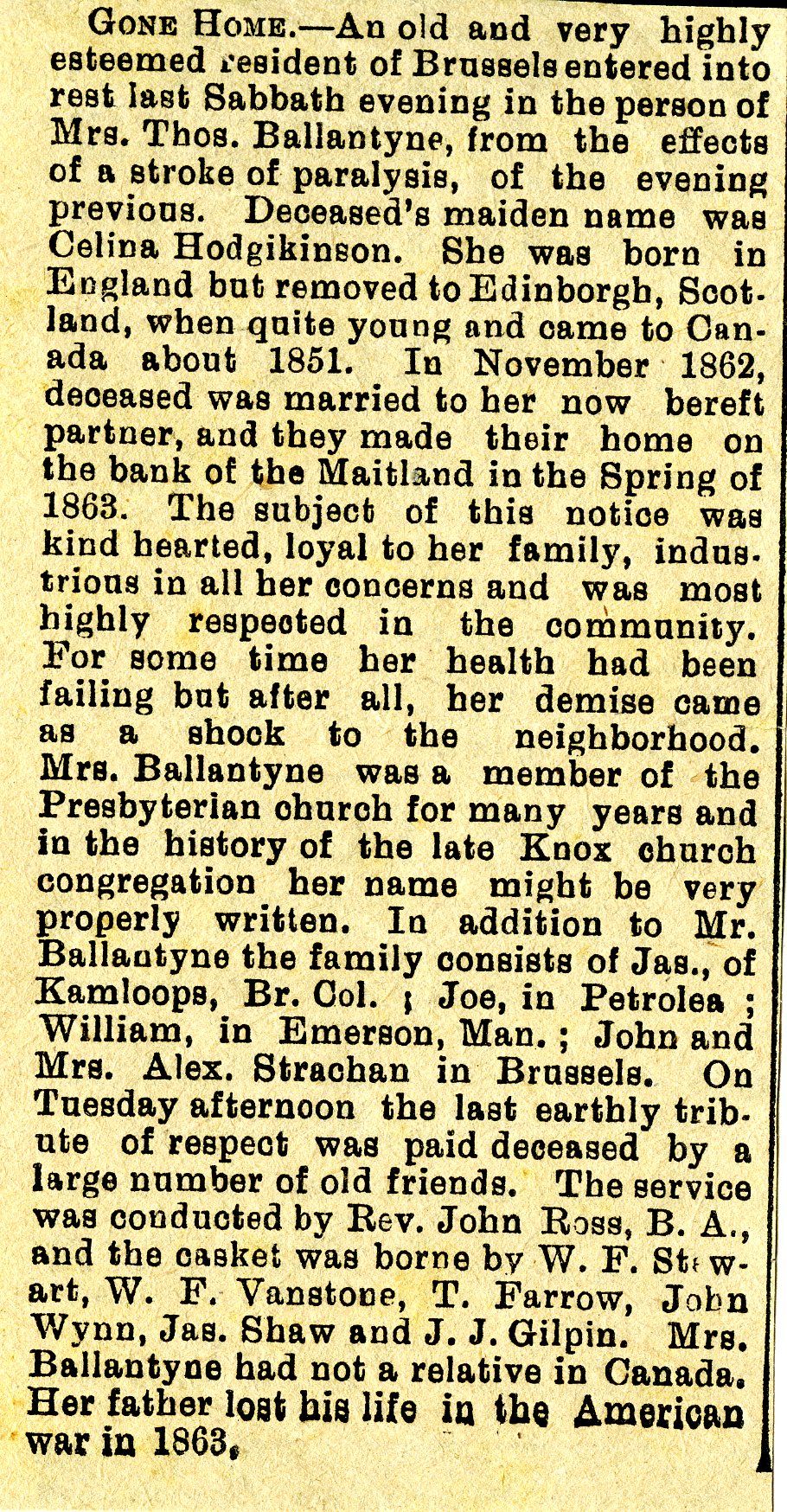
After Joseph’s death, Margaret and Celina remained in the Brussels area. Celina married Thomas Ballantyne in the fall of 1862 and the couple made their home on the bank of the Maitland River in the spring of 1863. The home is pictured above with the family sitting on the front porch around 1892. Shown here, from left to right, are Jack Ballantyne, Thomas Ballantyne, Celina Ballantyne holding Bill Strachan, Margaret Hodskinson, Annie and Alex Strachan, and Jenny and Joe Ballantyne.

Celina and Thomas had a daughter named Annie who married Alexander Strachan in Brussels in 1889. The couple owned a dry goods store in the village. 

The Huron County Museum would like to thank Ann Scott and Marion MacVannel for their recent donation of these letters and family photographs to the archival collection. Joseph was Ann’s three times great grandfather. If you are interested in learning more about our research services or making a donation to our collection, contact the Huron County Archives to arrange an appointment.

Image of a newspaper clipping of Celina Ballantyne's obituary
Henderson Collection – Labour Day Celebrations

Henderson Collection – Labour Day Celebrations

Brooklyn Wright, Huron County Museum assistant, is working on the Henderson Photographic Collection this summer and highlighting some of the stories and images from the collection. Gordon Henderson was a Goderich-based photographer who produced black-and white photos using a variety of mediums, such as negatives, glass-plate negatives, and cellulose nitrate film. The collection housed at the Huron County Museum and contains more than 10,000 negatives and photographs taken by Mr. Henderson from the 1930s – 1970s. Included in the collection are class pictures, summer camp pictures, wedding pictures, advertising campaigns, pictures of local events, buildings, businesses, and much more.

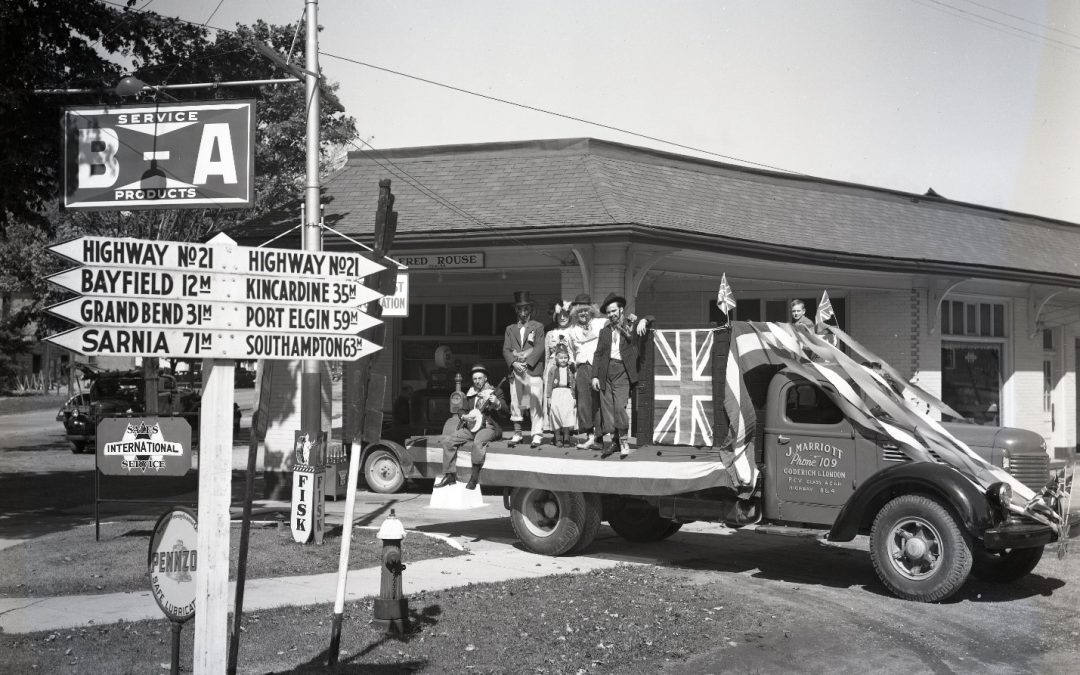
The second annual Goderich Labour Day Celebrations took place in and around the Goderich Square on Monday, Sept. 2, 1946. The celebrations were captured in part by the above image from the Henderson Collection, but the full extent of the festivities lasted all day, and a wide variety of events took place.

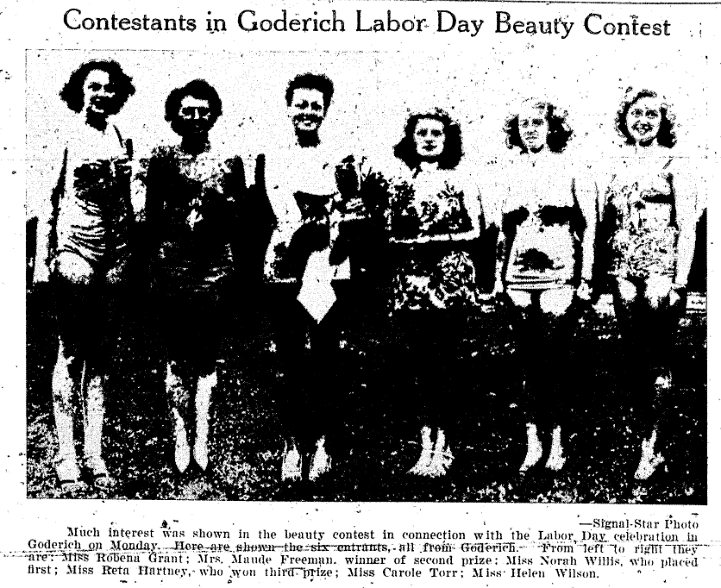
That morning, a parade was held, starting at Victoria Park and ending at the Square. The procession included many different community members, including labour unions, local businesses, bands, and the fire department. Goderich Bluewater Band, dressed as clowns, was one of the participating groups in the parade. Afterwards various contests took place; boys and girls races were held, as well as hurdle jumping, tug-of-war, a softball tournament and a beauty contest. There was also a speech by Col. Lambert, padre of the Christie Street Hospital in Toronto. He spoke to the crowd of his pride and gratefulness towards the soldiers of World War One and World War Two, but also to the working men and women who produced the firearms, minesweepers, parachutes, and other supplies needed for the war effort. The day was deemed a great success in the Goderich Signal-Star, with congratulations in order for the organizers, the local Trades and Labour Council.

What are your plans for this upcoming Labour Day?

Image from the digitized newspaper collection showing the contestants in the Goderich Labour Day Beauty Contest

The Goderich Signal-Star, 1946-09-05

School Style

School Style

By Robyn Weishar, Programs and Marketing Assistant

Back-to-school season is upon us! It can be an exciting time for many, and less exciting for those who favour warm weather and the freedom of summer. The very best part of going back to school for many is buying new supplies and new clothes! September is full of opportunities to start off on a new foot – or better yet, a new sole. Taking a glimpse back to the past, courtesy of the Museum’s extensive collection, we can observe some of the fashions students from Huron County were rocking back in their day. 

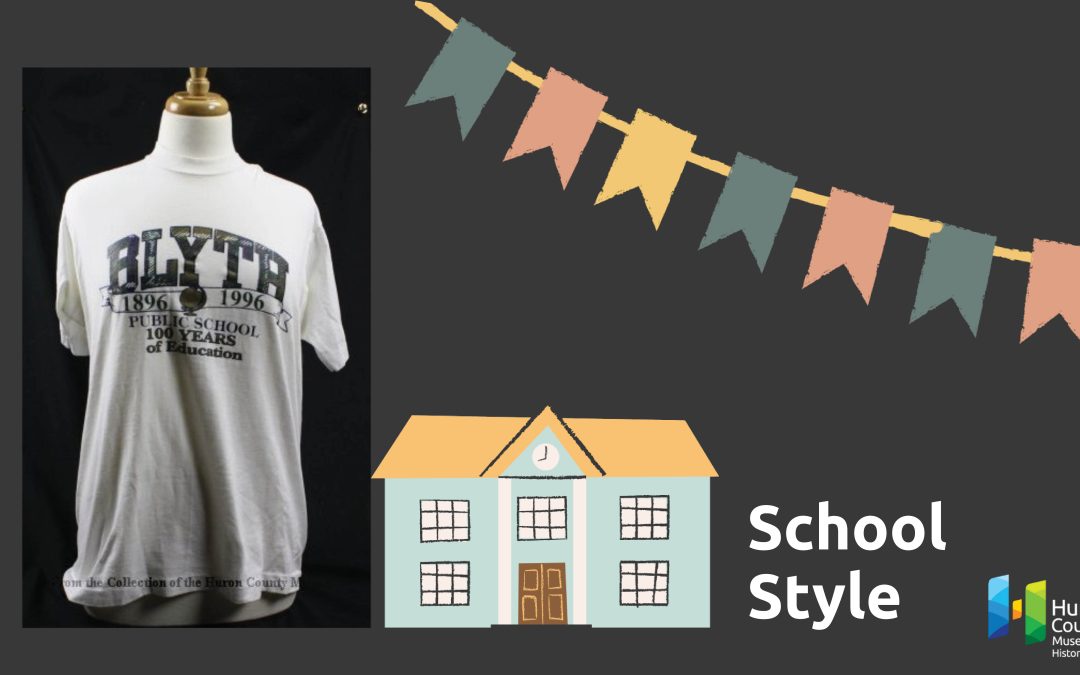
The above t-shirt is a commemorative clothing item to honour Blyth Public School’s “100 Years of Education.” This white cotton and polyester Fruit of the Loom t-shirt displays “Blyth” across the chest in blue, green, and white plaid. Below the emblem is a meridian with a globe in the centre, separating the years the school had been in operation: 1896-1996. (Object ID: 2018.0050.003)

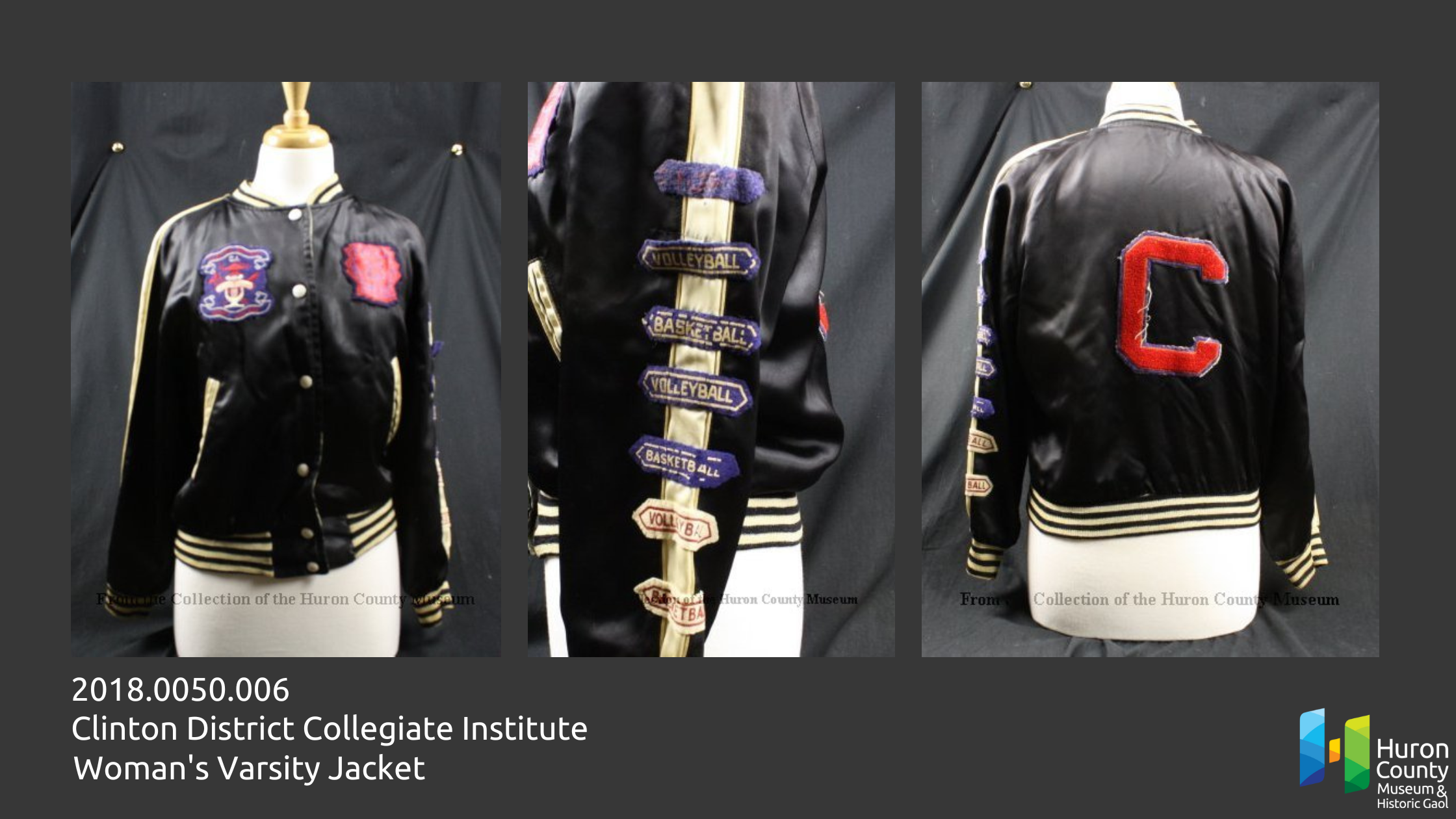
Three images showing different views of a Clinton District Collegiate women's varsity jacket from 1956

Shown above is a woman’s varsity jacket from Clinton District Collegiate Institute circa 1956-57. The jacket features the extracurricular activities the student would have participated in. Adorned on the left arm are seven patches with the respective activities. The first patch is believed to have said “music” prior to its deterioration. Following from top to bottom, the activities are; music, volleyball, and basketball, with volleyball and basketball alternating for the remainder of the patches with the final two being red and white as opposed to blue and white. (Object ID: 2018.0050.006)

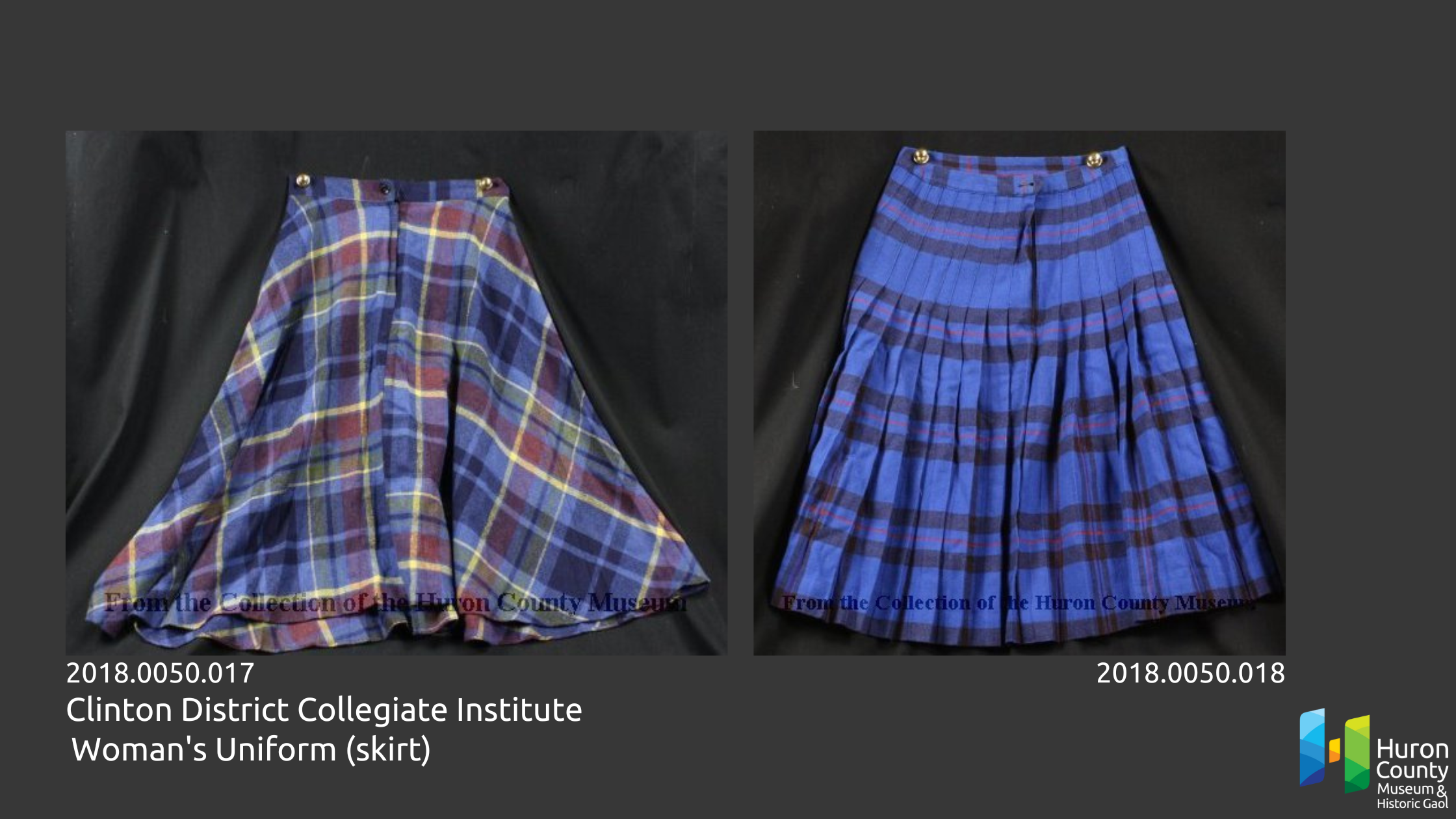
Image of two wool tartan skirts from the 1950s

The same student from the Clinton high school also donated her wool tartan skirts that were a part of a uniform. Though we do not have any blouses in our possession that would have gone with them, it may be assumed that a neutral coloured button-up blouse would have been paired. (Object IDs: 2018.0050.017 & 2018.0050.018)

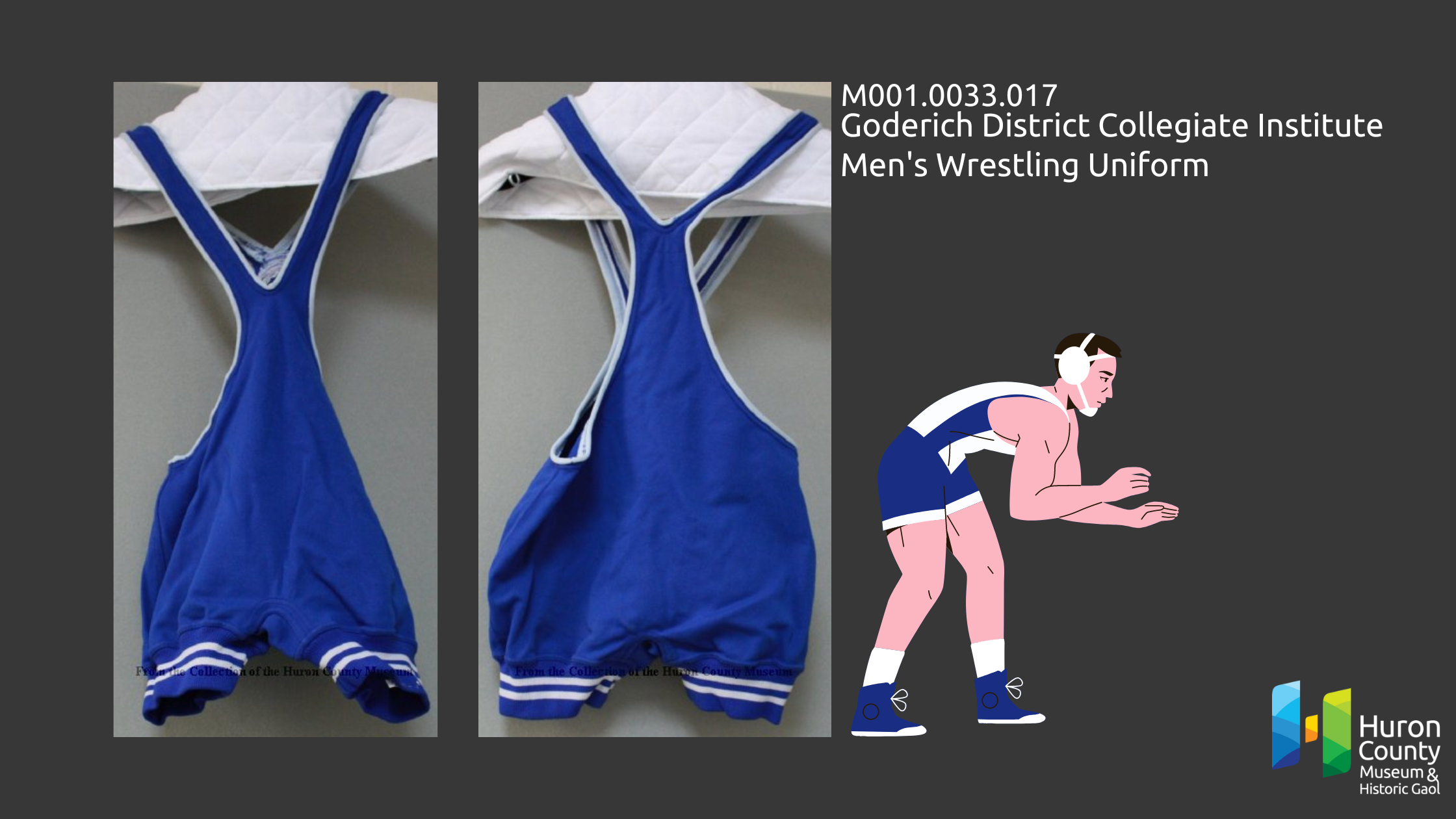
Two images of a Goderich District Collegiate Institute wrestling uniform with an illustration of a wrestler

For many athletes, a uniform is often what can set you and your opponents apart, whether it’s on the field, on the rink, or wherever else the sport takes place. One uniform that has stayed relatively the same over the years is that of wrestling. Shown above is wrestling attire belonging to a past member of the Goderich District Collegiate Institute’s wrestling team. The material used is nylon, however, overtime the elasticity has become stiff. The bright blue base of the uniform is complimented by white striping that outlines the edges of the garment. The date for this piece is not available. (Object ID: M001.0033.017)

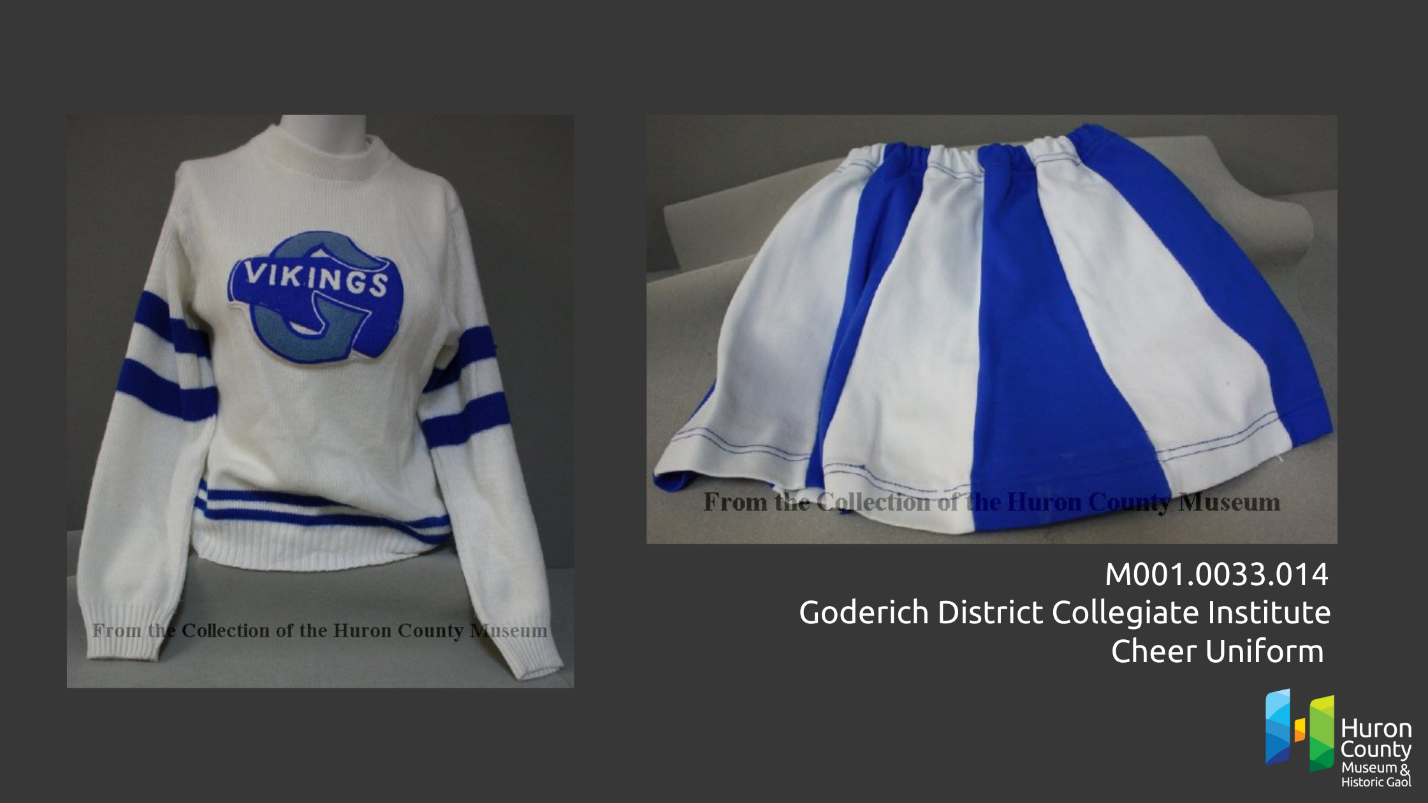
Two images of a top and skirt from a Goderich District Collegiate Institute cheerleader uniform

Uniforms are not just a way to distinguish members of the team, they’re also a great way to show off school pride! Goderich District Collegiate Institute students displayed their school spirit in a number of ways, although one particular style embodied exactly what it meant to have school pride – the cheerleading uniform. The skirt alternates blue and white paneling, with blue stitching appearing on the top and bottom hems. The top of the uniform is a white knitted sweater with blue accenting and the Viking crest. There is not a specific date for this uniform but it was likely used within the timeframe of the 1950s and 1960s. (Object ID: M001.0033.014)

It is always interesting to examine the past through various lenses and we are fortunate enough at the Huron County Museum to have a collection of student fashions spanning a number of decades. Take inspiration from these past uniforms of Huron County students when doing this year’s back-to-school shopping.

What fashions will you be rocking this school year?