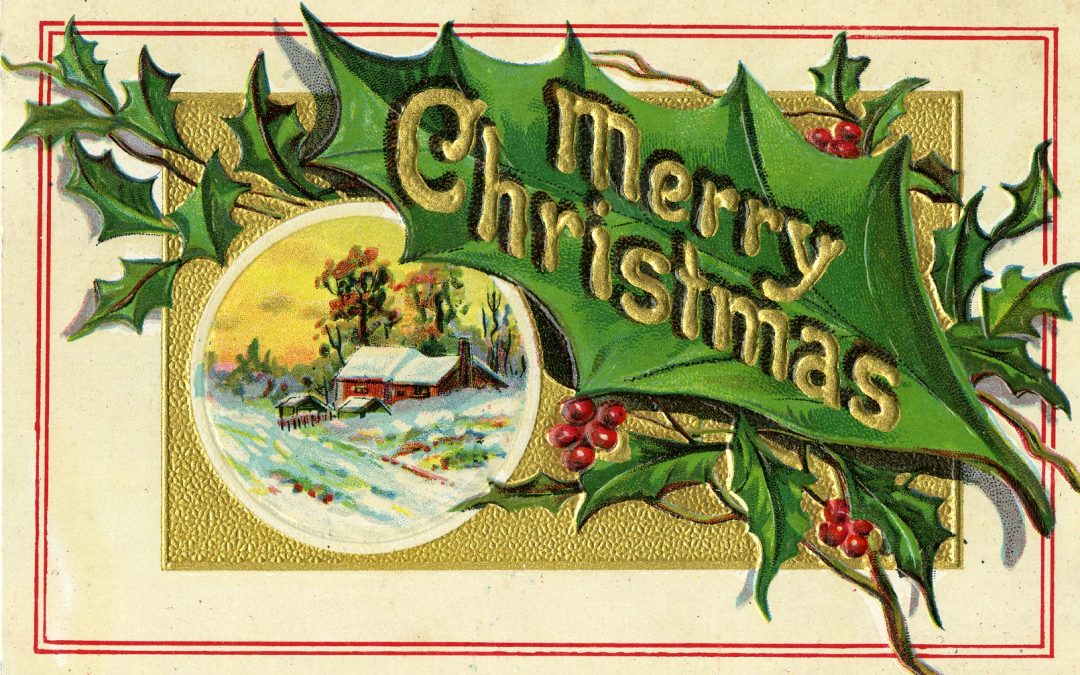
Technology over the last several years has made it so easy to quickly connect with friends and loved ones that the tradition of sending Christmas cards has not been as popular as it once was. But in the midst of a global pandemic, when we can’t celebrate together like we normally would, people are looking for more meaningful ways to let loved ones know they are thinking of them, and what better way than a lovely greeting delivered through the mail. And while we can’t send out a seasonal greeting to you all through the mail, we can still use the power of technology to share a little Christmas cheer by taking a look through some of the Christmas cards in our collection.
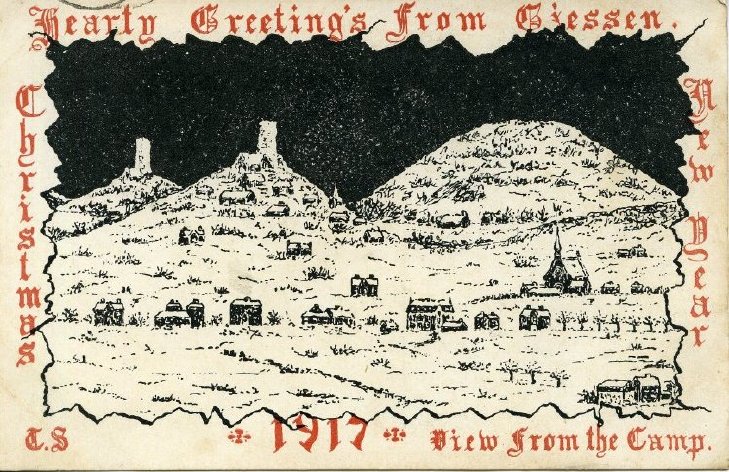
Christmas Greetings, From Germany To Edith Williams From Prison Camp 106684 Co.10 Bar. B A994.0007.033
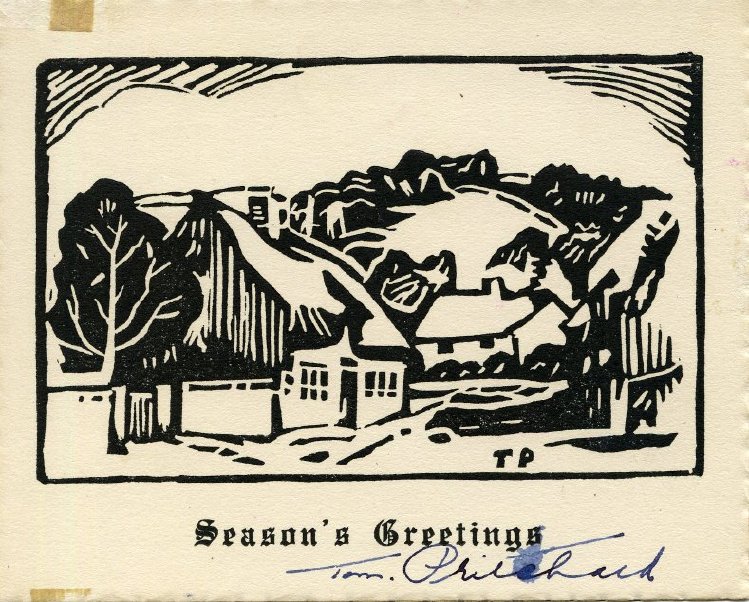
A Christmas notecard “Season’s Greetings”. On the front of card is a Tom Pritchard print of a farm/house by a hill and is signed by Tom Pritchard. Donated by Town of Goderich. 2011.0021.009
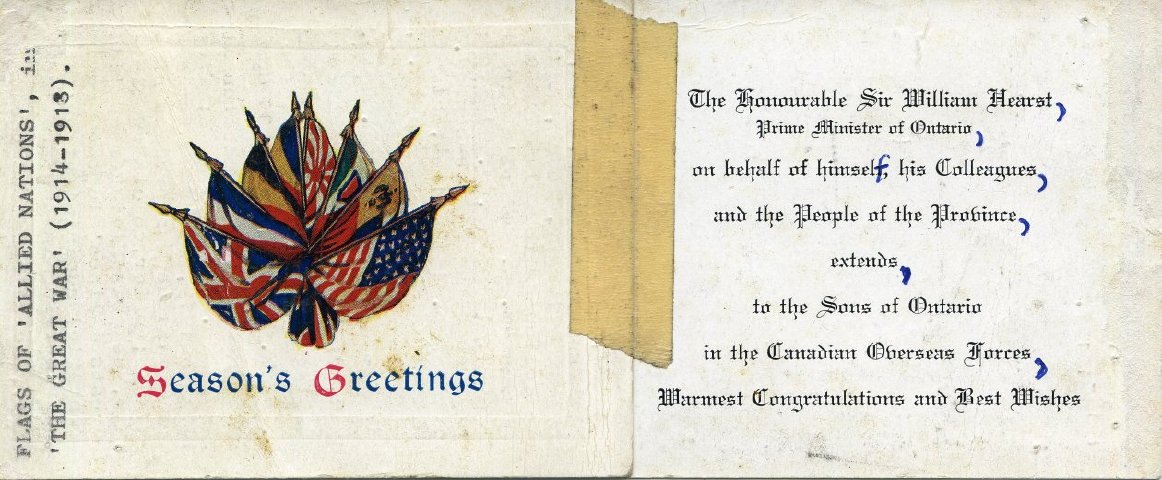
This Christmas postcard features flags of Allied nations in the First World War. The back of the card includes a bio of Ontario Premier William Hearst. 2004.0044.006
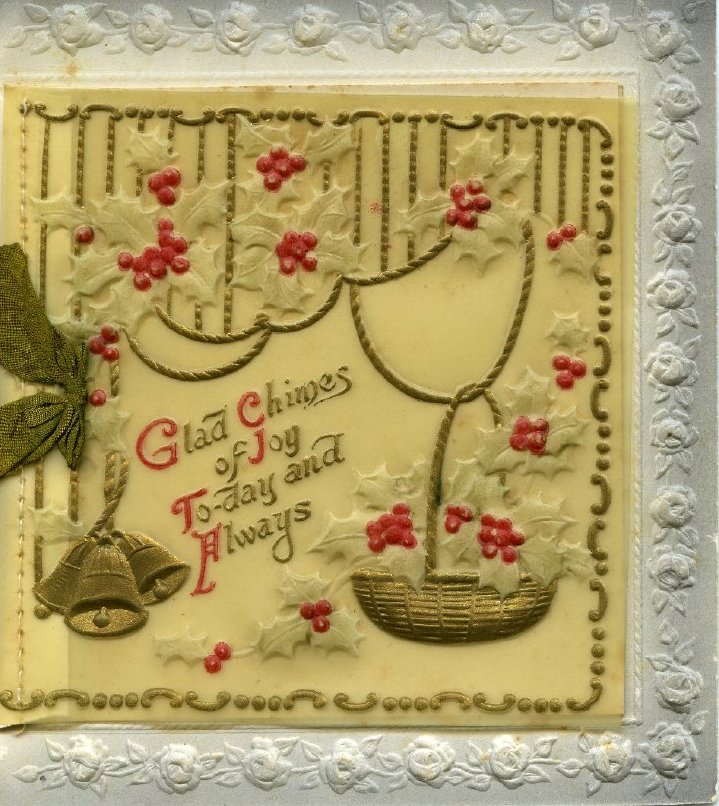
The back of this card has a silver embossed border. The front of the card is made of plastic with bells and holly designs on it. On the inside left is printed “THAT YOU’LL REMEMBER ME”. On the inside right is printed A GREETING…ANOTHER CHRISTMAS. A951.0664.001This Happy New Year postcard does not include a postmark, but reads on the back: “Dear cousin, received your cards yesterday and I was glad to hear from you’s. It is about 5 below zero, we have to go back to school next Monday. We have skating on Belles Isle. What did Santa Claus bring you for Christmas. Good bye from Harvey M Brien.” 2008.0032.005
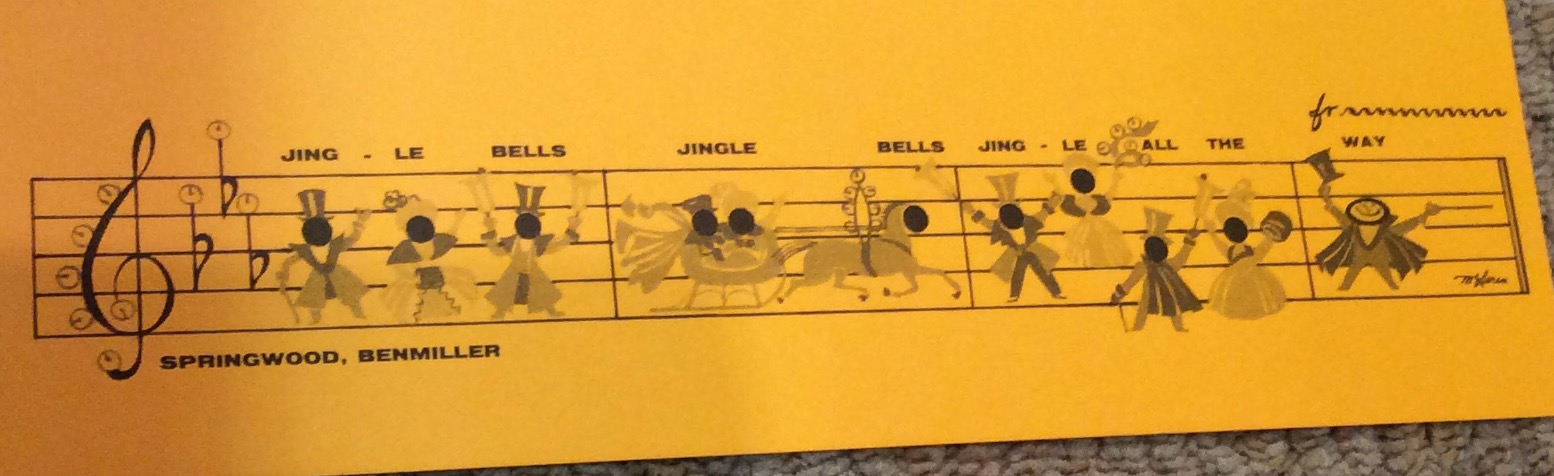
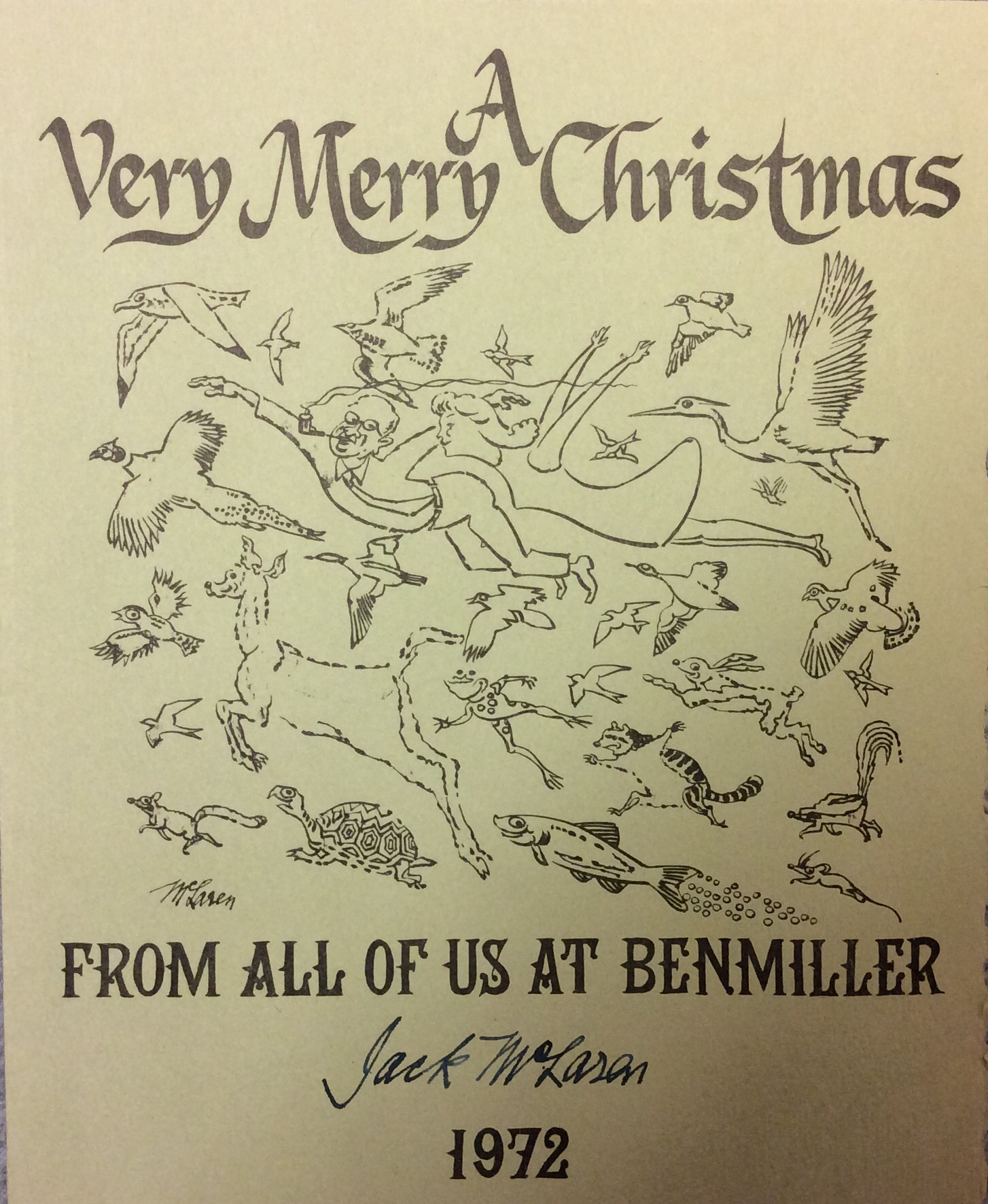
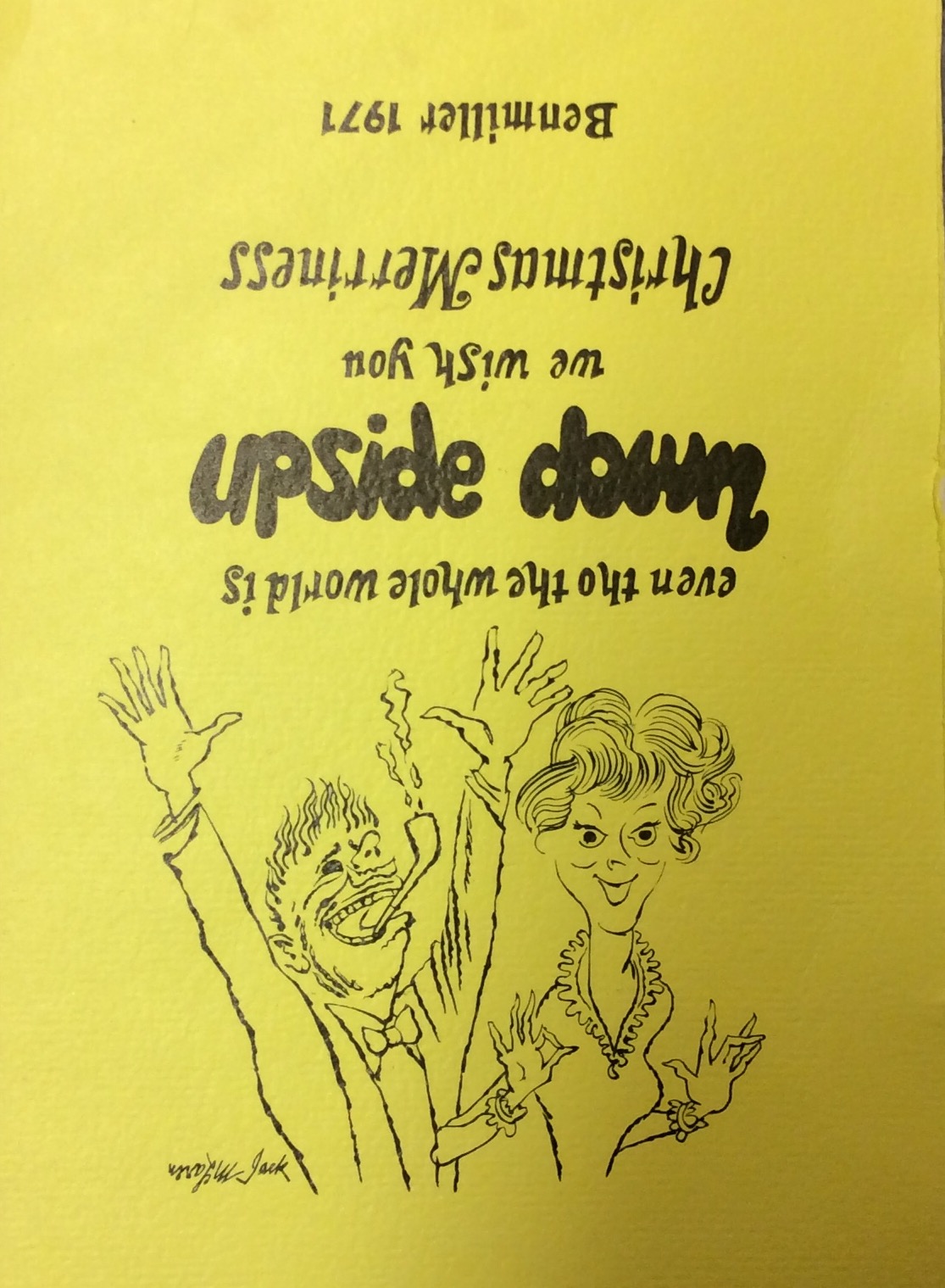
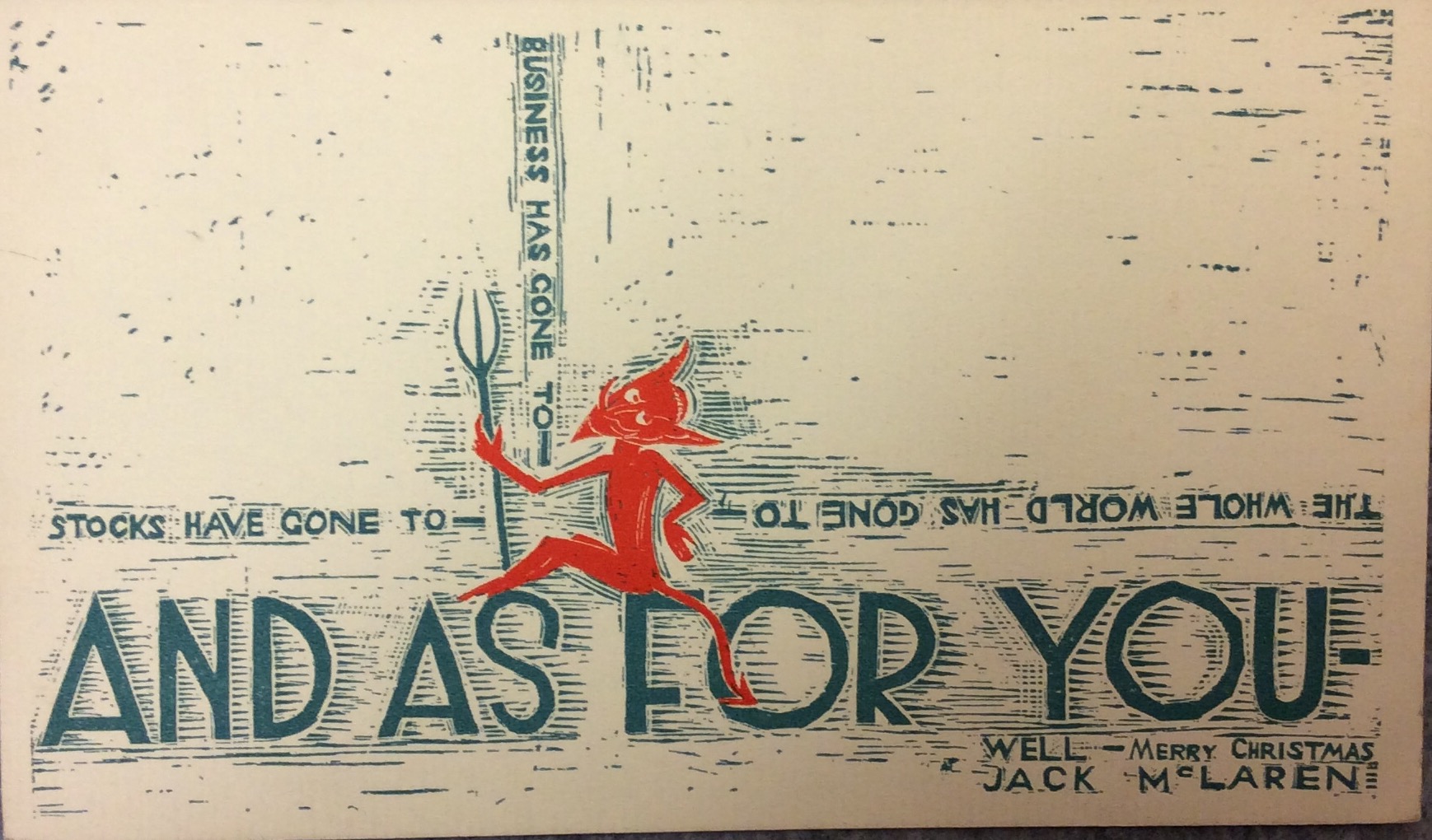
And, of course, we couldn’t share our Christmas card collection without sharing a selection of cards from artist Jack McLaren, who is the subject of our exhibit Reflections: The Life & Work of J.W. (Jack) McLaren. Depending on the year, his collection includes some happy and cheerful seasonal greetings….
And some that seem appropriate for the 2020 holiday season…
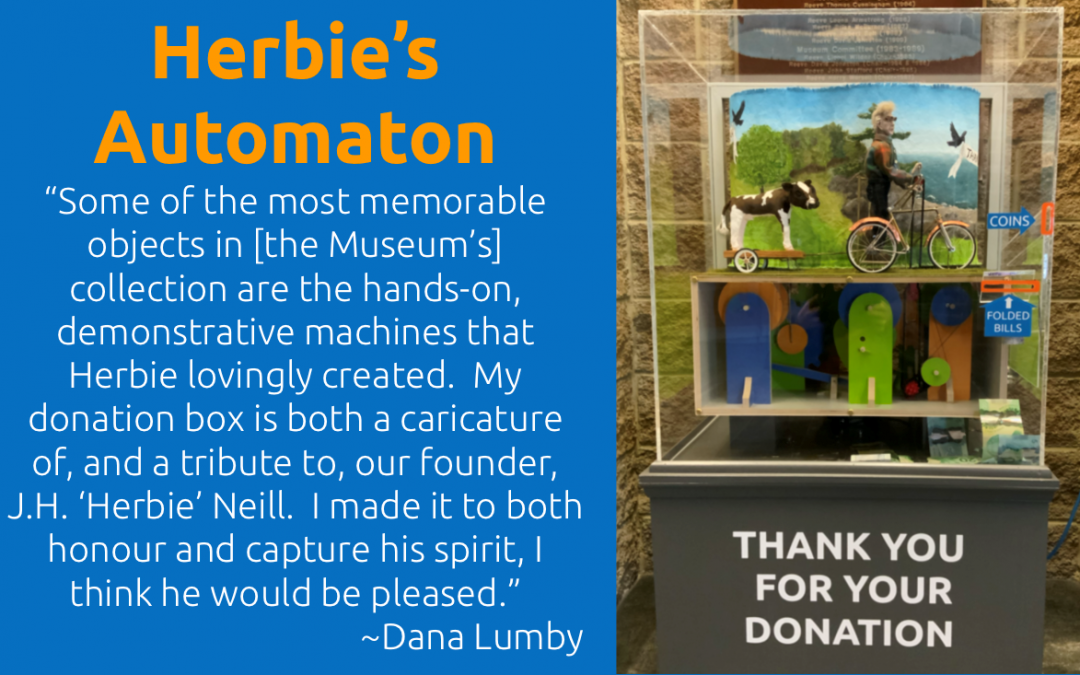
The Huron County Museum and Historic Gaol’s Museum Technician Assistant Dana Lumby shares how she created the museum’s donation box.
Creating the museum’s donation box has been one of my favourite projects. I was tasked to make an interactive donation box that would provide some sort of visual “reward” in exchange for a donation. I did not have to look very far to find inspiration. As many of you will already know, our founding Curator J.H. “Herbie” Neill was a maker and a tinkerer. He left us with a collection of handmade, hands-on, demonstrative machines that visitors have been encouraged to animate since the Museum opened in 1951. (Unfortunately, given the current pandemic, visitors are temporarily unable to touch Mr. Neill’s machines, as these artifacts cannot be sanitized.) The donation box features a miniature Herbie Neill pedaling his custom, hand-pedaled bicycle through the countryside while towing our unofficial mascot, the two-headed calf. Depositing a coin, or a folded bill, in the respective slot starts the mechanism and also triggers a recording of our orchestral regina.
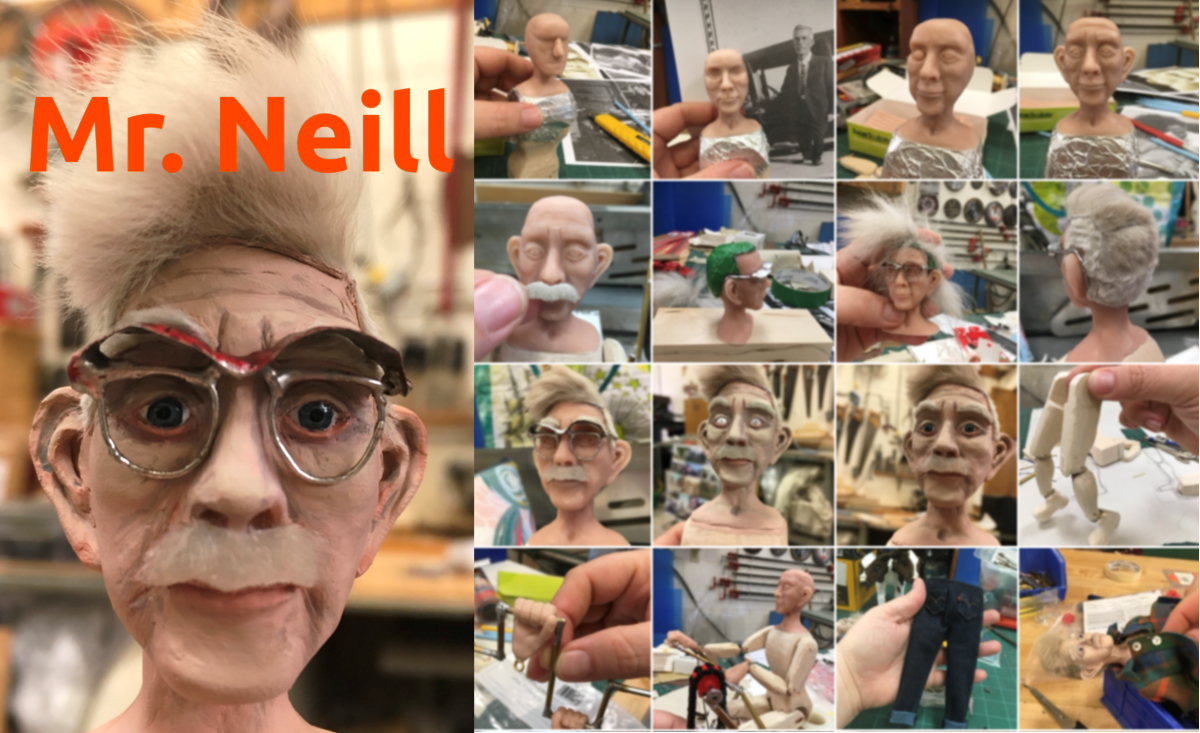
Herbie’s articulated body was carved from basswood and his face and hands were sculpted using polymer clay. I painted the clay to give him a realistic skin tone, added a gloss varnish to his eyes, and created a miniature wig out of rabbit fur, then gave him a tiny haircut. I created the special glasses, with copper and solder, to replicate the ones that Mr. Neill modified to protect his eyes. He suffered from sensitivity to light and added the metal shade to his glasses to help. You can see Mr. Neill’s actual modified glasses on display in the Neill Gallery at the Huron County Museum. I made his clothing from upcycled fabrics, including a pair of my own jeans.
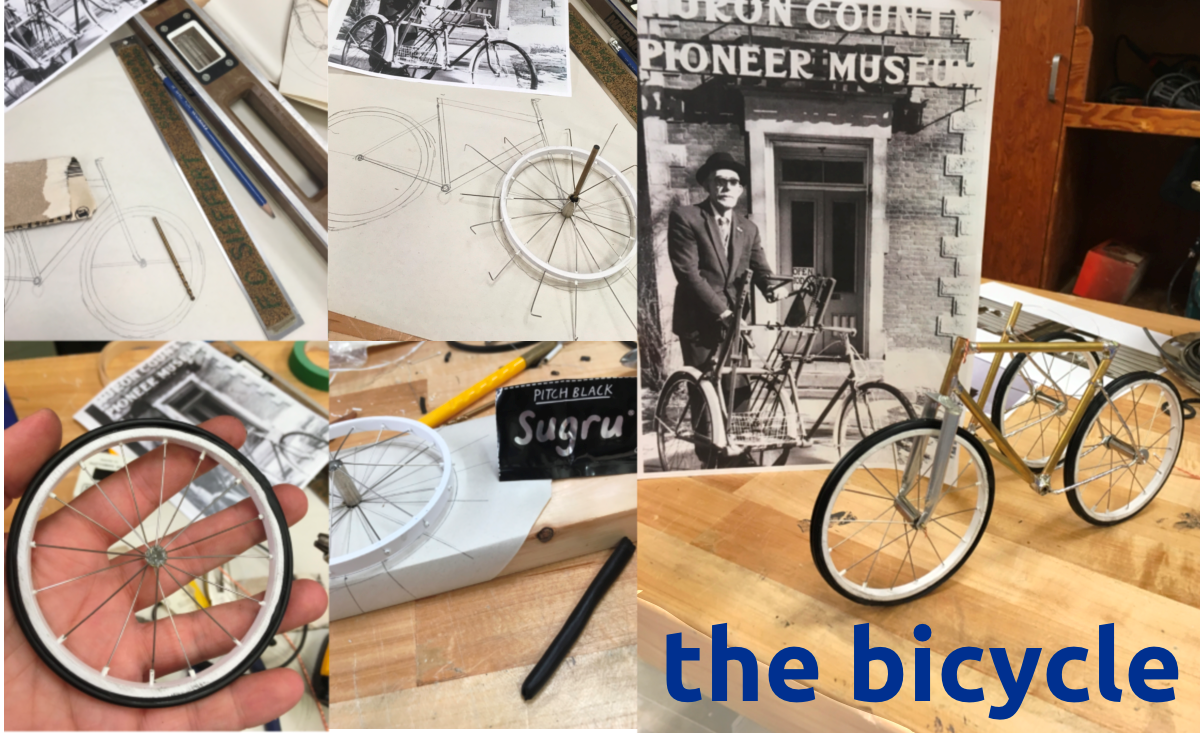
Because Mr. Neill suffered from mobility issues, he fabricated a special hand-pedaled bicycle for himself using bike parts and repurposed metal objects. I recreated his vehicle in miniature, working from a photograph. The wheels were made with a slice of 4” pvc piping, stainless steel wire, black electrical wire, epoxy and sugru – which is a moldable glue that remains flexible when cured. The body of the bicycle was made with various dimensions of miniature brass tubing.
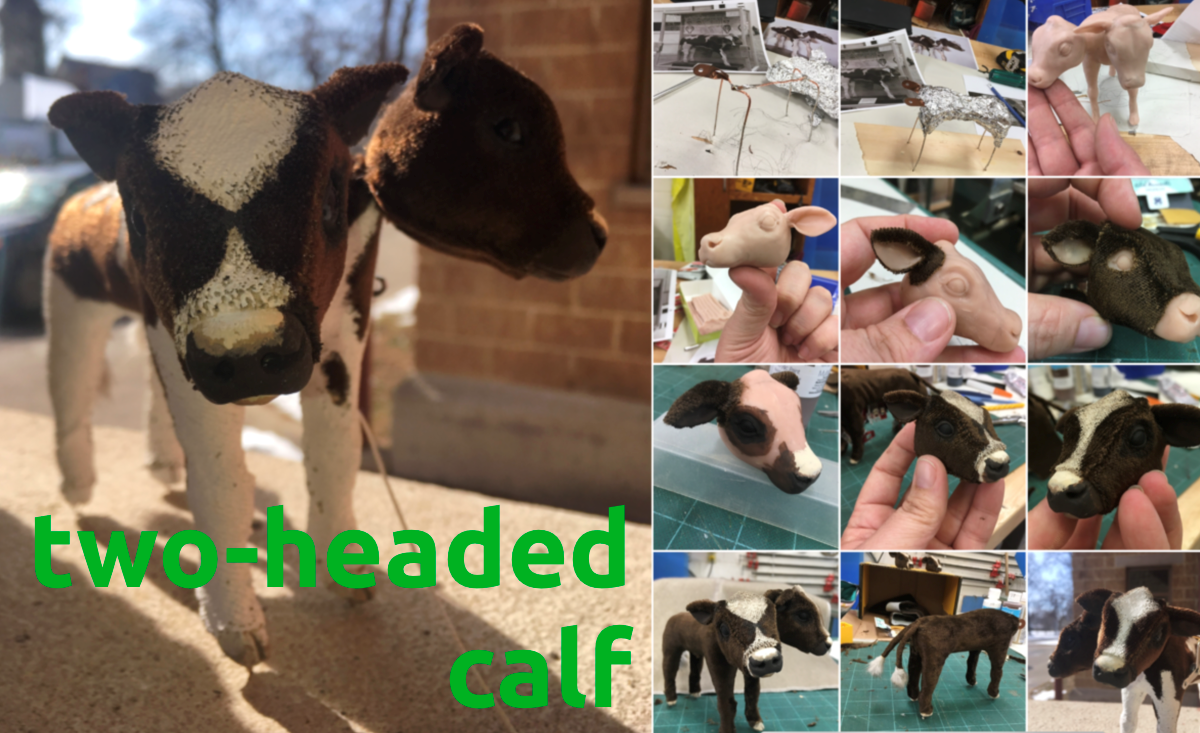
The two-headed calves were made of polymer clay on a metal armature. I covered them with a velvet fabric to mimic fur and painted the uncovered bits. I modeled the painted markings after one of our two-headed calves. When animated, one calf nods yes and the other no. I affectionately refer to them as Beau and Vinnie.
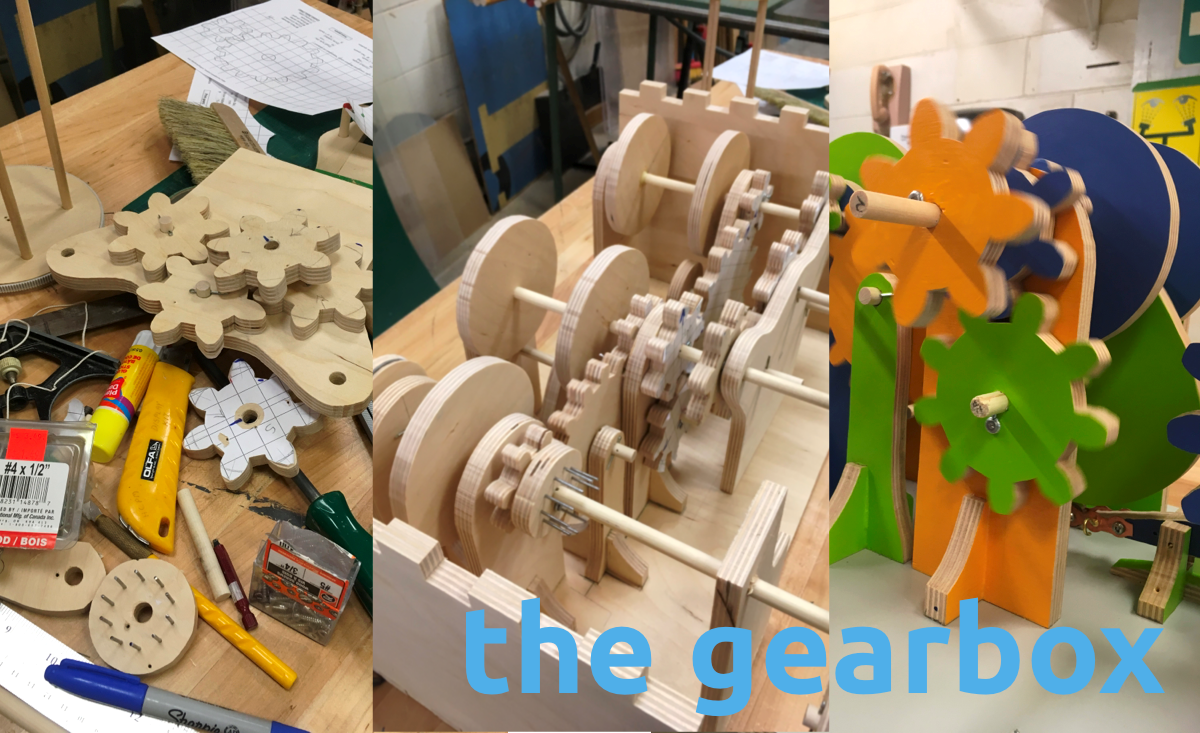
Once the models of Mr. Neill, the calves and the bicycle were finished, I set to work creating a set of wooden gears and cogs that would set them in motion. There was a lot of trial and error, taking apart and putting back together, and one very messy workbench, but I eventually figured it out. “Herbie” pedaled, the bike and trailer wheels turned, the calves disagreed with one another, and the hand-painted background scrolled by, all with the turning of a single crank.
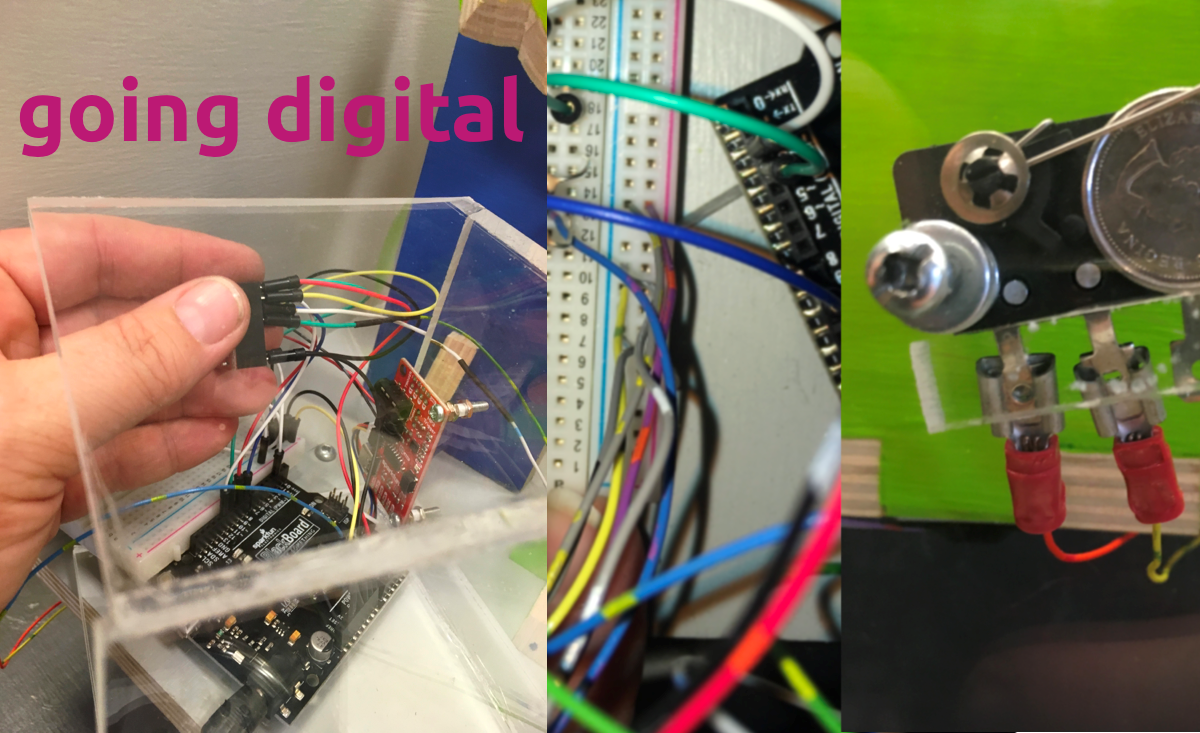
Once the mechanics of getting everything moving had been figured out, I had to find a way to pair the contraption with some circuitry so the action would be triggered each time a donation was made. I knew I wanted it to work when either a coin or a bill were inserted, so I decided to use two different switches. I chose an infrared interrupt switch (which senses a break in its infrared beam when something passes through it) for the bills*, and a mechanical coinswitch (not unlike what you would find in a pinball machine) to sense the coins. I wrote a simple program using Arduino that plays an MP3, and powers the motor for a set amount of time when either of the switches are triggered. I had never used Arduino before, but it was relatively easy to teach myself using the resources on the Arduino website, and the forums and tutorials on the sparkfun website. Sparkfun has lots of information, great components and reasonable prices, but they are an American company so I sourced their products via these Canadian distributors: Digi-Key and Elmwood
*Fun Fact: Canadian polymer bills are not quite opaque enough to block an infrared beam, which is why you are asked to fold your bill before inserting.
Here is a video of the donation box in action, or come and see the real thing in the front lobby of the museum! Click here for information about visiting the museum.

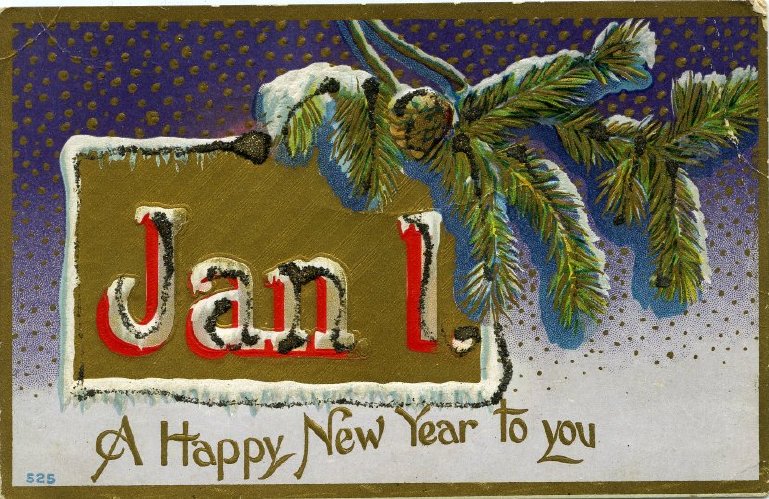
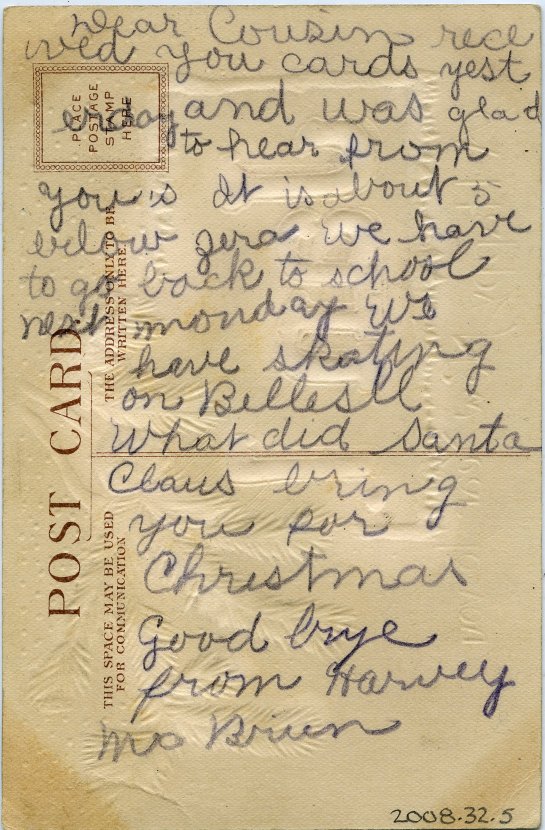 This Happy New Year postcard does not include a postmark, but reads on the back: “Dear cousin, received your cards yesterday and I was glad to hear from you’s. It is about 5 below zero, we have to go back to school next Monday. We have skating on Belles Isle. What did Santa Claus bring you for Christmas. Good bye from Harvey M Brien.” 2008.0032.005