New to the Collection: Civil War Letters

New to the Collection: Civil War Letters

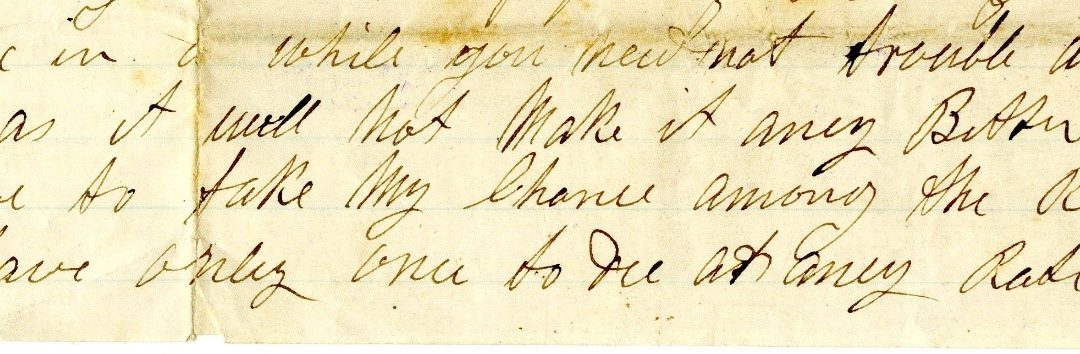
“I shall have to take my chance amongst the rest. I have only once to die at any rate.” – excerpt from a letter written by Joseph Hodskinson, March 29, 1862

The American Civil War doesn’t usually come to mind when thinking about Huron County history, but a recent donation to the Huron County Archives reveals the devastating impact the war had on a Brussels family.

Joseph Hodskinson immigrated to Canada from Scotland around 1851 with his wife Margaret and daughter Celina. The family settled in the Brussels area where Joseph worked as a farmer before he joined the Civil War. It remains unknown why Joseph chose to leave his family in Canada to join the fight in America, but what is known is he would never return home.

The American Civil War was fought between the Union (the North) and the Confederacy (the South – formed by states that had seceded) from April 12, 1861 – May 26, 1865. According to Wikipedia, “the central cause of the war was the dispute over whether slavery would be permitted to expand into the western territories, leading to more slave states, or be prevented from doing so, which was widely believed would place slavery on a course of ultimate extinction.” 
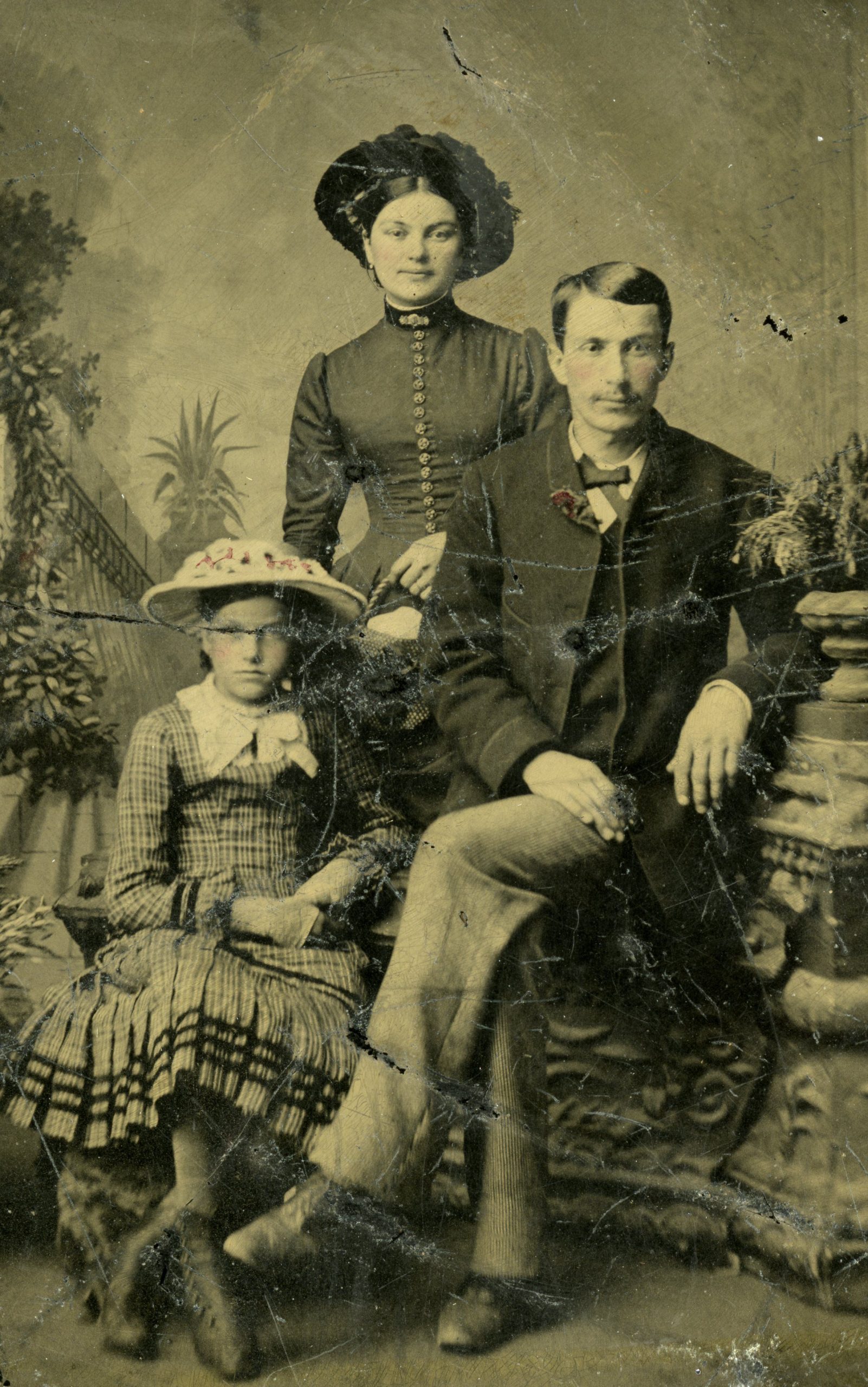
Historic image taken in a portrait studio of Joseph Hodskinson, his wife Margaret and young daughter Celina.
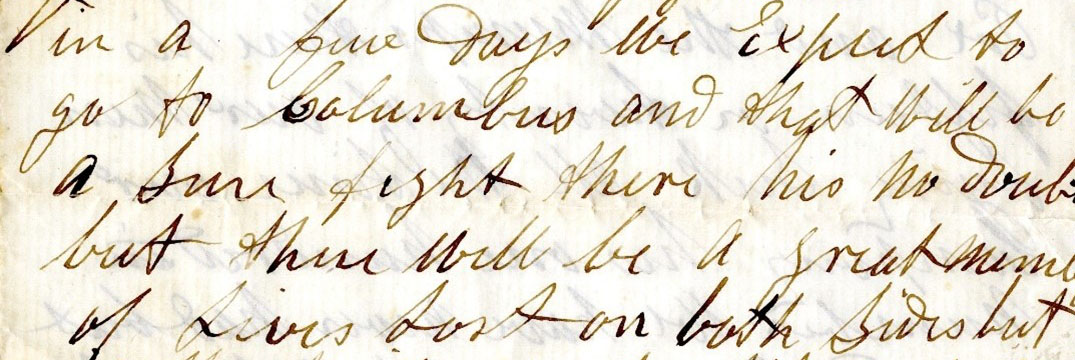
Photo of a section of an historic letter written from the American Civil War

“We expect to go to Columbus and that will be a sure fight. There is no doubt but there will be a great number of lives lost on both sides.” – excerpt of a letter written by Hodskinson on Jan. 24, 1862

Between 1862 and 1863, Joseph wrote several letters home to Margaret and Celina, describing the horrors of war. In the first winter of the war, in January 1862, he shares the great deal of sickness that hit the soldiers, including measles, small pox and mumps. In a letter home on March 1862, he describes three days of fighting at the Battle of Fort Donelson and noted that “It is the providence of the Lord that I am amongst those that was saved on the 13th Feb….the morning after the battle the field was a fearful sight. You might almost walk on dead bodies for a long distance.” A letter home on June 12, 1862, reveals that “We only have about 300 men remaining out of 1000 since I joined the army.”
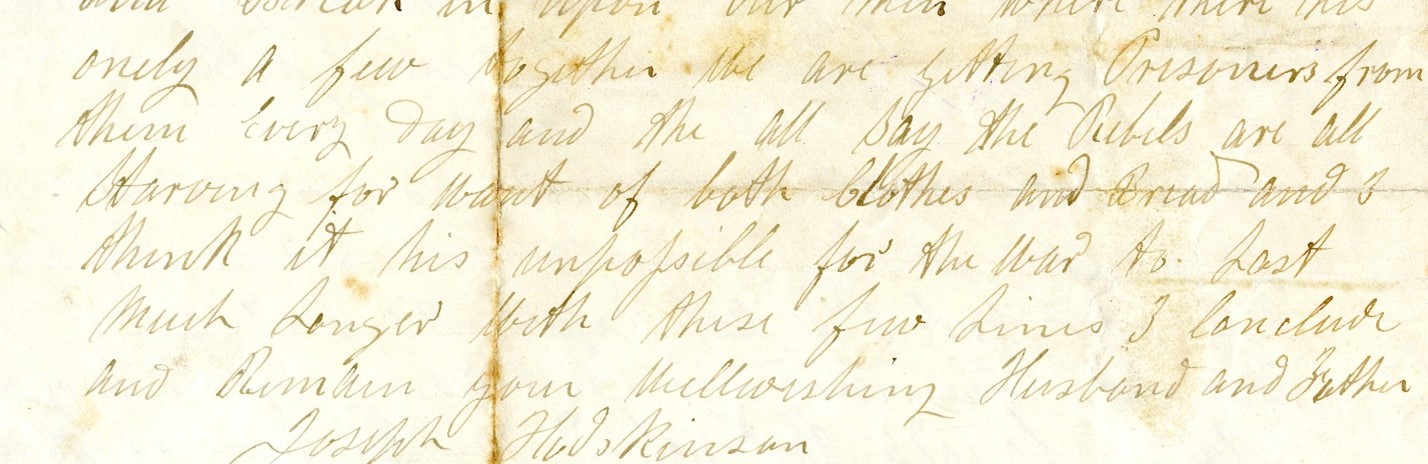
Photo of a section of an historic letter written from the American Civil War

We are getting prisoners from them every day and they all say the Rebels are all starving for want of both clothes and bread and I think it is impossible for the war to last much longer.” – excerpt from a letter dated Jan. 2, 1863

The war would continue for two more years, but Joseph would not see the end of the war, nor would he make his way home to his family in Brussels. He died later that year.
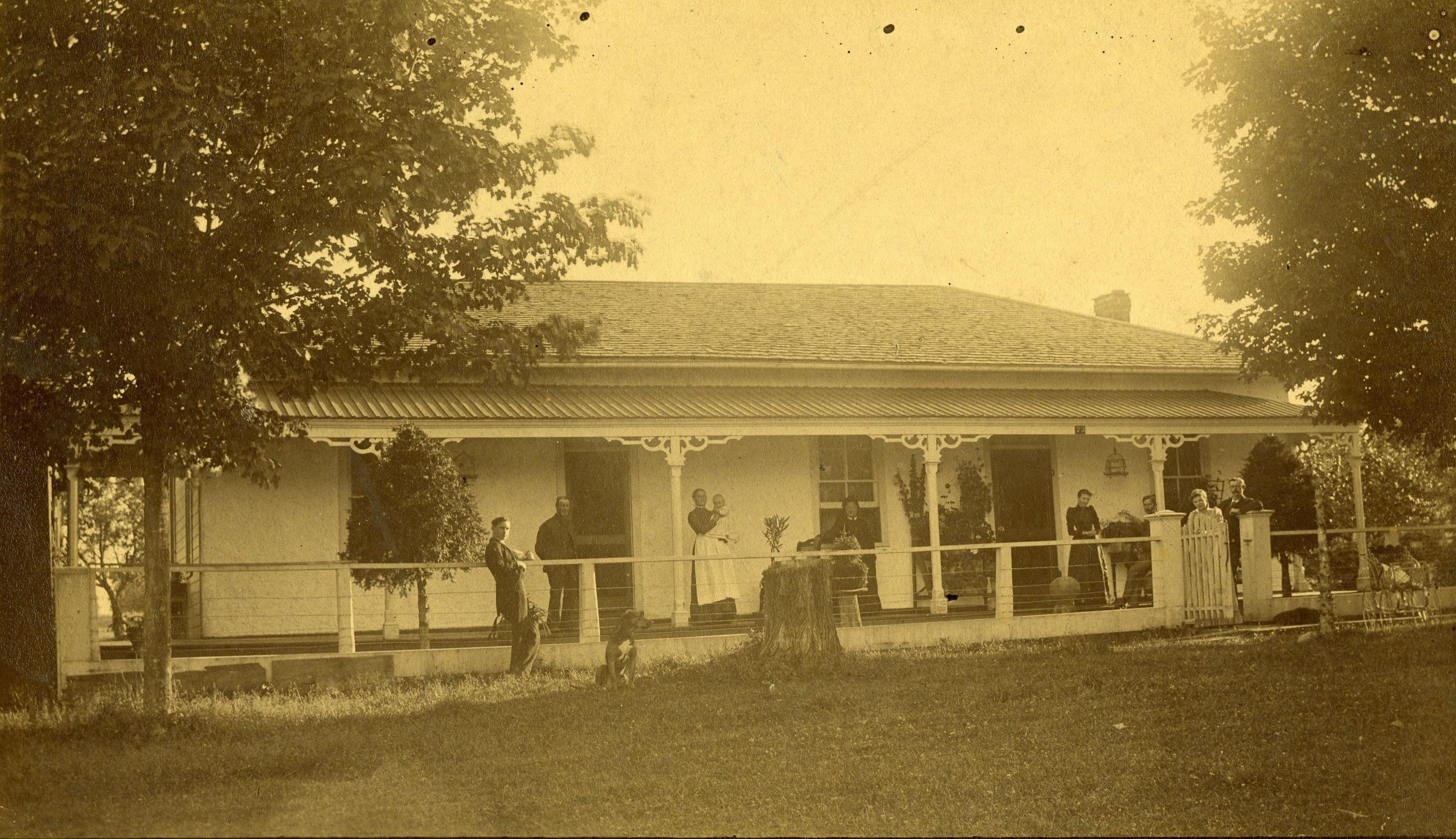
Historic image of the Ballatyne home on the bank of the Maitland River. There are a number of people standing on a wide front porch.

After Joseph’s death, Margaret and Celina remained in the Brussels area. Celina married Thomas Ballantyne in the fall of 1862 and the couple made their home on the bank of the Maitland River in the spring of 1863. The home is pictured above with the family sitting on the front porch around 1892. Shown here, from left to right, are Jack Ballantyne, Thomas Ballantyne, Celina Ballantyne holding Bill Strachan, Margaret Hodskinson, Annie and Alex Strachan, and Jenny and Joe Ballantyne.

Celina and Thomas had a daughter named Annie who married Alexander Strachan in Brussels in 1889. The couple owned a dry goods store in the village. 

The Huron County Museum would like to thank Ann Scott and Marion MacVannel for their recent donation of these letters and family photographs to the archival collection. Joseph was Ann’s three times great grandfather. If you are interested in learning more about our research services or making a donation to our collection, contact the Huron County Archives to arrange an appointment.
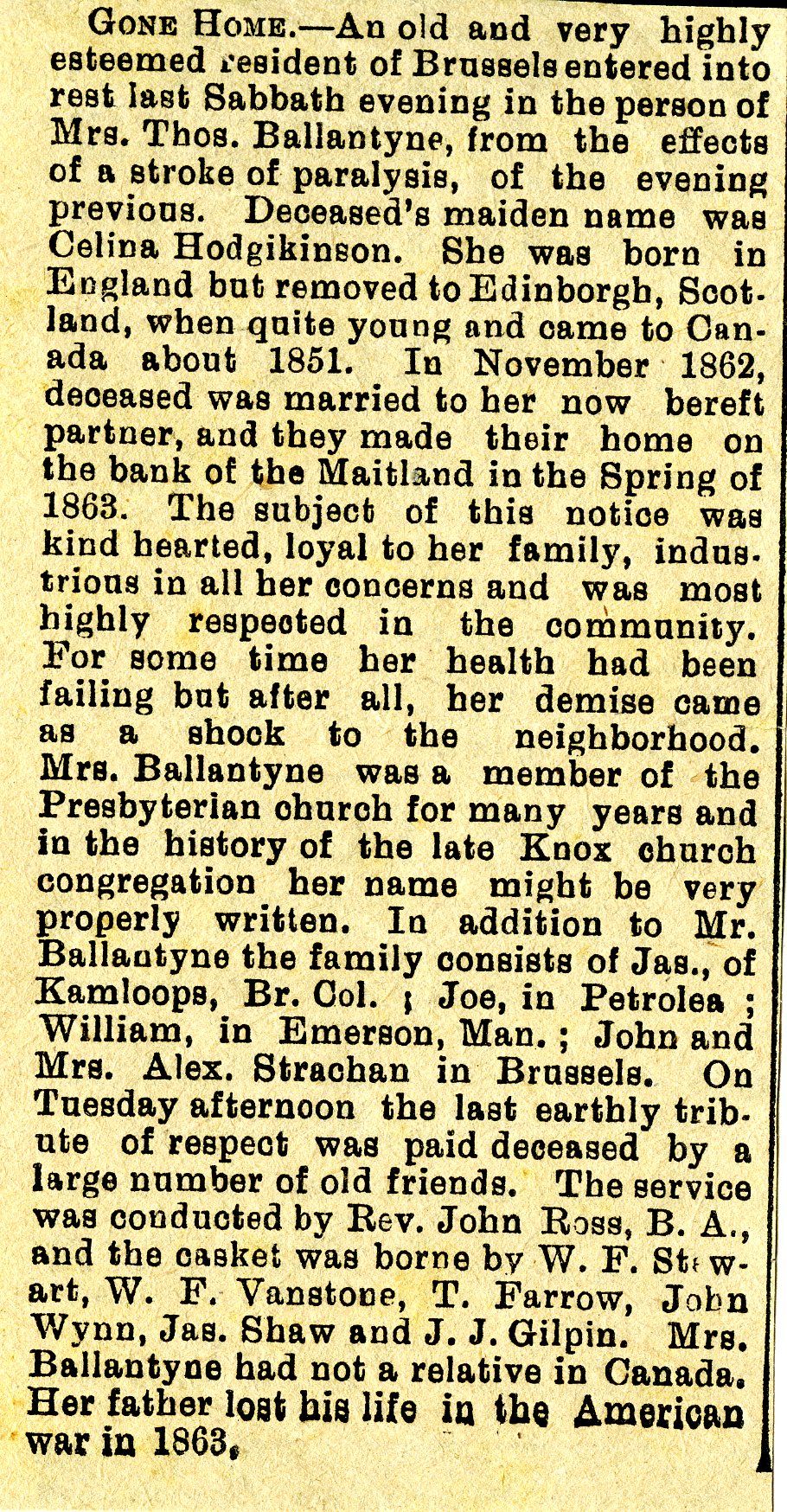
Image of a newspaper clipping of Celina Ballantyne's obituary
An Unconquered Crime: Infanticide in Huron County

An Unconquered Crime: Infanticide in Huron County

According to the Criminal Code of Canada, “a female person commits infanticide when by a wilful act or omission she causes the death of her newly-born child.” Using local resources, student Kevin den Dunnen explores local cases of infanticide in the late 19th and 20th century (the period for which Gaol records are readily available), and the contemporary attitudes towards this act at home and abroad.

Through the 19th and 20th centuries, Huron County newspapers printed cases of infanticide, or the act of killing an infant, allegedly taking place in other countries and cultures. These articles often framed this the context of the supposed inferiority of cultures without the influence of Western Christianity. (1) However, the prevalence of infanticide in Huron County and surrounding areas during this same time period disproves any claims of cultural immunity to infanticide in southwestern Ontario’s Christian-dominated communities.

There are many social factors that contributed to the infanticides that occurred in Huron County. In the 19th and 20th centuries, a birth outside wedlock threatened an unmarried woman’s status in society. Many known infanticide cases in Huron County involved these young, unmarried women. Contributing to the devastating decision to commit infanticide was the lack of local social services available to single women needing help to provide for their child. As such, infanticide has been present in Huron County for much of its history.

The story of a Huron County woman called Catherine and her child exemplifies many of these themes. Catherine was a 30-year-old servant and unmarried woman working in Goderich Township in 1870. She had gone to her doctor that year claiming her body was swelling. The doctor suspected that she might be pregnant, but Catherine did not agree. Later on, her employer came home to find some of her work unfinished and could not find her. Upon searching, they found her sitting in a privy. After telling her to leave the privy several times, Catherine went to the house. Upon inspection of the privy the next morning, the house-owner and a doctor found a dead child in the privy vault covered by paper and a board. In his subsequent report, the coroner believed that the baby was born alive. (2) Upon first reading, this story appears to be a cold-blooded case of infanticide, but the reality of the society around Catherine makes the situation far more complex.

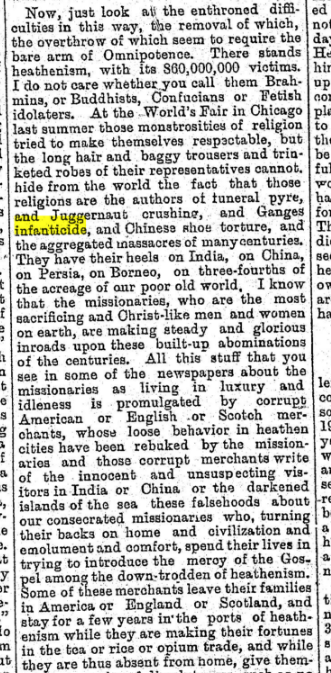
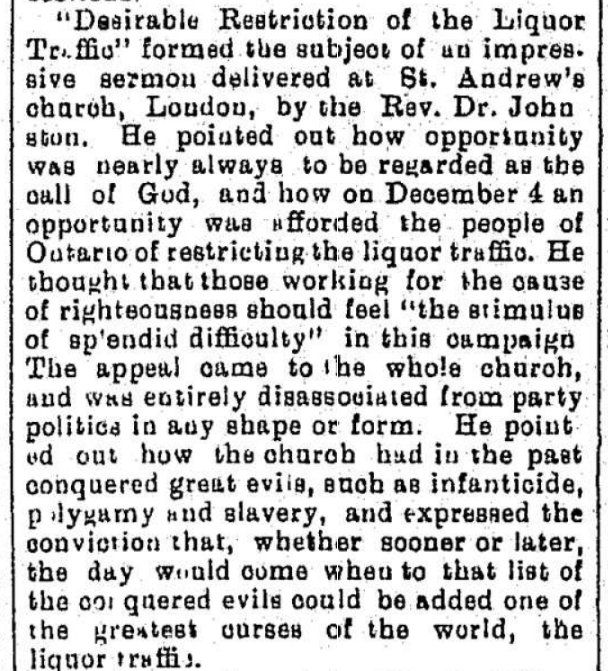
Turn of the 20th century newspapers in Huron County printed or reprinted articles from larger news agencies about non-Christian societies in India, China, and Hawaii and touted their supposed propensity of infanticide. These stories promoted the positive influence of Christian conversion outside of Canada, even though infanticide was also a local issue. Figure 1 is one such article from The Exeter Times, published on Feb. 1, 1894. This article states that the work of missionaries converting foreign societies to Christianity would “introduce the mercy of the Gospel among the down-trodden of heathenism.” The uncredited author claimed non-Christian cultures frequently committed infanticide but stopped when they converted to Christianity. (3) There is an apparent hypocrisy in these newspapers portraying other societies as uncivilized while the same issues were happing contemporaneously in their own Ontario communities. Figure 2 shows an article from The Brussels Post, dated Nov. 20, 1902. In this article, the author argues the need for laws restricting the distribution of alcohol. They state that such opportunities to change society are “the call of God” whose influence had already “conquered great evils, such as infanticide.” Yet, infanticide still occurred in the paper’s own region.

How prevalent an issue infanticide was throughout Huron County’s history is difficult to know, because many cases likely went unreported. A large proportion of the known cases involved single mothers of illegitimate children. However, some scholars suggest that more cases of undocumented infanticide frequently occurred in Western societies. These theories argue that hidden infanticide by married couples might partly explain changing gender ratios in select western societies. They claim this was a way of tailoring gender to fit family needs, like wanting males to help with farming. (4) Single women living and working away from their families would face greater difficulties concealing a birth without detection. Hidden infanticide drew attention from journals like the Upper Canada Journal of Medical, Surgical and Physical Science in 1852. This journal argued that women should have to register their children immediately after birth to lessen the chance of hidden infanticide. (5) This call for registration suggests that the journal suspected or knew of infanticide cases where the mother did not register their child to hide its birth. This research indicates that communities like Huron County could have many cases of infanticide that county records do not include.

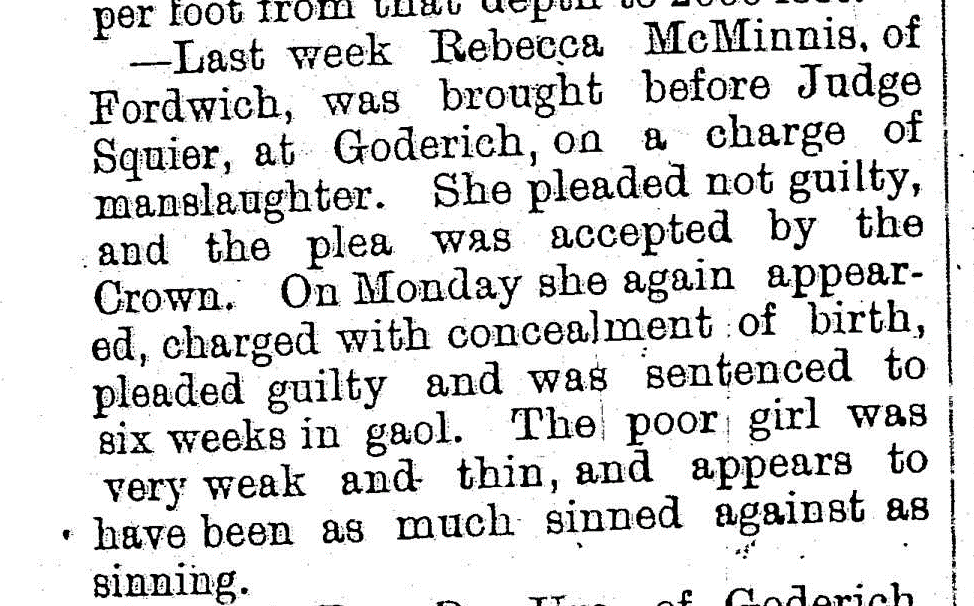
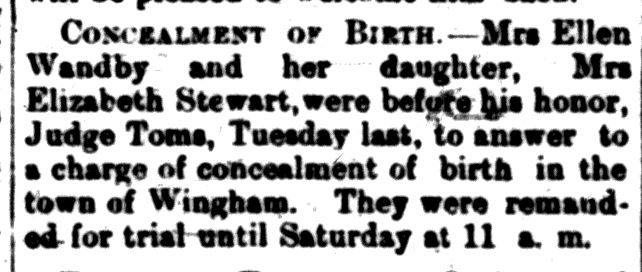
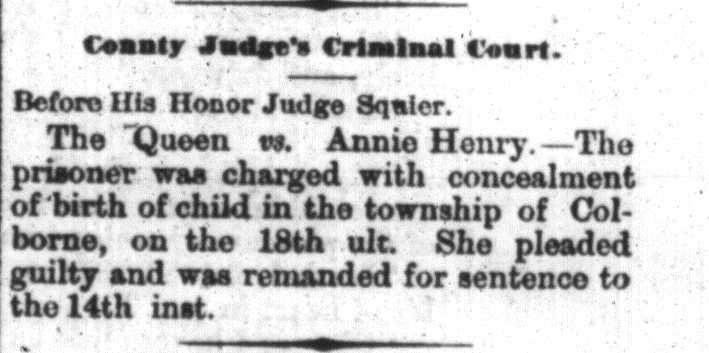
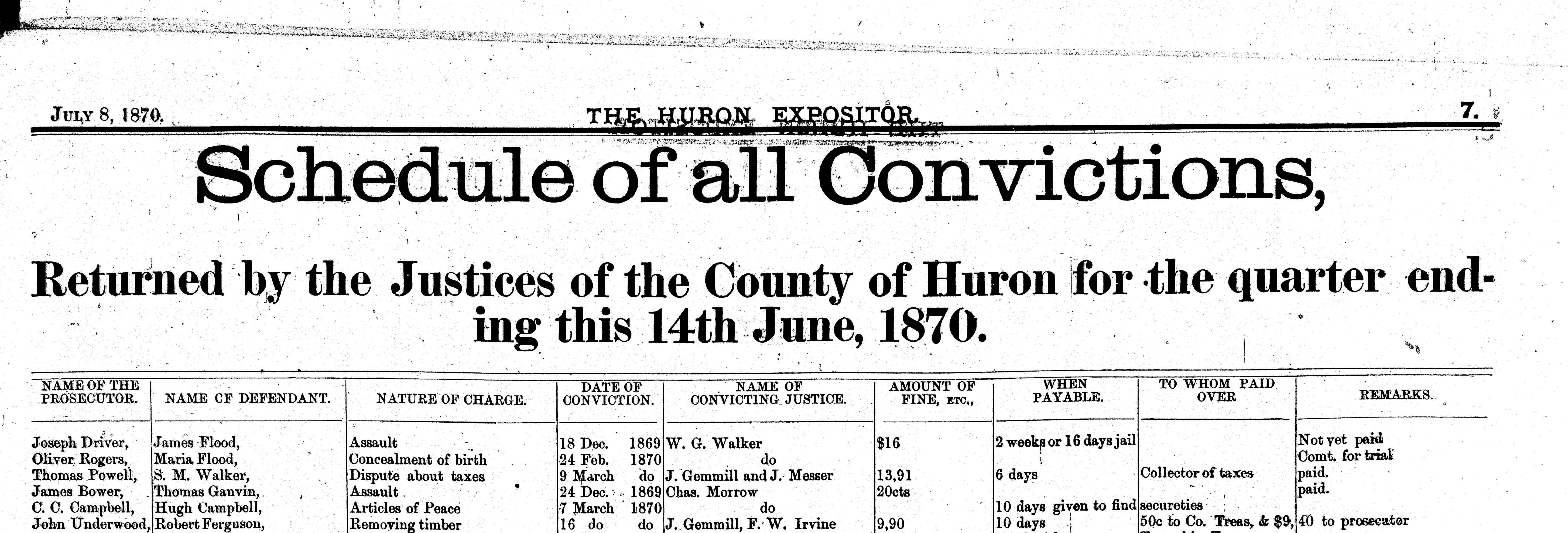
One record that is available for study is the “Huron County Gaol Registry.” The portion of the Registry currently available for research includes entries for every person who stayed at the Gaol from 1841-1922. There are at least 12 cases that list infanticide, concealment of birth, child exposure, or a related charge as the reason for committal (Figure 3 and 4). While not a staggeringly high number, these records only include the people sentenced to gaol for allegedly killing their infant or related crimes. If they were not apprehended or not committed to jail, they would not appear in the registry. Additional cases do appear in the local newspaper accounts (Figure 5) and coroner’s inquest records , including Catherine’s story .  The registry shows that the first prisoner committed for infanticide came to the Gaol in 1846 and that a prisoner was committed for procuring drugs for an illegal abortion in 1920. While not demonstrating frequency with complete accuracy, the registry clearly does indicate that infanticide and other crimes resulting from unwanted pregnancies occurred in Huron County throughout the entire period documented from 1841-1922. These instances of infanticide would increase when including the records of nearby counties like Middlesex, Bruce, and Perth, which also had reported infanticide cases during the same period. There was therefore no reason to look to other countries to find the circumstances that fostered infanticide: Huron County residents could see the evidence in their own towns and the surrounding counties.

image of a newspaper clipping

Figure 1: “The Safe Arm of God,” The Exeter Times, 1894-2-1, Page 6 

Image of figure 2 - newspaper clipping from Brussels Post

Figure 2: “Prohibition Notes,” The Brussels Post, 1902-11-20, Page 4

Figure 3: Newspaper clipping from The Huron Expositor, 07-22-1881, pg 5.

Figure 3: The Huron Expositor, 07-22-1881, pg 5.

Newspaper clipping: "Concealment of a Birth" Mrs. Ellen Wandby and her daughter, Mrs. Elizabeth Stewart, were before his honour Judge Toms, Tuesday last, to answer to a charge of concealment of birth in the town of Wingham.

Figure 4:The Huron Signal, 06-10-1887, pg 4.

Figure 3: Newspaper clipping from The Huron Expositor, 07-22-1881, pg 5.

Figure 5: The Huron Signal, 12-10-1880, pg 1.

Image of newspaper clipping from 1870 Schedule of Convictions featuring prosecution of Maria Flood for “concealment of birth.” The Huron Expositor, 07/08/1870, pg 1.

Mothers faced most of the blame for infanticide from the legal system and contemporary journalists for reported cases. However, this viewpoint often neglects to consider both the devastating judgements placed upon these women for their unwanted pregnancies, and the lack of support available to help struggling mothers. Of the cases involving infanticide, concealment of birth, or abortion found in the Huron County newspapers and Gaol records, a large number involve young women under 25 years old and illegitimate children (the offspring of a couple not married to each other).  For example, a case from 1864 involves a 15-year-old unmarried female servant; a case from 1877 involves a 22-year-old single female servant; a case from 1880 involves a 17-year-old female servant. As servants, these women were dependent on wage labour. With the birth of a child, the woman would have to give up employment to care for the baby, as without the security of legal marriage the father would often refuse any support. Her ability to care for herself, let alone the child, declined greatly after giving birth. In addition, women faced religious and societal pressures to remain chaste until marriage. Bearing an illegitimate child proved to society that a woman was unchaste. (6) Women who gave birth to illegitimate children, no matter the circumstances of their conception, would face harsh judgement from their communities, which could impact their ability to find new work or to be married. These women with illegitimate children immediately became outcasts. This happened because Christian societies at the time judged much of a single woman’s morality and value according to her chastity. (7) As such, women of this period faced significant social judgement if they had an illegitimate child. The idea of concealing the child’s birth may have appeared to be the only choice for single mothers hoping to retain their ability to earn a living, maintain their place in society and avoid becoming an outcast, which could lead to cases of infanticide and child abandonment. 

The lack of available social services in Huron County before the 20th century could also factor into these cases of infanticide. Before Huron County’s House of Refuge opened near Clinton in 1895, the only municipal building available for social services was the Huron County Gaol. There was no local lying-in hospital or home for unwed mothers. During this period, the Gaol often housed the elderly, destitute, and sick. Some lower tier municipalities made the choice to commit unwed mothers to gaol to give birth, and multiple women would have their babies behind bars at the Huron Gaol. This was an inexpensive way to house the mother and child until such a time she could return to the labour market. A young woman faced with the birth of an illegitimate child in Huron County would therefore have little support and few options available should she struggle to care and provide for her baby, and may have to bear the stigma of being committed to gaol regardless of committing a crime.

While newspapers like The Exeter Times and Lucknow Sentinel reprinted articles featuring infanticide as a cautionary tale to criticize and condemn outside cultures and to promote the positive influence of western Christianity, infanticide remained prevalent in their own communities. Stories like that of Catherine demonstrate the difficult circumstances that sometimes drove women to commit infanticide. Having an illegitimate child immediately lessened the perceived status and life options of a young woman in respectable Christian Southwestern Ontario society. Also contributing to the devastating decision by some of these young women to commit infanticide was the lack of social services available to help them provide for a child. As such, infanticide was not a conquered issue for the residents of Huron County in the 19th and early 20th century.

Sources:

  • (1) Nicola Goc, Women, Infanticide, and the Press, 1822-1922: News Narratives in England and Australia (New York, NY: Routledge, 2016), 28.
  • (2) Coroner’s Report #365 Huron County Archives,  Unnamed baby of  Catherine J.  
  • (3 “The Safe Arm of God,” The Exeter Times, February 1, 1894, p. 6.
  • (4) Gregory Hanlon, “Routine Infanticide in the West 1500-1800,” History Compass 14, no. 11 (2016): pp. 535-548, https://doi.org/10.1111/hic3.12361, 537. 
  • (5) Kirsten Johnson Kramar, Unwilling Mothers, Unwanted Babies: Infanticide in Canada (Vancouver, BC: UBC Press, 2006), 97.
  • (6) Nicolá, Women, Infanticide, and the Press, 21.
  • (7) Nicolá, Women, Infanticide, and the Press, 21.

Further Reading

Find an index of coroner’s inquests on our Archives page (scroll to the bottom to find indexes and finding aids).

Find more stories from Huron’s past through a search of Huron County’s historical newspapers online!

Henderson Collection – Blackstone’s Furniture

Henderson Collection – Blackstone’s Furniture

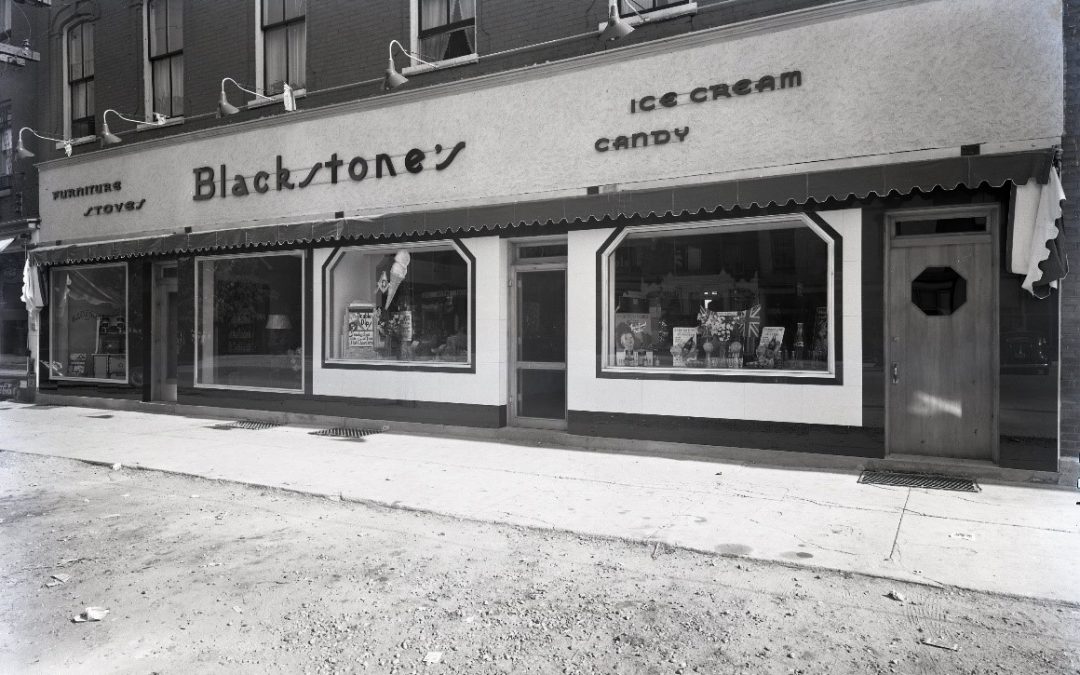
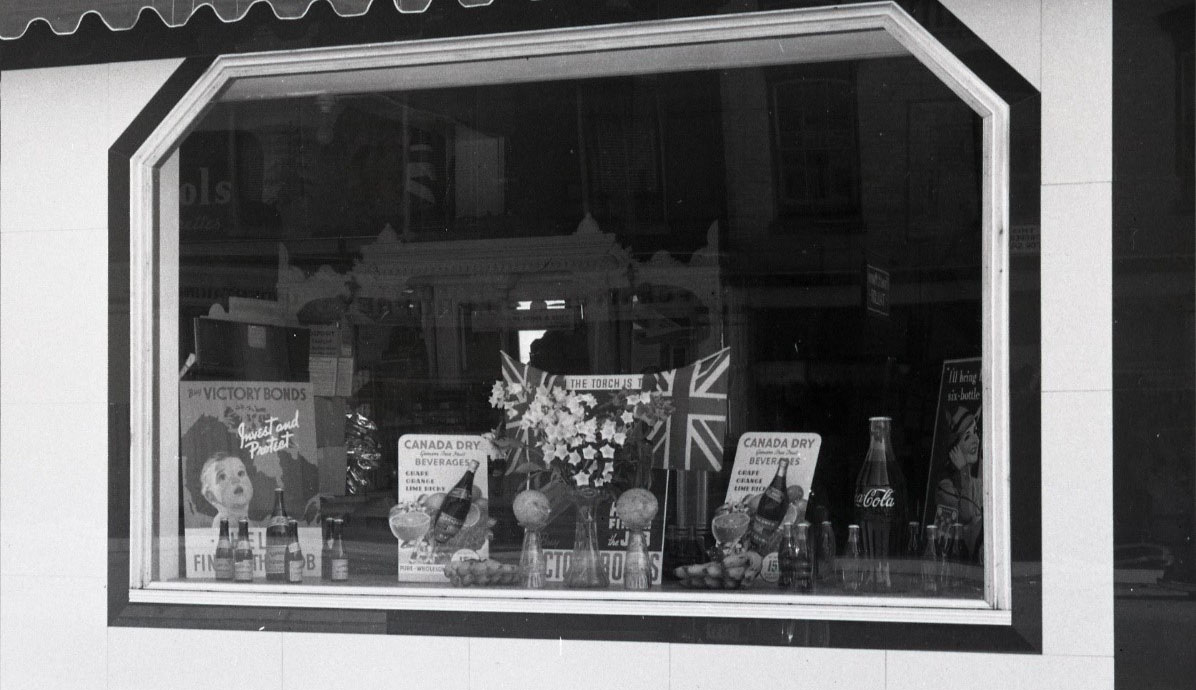
Close up photo of Blackstone's front window display promoting War Bonds

Brooklyn Wright, Huron County Museum assistant, spent time this summer working on the Henderson Photographic Collection and highlighting some of the stories and images from the collection.

Gordon Henderson was a Goderich-based photographer who produced black-and white photos using a variety of mediums, such as negatives, glass-plate negatives, and cellulose nitrate film. The Henderson Collection housed at the Huron County Museum contains more than 10,000 negatives and photographs taken by Mr. Henderson from the 1930s – 1970s. Included in the collection are class pictures, summer camp pictures, wedding pictures, advertising campaigns, pictures of local events, buildings, businesses, and much more.

While Blackstone’s Store is no longer in operation today, it stood on West Street just off the Goderich Square. The photographs shown above were taken by Mr. Henderson of the store’s window display in September, 1939.

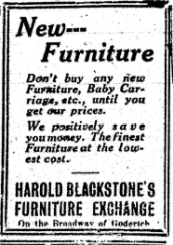
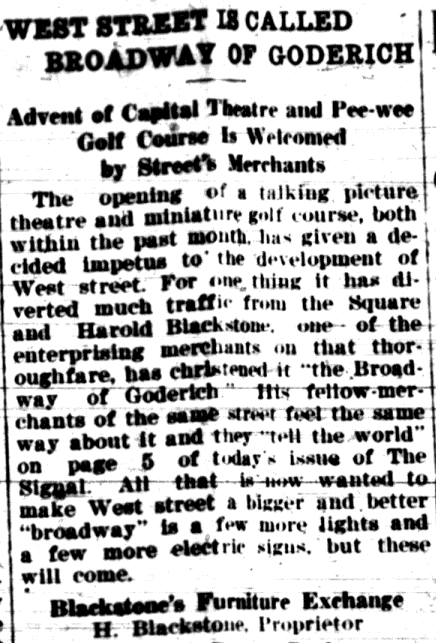
References to Blackstone’s in The Signal, available online through the Digitized Newspaper Collection, date back to as early as 1908. At this point, Blackstone’s was a restaurant that served oysters, ice cream, and confectionaries. By 1930 it had expanded to sell furniture as well, and was known as Blackstone’s Furniture Exchange, as shown in the ad at right published in the Goderich Star in 1928. It was around this time that the owner, Harold Blackstone, christened West Street as ‘The Broadway of Goderich’, as shown in the newspaper clipping published in The Signal in 1930. 

By the time Henderson took the above photographs in 1939, Blackstone’s was selling appliances and furniture, while they also continued to sell ice cream and other sweet treats. Take note of the War Bonds advertisement in the window! This photograph was taken just two weeks after the start of the Second World War. If you’re looking for a better view, you can see similar War Bonds advertisements in person at the Huron County Museum.

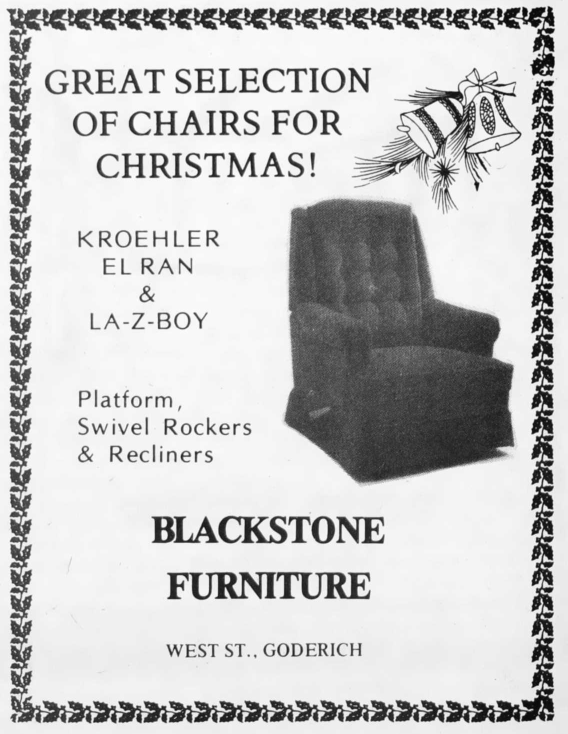
Blackstone’s continued to operate until at least 1980, known then as Blackstone’s Furniture, as can be seen from an advertisement published in the Village Squire.

SOURCES

Photo of a Blackstone's Furniture ad from 1928
Photo of a newspaper clipping of a Blackstone Furniture ad from 1980

Henderson Collection – Labour Day Celebrations

Henderson Collection – Labour Day Celebrations

Brooklyn Wright, Huron County Museum assistant, is working on the Henderson Photographic Collection this summer and highlighting some of the stories and images from the collection. Gordon Henderson was a Goderich-based photographer who produced black-and white photos using a variety of mediums, such as negatives, glass-plate negatives, and cellulose nitrate film. The collection housed at the Huron County Museum and contains more than 10,000 negatives and photographs taken by Mr. Henderson from the 1930s – 1970s. Included in the collection are class pictures, summer camp pictures, wedding pictures, advertising campaigns, pictures of local events, buildings, businesses, and much more.

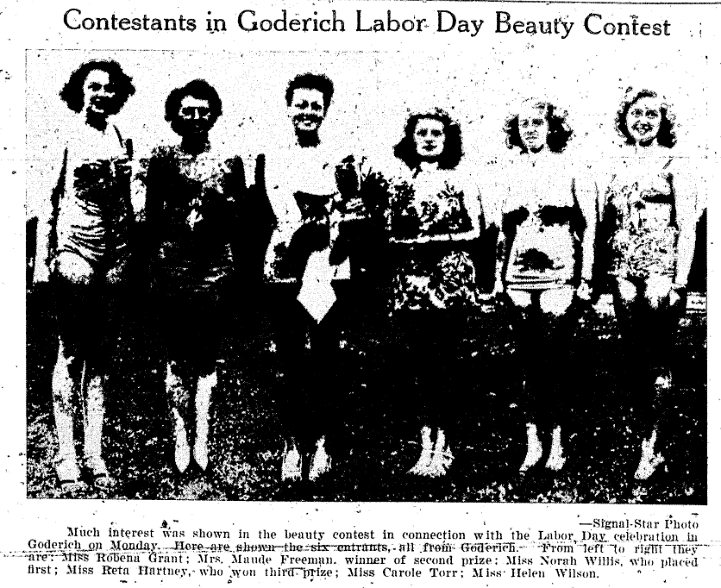
The second annual Goderich Labour Day Celebrations took place in and around the Goderich Square on Monday, Sept. 2, 1946. The celebrations were captured in part by the above image from the Henderson Collection, but the full extent of the festivities lasted all day, and a wide variety of events took place.

That morning, a parade was held, starting at Victoria Park and ending at the Square. The procession included many different community members, including labour unions, local businesses, bands, and the fire department. Goderich Bluewater Band, dressed as clowns, was one of the participating groups in the parade. Afterwards various contests took place; boys and girls races were held, as well as hurdle jumping, tug-of-war, a softball tournament and a beauty contest. There was also a speech by Col. Lambert, padre of the Christie Street Hospital in Toronto. He spoke to the crowd of his pride and gratefulness towards the soldiers of World War One and World War Two, but also to the working men and women who produced the firearms, minesweepers, parachutes, and other supplies needed for the war effort. The day was deemed a great success in the Goderich Signal-Star, with congratulations in order for the organizers, the local Trades and Labour Council.

What are your plans for this upcoming Labour Day?

Image from the digitized newspaper collection showing the contestants in the Goderich Labour Day Beauty Contest

The Goderich Signal-Star, 1946-09-05

Forgotten Faces of Huron Remembered

Forgotten Faces of Huron Remembered

The Huron County Museum’s temporary exhibit Forgotten: People and Portraits of the County  features unidentified portraits captured by Huron County photographers. In addition to the onsite exhibit, photos are shared in an online exhibit and Facebook group in hopes that some of these ‘Forgotten’ faces will remembered and named. Curator of Engagement & Dialogue Sinead Cox shares highlights of the exhibit’s remembering efforts so far. 

Semi-Weekly Signal, (Goderich) 07-27-1869 pg 2

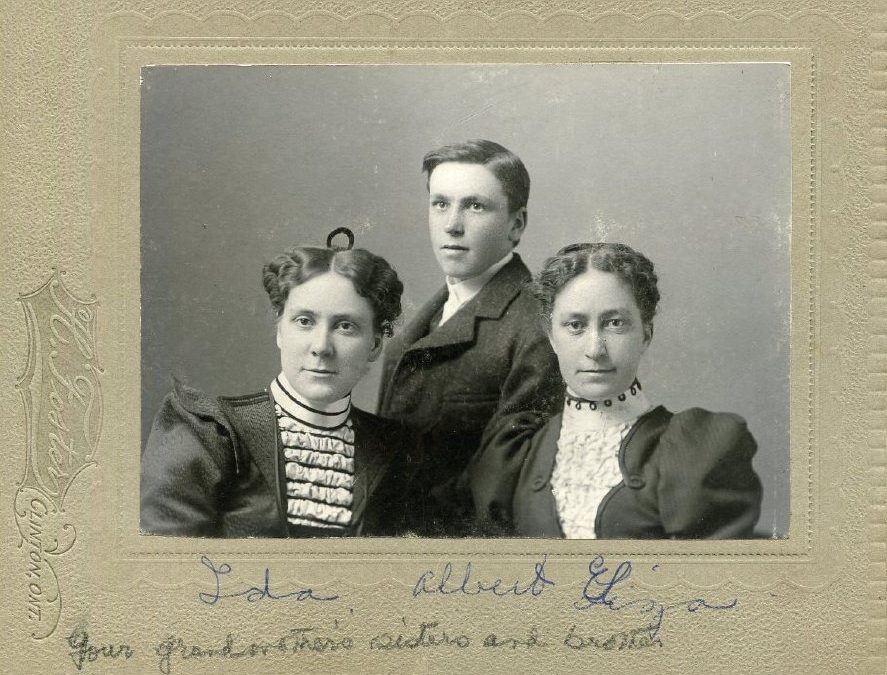
The Huron County Museum has an incredible collection of photographs in its Archives – especially studio portraits from commercial photographers within Huron County (spanning the county from Senior Studio in Exeter,  Zurbrigg in Wingham, and everywhere in between). Not all of these photographs came with identifying information for their subjects, or even known donors or photographers. The Forgotten exhibit has provided an opportunity to delve deeper into the clues that can be present in everything from associated family trees to fashion styles, photographer’s marks, and photography methods that can provide more context, narrow timelines, or even lead to the re-discovery of names. I am especially grateful for the enthusiastic participation we have already had from photo detectives from the public who have contributed to remembering Huron County’s ‘Forgotten’ faces. Hopefully this is just the beginning of adding value to our collection.

Professional studio photographs were often (and still are!) sent as gifts to family and friends. Local photographers saved negatives to sell reprints at a later date, and these negatives were also sometimes inherited when a studio changed hands. It’s very possible your own family photo collection contains the duplicate of a photo that exists in the possession of an archive or a distant relation somewhere else in the world. Finding matches between the faces in those photos is one way to solve photographic mysteries, and why a shared space to upload and comment on photos, like the Forgotten Facebook group, has the potential to put names to faces even after more than a century has passed since the camera flash!

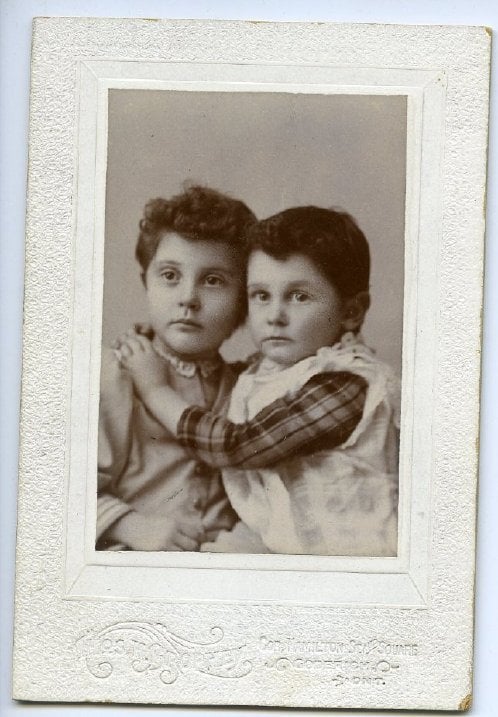
Black & white image of two children embracing.

2011.0013.020. Photograph

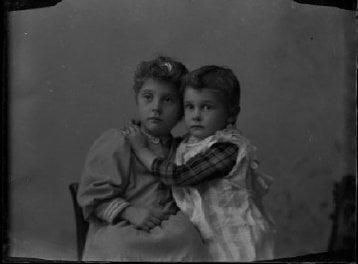
Black & white negative image of two children embracing.

2017.0013.011. Glass negative

During preparation for the exhibit, staff recognized that a photograph and a glass negative from unrelated donations depicted the same image of a pair of children (their nervous expressions at having their photo taken were difficult to miss). The photo and negative came to the museum from different donors, six years apart.  Information provided with the donation of the photograph indicates that these children may be related to the McCarthy and Hussey families of Ashfield Twp and Goderich area; the studio mark for Thos. H. Brophey is also visible on its cardboard mount, dating the image approximately between 1896 and 1904. The matching negative came from a collection related to Edward Norman Lewis, barrister, judge and MP from Goderich. The shared connection between the donations provides one more clue to help identify the unnamed children, and gives the negative meaning and value (through a place, time and potential family connection) it didn’t previously have without the photograph’s added context. You can see both the photograph and the negative on display in the temporary Forgotten exhibit, which is on at the Museum until fall 2022.


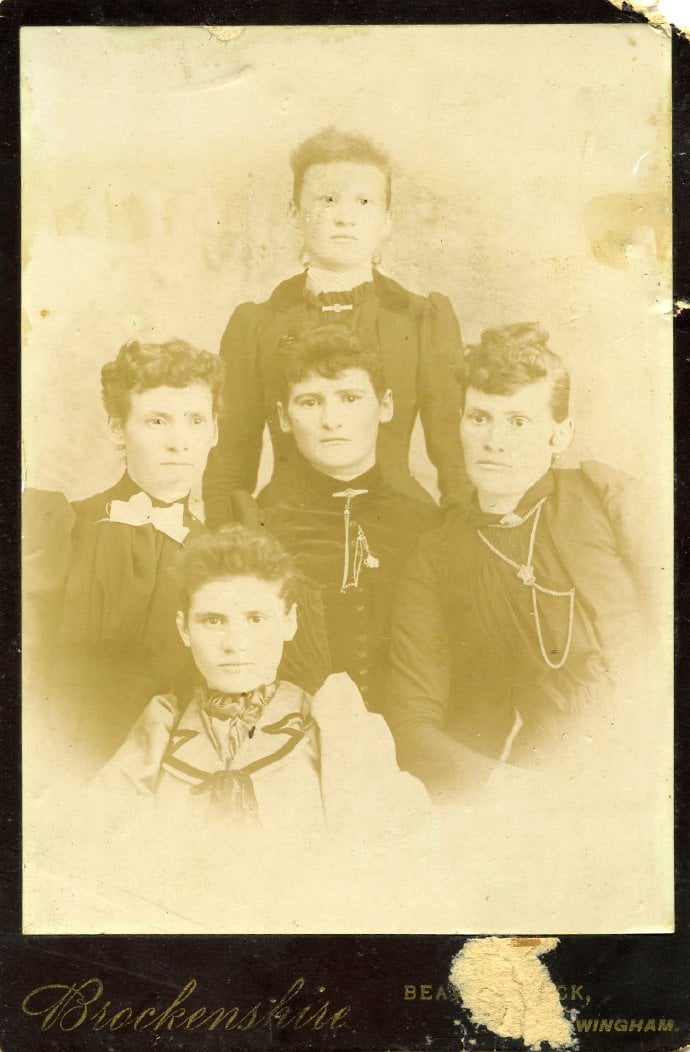
Photograph of five women circa 1890s. Photomark for Brockenshire, Wingham, at bottom.

2021.0053.006. The “Garniss sisters”: Sarah Ann, Elizabeth, Eliza Maria Ida, Jemima, Mary Lillian. Can you help us identify which sister is which?

Sometimes photographs arrive to the collection with partial identifications or known connections to a certain family, even when individual names are missing.  In those cases, knowledge of family histories can help pinpoint who’s who.  Members of the Facebook group were recently able to name all five Morris Township women identified as only the “Garniss sisters” on the back of a photo from Brockenshire Studio, Wingham.

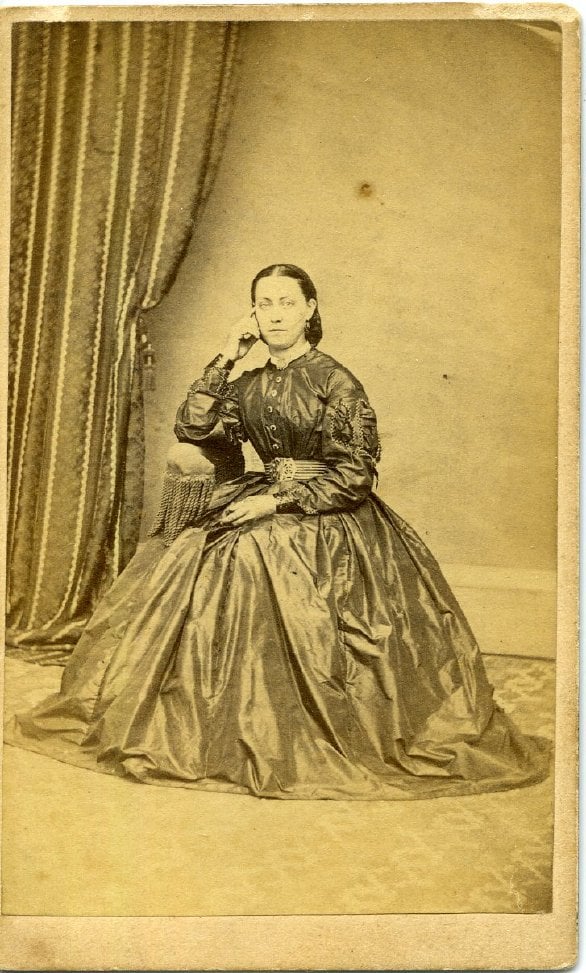
Sepia photograph of seated woman in hoop skirt. Curtain to the left.

A996.001.095

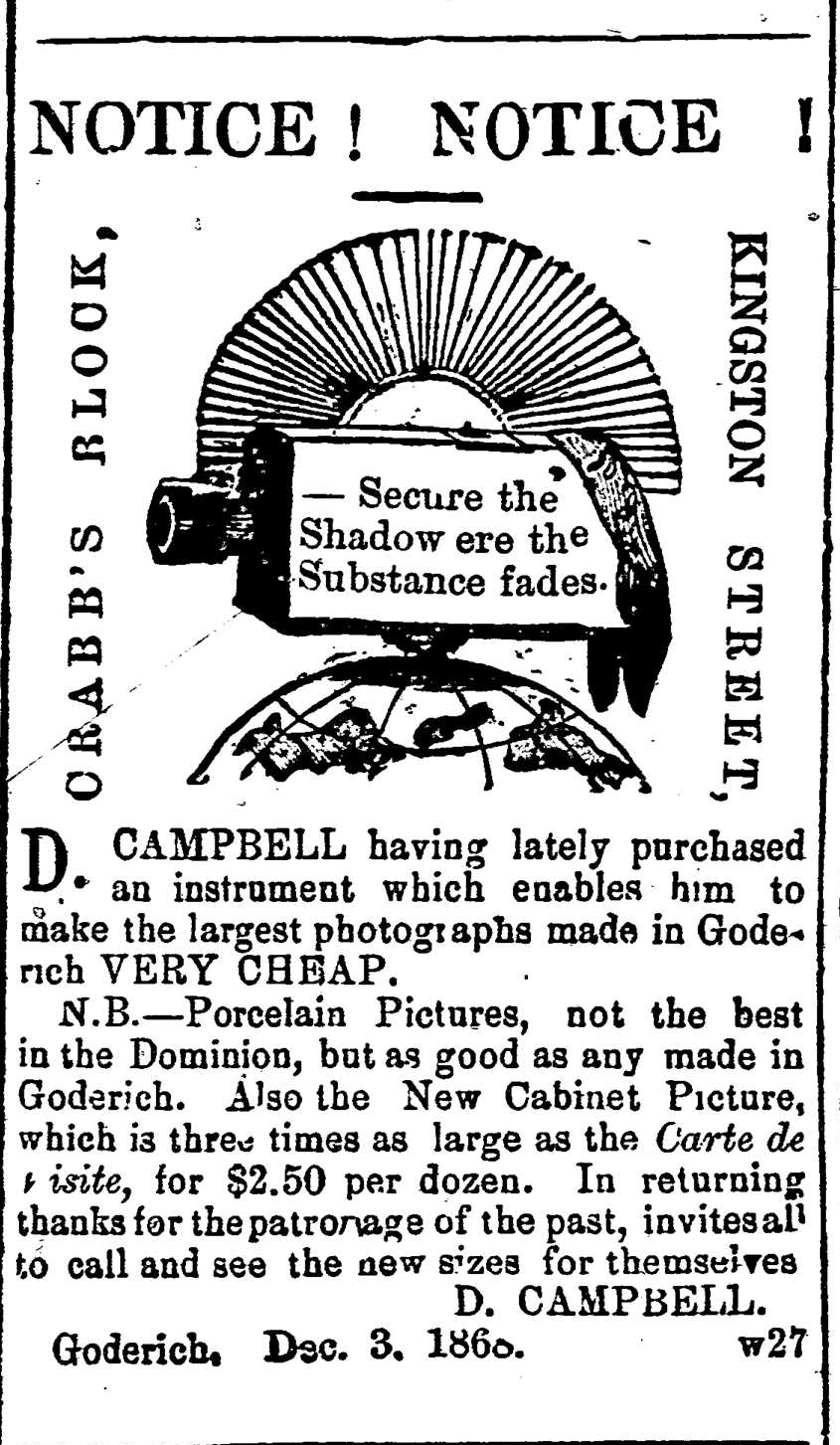
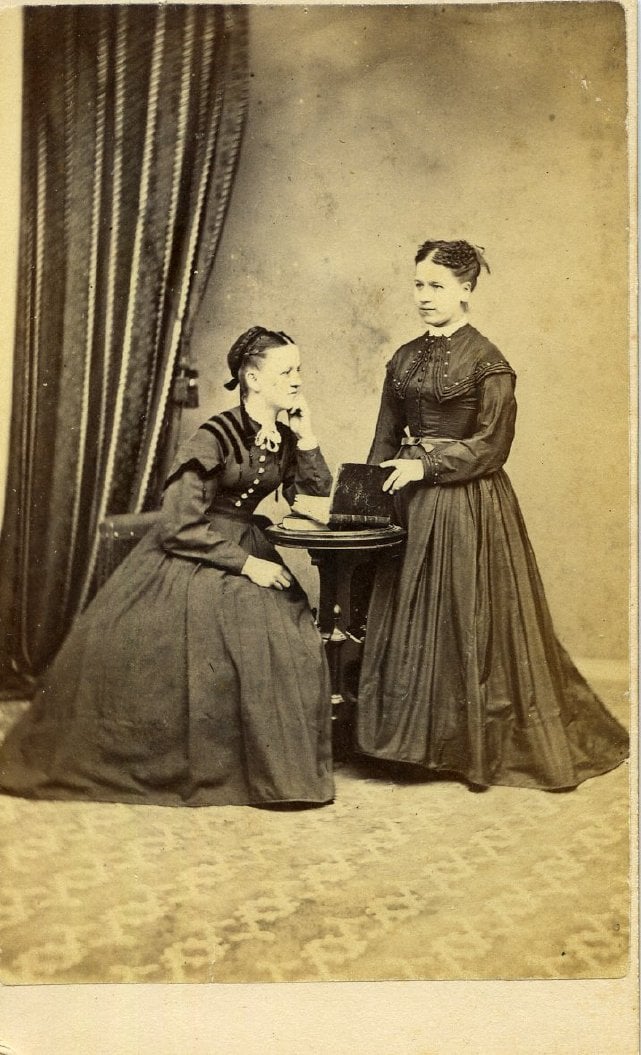
Patterns tend to emerge with access to larger collections from the same location or time period. Although studio photographers later in the 19th century prided themselves on offering a large selection of backdrops, photos from local studios in the 1860s and 1870s often show a more simple set-up. In posting the ‘Forgotten’ photos online, I noticed that the studio space of Goderich photographer D. Campbell can be recognized by the consistent presence of a striped curtain in the background (and more often than not the same tassel-adorned chair) and a distinctive pattern on the floor, as seen in both the photos above and below. This helped identify additional photographs as Campbell’s work, and therefore place them in Goderich circa 1866-1870 , even when a photographer’s mark or name was absent from they physical photo.

Sepia photograph of two young women in dark dresses, one seated and one standing.

A996.001.071. This photograph is labelled as “the Miss Henrys.” Do you have any information that might reveal their first names?

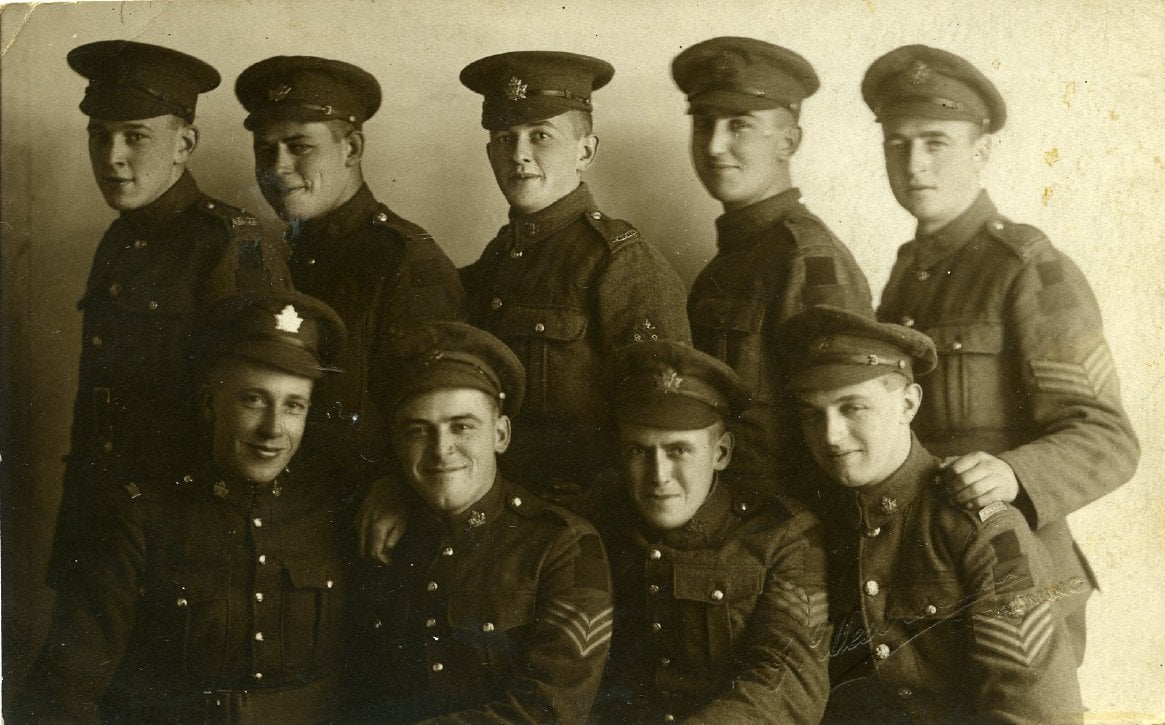
Crowdsourcing information through the online exhibit and group has allowed fresh pairs of eyes to notice detail previously missed in some of the museum’s photos, even when the evidence was captured by the staff doing the scanning and cataloguing work. In November, the Facebook group spotlighted unidentified soldiers, and one of the members pointed out a photographer’s mark embossed on the bottom right corner of a group photo. Staff were able to look at the original photo to get a clearer look to confirm the studio was identified as “G. West & Sons, Godalming.”  Godalming is a town in Surrey, England near Witley Commons, which hosted many Canadian soldiers during the First and Second World Wars.

2004.0044.005. Photographer: G. West & Sons, Godalming, Surrey, U.K.

A950.1740.001

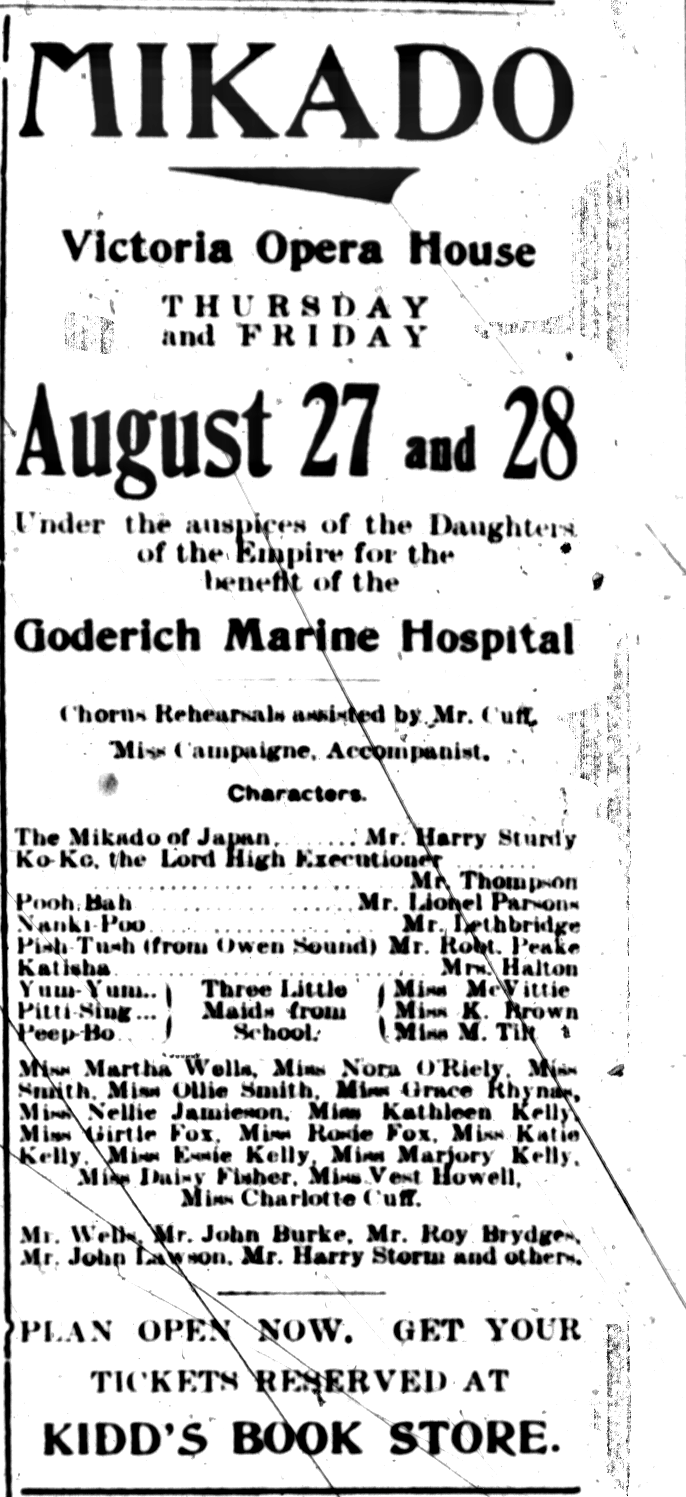
Advertisement for The Mikado August 27 and 28 with cast list.

The Signal 08-27-1903 pg 8.

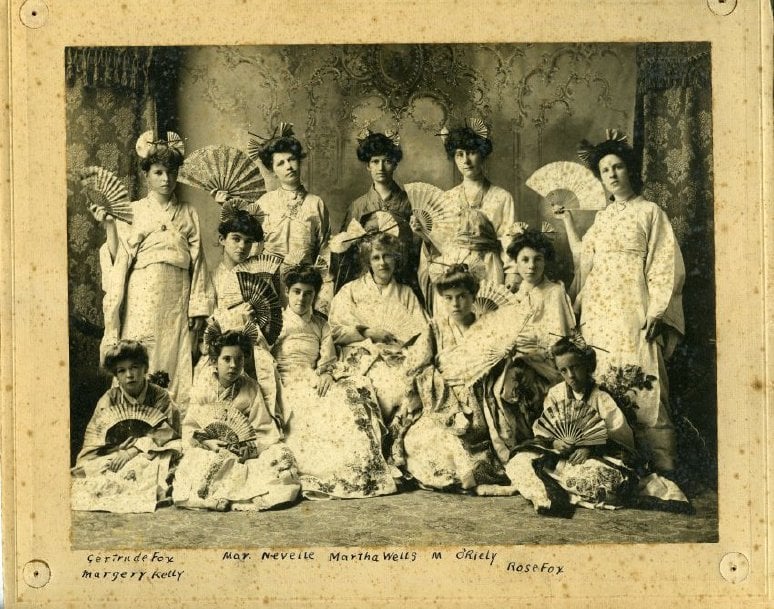
Comparing photographs with other readily available local historical resources like Huron’s digitized newspapers can also help provide new insight. Partial identifications on a group photo of young women in theatrical costumes without a location allowed a group member to link it to a 1903 Goderich production of Gilbert & Sullivan’s The Mikado. Further research in the newspapers provided a full list of the names of the participating cast and more information about the production, which toured Huron County.  This information is now attached to the photograph’s catalogue record to benefit future researchers.

Although many historical photos may be ‘Forgotten’, if they are preserved and housed they are not lost. They still retain the potential  for remembering , and to be re-connected to descendants and communities through extant clues and the growing possibilities of digitization and online sharing. For more highlights from the exhibit and tips for identifying mystery subjects photos or caring for your own collections, join is Feb. 9, 2022 for the second webinar in our exhibit series:  Forgotten in the Archives.

If you can help identify a ‘Forgotten’ face, email us at museum@huroncounty.ca!

For more on the Forgotten: People & Portraits of the County exhibit and related coming events: