by Erin Samuell | Jan 3, 2020 | Uncategorized

New Temporary Exhibits
Did you know that the Huron County Museum updates its exhibits annually? Staff at the Museum are currently busy preparing for an exciting season! Watch for these fascinating and interactive exhibits opening in 2020!
Ripple Effect
March 14, 2020 to February 15, 2021
Draw, Play, Create & Explore. Dive into Huron’s lakes and waterways in this fun and interactive exhibit for all ages.
Reflections: The Life and Work of J. W. (Jack) McLaren
April 15 to August 31, 2020
From Mirth and Mud at Ypres Salient and Vimy Ridge to the vibrancy of landscapes from Huron County and the Maitland Valley, explore the works of artist Jack McLaren (1895-1988).
Forgotten: People & Portraits of the County
September 26, 2020 to September 26, 2021
Explore unidentified images of the people and places of Huron County taken by local photographers. Who are they, where were they, and what stories could they tell?
From the collection of the Huron County Museum & Archives.
*Exhibit opening and closing dates are subject to change

Enjoy Interactive Programs
The Museum hosts a variety of programs for all ages and interests year round. Watch for these programs this winter and follow us on Facebook to stay informed on upcoming events and activities!
Make A Mess at the Museum!
Saturdays in January, February and March
1:30 pm – 3:30 pm
Enjoy unstructured play at the Museum! Create without instructions, colour without lines, and play games without rules!
Multilingual Movie Nights
January 9: Incendies with poutine & apple cider
February 13: House of Flying Daggers with egg rolls & green tea
March 12: A Separation with sweets & Persian tea
Dads and Kids
Presented by Rural Response for Healthy Children
January 30: Movie & themed craft night at the Museum
March 26: Oral history of your Dad/male caregiver! Kids interview the adults for some interesting story-telling!
PA Day Camps
January 31: Games & Toys of the Past, Present and Future!
May 1: Planes, Trains & Automobiles!
June 8: Unlock History! Hands-on history at the Huron Historic Gaol, including lock mechanics.
March Break at the Museum
Join us this March Break at the Huron County Museum as we proudly open our newest exhibit: Ripple Effect. Draw, Play, Create & Explore! Dive into Huron’s lakes and waterways in this fun and interactive exhibit for all ages.
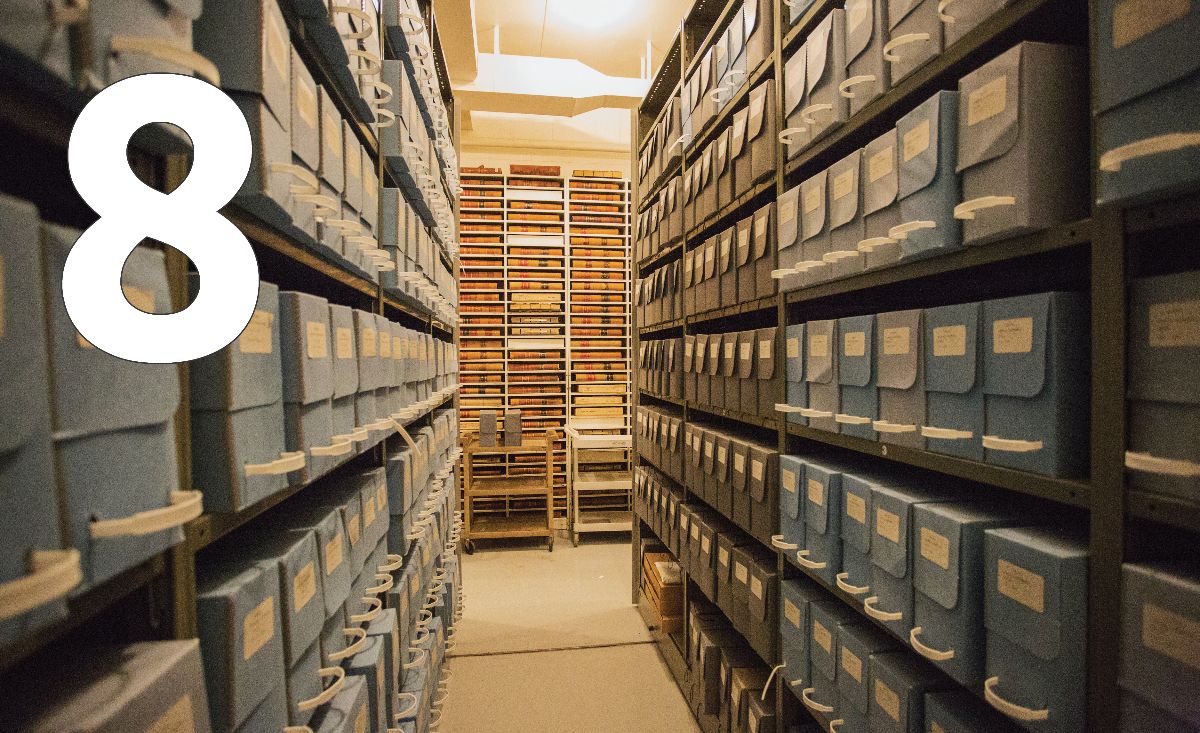
Research Local History in the Museum Archives and On-line!
Research local history in the Archives & Reading Room at the Huron County Museum.
Meet with the Archivist in the Huron County Museum’s Archives & Reading Room for hands on research assistance. Access local resources including; historical documents, newspapers, photographs, personal correspondence, literature and more!
Browse the Huron County Museum and Historic Gaol’s virtual collection from the comfort of your own home!
Access historic newspapers, artifacts, photographs, videos, and 360° virtual tours, on-line for free.
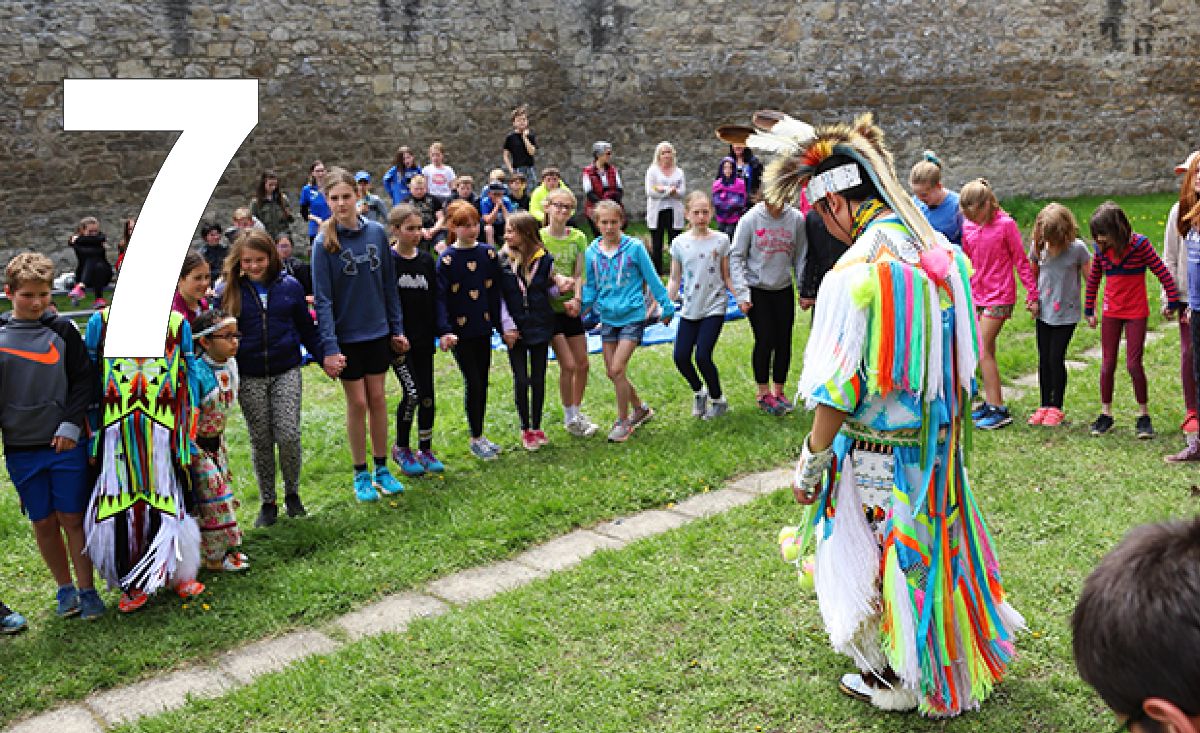
Participate in a School Program
Bring your class to the Huron County Museum & Historic Gaol for a school trip they’ll remember! The Huron County Museum offers innovative tours and programs in an ideal setting for students to learn and truly appreciate the rich history of Huron County.
School programs are geared for grades K-12 and are available for schools, youth groups, girl guide groups, boy scout groups, or groups of any other kind.
All educational programs are informative and interactive. We offer a wide range of programs that connect heritage and cultural life in Huron County to the school curriculum.
Check out our program guide for more information on the programs we offer!
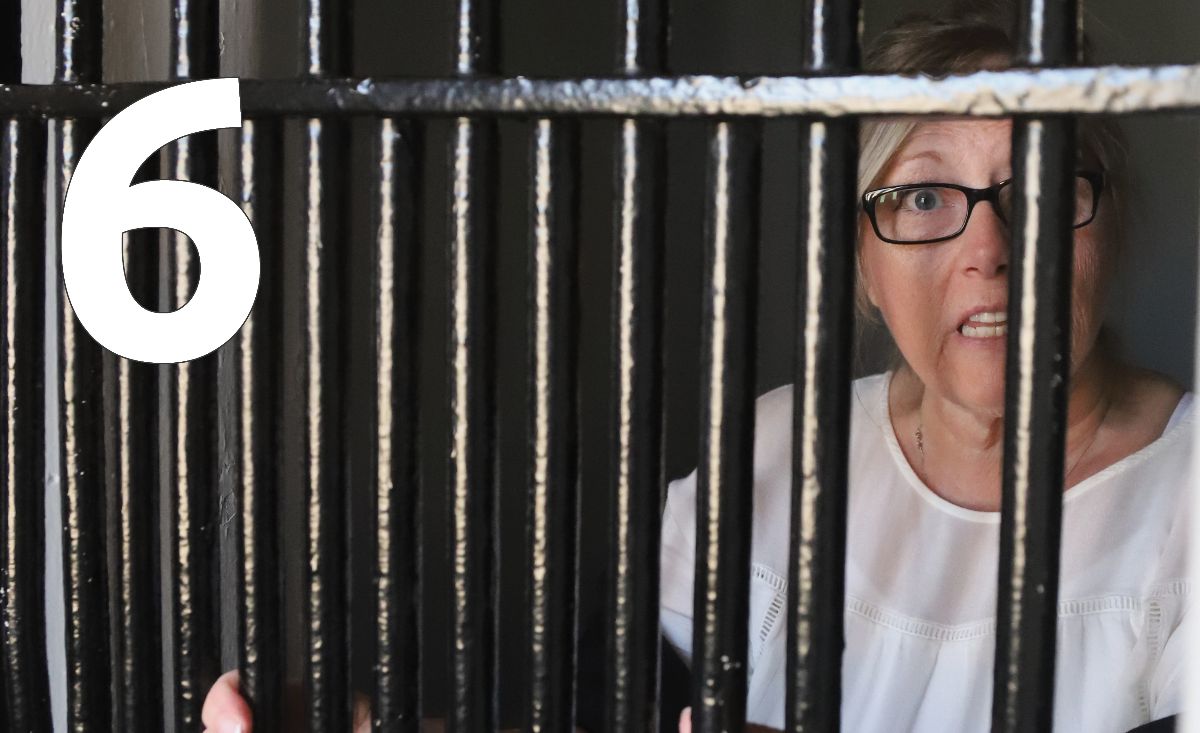
Learn about life Behind the Bars!
The Gaol’s most popular program, Behind the Bars, will return this summer! Meet the faces of the Gaol and learn about life in Gaol between 1841 and 1911 in this interactive evening tour!
Did you know the Behind the Bars program is updated annually with new scripts and actors? Even if you’ve been before you’ll be sure to discover something new!
Admission is $10 for adults and $5 for children
Children under 5 and Museum Members are free!
Tuesdays & Thursdays 7-9 pm in July and August
Get Involved!
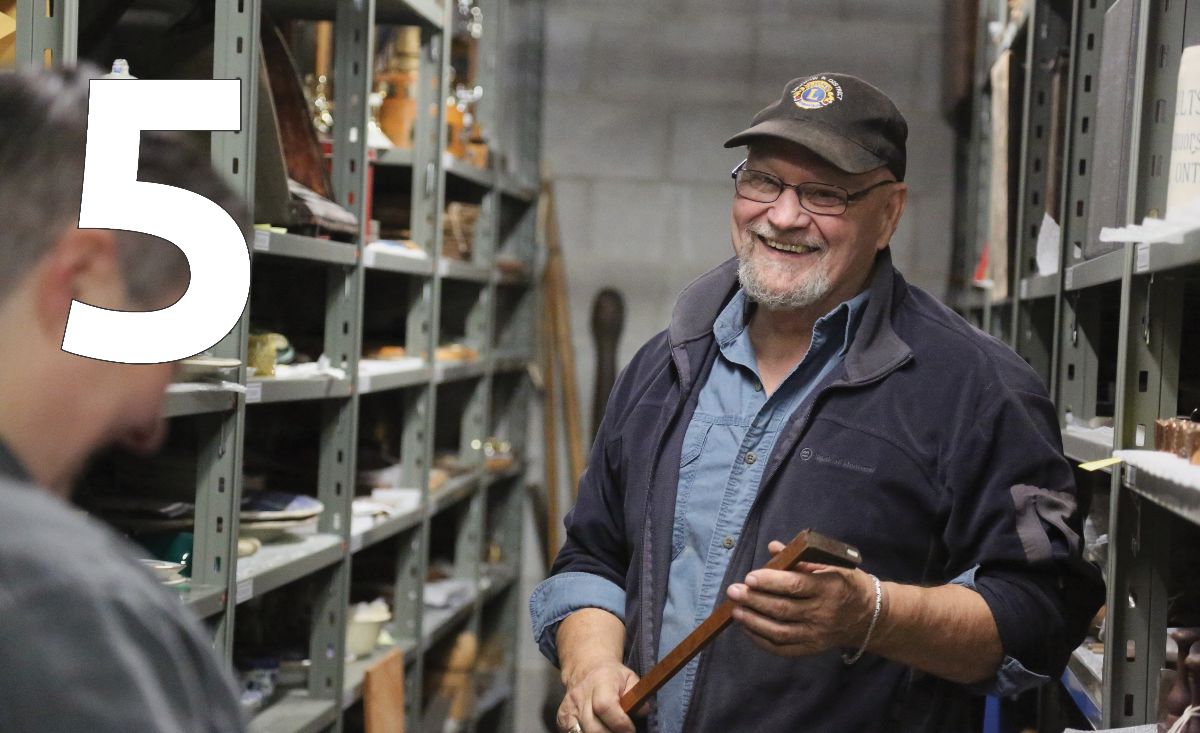
There are many ways to join the Museum in our efforts to preserve, share and foster Huron County culture! We’d love to work with you!
Volunteer opportunities
There are many opportunities for volunteers at the Huron County Museum & Historic Gaol including: guest services, artifact cataloguing, cleaning & preservation, research & exhibit development, special event coordination, gardening and more! Learn about all of the opportunities to volunteer at the Museum & Gaol in our volunteer guide!
Donate an artifact
The Huron County Museum and Historic Gaol accept donations of artifacts and archival material that are historically significant to Huron County. Make an appointment with the Museum’s Registrar to learn more about the items we accept.
Sponsor an Exhibit or Program
Your business or organization can help support the Museum by sponsoring an exhibit or program. Sponsorship is available at a variety of price points or through in-kind donation and is a great way to connect with your community while promoting your business. Contact the Museum’s Business Development Manager for more information!
Take advantage of the Huron Heritage Fund
The purpose of the Huron Heritage Fund is to encourage the preservation of heritage assets and activities of heritage importance to the County of Huron and its residents.
Projects that receive funding assist in the preservation and restoration of heritage landmarks, historic buildings, and objects of historical significance not owned by the County of Huron. Heritage events and publications may also qualify for support under this program.
Learn more about the Huron Heritage Fund in the application form.
S.T.E.A.M. Power Summer Camp
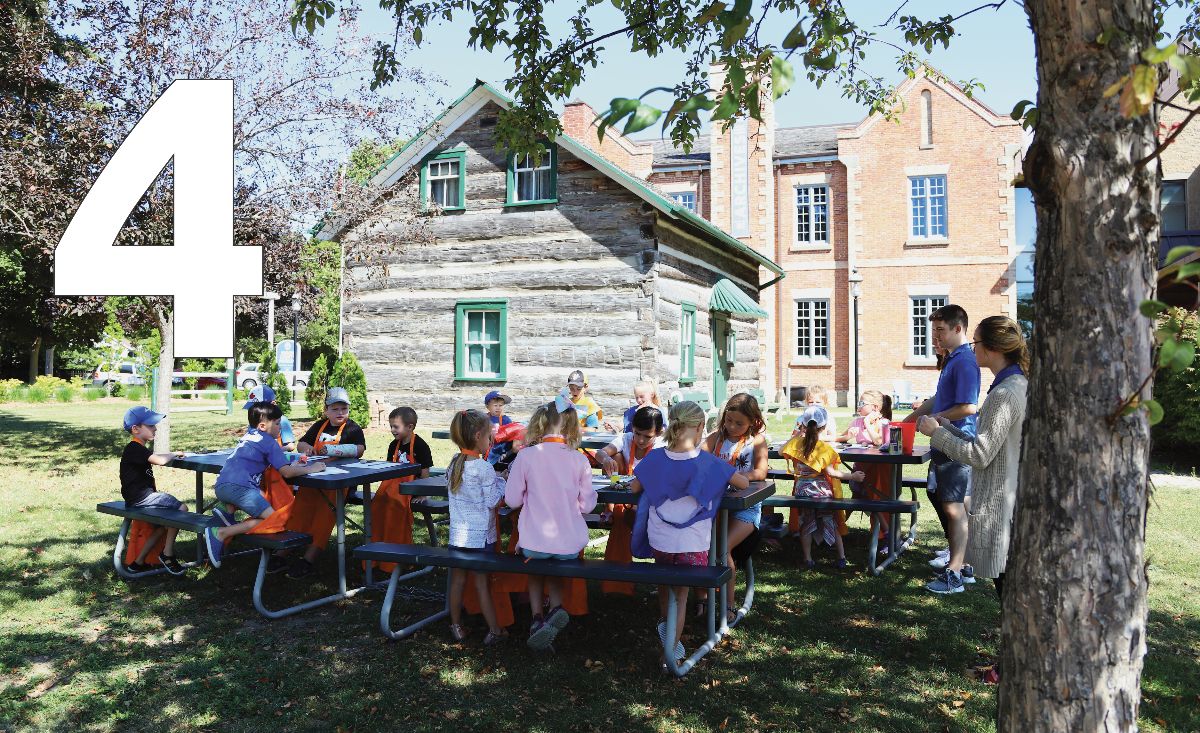
All aboard! It’s full steam ahead for the Huron County Museum and Historic Gaol’s S.T.E.A.M. Power Camp! Discover the thrill of learning about science, technology, engineering, arts, and math in a fun and interactive setting!
Tinkerer, Curator, Spy
July 13-17, 2020
Make, build and go behind-the-scenes at the Huron County Museum. Create a mini-exhibit, design a disguise, invent a machine, solve a mystery, and check out the strangest, weirdest, most unbelievable artifacts from the museum’s collection.
World Famous
July 27-31, 2020
Be a globetrotter & travel the world (and through time) all from the Museum – somewhere new every day! Imagine your own international travels, use hands-on play to explore cultures from around the globe, and discover what makes Huron County famous around the world!
Eco Action!
Aug 10-14, 2020
Get active to find out more about our natural environment in the past, present and future and how to defend it! Make a splash with our interactive Ripple Effect exhibit about Huron’s waterways, and get your hands dirty in the Museum’s garden. Build and invent with upcycled materials.
Registration for summer camp opens February 3, 2020
Two-Headed Calves
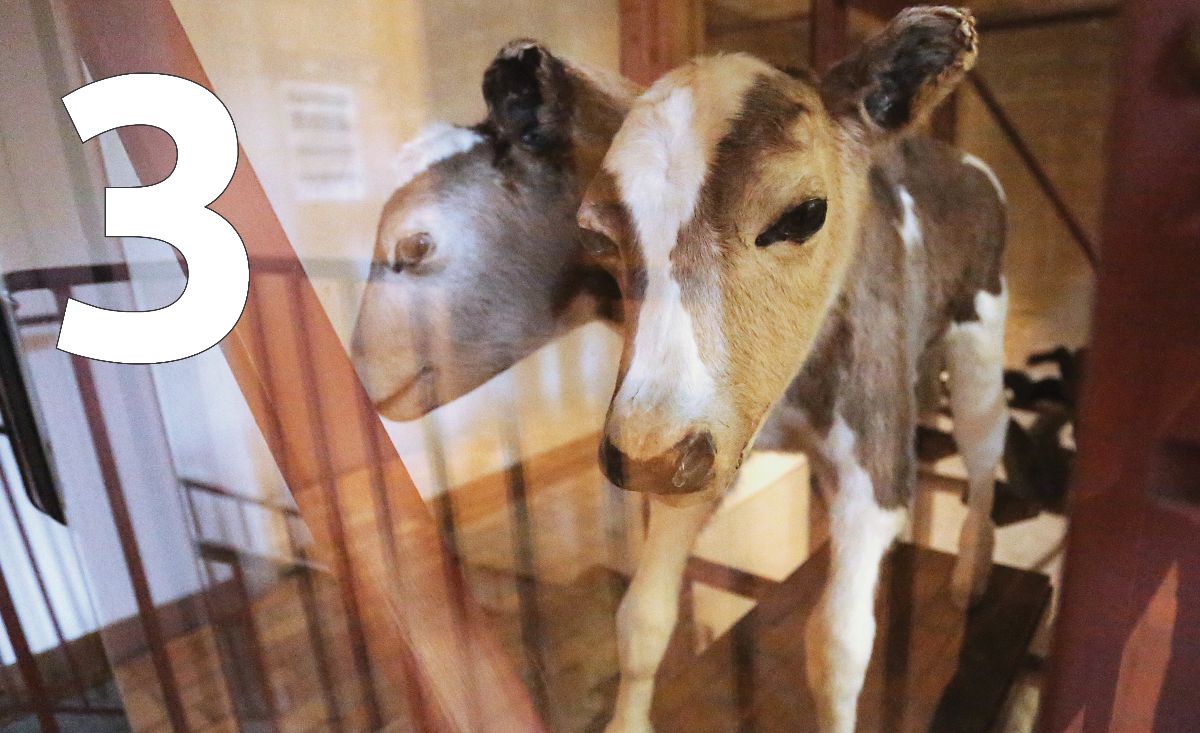
Did you know that the Museum has two two-headed calves in our collection? Since the Museum’s earliest days these calves have been a crowd pleasing favourite amongst staff and visitors – which one do you favour?
Take a two-headed calf home with you! Visit the Museum’s gift shop (open year round) to purchase a collector two-headed calf plushie, t-shirt, key chain, mug and more!

Become a Museum Member!
Support the Huron County Museum & Historic Gaol by becoming a Museum Member
Annual membership is available for as little as $30!
Membership Benefits Include:
Unlimited admission to the Huron County Museum and Historic Gaol during regular hours of operation
Invitations to exhibit openings and select events
Discount on programming and gift shop purchases
Free admission to Behind the Bars
Unlimited regular admission at our reciprocal partners:
Bruce County Museum and Cultural Centre
Grey Roots Museum and Archives
Ken Seiling Waterloo Region Museum
Simcoe County Museum
Regular admission to the Huron County Museum and Historic Gaol is FREE when you show your Huron County Library Card!
Library cards are available at no charge to Huron County residents at any one of Huron County’s twelve library branch locations. Free admission is limited to regular admission rates only. Additional charges may still apply to workshops, programs (including Behind the Bars), special events, room rentals, group tours, memberships, archives use, and other events.
by Erin Samuell | Sep 5, 2019 | Exhibits, Textile Collection, Uncategorized
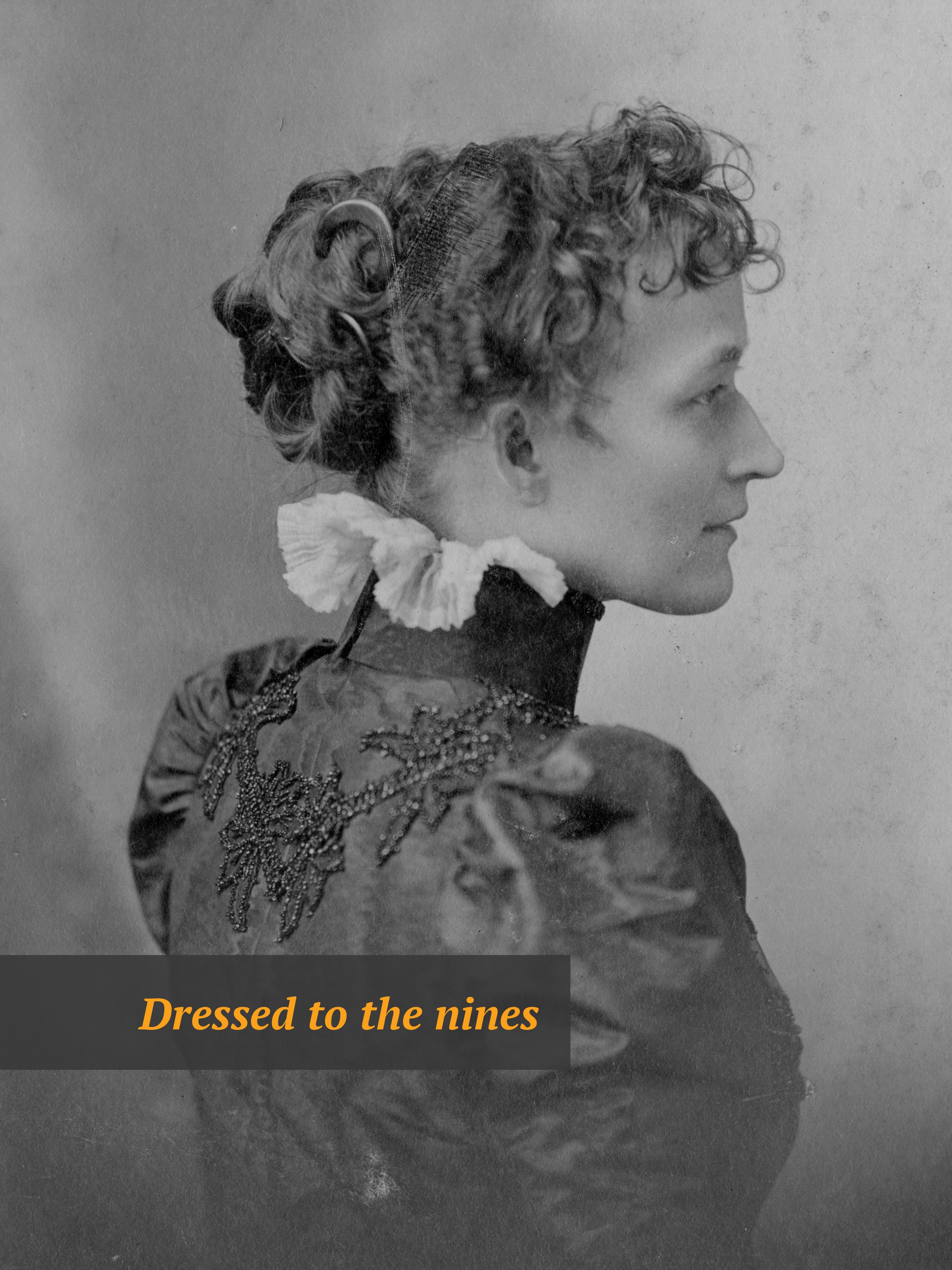
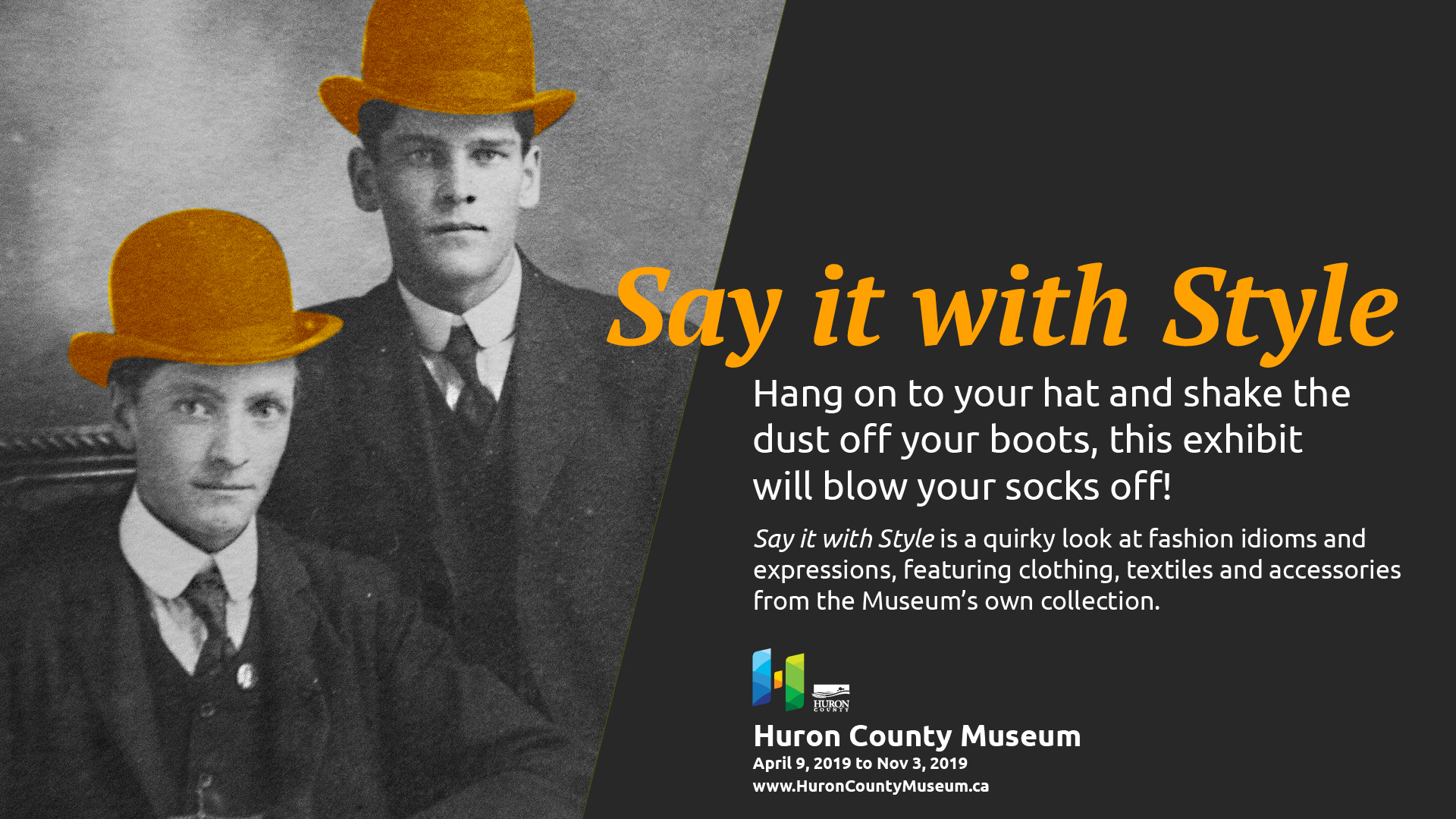
The Huron County Historic Museum presents our newest temporary gallery “Say It with Style”. This exhibit explores different fashion idioms from around the world, along with displays of clothing and accessories from dresses to collars, all from our own collection.
Some idioms, are hard to understand until they are defined. Some of them, you also will find you have never heard of. But the history from where these idioms originated is very interesting and every idiom has a story to tell. Here is the history of two idioms presented in the gallery and their definitions:
To wear your heart on your sleeve essentially means to openly display all of your emotions and feelings. This idiom has a few places where it could have originated from. The first and most likely place is from Shakespeare’s play Othello. Spoken by Iago, he is saying that to show his feelings would be like wearing his heart on his sleeve, where birds could peck at it. In other words, he is saying that to be open about your feelings is to make yourself vulnerable. Another theory about where it could have been started was in the middle ages. Claudius II, the Emperor of the Roman Empire from 268 to 270. He thought that unattached men make better soldiers, making marriage illegal. As an alternative, he would suggest temporary coupling. Every year, he would hold festivals and men would draw names of different ladies and whoever they got would be their partner for the next year. Once this was done, the man would wear her name on his sleeve for the rest of the festival. The last story originates from a time when knights would joust by order of the king and dedicate his performance to a woman of the court. So, by wearing something around his arm like a handkerchief, he let everyone know that the match was in defense of the woman’s honour. Which of these stories would you choose?
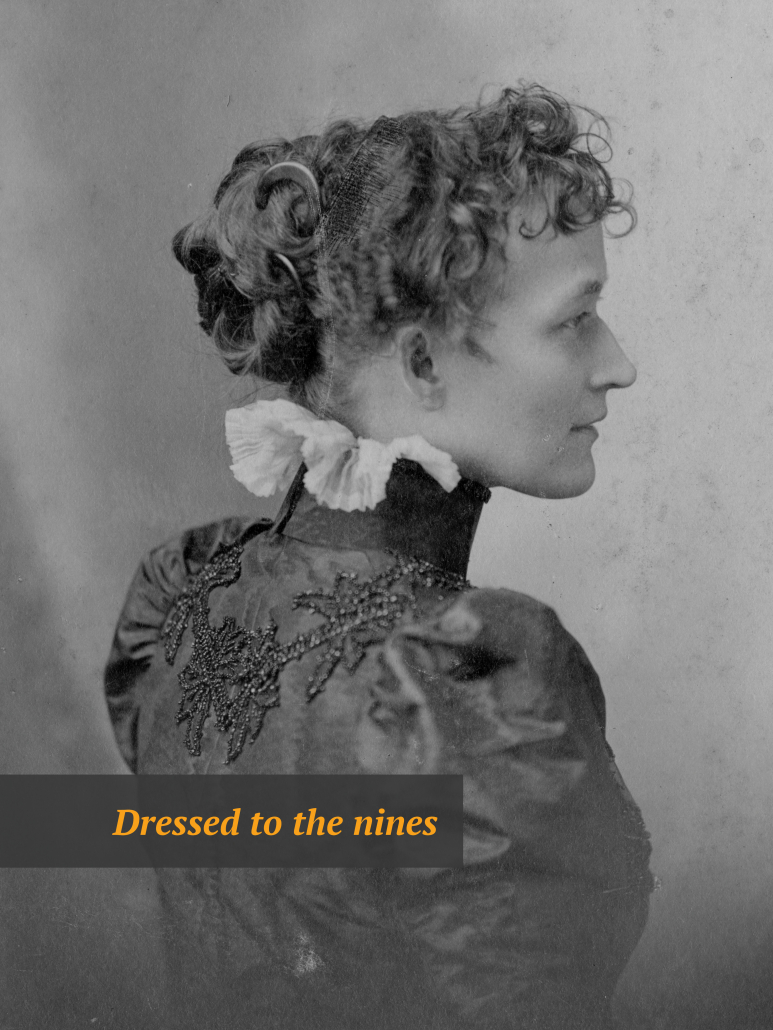
Another idiom, dressed to the nines, means to be dressed in your best, fanciest clothing. The origin of this idiom is unclear, but there are a few theories to where it could have come from. The phrase “to the nines” was found in poetry and stories before it was associated with clothing. One of the first encounters with the slang came from an English poem by William Hamilton called Epistle to Ramsay in 1719 where he wrote: “The bonny Lines therin thou sent me, How to the nines they did content me.” Another theory is that it came from the British Army’s 99th Regiment of Foot. They were well known for their intelligence and well kept uniforms, so well-known that other regiments that were based with them were would try to emulate them — to equal “the nines”. The most likely origin is the instance of the phrase being applied to using 9 yards of material to perfectly craft a suit, not to mention 9 yards of material for a suit is way too much material than actually needed. It would be an extravagance!
All of the textile pieces in our gallery feature different types and styles and are all designed to pair with each idiom presented. We have also included idioms from around the world, exploring different languages and cultures so you can also explore what other countries might say when expressing how they feel about clothing. If you would like to see for yourself, this exhibit is on display now for you to learn and explore, located in the Feature Gallery on the second floor of the Huron County Museum until November 3rd. We hope to see you there!
Written by Olivia Vanstone, Huron County Museum Co-op student from Goderich District Collegiate institute. Olivia recently graduated from grade 12 and enjoys photography, art, fashion, music and dramatic arts. During Olivia’s placement she was busy assisting with exhibit and programming activities.
by Erin Samuell | Aug 14, 2019 | Exhibits, Uncategorized
The Huron County Museum currently has on display a temporary exhibit created by Ingenium: Canada Science and Technology Museum, all about women in the STEM workforce – Iron Willed: Women in STEM. The exhibit includes interactive digital activities and bright infographics which display topics such as general information about women in STEM, gender discrimination, and material on the women from now and in the past who have pushed change for the women in these fields.
The fields of Science, Technology, Engineering and Math (STEM) have been of great interest to women now and in the past, but women haven’t always been taken seriously in these fields. Due to the issues of women’s rights in the past and gender discrimination, women were not able to go to college or university until the late 1800’s. In the beginning of the 20th century, men and women had their set roles in society. Often schools would turn down women because of these roles, and assume that after they were married and had children they would leave anyways.
Harriet Brooks
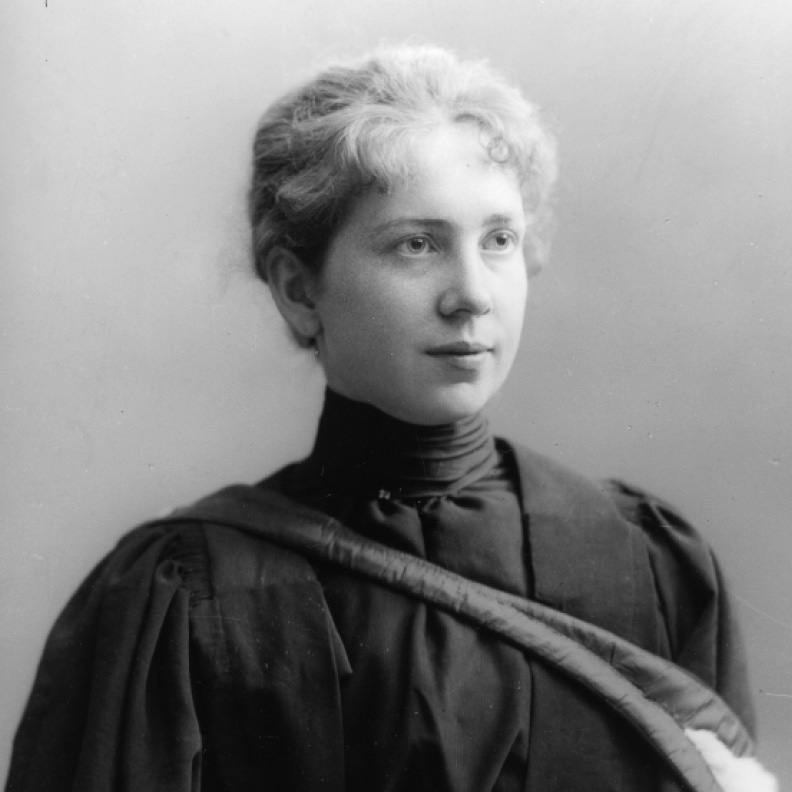
However, for Harriet Brooks, this was not the case. Born in 1876 in Exeter Ontario, Harriet was the first Canadian woman to become a Nuclear Physicist. She worked with researchers and professors like Ernest Rutherford and Marie Curie, and experimented with radioactive emissions from thorium and radon. During her time at Barnard College in New York 1906, she became engaged to a physics professor from Columbia University. The Dean of Barnard stated that “whenever your marriage does take place it ought to end your official relationship with the college” which began a debate. Brooks felt she had a duty to both her profession and her sex to continue her work even after marriage. Harriet ended up breaking off the engagement and stayed at the school until 1907. In 1907, she became engaged again, and resigned claiming that there wouldn’t have been employment in physics research for her anyways.
As the 20th century continued, more women were studying higher level mathematics, but there was still a lack of job opportunities in those fields. Despite this being the reality, that didn’t stop women from studying and teaching mathematics, such as Emmy Noether, another woman featured in this exhibit. Emmy Noether was a German Mathematician and studied abstract algebra and theoretical physics, including the development Noether’s Theorem in Physics. She was also described various well-known scientist as the most important woman in the history of mathematics. After graduating in 1907, she worked at the Mathematical Institute of Erlangen teaching advanced mathematics. Due to gender norms at this time in society and in law, women were often unable to teach in schools or universities therefore she worked at the university unpaid for 7 years. She was then offered a position at the University of Göttingen, which is known for their mathematical research. She took up the offer, but had to lecture under David Hilbert’s name (who was the one that offered her the position) for 4 years. In 1919, she obtained the position of Privatdozent (permission to teach). In 1933 she moved to the United States after dismissal by the German Nazi Government due to her Jewish faith. Unfortunately, in 1935 she underwent surgery and despite the signs of recovery, passed away at the age of 53.
The effort, work, determination and skill these women have shown are all reasons which have greatly assisted the future of women in the workforce. These women worked towards their goals regardless of what being told and fought for what they believe is right. It is an amazing highlight of our history in Canada and the women in STEM wouldn’t have been able to be where they are today if it wasn’t for them. If you would like to see this exhibit, it is now open today for you to come and explore. Located in the Temporary Gallery on the main floor of the Huron County Museum until September 1st.
Written by Olivia Vanstone, Huron County Museum Co-op student from Goderich District Collegiate institute. Olivia recently graduated from grade 12 and enjoys photography, art, fashion, music and dramatic arts. During Olivia’s placement she was busy assisting with exhibit and programming activities.
by Erin Samuell | Jun 7, 2019 | Uncategorized
Found in the Huron Digitized Newspapers
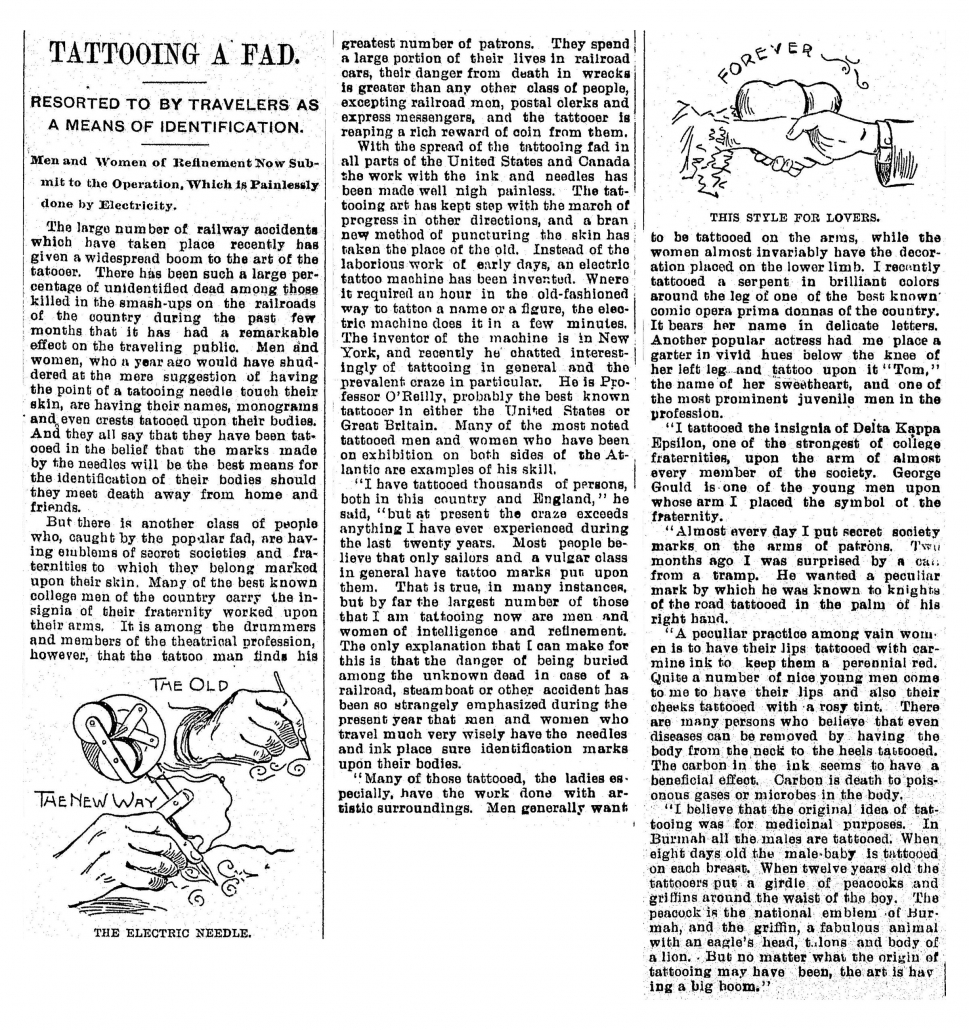
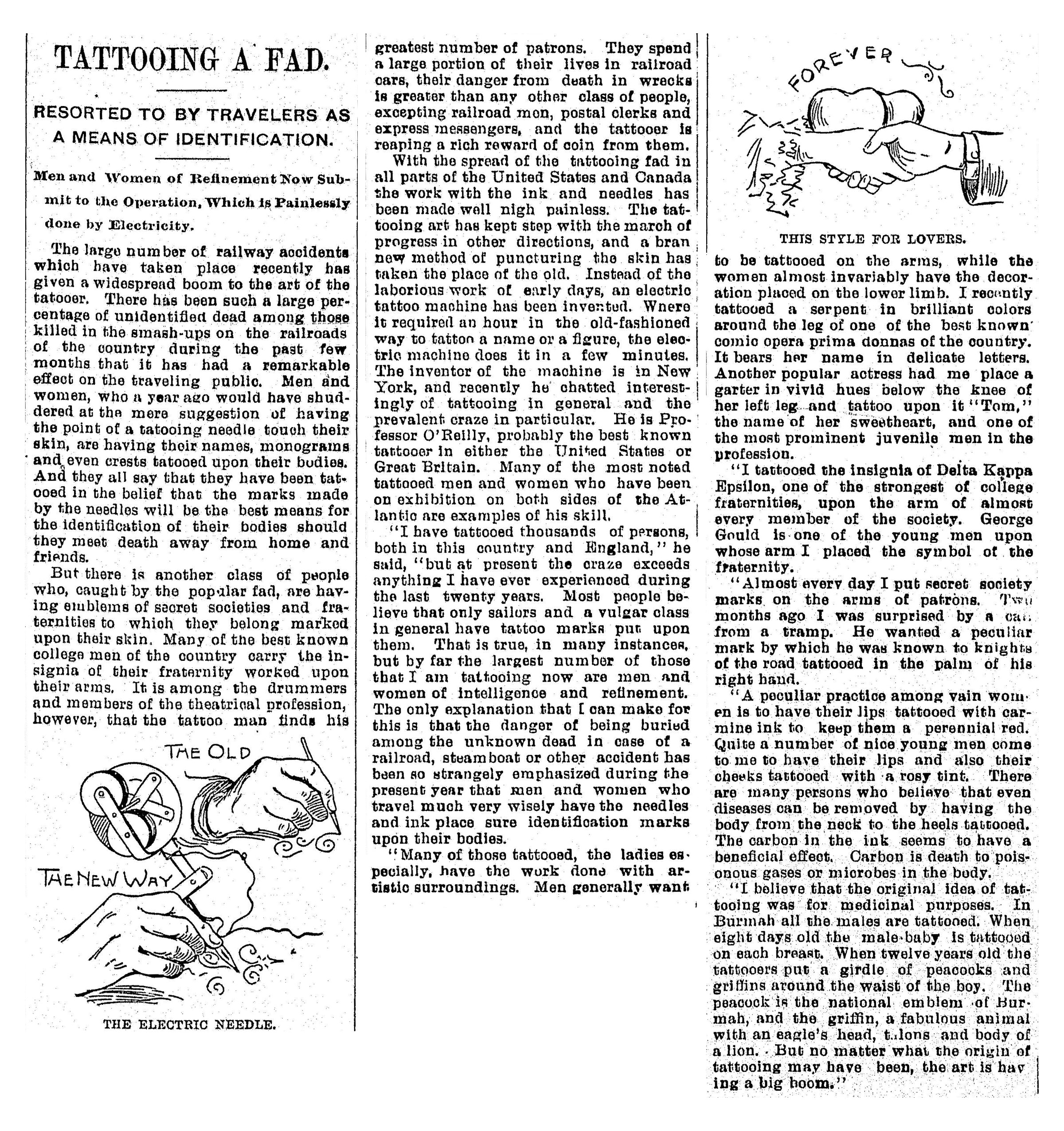
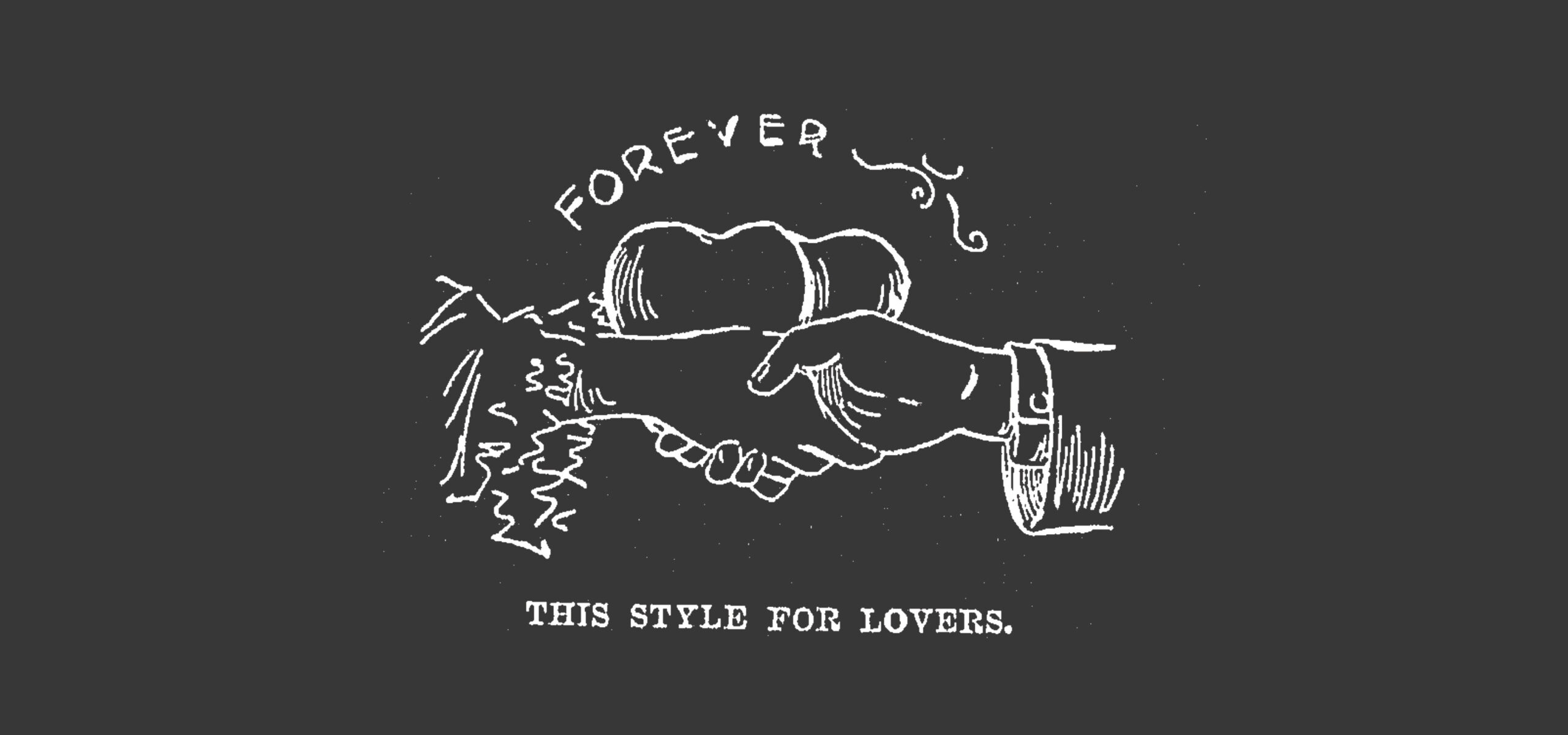
You never know what curiosity you’ll discover when searching the Digitized Newspaper Collection. Take this article on the tattooing craze in 1896 for example. This article suggests that the recent boom in the tattoo industry has been brought about by an increase in railroad accidents leaving unidentified dead in their wake. A fantastic read indeed!
Excerpt from the Exeter Advocate, 1896-4-30 page 7
Tattooing A Fad
Resorted to by travelers as a means of identification.
Men and women of refinement now submit to the operation, which is painlessly done by electricity.
The large number of railway accidents which have taken place recently has given a widespread boom to the art of the tattooer. There has been such a large percentage of unidentified dead among those killed in the smash-ups on the railroads of the country during the past few months that it has had a remarkable effect on the traveling public. Men and women, who a year ago would have shuddered at the mere suggestion of having a tattooing needle touch their skin, are having their names, monograms, and even crests tattooed upon their bodies. And they all say that they have been tattooed in the belief that the marks made by the needles will be the best means for the identification of their bodies should they meet death away from home and friends.
But there is another class of people who, caught by the popular fad, are having emblems of secret societies and fraternities to which they belong marked upon their skin. Many of the best known college men of the country carry the insignia of their fraternity worked upon their arms. It is among the drummers and members of the theatrical profession, however, that this tattoo man finds his greatest number of patrons. They spend a large portion of their lives in railroad cars, their danger from death in wrecks is greater than any other class of people, excepting railroad men, postal clerks and express messengers, and the tattooer is reaping a rich reward for coin from them.
With the spread of the tattooing fad in all parts of the United States and Canada the work with the ink and needles has been made well nigh painless. The tattooing art has kept step with the march of progress in other directions, and a brand new method of puncturing the skin has taken the place of the old. Instead of the laborious work of early days, an electric tattoo machine has been invented. Where it required an hour in the old-fashioned way to tattoo a name or figure, the electric machine does it in a few minutes. The inventor of the machine in in New York, and recently he chatted interestingly of tattooing in general and the prevalent craze in particular. He is Professor O’Reilly, probably the best known tattooer in either the United States or Great Britain. Many of the most noted tattooed men and women who have been on exhibition on both sides of the Atlantic are examples of his skill.
“I have tattooed thousands or persons, both in this country and England,” he said, “but at present the craze exceeds anything I have ever experienced during the last twenty years. Most people believe that only sailors and a vulgar class in general have tattoo marks put upon them. That is true, in many instances, but by far the largest number of those that I am tattooing now are men and women of intelligence and refinement. The only explanation that I can make for this is that the danger of being buried among the unknown dead in case of a railroad, steamboat or other accident has been so strangely emphasized during the present year that men and women who travel much very wisely have the needles and ink place sure identification marks upon their bodies.
“Many of those tattoos, the ladies especially, have the work done with artistic surroundings. Men generally want to be tattooed on the arms, while the women almost invariably have the decoration placed on the lower limb. I recently tattooed a serpent in brilliant colors around the leg of one of the best known comic opera prima donnas of the country. It bears her name in delicate letters. Another popular actress had me place a garter in vivid hues below the knee of her left leg and tattoo upon it “Tom” the name of her sweetheart, and one of the most prominent juvenile men in the profession.
“I tattooed the insignia of Delta Kappa Epsilon, one of the strongest of college fraternities, upon the arm of almost every member of the society. George Gould is one of the young men upon whose arm I placed the symbol of the fraternity.
“ Almost every day I put secret society marks on the arms of patrons. Two months ago I was surprised by a call from a tramp. He wanted a peculiar mark by which he was known to knights of the road tattooed in the palm of his right hand.
“A peculiar practice among vain women is to have their lips tattooed with carmine ink to keep them perennial red. Quite a number of nice young men come to me to have their lips and also their cheeks tattooed with a rosy tint. There are many persons who believe that even diseases can be removed by having the body from the neck to the head tattooed. The carbon in the ink seems to have a beneficial effect. Carbon is death to poisonous gases or microbes in the body.
“I believe that the original idea of tattooing was for medical purposes. In Burmah all the males are tattooed. When eight days old the male baby is tattooed on each breast. When twelve years old the tattooers put a girdle of peacocks and griffins around the waist of the boy. The peacock is the national emblem of Burmah, and the griffin, a fabulous animal with an eagle’s head, talons and a body of a lion. But no matter what the origin of tattooing may have been the art is having a big boom.”