by Amy Zoethout | Aug 31, 2022 | Archives, Blog, Collection highlights
Brooklyn Wright, Huron County Museum assistant, is working on the Henderson Photographic Collection this summer and highlighting some of the stories and images from the collection. Gordon Henderson was a Goderich-based photographer who produced black-and white photos using a variety of mediums, such as negatives, glass-plate negatives, and cellulose nitrate film. The collection housed at the Huron County Museum and contains more than 10,000 negatives and photographs taken by Mr. Henderson from the 1930s – 1970s. Included in the collection are class pictures, summer camp pictures, wedding pictures, advertising campaigns, pictures of local events, buildings, businesses, and much more.
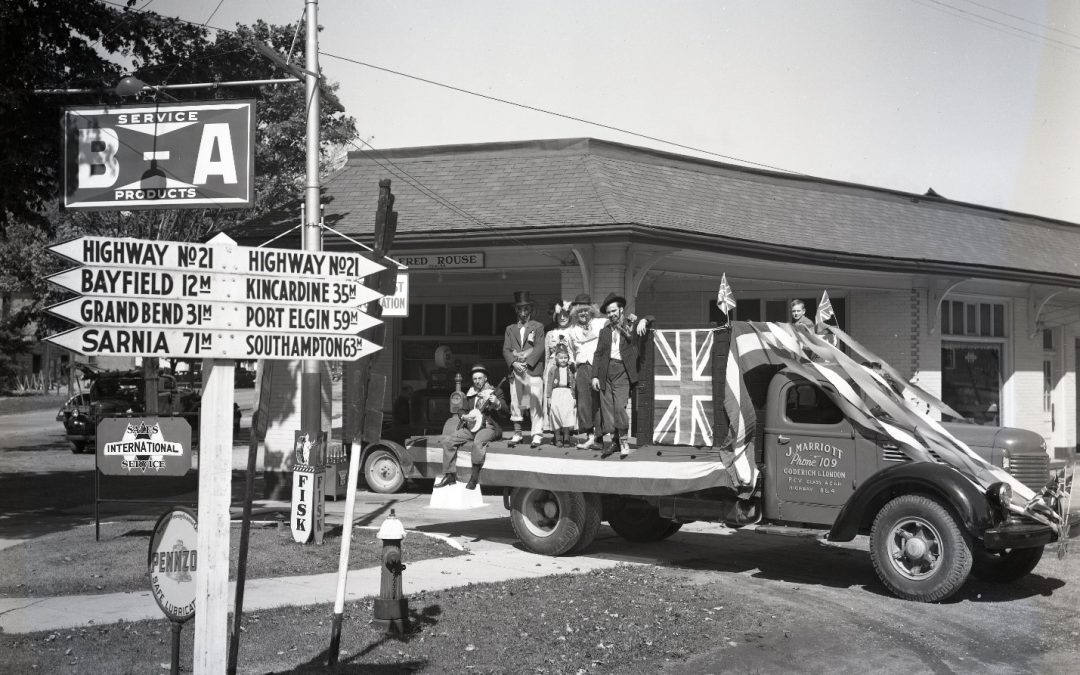
The second annual Goderich Labour Day Celebrations took place in and around the Goderich Square on Monday, Sept. 2, 1946. The celebrations were captured in part by the above image from the Henderson Collection, but the full extent of the festivities lasted all day, and a wide variety of events took place.
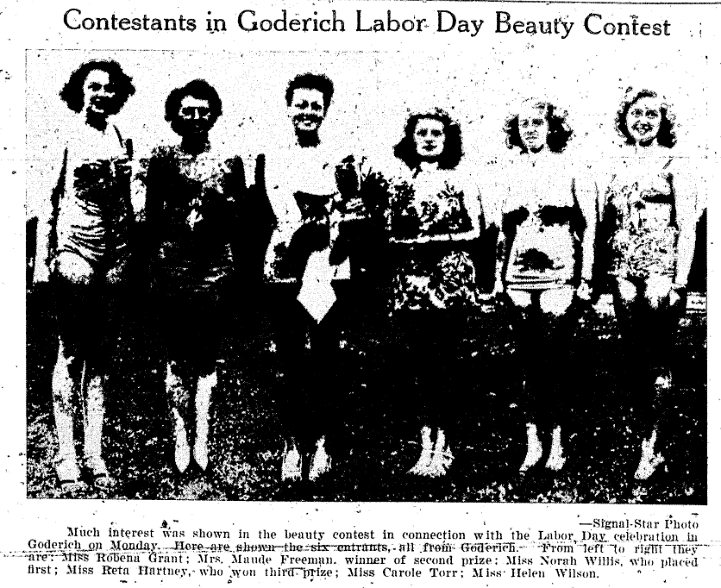
That morning, a parade was held, starting at Victoria Park and ending at the Square. The procession included many different community members, including labour unions, local businesses, bands, and the fire department. Goderich Bluewater Band, dressed as clowns, was one of the participating groups in the parade. Afterwards various contests took place; boys and girls races were held, as well as hurdle jumping, tug-of-war, a softball tournament and a beauty contest. There was also a speech by Col. Lambert, padre of the Christie Street Hospital in Toronto. He spoke to the crowd of his pride and gratefulness towards the soldiers of World War One and World War Two, but also to the working men and women who produced the firearms, minesweepers, parachutes, and other supplies needed for the war effort. The day was deemed a great success in the Goderich Signal-Star, with congratulations in order for the organizers, the local Trades and Labour Council.
What are your plans for this upcoming Labour Day?
The Goderich Signal-Star, 1946-09-05
by Amy Zoethout | Jun 24, 2022 | Archives, Blog, Collection highlights, Museum News, Project progress
Kyle Pritchard is the Digitization Coordinator at the Huron County Museum. With the Digitized Newspaper Collection nearing completion, the project sets its sights on historical records in the archival collection at the Huron County Museum Archives with the assistance of the Department of Canadian Heritage. Consider supporting the digital collection today by donating at the front desk of the Huron County Museum. You can search the digitized newspapers yourself for free at https://www.huroncountymuseum.ca/digitized-newspapers/
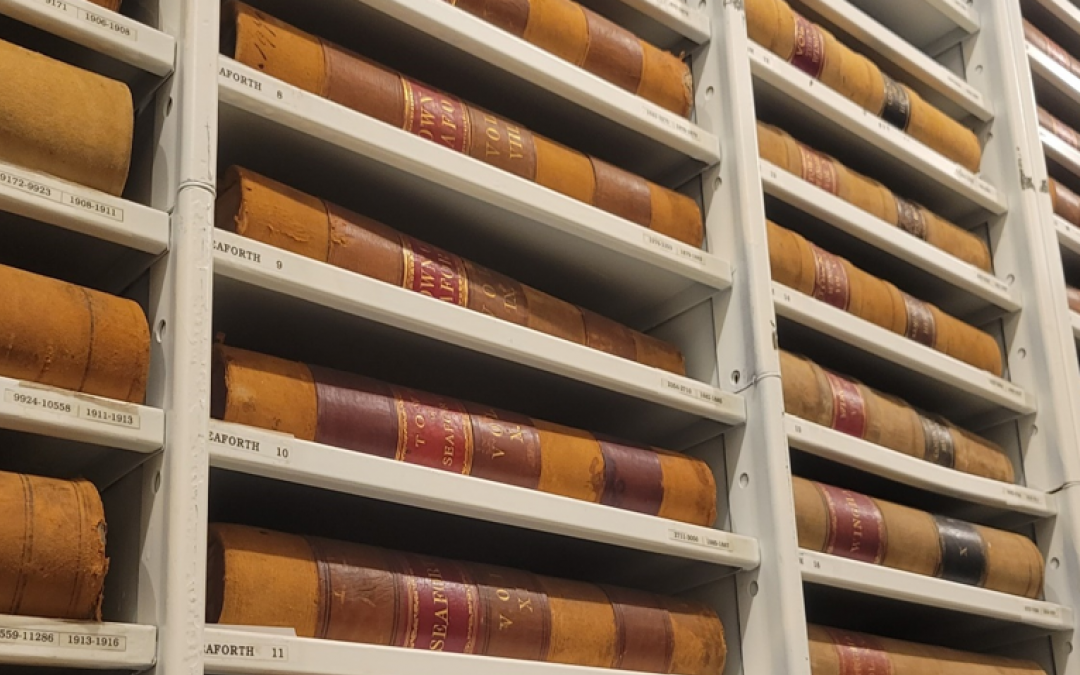
After six long years and the hard work of many, the Huron County Digital Newspaper Project is nearly complete. As the digitization of Huron County’s newspaper collection enters its final stages, the scope of the project is expanding to offer a greater variety of digital content for researcher and the community. Over the coming two years, select archival records held at the Huron County Museum will be added to the online web portal. This has been made possible after Huron County Cultural Services’ digitization project received news it had secured funding with the Department of Canadian Heritage as part of the Digital Museum Assistance Program. The goal of digitizing records in the museum archival collection is to transition our current online repository on the Digitized Newspaper Collection into a digital archive, where a wider variety of source material about local cultural heritage is available for local and academic research, and community engagement.
The Digitized Newspaper Collection has thrived over the last few years, despite the unexpected hurdles, delays and setbacks that have accompanied the trials and tribulations of enduring a global pandemic. In February of this year, the digitization project was awarded the Digital Access to Heritage Grant as part of the Museum Assistance Program, which is contributing to funding the next years of digitization. Huron County’s newspaper digitization also received the Ontario Library Association’s (OLA) Archival and Preservation Achievement Award back in February.
The Huron County Digitized Newspapers Collection began in 2016 to improve access to the enormous volume of local newspaper content previously only available on microfilm and in their physical format. The digitized collection now holds over 550,000 newspaper pages and receives between 7,000 and 9,000 online visitors per year. The papers preserve a century and a half of local historical content and are searchable using OCR (optical character recognition) technology. The collection is designed to assist researchers to advance our understanding of the history of Huron County and its growing community and has proven an invaluable tool for researchers in a wide range of topics, including political, social, cultural and genealogical history. The project aims to increase the accessibility of archival records at the Huron County Museum by increasing researchers’ awareness and knowledge of the collection.
DIGITIZING ARCHIVAL COLLECTIONS
The expansion of the Huron County Cultural Services digitization initiative focuses on five archival collections at the Huron County Museum Archive between now and mid-2024. These are the J.G. Henderson Collection, Huron County Assessment Rolls, CKNX films, rural diaries and the Huron County Return of Inhabitants. The timeline for digitizing archival materials prioritizes the release of content based on popularity, preservation, and the materials contributions to local cultural heritage.
The first of these digitization projects is centred on the J.G. Henderson Collection. The Henderson Collection holds a large volume of materials, including a collection of photographs of particular interest to digitization. The collection is named after J. Gordon Henderson, a photographer who moved to Goderich, Ontario when he purchased a local photography business in 1939. Henderson was the principle photographer of the community during his lifetime. The files in the Henderson collection include local photographs like wedding portraits, candid shots, and captures of day-to-day life. The photography studio in Goderich relocated several times over the years, though most of the portraits taken during WWII were captured at the Hamilton Street studio. Throughout his forty years as a professional photographer in Goderich, Henderson only shot and developed in black and white film. All of the photographs held in this collection were taken by J. Gordon Henderson. Around 500 of these photographs have been selected for digitization based on their ability to highlight community activities and events. Those selected for digitization represent just a small part of Henderson’s collection of professional work held at the Huron County Museum Archives which are of benefit to public and academic research.
The second digitization project are assessment rolls located at Huron County Museum Archives for Goderich, Steven and Hay Townships dated up until 1940. This includes four archival series for Hay township, three archival series for Stephen township, and four archival series for Goderich township. Assessment Rolls provide details of homeownership within the county at various points in history, and are of particular use for demographic and genealogical historians. The records also allow for a closer examination of living arrangements and demographic change over time across the region.

The CKNX films will be the third records to be digitized. CKNX radio station was created by W.T. Cruickshank, which started broadcasting out of Wingham in the mid-1930s. In 1955, CKNX expanded to television broadcasting, becoming the first rurally-based television station in North America. CKNX was a pioneer in broadcast television and set the standard for other rurally-based television-stations across Canada. Crews from CKNX travelled all over Southern Ontario filming parades, schools, sports, and other significant events. The culturally significant films showcase how rural Canadians lived, worked, and enjoyed their time in the early-1960s. There are currently 36 CKNX films in the Huron County Museum Archives, which range in content from depictions of local scenery, architecture, organizations and businesses. The project will digitize half of this collection, prioritizing films with important historical value which showcase the local environment and activities involving community engagement.
The Huron County Museum Archives holds a small collection of historical diaries written by members of the local community which will be the fourth set of records to be made available digitally. The majority of the diaries date to the turn of the 20th century, with some written during the Victorian period and others written during the First World War. Historical diaries are hidden gems inside the archival stacks. Often underutilized, historians are only now beginning to discover the value of these rich sources of rural, family and community life. Eight of these diaries were transcribed during a research project in 2017, and their transcriptions will be made available online alongside the digitized diaries.
Lastly, the Huron County Museum Archives holds the Assessment and Return of Inhabitants records for 1842 to 1850, which will mark the final project to be digitized. Records from the return of Inhabitants can quantify the demographics of local populations over time and offer a window into the settlement of the county. These are popular archival records requested by researchers and the community at a higher degree of frequency than other records in the collection. Due to their age and wear, the digitization of these records is important for the long-term preservation of the original documents.
CONCLUSION
The next phase of digitization aims to diversify the digital content available within the collection by focusing on archival materials which capture local cultural heritage through a variety of mediums, which depict a fuller image of rural life and day-to-day experiences within the community. These include archival photographs, diaries, films and government records. The digitization of these archival records is an important contribution to local history and serves the benefit of preserving some of the most popular records in Huron County’s archival collection.
by Amy Zoethout | Jun 1, 2022 | Archives, Exhibits
By Robyn Weishar
The Museum’s temporary exhibit, Forgotten: People & Portraits of the County, explores unidentified images of the people and places of Huron County taken by local photographers. On until Sept. 4, 2022, the photographs featured in the exhibit have been compiled from various donations to the Museum’s archival collection and provide the public with the opportunity to help us identify these forgotten faces.
For those who have photographs of their own that they wish to label and/or donate to our archival collection, the following content will provide suggestions on the best ways to identify and label old photographs so that neither you nor your loved ones get forgotten.
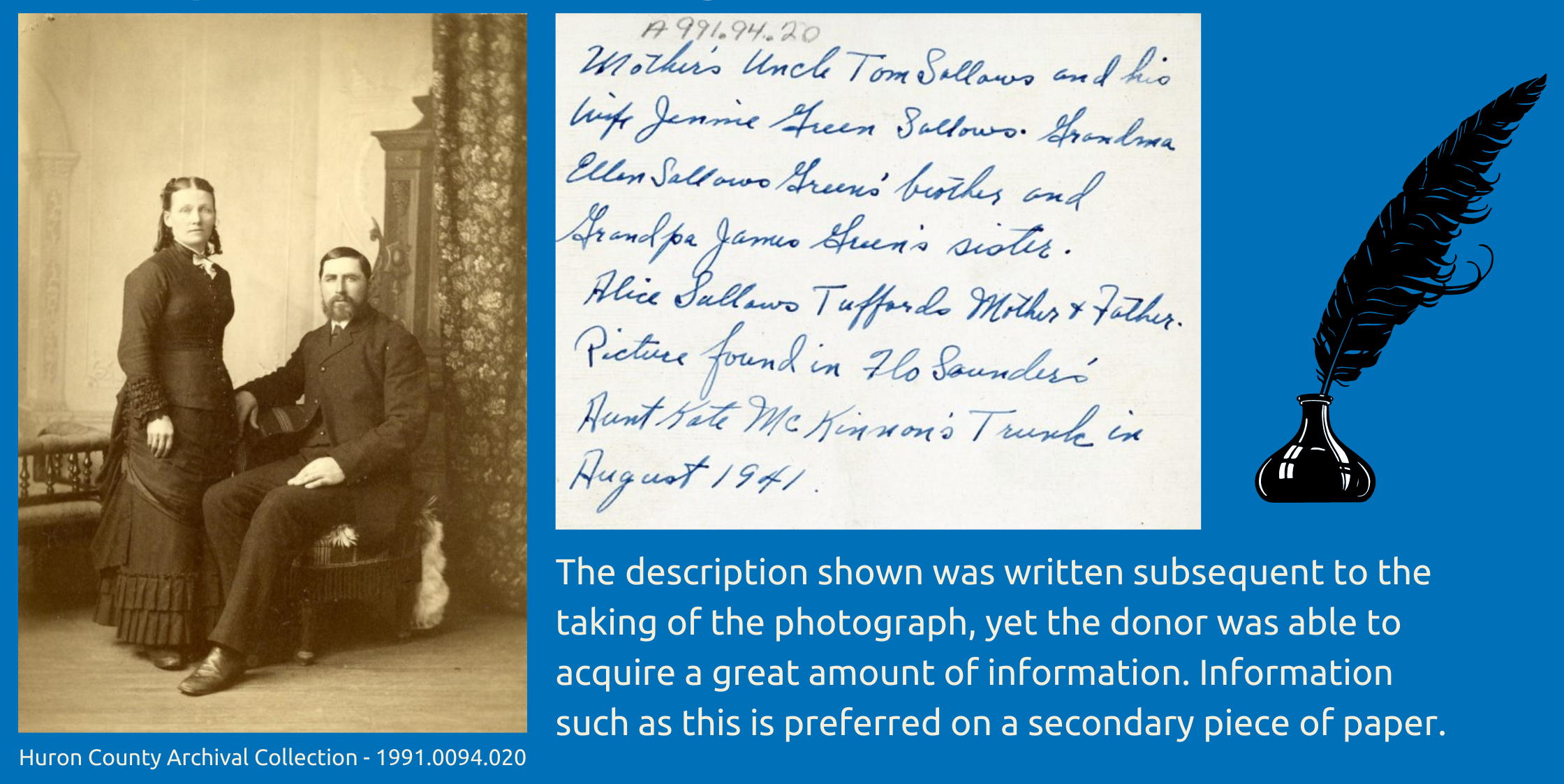
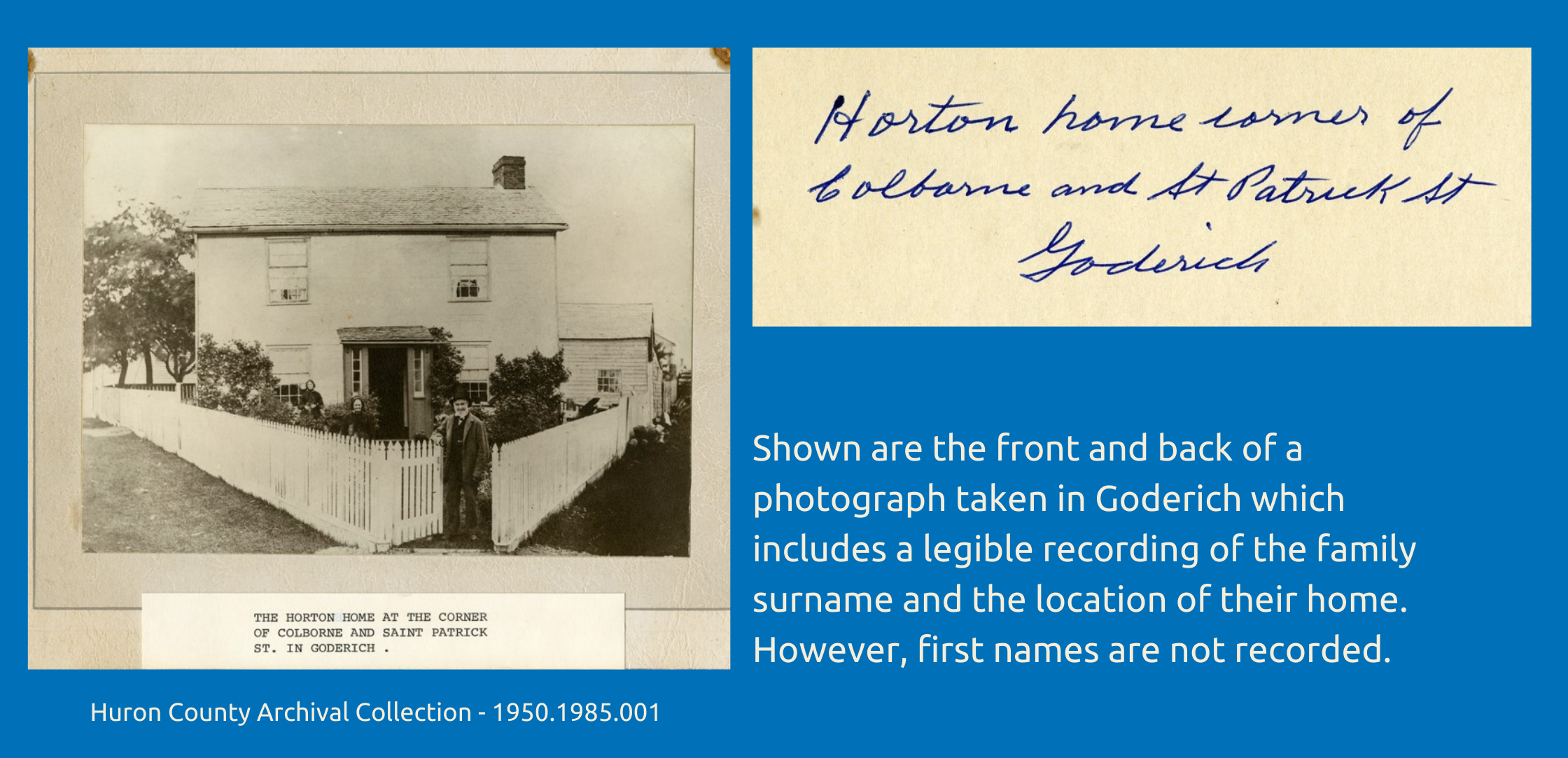
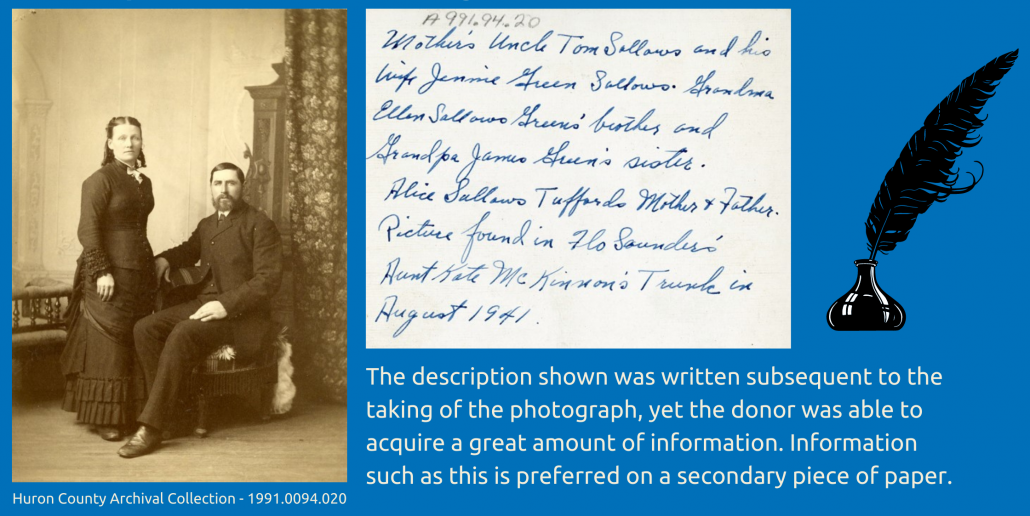
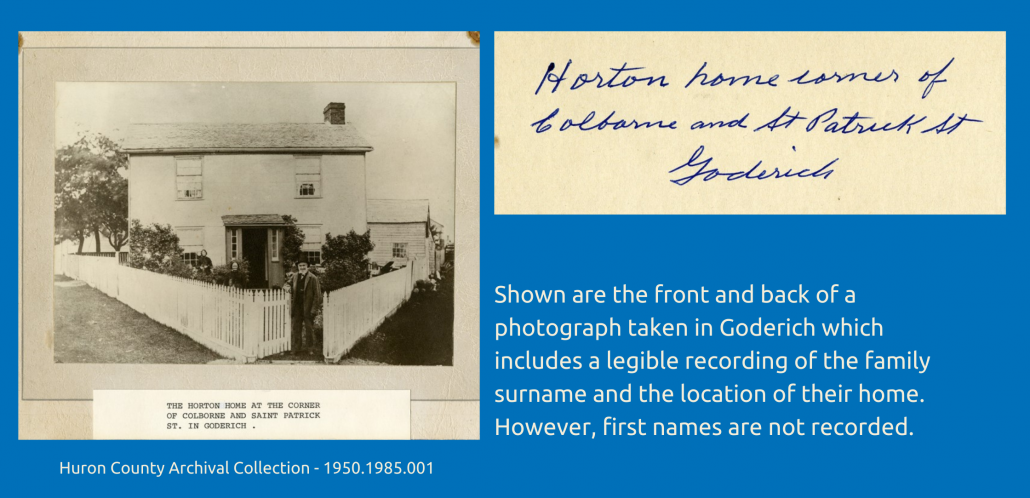
It is suggested that any photographs being donated to the Huron County Archives be given a number, which can be labeled on the back of the picture in soft lead pencil. A corresponding sheet of paper should accompany the donation, which would include the number of each photograph and any other pertinent information not already recorded on the back.
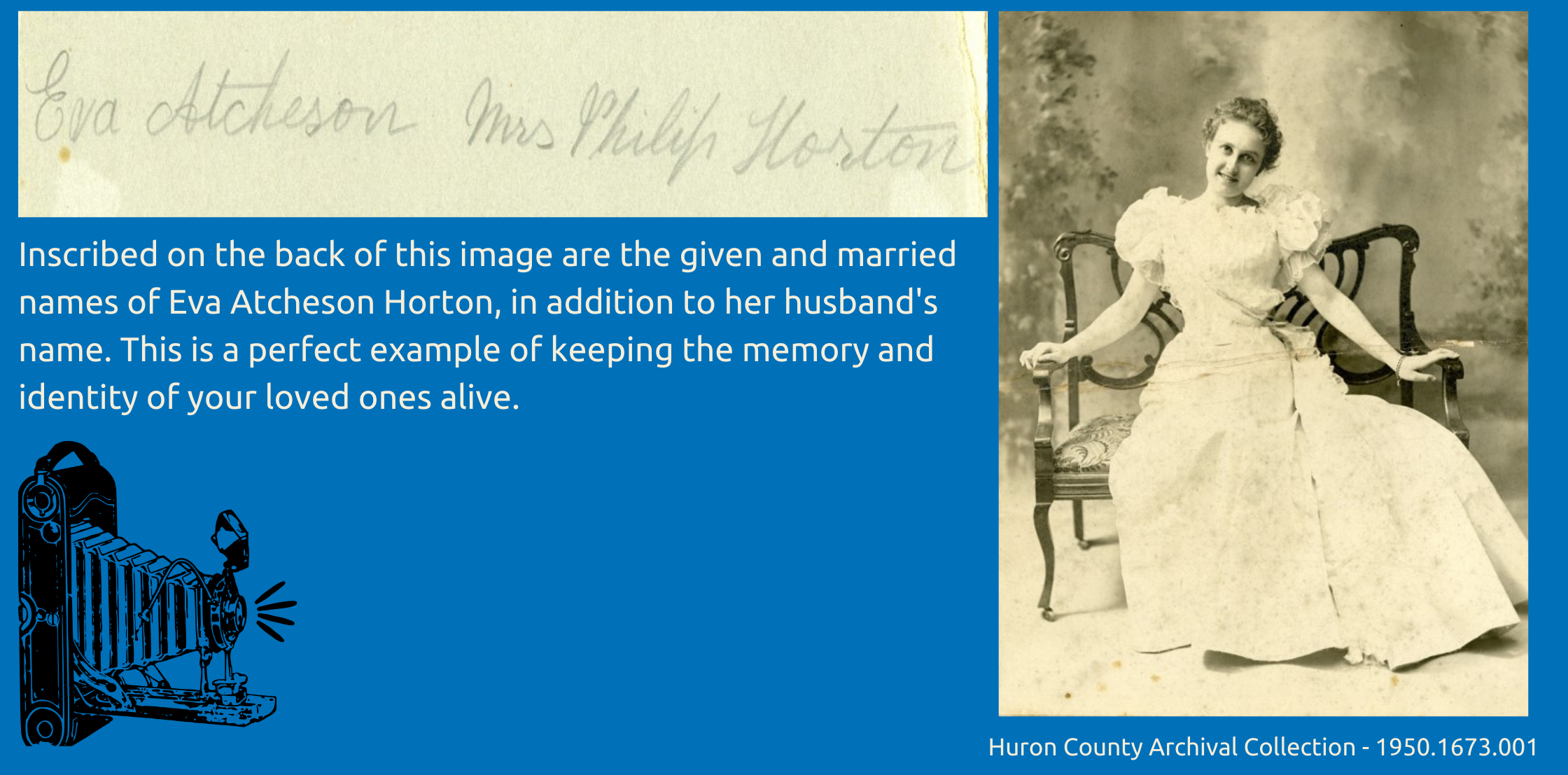
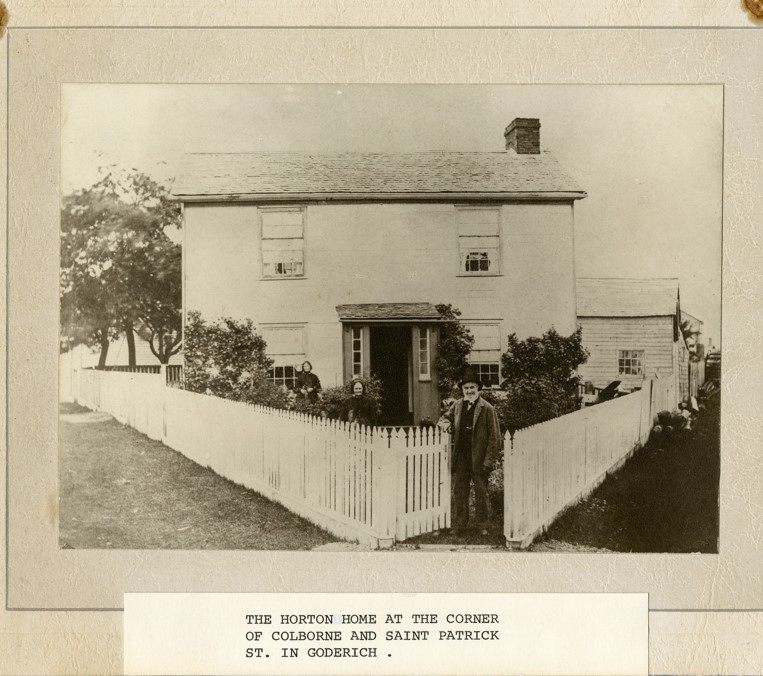
Please consider the examples shown below that display information recorded about each photograph. This is the type of information that should be recorded on a corresponding sheet of paper to help future generations know the faces and places captured in time.
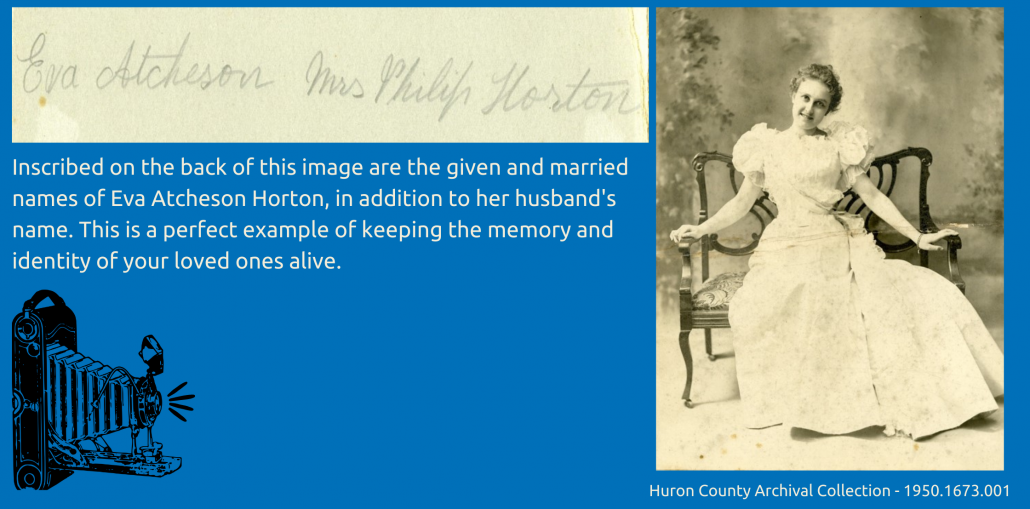
For many women of the past, their identity became linked with that of their husband, making it all the more difficult to pinpoint just who these women were outside of their marriages and homes. If any names are known (i.e., first name, maiden name, surname, nicknames etc.), we ask this information to be documented in order to conserve the memory of everyone and everything captured on film.
These suggestions are intended to highlight an ideal circumstance and are strictly recommendations. We hope you come visit us in person or online to check out the Forgotten exhibit and potentially recognize someone from the past.
We hope this information is of value to you and that you take it into consideration so that one day your face is not among those who have been forgotten.
by Amy Zoethout | Apr 1, 2022 | Archives, Blog
The Huron County Museum & Historic Gaol joins archives from across the province to celebrate Archives Awareness Week in Ontario, April 4-8. Celebrated each year during the first week of April, this week provides the opportunity to highlight the importance of preserving the documentary heritage of Ontario’s communities.
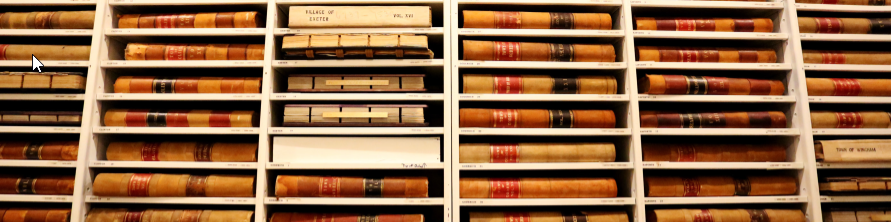
“Archives Awareness Week offers a great opportunity to highlight the valuable archival collection held at the Huron County Museum,” said Archivist, Michael Molnar, whose role is to assess, collect, organize, preserve, and provide access to the collection. The Huron County Archives collection is accessible to the public for research purposes. The collection contains historical documents specific to Huron County, including photographs, personal papers and diaries, land registry copy books, maps, property tax assessment rolls, scrapbooks, Council minutes and more.
The Huron County Archivist provides access to the archival collection in a variety of ways and processes research requests received by phone, email and mail, as well as in-person, through scheduled appointments in the Archives’ Reading Room.
To celebrate Archives Awareness Week, the Museum will be offering free admission to the Reading Room for in-person research. Due to capacity limits in the Reading Room, appointments are required and are being booked daily from Monday, April 4 to Friday, April 8. Call the Museum at 519-524-2686, ext. 2201, to book a complimentary research session. Please note that other fees may apply.
The Museum also continues to accept donations of archival materials from the community. Items should be historically significant to Huron County and may include journals, historical documents, business records, photographs of local homes, towns and villages throughout Huron, cookbooks created within the County, or organizational and club records, to name a few. Donations can be made by appointment.
To learn more about the archival collection, donating to the collection, services offered, and fees that may apply, please visit: https://www.huroncountymuseum.ca/huron-county-archives/.
by Sinead Cox | Jan 25, 2022 | Archives, Exhibits, Image highlights
The Huron County Museum’s temporary exhibit Forgotten: People and Portraits of the County features unidentified portraits captured by Huron County photographers. In addition to the onsite exhibit, photos are shared in an online exhibit and Facebook group in hopes that some of these ‘Forgotten’ faces will remembered and named. Curator of Engagement & Dialogue Sinead Cox shares highlights of the exhibit’s remembering efforts so far.
Semi-Weekly Signal, (Goderich) 07-27-1869 pg 2
The Huron County Museum has an incredible collection of photographs in its Archives – especially studio portraits from commercial photographers within Huron County (spanning the county from Senior Studio in Exeter, Zurbrigg in Wingham, and everywhere in between). Not all of these photographs came with identifying information for their subjects, or even known donors or photographers. The Forgotten exhibit has provided an opportunity to delve deeper into the clues that can be present in everything from associated family trees to fashion styles, photographer’s marks, and photography methods that can provide more context, narrow timelines, or even lead to the re-discovery of names. I am especially grateful for the enthusiastic participation we have already had from photo detectives from the public who have contributed to remembering Huron County’s ‘Forgotten’ faces. Hopefully this is just the beginning of adding value to our collection.
Professional studio photographs were often (and still are!) sent as gifts to family and friends. Local photographers saved negatives to sell reprints at a later date, and these negatives were also sometimes inherited when a studio changed hands. It’s very possible your own family photo collection contains the duplicate of a photo that exists in the possession of an archive or a distant relation somewhere else in the world. Finding matches between the faces in those photos is one way to solve photographic mysteries, and why a shared space to upload and comment on photos, like the Forgotten Facebook group, has the potential to put names to faces even after more than a century has passed since the camera flash!
2011.0013.020. Photograph
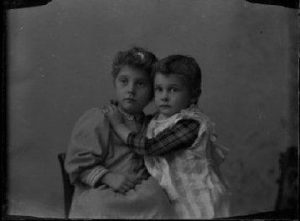
2017.0013.011. Glass negative
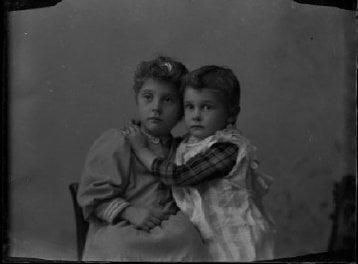
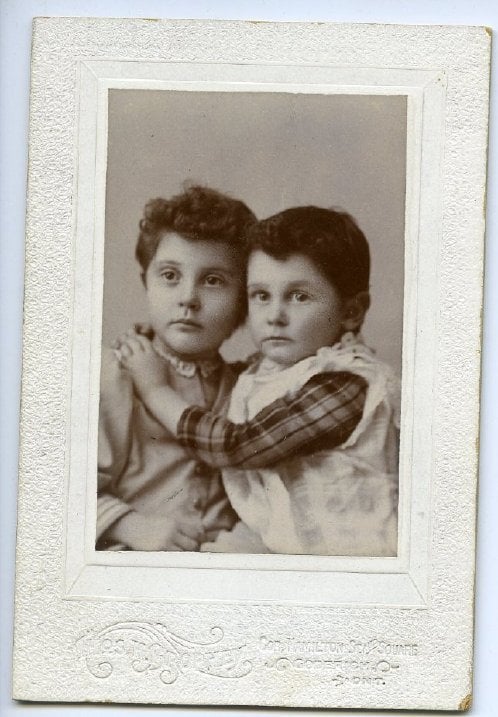
During preparation for the exhibit, staff recognized that a photograph and a glass negative from unrelated donations depicted the same image of a pair of children (their nervous expressions at having their photo taken were difficult to miss). The photo and negative came to the museum from different donors, six years apart. Information provided with the donation of the photograph indicates that these children may be related to the McCarthy and Hussey families of Ashfield Twp and Goderich area; the studio mark for Thos. H. Brophey is also visible on its cardboard mount, dating the image approximately between 1896 and 1904. The matching negative came from a collection related to Edward Norman Lewis, barrister, judge and MP from Goderich. The shared connection between the donations provides one more clue to help identify the unnamed children, and gives the negative meaning and value (through a place, time and potential family connection) it didn’t previously have without the photograph’s added context. You can see both the photograph and the negative on display in the temporary Forgotten exhibit, which is on at the Museum until fall 2022.
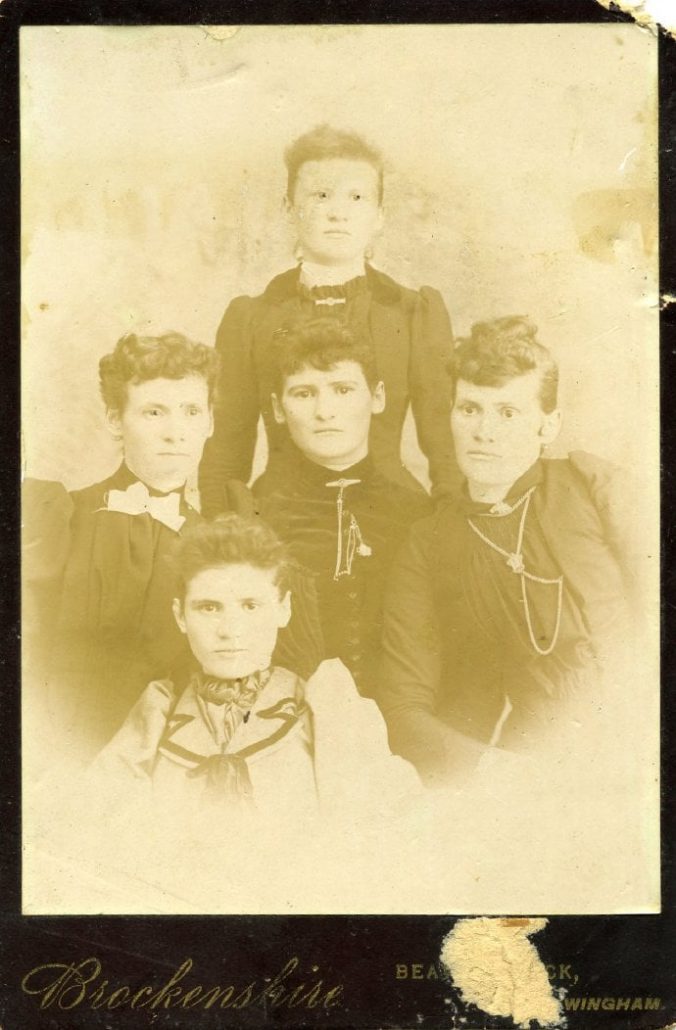
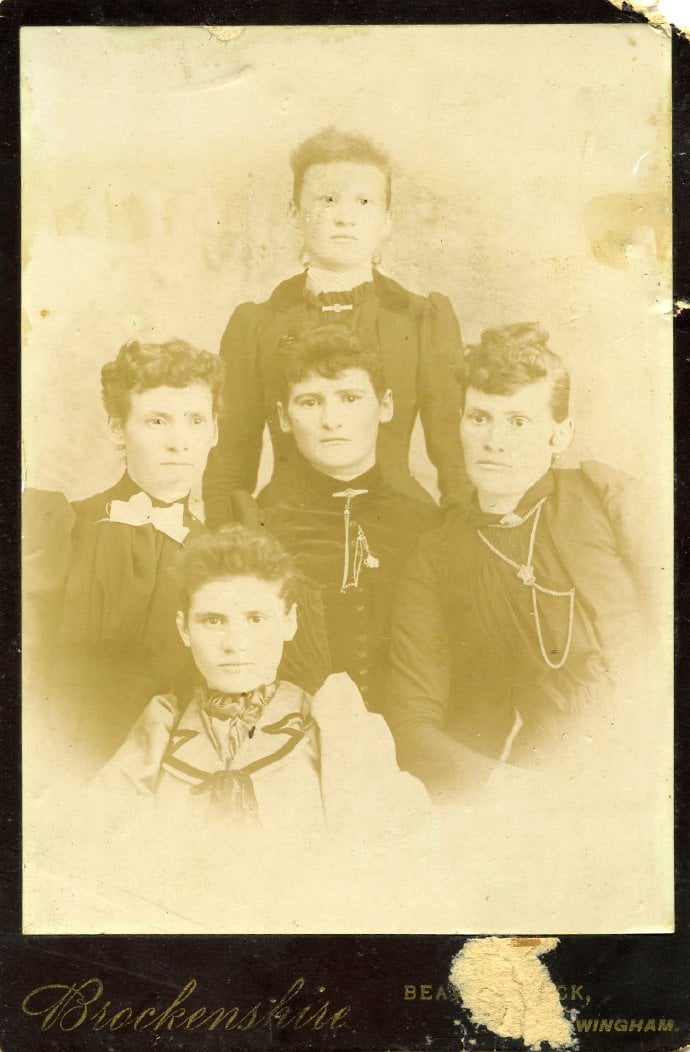
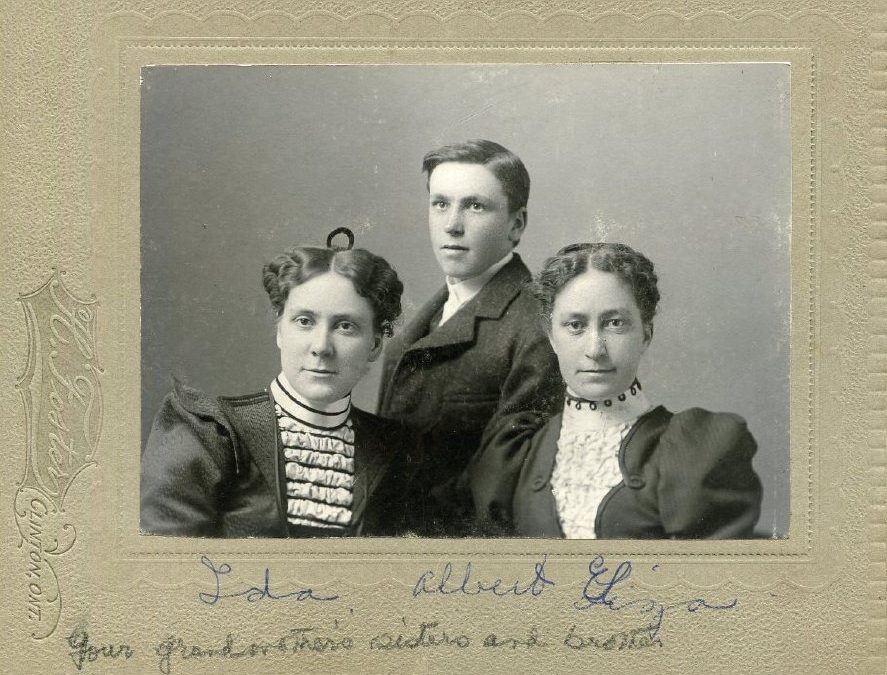
2021.0053.006. The “Garniss sisters”: Sarah Ann, Elizabeth, Eliza Maria Ida, Jemima, Mary Lillian. Can you help us identify which sister is which?
Sometimes photographs arrive to the collection with partial identifications or known connections to a certain family, even when individual names are missing. In those cases, knowledge of family histories can help pinpoint who’s who. Members of the Facebook group were recently able to name all five Morris Township women identified as only the “Garniss sisters” on the back of a photo from Brockenshire Studio, Wingham.
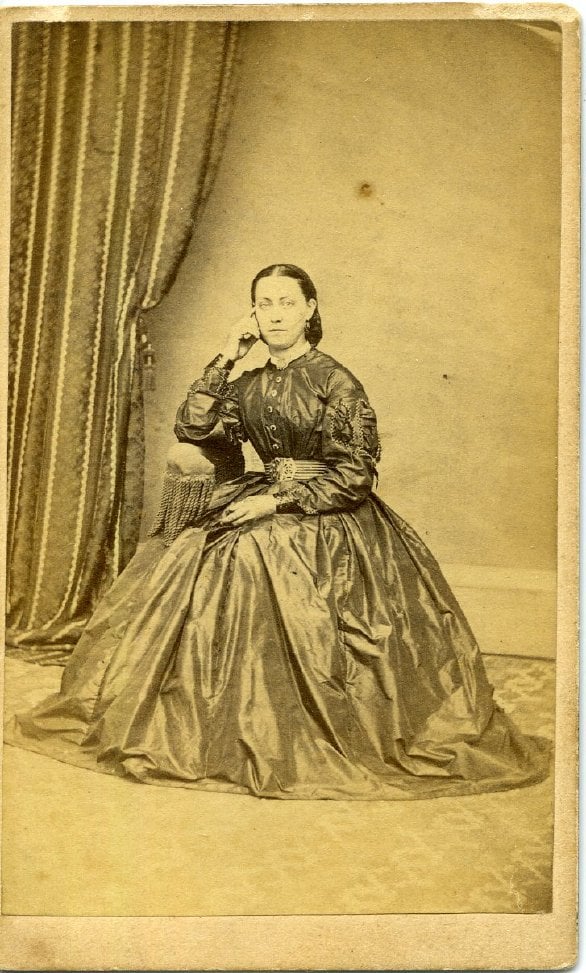
A996.001.095
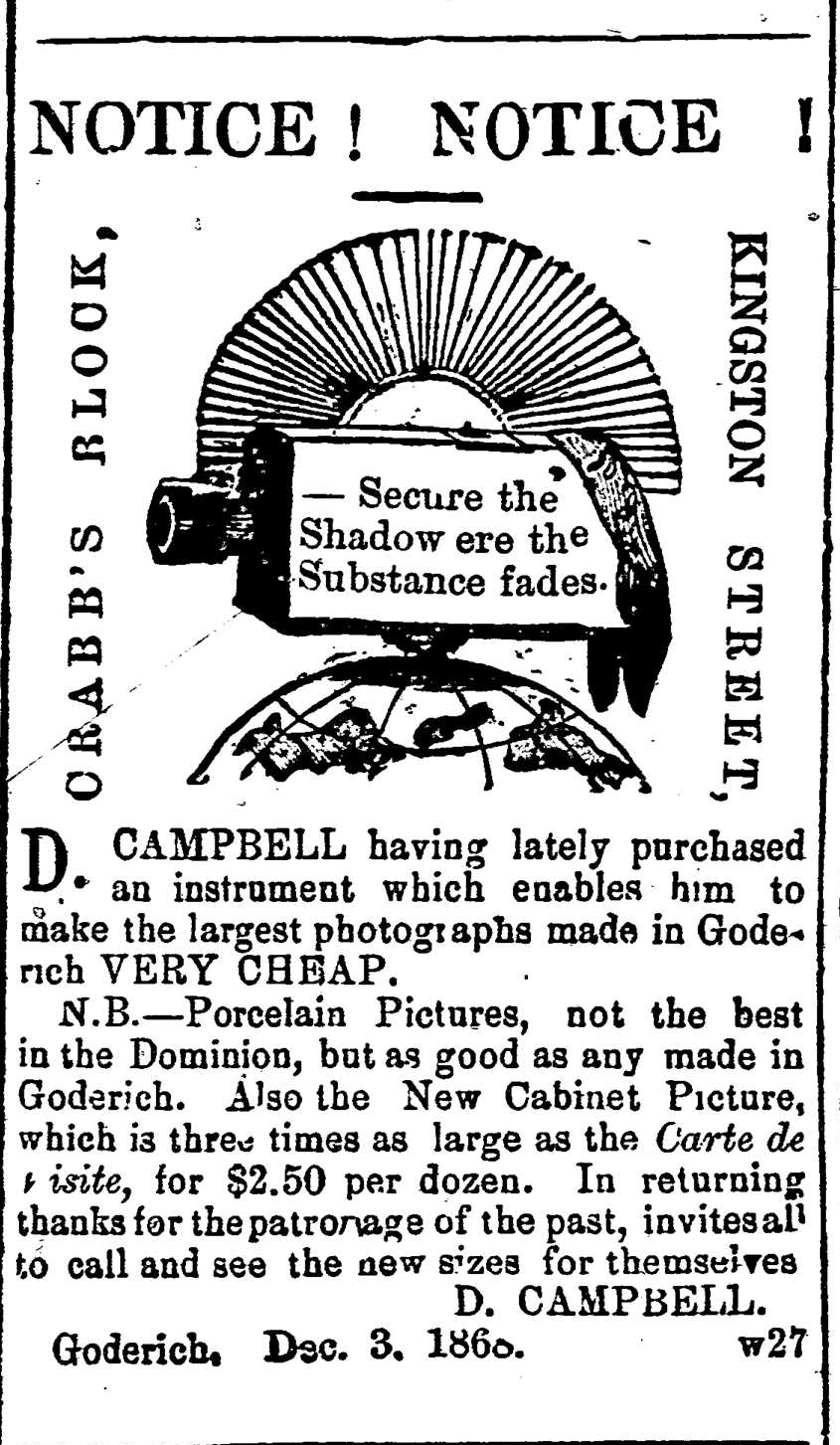
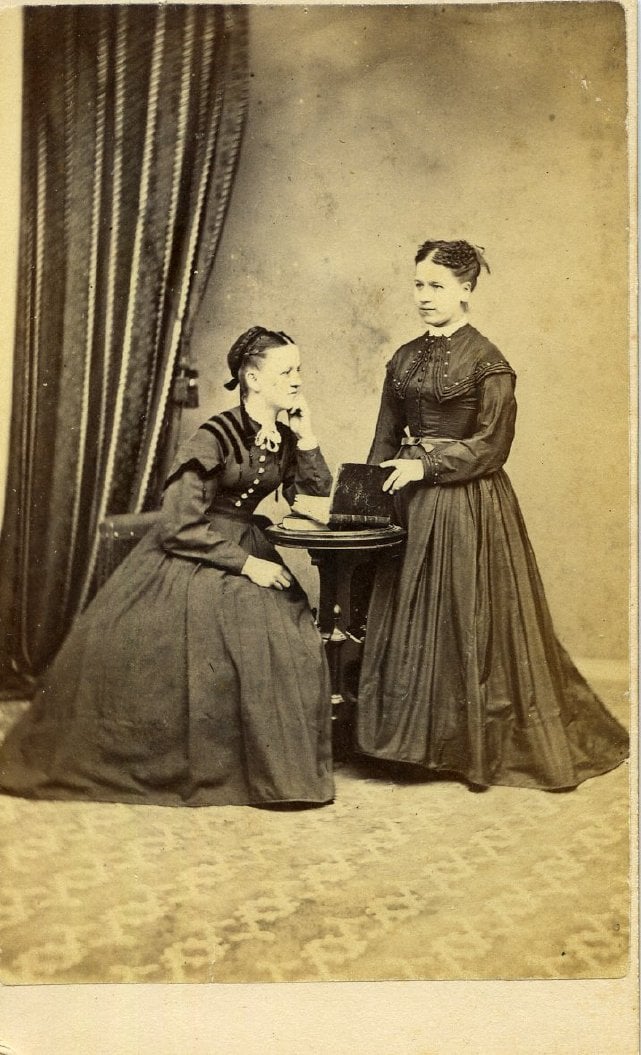
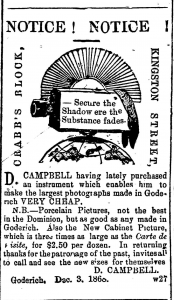
Patterns tend to emerge with access to larger collections from the same location or time period. Although studio photographers later in the 19th century prided themselves on offering a large selection of backdrops, photos from local studios in the 1860s and 1870s often show a more simple set-up. In posting the ‘Forgotten’ photos online, I noticed that the studio space of Goderich photographer D. Campbell can be recognized by the consistent presence of a striped curtain in the background (and more often than not the same tassel-adorned chair) and a distinctive pattern on the floor, as seen in both the photos above and below. This helped identify additional photographs as Campbell’s work, and therefore place them in Goderich circa 1866-1870 , even when a photographer’s mark or name was absent from they physical photo.
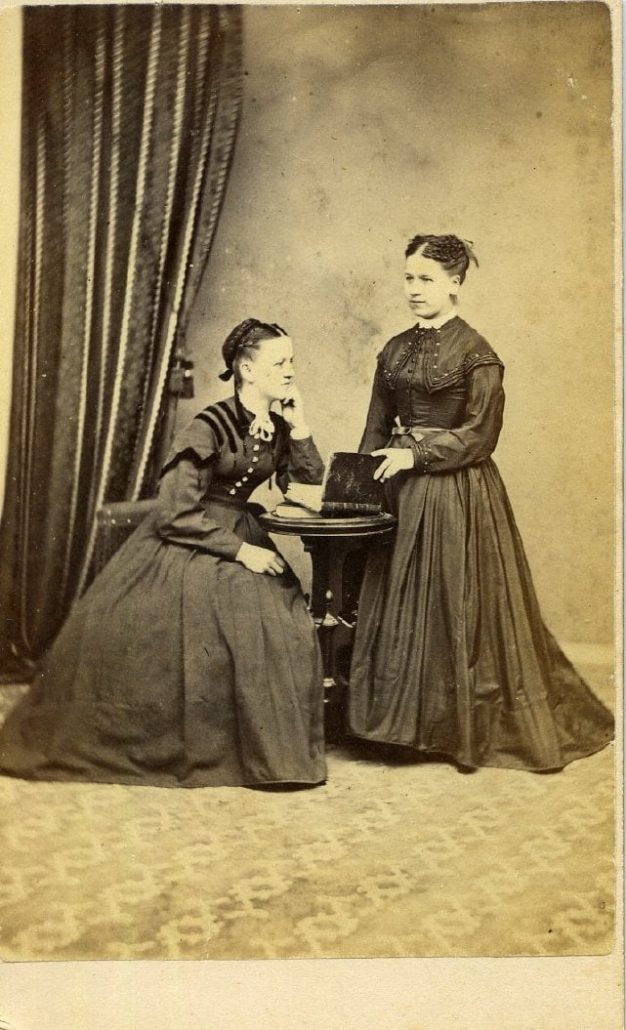
A996.001.071. This photograph is labelled as “the Miss Henrys.” Do you have any information that might reveal their first names?
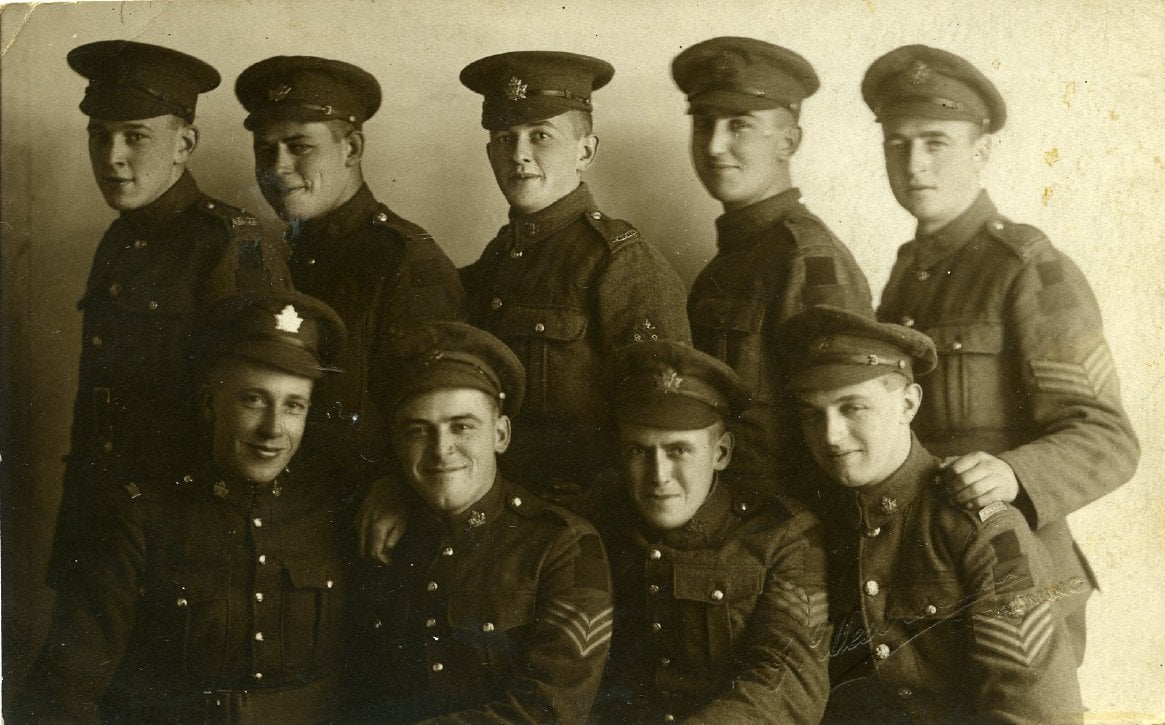
Crowdsourcing information through the online exhibit and group has allowed fresh pairs of eyes to notice detail previously missed in some of the museum’s photos, even when the evidence was captured by the staff doing the scanning and cataloguing work. In November, the Facebook group spotlighted unidentified soldiers, and one of the members pointed out a photographer’s mark embossed on the bottom right corner of a group photo. Staff were able to look at the original photo to get a clearer look to confirm the studio was identified as “G. West & Sons, Godalming.” Godalming is a town in Surrey, England near Witley Commons, which hosted many Canadian soldiers during the First and Second World Wars.
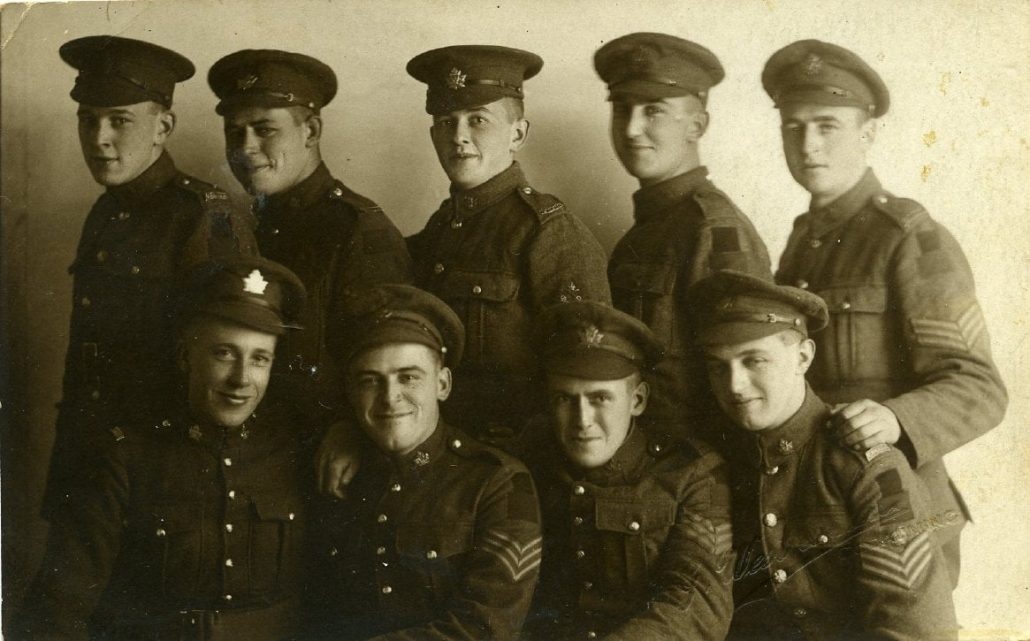
2004.0044.005. Photographer: G. West & Sons, Godalming, Surrey, U.K.
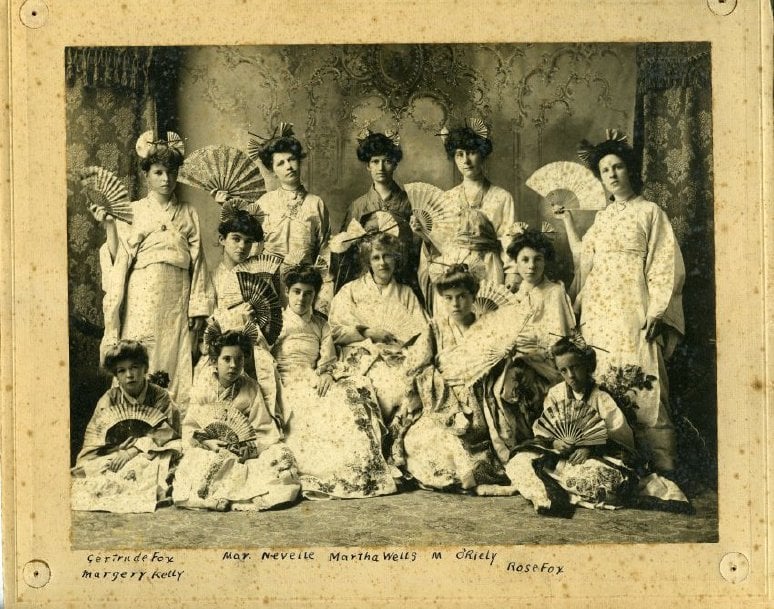
A950.1740.001
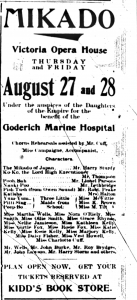
The Signal 08-27-1903 pg 8.
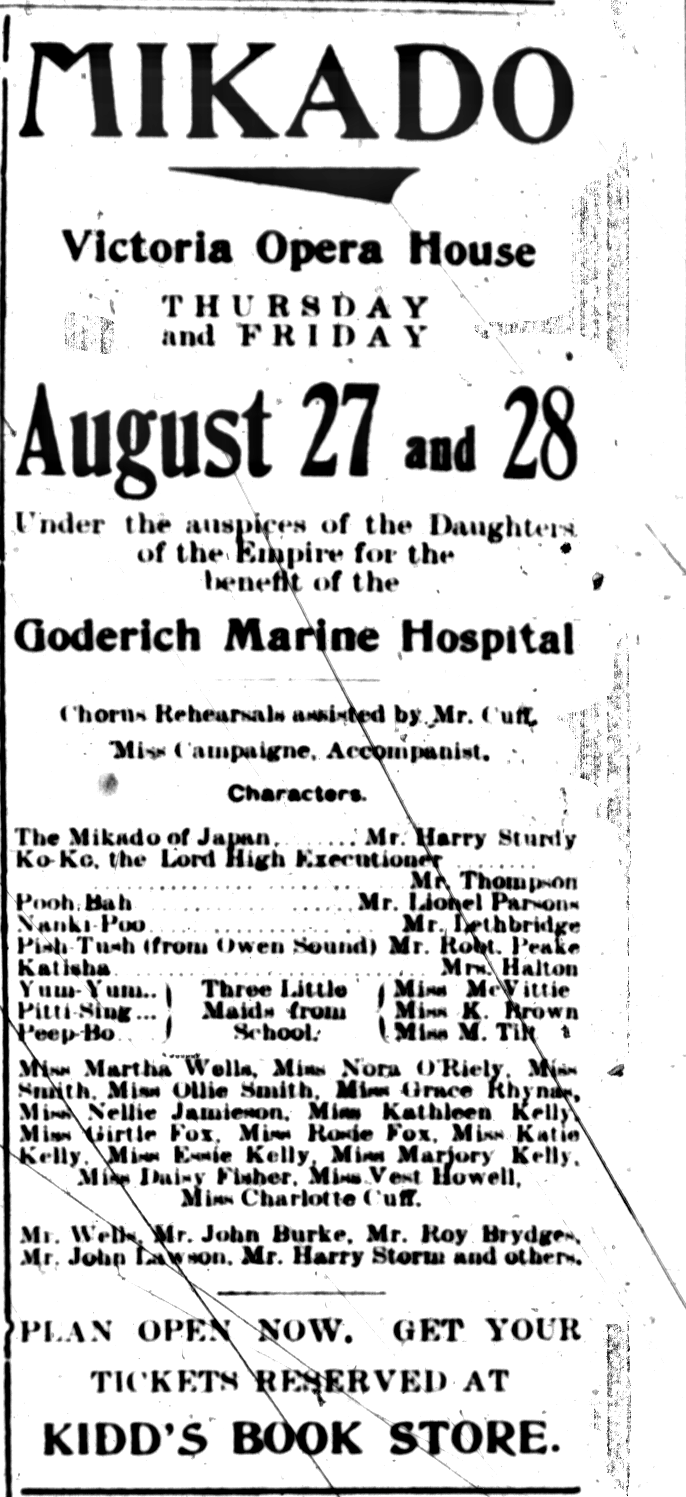
Comparing photographs with other readily available local historical resources like Huron’s digitized newspapers can also help provide new insight. Partial identifications on a group photo of young women in theatrical costumes without a location allowed a group member to link it to a 1903 Goderich production of Gilbert & Sullivan’s The Mikado. Further research in the newspapers provided a full list of the names of the participating cast and more information about the production, which toured Huron County. This information is now attached to the photograph’s catalogue record to benefit future researchers.
Although many historical photos may be ‘Forgotten’, if they are preserved and housed they are not lost. They still retain the potential for remembering , and to be re-connected to descendants and communities through extant clues and the growing possibilities of digitization and online sharing. For more highlights from the exhibit and tips for identifying mystery subjects photos or caring for your own collections, join is Feb. 9, 2022 for the second webinar in our exhibit series: Forgotten in the Archives.
If you can help identify a ‘Forgotten’ face, email us at museum@huroncounty.ca!
For more on the Forgotten: People & Portraits of the County exhibit and related coming events:
by Amy Zoethout | Sep 9, 2021 | Archives, Blog, Investigating Huron County History
Kyle Pritchard, Special Project Coordinator for Huron’s digitized newspaper project, examines the types of content newspapers produced and how it changed over time to reflect the needs and demands of a growing community. You can search the newspapers yourself for free at https://www.huroncountymuseum.ca/digitized-newspapers/
In the age before smartphones and flat screens, newspapers served an important role in the functioning of communities. The Huron County Digitized Newspaper Collection began as Project Silas in 2014 to improve access to the enormous volume of local newspaper content previously only available on microfilm and in their physical format. Today, the digitized collection holds over 350,000 newspaper pages, which preserves a century and a half of local history. The papers were scanned and made searchable using OCR (optical character recognition) technology to assist researchers of all kinds to advance our understanding of the history of Huron County. Each of the newspapers in the digitized collection captures a unique vantage point of the past and is an invaluable tool for researchers in topics as wide-ranging as political, social, cultural and genealogical history.
Many newspapers have come and gone from Huron County, and only a handful have modern counterparts which have survived until today. Many publishers shut down, relocated, or merged with other news agencies to stay afloat. Those that lasted did so by pivoting to new audiences and revenue streams to keep the presses printing. By doing so, editors expanded the roster of sections their newspapers offered to retain their relevance and competitiveness.
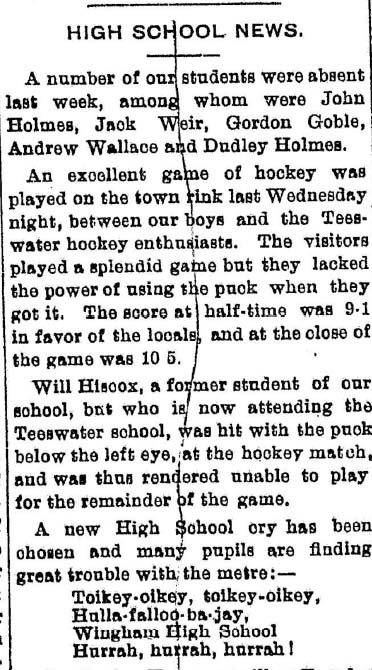
High School News published in the Wingham Times, Feb. 11, 1909.
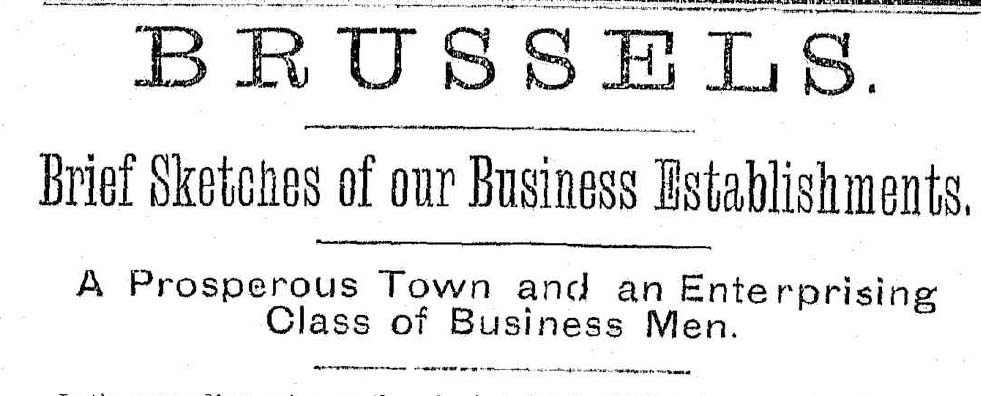
Local newspapers strove to build a sense of communal identity. Farmers and merchants relied on newspapers extensively for everything from rural news, to exhibition schedules, to weather forecasts. Business was so central to early newspapers that a review of local businessmen and their storefronts in the Brussels Post in 1893 filled the entire front page. (Brussels Post, Oct. 20, 1893, pg. 1). The personals column documented locals’ travel arrangements in and out of the county and informed them of visitors returning home. A defense of personals columns was reprinted in the Clinton News Record from the Listowel Banner after the editor received complaints that “they are silly and that they are not read.” They responded by referring to the personals in their own paper as being “one of the most interesting developments in modern journalism,” (Clinton News Record, Aug. 8, 1935, pg. 3).
By the turn of the 20th century, sections on politics, business and industry within newspapers were condensed to increase the space available for larger advertisements and new columns. This trend increased as newspaper readership grew more slowly over the course of the world wars with competition from radio and television. In response, editors endeavored to expand the reach of their newspapers to new audiences. Fashion, recipe and lifestyle sections were introduced in hopes of appealing to women, and cartoons and high school news were aimed at stimulating the interest and involvement of young people. Readers who perused The Seaforth News in 1962 could discover the new culinary marvel of pancake houses which were taking the United States by storm and try their hand at “African banana pancakes” and “New Orleans kabob hot cakes”. (The Seaforth News, March 22, 1962, pg. 2) Or, depending on the decade, they might serve their families an unsavory recipe for depression-era oyster stuffing. (The Wingham Advance-Times, Dec. 19, 1935, pg. 7) Just like readers in the past, these kinds of recipes are preserved today in the digitized newspapers just waiting for savvy or unsuspecting chefs to test them out in their own kitchens.
Newspapers were also an important medium for local teens to keep a record of events, communicate, and share high school gossip. Yet, it might be surprising to know that the oldest high school news column in Huron County started in 1909 in the Wingham Times. It was not really until after the Second World War that young people really established a presence in news reporting. (Wingham Times, Feb. 11, 1909, pg. 1) Introduced to fill some of the space left by wartime commentary, high school journalism was forward-thinking and allowed the opportunity for newspapers to attract and engage with a younger audience. The results of games played by local sports teams and club activities were a major highlight of these sections, which eventually came to fill a whole sheet in the newspaper. (Lucknow Sentinel, Dec. 18, 1947, pg. 3)
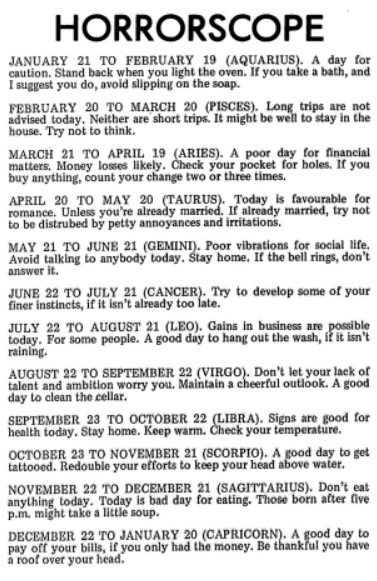
The Horrorscope as published in the Exeter Times-Advocate, Oct. 23, 1969.
 Even small editorial changes which found room for community announcements, movie showtimes, advice columns and crossword puzzles were intended to position local news so that papers provided little bouts of day-to-day wisdom, small-town gossip and casual distraction. In an October edition of the Exeter Times-Advocate published in 1969, readers were treated to a horrorscope, an inverted horoscope which only offered bad advice. Pisces were told that “Long trips are not advised today. Neither are short trips. It might be well to stay in the house. Try not to think,” whereas Capricorns were reminded it was “A good day to pay off your bills, if you only had the money. Be thankful you have a roof over your head,” (Exeter Times-Advocate, Oct. 23, 1969, pg. 9)
The Digitized Newspaper collection is constantly expanding to include more local historical content. The database is free, searchable and easy to use. So, what are you waiting for? Whether a traditional, or not so traditional, recipe, a photograph of your high school sports team, or the latest in 1970s fashion, head on over to the Huron County Museum website and start exploring! Who knows what you might find?