Remembering the Lyceum: A History of Cinema in Wingham

Remembering the Lyceum: A History of Cinema in Wingham

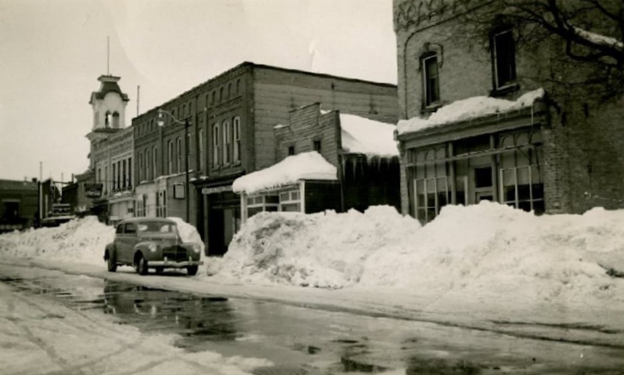
Historic black and white image showing main street Wingham with the Lyceum Theatre in the distance. The street is lined with snow banks.

Written by Museum Archives Assistant Natalie Conrad

The story of Wingham’s picture house begins in earnest in 1908, when local undertaker William Briton opened the Wonderland. It was located north of the town hall on Josephine Street, in a building that had formerly been a farm machinery dealership. In March 1909 came the first of many changes in ownership when the theatre was purchased by George Corbett. Corbett renamed his new business the Lyceum, a name that would stick until the theatre closed nearly a century later.

Under Corbett’s ownership, the Lyceum Theatre showed both films and concerts. However, these new forms of local entertainment were not without their problems. There were complaints of the theatre being cramped, with improper lighting, and of the pictures being generally difficult to see.

In 1912, Lachlan Kennedy would purchase the theatre from Corbett. Promising that nothing objectionable would be shown at the theatre, the opening film footage was of the Titanic disaster. While some today might find showing disasters for entertainment objectionable, this was certainly not what they meant in the day. In 1914, Kennedy took to renovating the theatre. The Lyceum was enlarged and redecorated, the ventilation improved, and a new electric player piano installed.

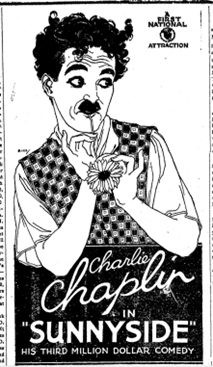
Historic ad promoting Charlie Chaplin in Sunnyside published in the Wingham Advance, Jan. 22, 1920.

Advertisement promoting Charlie Chaplin in “Sunnyside”. Published in the Wingham Advance, Jan. 22, 1920.

The early 20th century saw considerable backlash around the introduction of movie theatres, with both moral and health concerns. Indeed, as David Yates reports, not all residents approved of having a picture house in town, with some seeing it as a symbol of modern decadence. In 1924, Dr. J. Middleton of the Provincial Board of Health stated that moving pictures were bad for the eyesight of the young, and time spent sedentary in a stuffy theatre would be put to better use outside. (i)

“Fearing Hollywood Babylon in Wingham” (ii), in 1915 town council proposed a hundred-dollar fee for a license for the theatre. Today, this would amount to about $2,700—a fine surely meant to be prohibitively expensive for a small business. Rallying against this, Kennedy argued the theatre paid no small sum to the town in electricity and business taxes, as well as employing four. Council eventually relented somewhat, with Reeve Mitchell admitting the movie house was a good place for youths—or at least better than pool halls and hotels. For the lesser evil of entertainment, a revised, lesser fee of $60 was levied.

The Wingham Advance reports that in October 1921, Robert VanNorman purchased the Lyceum from Kennedy and Maxwell, describing plans to overhaul the building and to put on a new front. In an opinion column published two months later, said front would be described as “… a decided improvement [that] adds greatly to the appearance of the main street.”(iii) The theatre would go on to re-open on Nov. 10, 1921, with new and reduced admission prices. Twenty cents for adults, including war tax, and 10 for children, who must be accompanied by a parent or guardian.

June 1923 would see the Lyceum sell again, this time to Hyde Parker of Stratford. Curiously, the Advance reported that the theatre was sold to Parker by Mr. Kennedy, and not VanNorman. (iv) A short two years later came another change of hands. In December 1925, Parker sold the theatre to Captain William James Adams of Orangeville, who would come to be known simply as “Capt. Adams”. Adams was a sailor by trade, formerly in charge of the Greyhound, a famed Great Lakes passenger ship that regularly sailed out of Goderich. The ship’s three hour “Moonlight Cruises” and Detroit excursions were popular amongst local holidaymakers for many years, with the Goderich to Detroit trips operating from 1902 to 1927. (v)

Captain Adams and his son, Alton, would run the theatre for several decades, overseeing many major renovations. It can be assumed that changes to the theatre were made between 1925 and 1929. A retrospective issue published by the Advance-Times in 1929 states that he “… ha[d] completely renovated it, and made it an attractive place.”(vi) In June of 1930, however, the Lyceum would really be changed, inside and out—in the ballpark of a practically new building, and the installation of equipment for “talkies”, or movies with sound. Closure began on June 16, and it would re-open on Aug. 18. After congratulatory remarks that evening by Mayor Fells, the first show was Sally, a musical in Technicolor, which was standing room only, with a packed house. The building was described as being made of steel, brick, and concrete, and absolutely fireproof. New and improved capacity for “talkies” was complemented by a new seating capacity of 300, a new screen, hot water heating, improved ventilation, and a new lobby.

Upgrades, renovations, and general improvements were constantly being made under the ownership of the Adamses. In February 1937, new soundproofing; in April 1941, new seats; redecorating in 1944; in November 1946, new amplifiers of “greatly improved quality” (vii); and in 1948, a completely new sound system from Northern Electric, “making [the] local theatre one of the best in Western Ontario”, according to one Advance-Times contributor (viii).

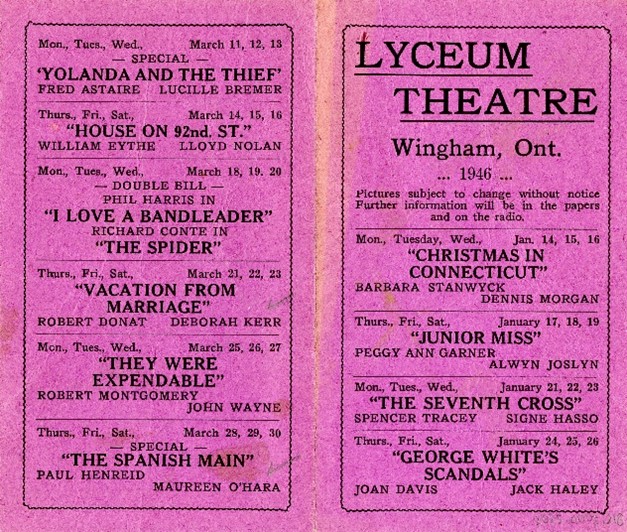
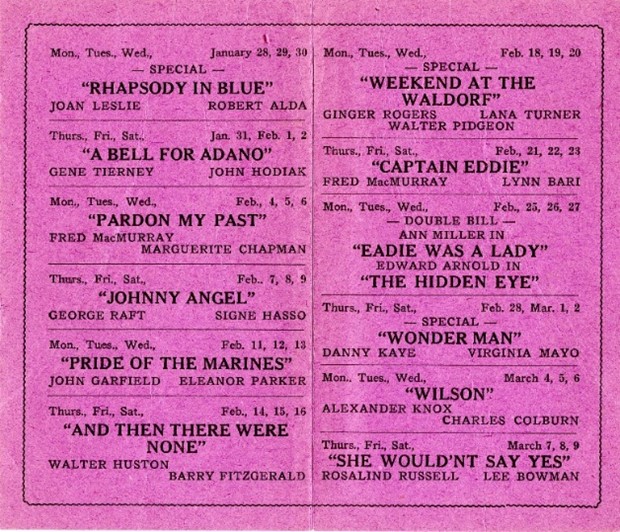
A Lyceum program from Winter 1946. From the collection of the Huron County Museum, 2025.0002.218.

A Lyceum program from Winter 1946. From the collection of the Huron County Museum, 2025.0002.218.

Management was handed over to Alton Adams in 1942. Throughout the ’40s, the Lyceum would play its part in the collective war effort on the home front. In 1940, the theatre participated in a nationwide event in which admission to a show would be free with the purchase of two war saving stamps, costing 25 cents. The Advance-Times reports the event went well, with $294 of stamps sold and over 500 people attending. Tickets were donated for charitable purposes on many occasions— for one example, 600 tickets were presented to the Wingham Red Cross in March 1943.

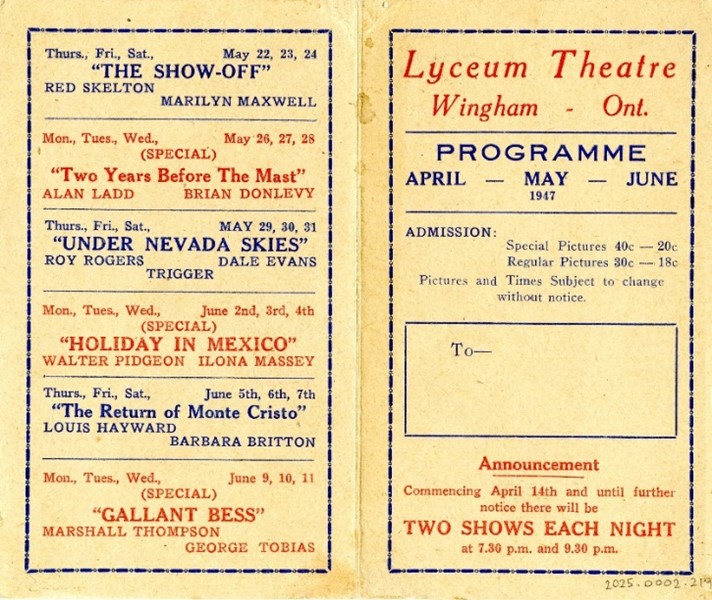
In March of 1947, new programs for the Lyceum Theatre would be rolled out. For April to June, they were ready at the end of the month and could be obtained by calling at the box office or mailing in one’s name. A permanent mailing list was in the process of being established.

One of the new Lyceum programs. From the collection of the Huron County Museum, 2025.0002.219.

One of the new Lyceum programs. From the collection of the Huron County Museum, 2025.0002.219.

With the advent of television in the home, small-town movie houses across the province would feel a loss, with many being forced to shut down. The Lyceum was certainly not unique in this regard: beginning in the mid-’50s, and over the course of the next two decades, would come repeated shutdowns and re-openings of the theatre.

In October 1954, the first Cinemascope picture to be shown in Wingham was The Robe. This came with another huge leap in theatre technology— “the new wide screen necessary for Cinemascope pictures, which give the effect of breadth and three dimensions without the use of glasses on the part of the spectators”.(ix) Always at the vanguard of these new innovations, the Lyceum was first in the area with Cinemascope.

Here comes what seemed the beginning of the end. Matinees at the Lyceum were discontinued in July 1955, for lack of interest. As early as February 1956, the first of several pieces forewarning the closure of the Lyceum were published in the Advance-Times. In the “Worth Thinking About” column, the author observed that the popularity of TV had begun to wreak havoc on community entertainment. It discussed hockey games, but more presciently, the small-town movie house and how many had been forced to close due to wanting patronage. The piece sagely remarked that the Lyceum was a top-of-the-line picture house, and it “would be a sad day for Wingham” should it be forced to close. (x)

In October of 1960, another piece would be published in the local news, urging community members to attend matinees, which were being given another try. At this point, the theatre had been operating only part-time, and the article once again ending on a warning note: “If the Lyceum were to close completely it would be a distinct loss to the community and it would be altogether likely that no other theatre would ever open its doors in Wingham”.(xi) Just under a year later, in September 1961, a similar announcement would be made—a trial period of matinees, despite their having been unprofitable in the past. By January of 1963, the Lucknow Sentinel was reporting that lack of patronage had forced opening hours down to Saturday and Sunday evenings. (xii)

Theatre attendance continued to dwindle, the warnings of local columnists apparently gone unheard. In April of 1963, it seemed it was finally going to happen. Unable to turn enough profit (after all, the Adams ran a business, not a public service), the Lyceum was to close its doors for good.

A heartfelt editorial, “Sorry To See It Go”, mourned the loss of a town institution and what was once a community hub.(xiii) It had, under two names, numerous owners, and with various fronts, served the community for five and a half decades. The editor expressed sincere regret, sympathy for Adams (who had hung on for as long as possible), and the opinion that Wingham would be the poorer for its loss.

Half a year later, in September 1963, the Advance-Times was reporting on a rumor about town—that the Lyceum, not in operation since March, had sold, and the purchaser intended to put it back in business. Only one week later, the buyer would be revealed: W.T. “Doc” Cruickshank, well-known resident and president of CKNX.

The theatre would re-open on Oct. 3, featuring the film The Longest Day, the story of the Allied landing on D-Day. Under new ownership, the Lyceum was to be back in operation six days a week, and the building was already in the process of being redecorated.

Another editorial, this one published on the theatre’s opening day, was pleased to see the lights back on at the Lyceum. However, the editor’s fears were not completely allayed. In a cautioning tone, it recalled that the Lyceum, for a decade, had experienced challenges faced by many small-town theatres. The town, according to the editor, was lucky that Adams had kept the business open as long as he did, and that even though it had been reopened, no one could expect the theatre to remain open without the support of the public.

Three years later, in May of 1966, yet another editorial—the topic and title, “Unwanted Amusements”. The editor was not amused by local youths complaining of having nothing to do, especially since their own disengagement had caused the decline of said amusements. Weekly dances at the Kin Pavilion had been cancelled, and it seems implied that the Lyceum was once again set to close. The editor writes, “[t]here will be a second gap when the Lyceum Theatre closes—also for lack of public support. The management of the theatre has brought first-class films to town and has made every effort to maintain the theatre, but now they have decided its operation cannot be continued on the present scanty attendance … There is no law which forces people of any age to attend dances or shows. This is a free country. But let’s not hear that plaintive cry that there is nothing to do in Wingham. It’s too late for that theme now.” (xiv)

Once again, however, the Lyceum appears to have been saved from closing its doors— in July 1966, an ad in the Advance-Times stated that the theatre would re-open on Aug. 3.

In March of 1967, the Lyceum would begin a six-week closure, re-opening mid-June. Operations seem to have continued to struggle into the 1970s, with the theatre lacking a snack bar and open only a few nights a week.

1973 would see the theatre purchased by John Schedler, a man with theatre experience from all over, but most recently employed at the Capitol in Listowel. In a long-form article published in the Advance-Times in January 1975, we hear of a new era for the local landmark. From when Schedler assumed management in August 1973, to the date the article was published, over $20,000 had been poured into improving the theatre. The lobby was entirely remodeled, the box office replaced, and the concession booth expanded. Almost half of the seats in the theatre were ripped out, providing patrons a better view of the screen, and many of the chairs were brand new. Perhaps the most important improvement to the moviegoing experience was a new automatic projection system. With the new projector, the number of times film reels had to be changed per showing went from five to one, and it took care of “virtually all visible errors”. (xv) With new management also came a new philosophy. Small-town theatregoers in general, and patrons of the Lyceum in particular, should be able to see the best pictures in a timely manner, right down the street.

Schedler had an original partner in business who left, and in 1976, he was joined in operating the theatre by Nelson Frank. In addition to the aforementioned renovations, the theatre had obtained a shiny new pair of Cinemascope lenses. It was back to operating seven days a week, up from three at the time of Schedler’s takeover. Ownership expressed confidence about the staying power of the movie theatre. Schedler, when interviewed, thought that people had grown tired of low-quality TV movies and that theatres offered something unique. After all, “[w]here would you go on a date?” (xvi) As a pair, Schedler and Frank also founded the Wingham Film and Nostalgia Festival, the first of which was held in 1977. In 1979, the theatre employed five additional staff members: projectionist Ward Robertson, his wife Patti, Rhonda Frank, and Lisa and Jane Vath.

In August 1981, the Lyceum was purchased by the Robertsons. At the time, Ward Robertson had already been employed seven years at the theatre as the projectionist, assistant manager, and maintenance man. When the couple was interviewed, they hoped to enforce smoking rules, install a new heating system, give the lobby a facelift, and were contemplating a new outdoor window for the ticket booth.

The eighties and nineties came with their own sets of challenges to keeping the theatre open. While in the fifties the worry was TV, there was now VHS and home movies to compete with—would patrons want to see films in theatres when they could view the exact same ones at home? An additional factor was increased mobility of local youths, who could now see pictures elsewhere before the Lyceum got hold of them.

Dale Edgar purchased the Lyceum in 1993 and would prove to be its final owner. He would operate it for 12 years until its closure in 2005. At the time, it was Huron County’s longest-running movie house. (xvii)

Sources

i “Lyceum Theatre was Huron’s longest continuous running movie house”, Clinton News Record, David Yates, Jan. 6, 2021
ii “Lyceum Theatre was Huron’s longest continuous running movie house”, Clinton News Record, David Yates, Jan. 6, 2021
iii The Wingham Advance, Dec. 1, 1921, Pg. 1
iv The Wingham Advance, June 14, 1923, Pg. 1
v “The Big Steel Steamer Greyhound”, Goderich Signal-Star, David Yates, April 25, 2024.
vi The Wingham Advance-Times, Oct. 3, 1929, Pg. 7
vii The Wingham Advance-Times, Nov. 28, 1946, Pg. 1
viii The Wingham Advance-Times, Dec. 22, 1948, Pg. 9
ix The Wingham Advance-Times, Oct. 20, 1954, Pg. 1
x The Wingham Advance-Times, Feb. 29, 1956, Pg. 2
xi The Wingham Advance-Times, Oct. 5, 1960, Pg. 2
xii “Lyceum Theatre was Huron’s longest continuous running movie house”, Clinton News Record, David Yates, Jan. 6, 2021
xiii The Wingham Advance-Times, April 4, 1963, Pg. 11
xiv The Wingham Advance-Times, May 5, 1966, Pg. 9
xv  The Wingham Advance-Times, Jan. 5, 1975, Pg. 24
xvi  The Wingham Advance-Times, Jan. 1, 1979, Pg. 7
xvii  “Lyceum Theatre was Huron’s longest continuous running movie house”, Clinton News Record, David Yates, Jan. 6, 2021

Safety bicycles and the Henderson Bicycle Co.

Safety bicycles and the Henderson Bicycle Co.

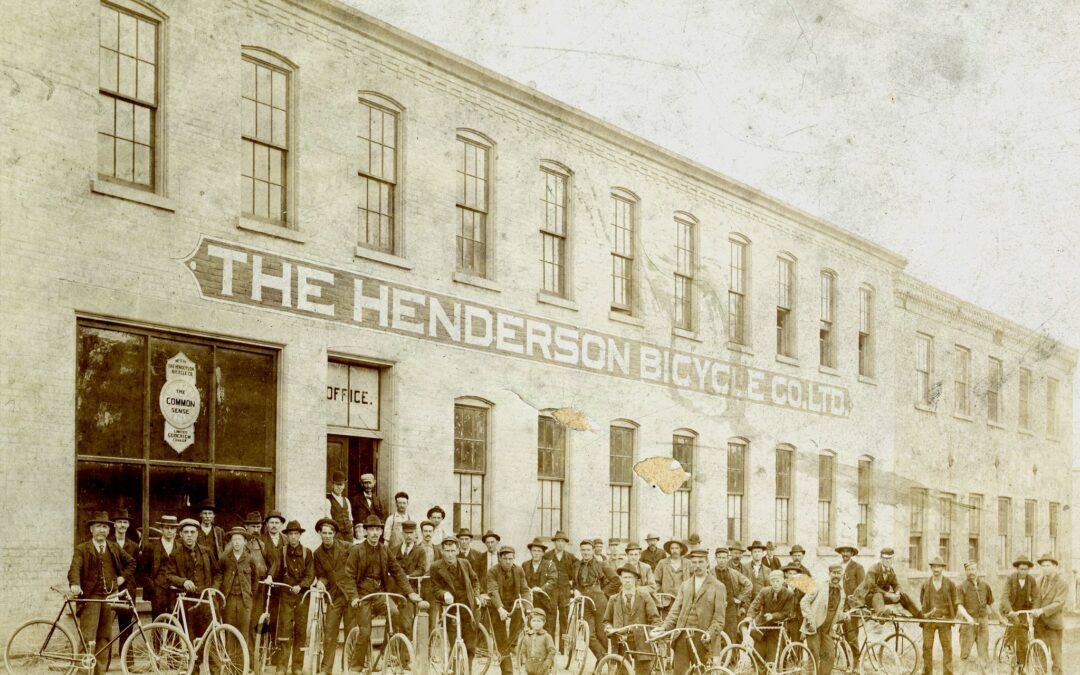
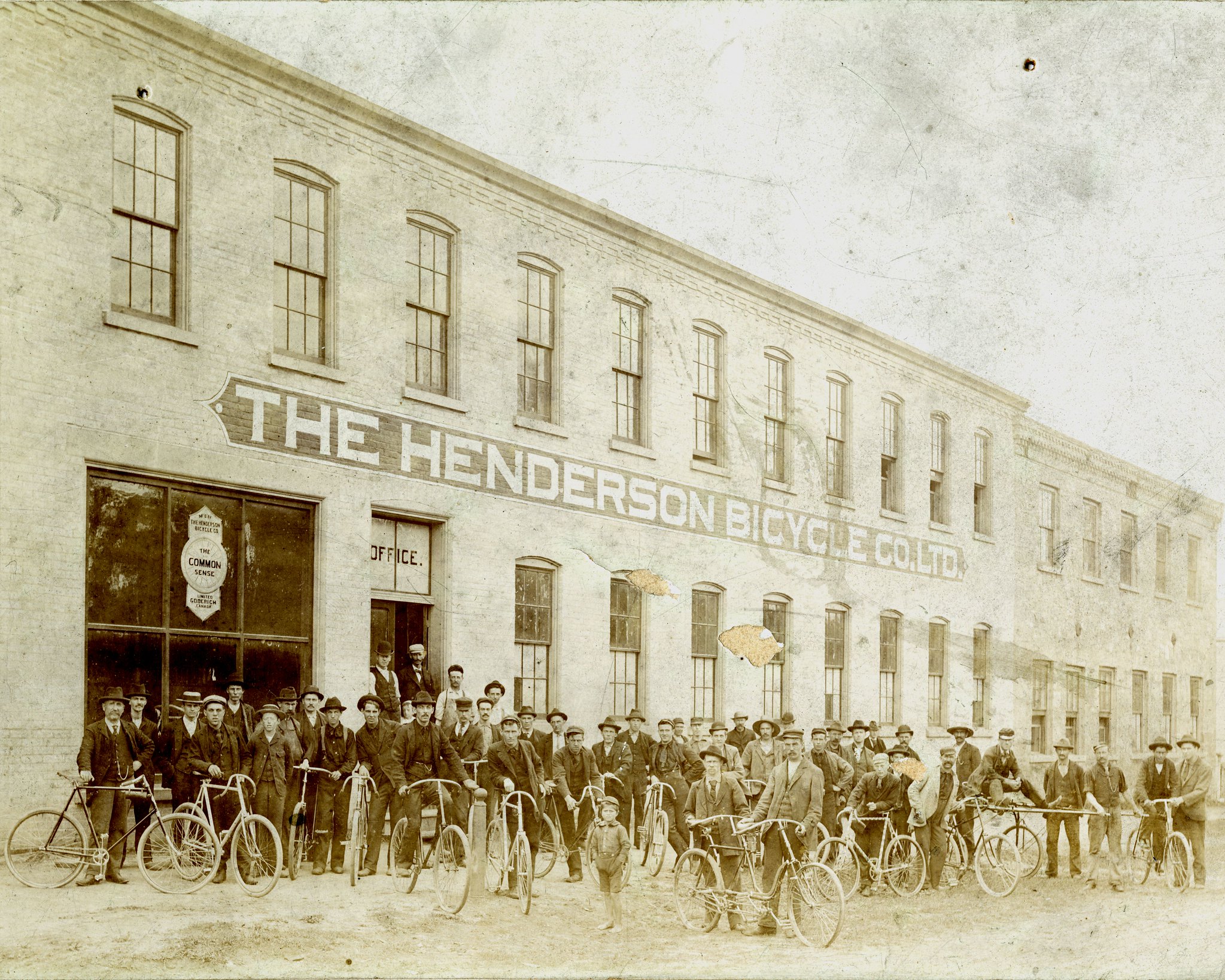
Photo of the Henderson Bicycle Co. Located At the Corner of Cambria Road and East St. Goderich,Ont.

Written by Museum Assistant Alice Bosch

 The bicycle boom of the 1890s heavily impacted most of North America, including Huron County. The area saw bicycle production companies, most notably Henderson Bicycle Co., and retailers emerging at the time. Everyone wanted to get their hands on the latest invention of the safety bike, made for everyone to ride both short and long distances.

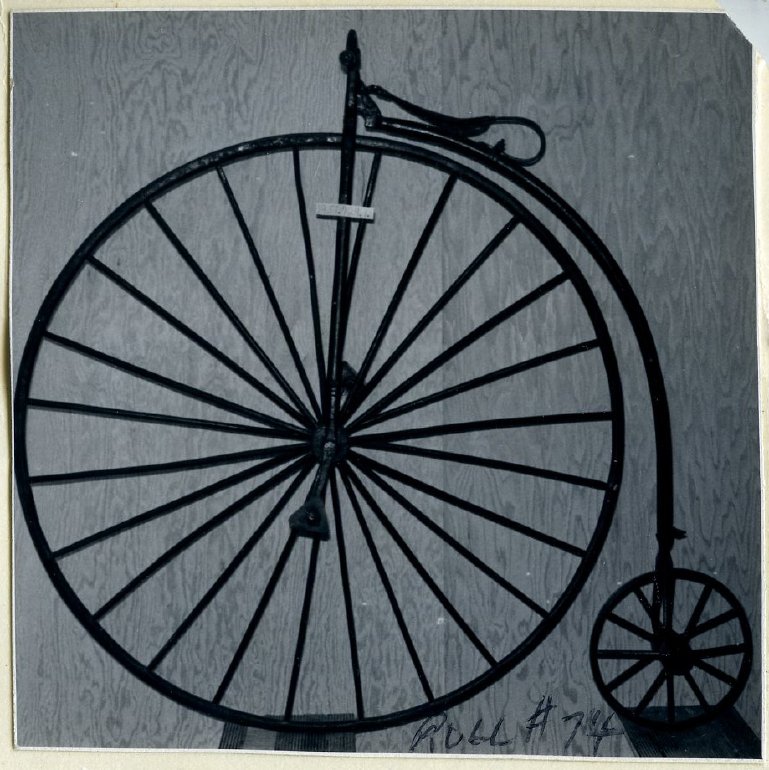
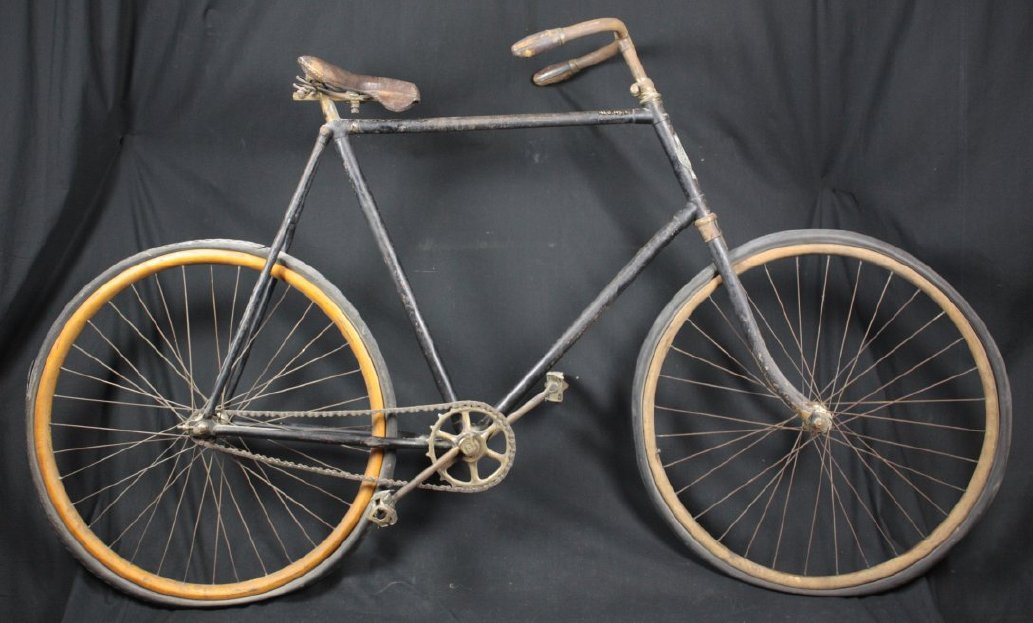
Before safety bikes were invented, though, there were penny-farthing bikes. These bikes featured one large wheel accompanied by a smaller one, making it look like a penny and farthing side-by-side. But these bikes weren’t for the average person to ride around on, as they were hard to control and even harder to stop. With the innovation of safety bikes, local transport was made easy before cars were invented. You could quickly go across town without having to pull out the horse and carriage or walk a long distance. Safety bicycles were the blueprints for our modern bikes and what made the safety bike possible was its chain-driven rear wheel, allowing the pedals to be closer to the ground for an easier stop. Safety bicycles came in two main frame shapes – men’s and women’s. The main difference between men’s and women’s was the middle bar between the legs, on the men’s bikes there is a bar directly under the seat, while the women’s had the bar placed far lower, as to allow their dresses to fall flat, even though women’s bicycle bloomers where also popularized at this time, somewhat making that design unnecessary.

The craze these bikes created meant there had to be plenty of factories to build all of them. The Henderson Bicycle Co., later renamed Goderich Engine and Bicycle Co. after it was sold, was a bike manufacturing company in Goderich in the late 1890s and early 1900s. The business was specifically known for their Common Sense, Huron, and McCready bicycles. These bicycles were sold both straight out of factory and through other local sports goods retailers, from places like Goderich to Toronto to Winnipeg. Depending on the model, the bikes cost from about $60-$85 which for the time wasn’t cheap and unreasonable, meaning that after everyone had a bike, very few bought another. This caused competing companies to create cheaper costing bikes, made from cheaper materials and of less quality. In the end this left the bicycle boom unprofitable and boring, causing bicycles’ popularity to drop before they can rise again before the invention and widespread of cars.

Today there are many great biking trails in and around Huron County to enjoy, and while bikes are not as popular as they were then they are still a great way to be active and enjoy the outdoors. To learn more about cycling in Huron County, visit Ontario’s West Coast.

Image of a penny farthing

This black, wooden-spoked penny farthing looks to be blacksmith made. The frame is made from iron. This penny farthing has pedals on the big wheel that, when pushed on, propels the bicycle in a forward motion. The small wheel just follows behind. Both wheels have wooden spokes and rims. There are no rubber tires. The rims are the wheels. Object ID: M951.0729.001 

A “Common Sense” from the Henderson Bike Co. that was made in the Goderich around 1897. This make of bike does not have a coaster brake, the pedals continuously move round on this cycle and to stop a person would have to slow down the pedals. Object ID: M960.0142.001

Huron Historic Gaol: Resources for Teachers and Students

Huron Historic Gaol: Resources for Teachers and Students

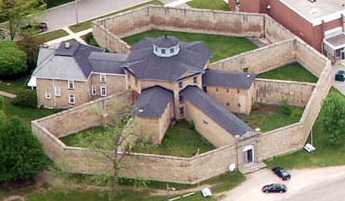
The Huron Historic Gaol is a national historic site and Huron County’s first municipal building. Between 1841 and 1972, it not only served as a correctional facility, but as the site of Huron’s first County Council meeting, its first courthouse, and as an inadequate refuge for those facing hardships that included poor health, homelessness, and mental health struggles.

The history of the gaol intersects with subjects ranging from history and social studies to civics and law. There are onsite programs and resources for every learner, from elementary school to post-secondary students. Educators and students can access these locally available resources to prompt in-depth discussions or create essays on capital punishment, government structures, social safety nets,  legal history, social justice, and much more.

Videos

Behind the Bars video series of prisoner stories

The Young Canuckstorian Project: Margaret & William Dickson, longtime caretakers of Huron Gaol

From Family, Friends and Love, to Betrayal: The Last Official Public Hanging in Canada


Virtual Tours

Explore the 360 virtual tour of the gaol from the classroom: Huron Historic Gaol – Google Maps

You can also try our Virtual Escape RoomContact staff for a guided experience, or book one of our virtual field trips!

Ask an Expert

Contact museum [@] huroncounty.ca to book a guided group tour or onsite education program.

Knowledgeable staff are also available for in-person or virtual outreach to speak about multiple topics related to the gaol’s fascinating history! Get in touch with your questions, or you can choose from an existing list of presentations. 


Aerial view of the Huron Historic Gaol, a central building surrounded by tall octogonal stone walls.
Huron Historic Gaol, located at 181 Victoria St. N, Goderich
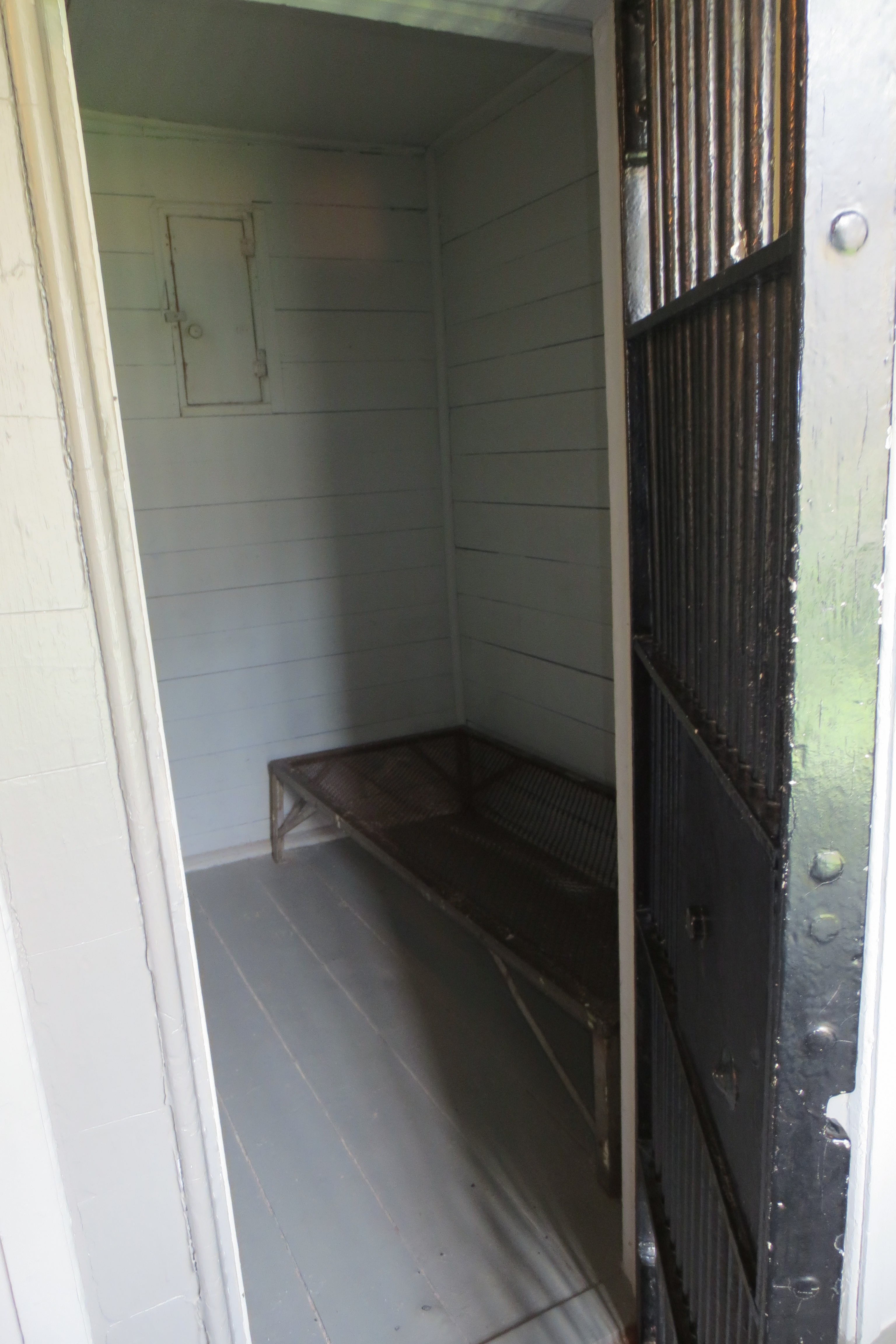
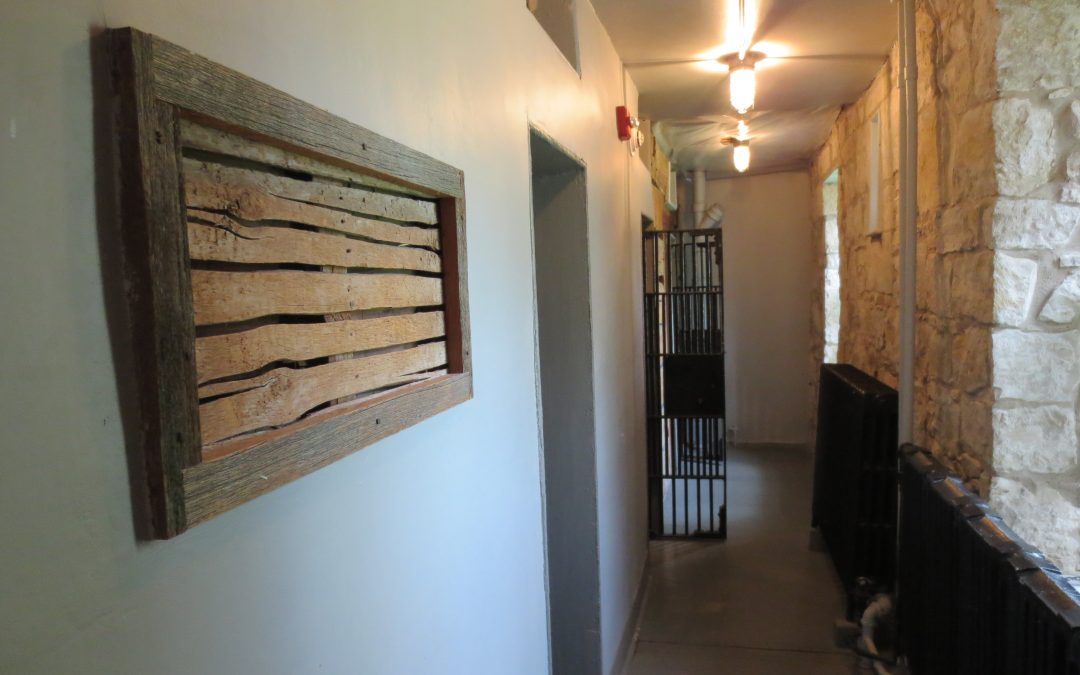
Photograph of a jail cell, barred door ajar. Metal bead inside. Small rectangular window closed.
Contact staff to visit the gaol onsite or virtually!
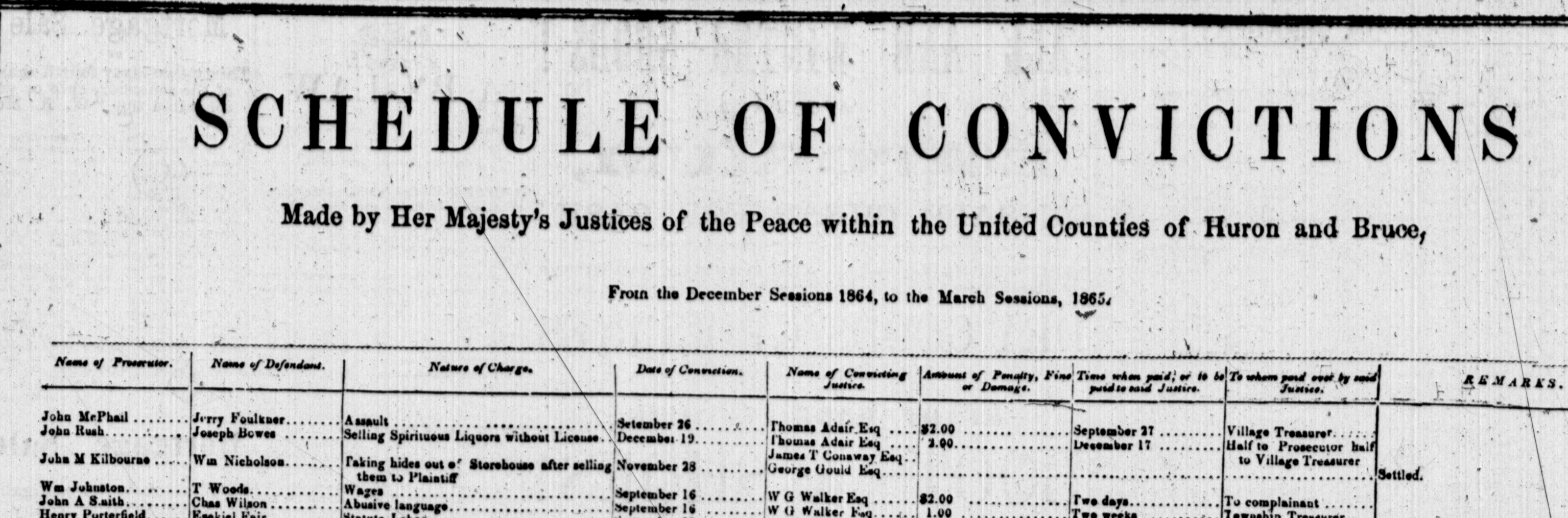
Newspaper clipping: "Schedule of Convictions." Columns list prosecutor, defendant, crime, result and remarks.
Clipping from the Huron Signal, 1865-04-06.  In the early decades of Huron County’s history,  local newspapers regularly published the full Schedules of Convictions listing those accused of crimes as well as accounts of court proceedings.

Research Resources

Huron County’s digitized newspapers chronicle local news from across the county! Click to search more than a century of history via Huron County’s digitized newspapers: free, online and keyword searchable.

You may find many items in the online newspapers about prisoners, significant cases, lists of crimes via the Schedule of Convictions, or the history of the building via reports to Council  & inquests. Review the search tips on our website to help with your search results.


Visit our online catalogue to find artifacts in the museum’s collection that  relate to the Huron Gaol or the communities it served, as well as local law enforcement and court systems.

For in-person research, you can find indexes for certain court records and information on how to book an appointment with the Archivist on the Archives page of our website! Scroll to the bottom for finding aids. Virtual appointments are also now available.

Reading List

Huron Historic Gaol | Huron County Library | BiblioCommons

Check out our reading list in the Huron County Library catalogue for books about the jail and notable prisoners, including Steven Truscott and James Donnelly.

Online Readings/Third Party Links:

The Final Days of Nicholas Melady Jr. as Witnessed by William Dickson

 Heaven & Hell on Earth: The Massacre of the Black Donnellys

Huron Historic Gaol: National Historic Site Designation


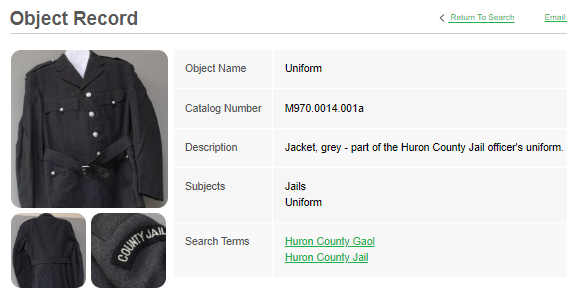
Screenshot of search results. Three Images of a jail uniform, including "County Jail" text on shoulder. Text identifies as "Jacket, grey - part of the Huron County Jail officer's uniform".
Search thousands of selected artifacts online!
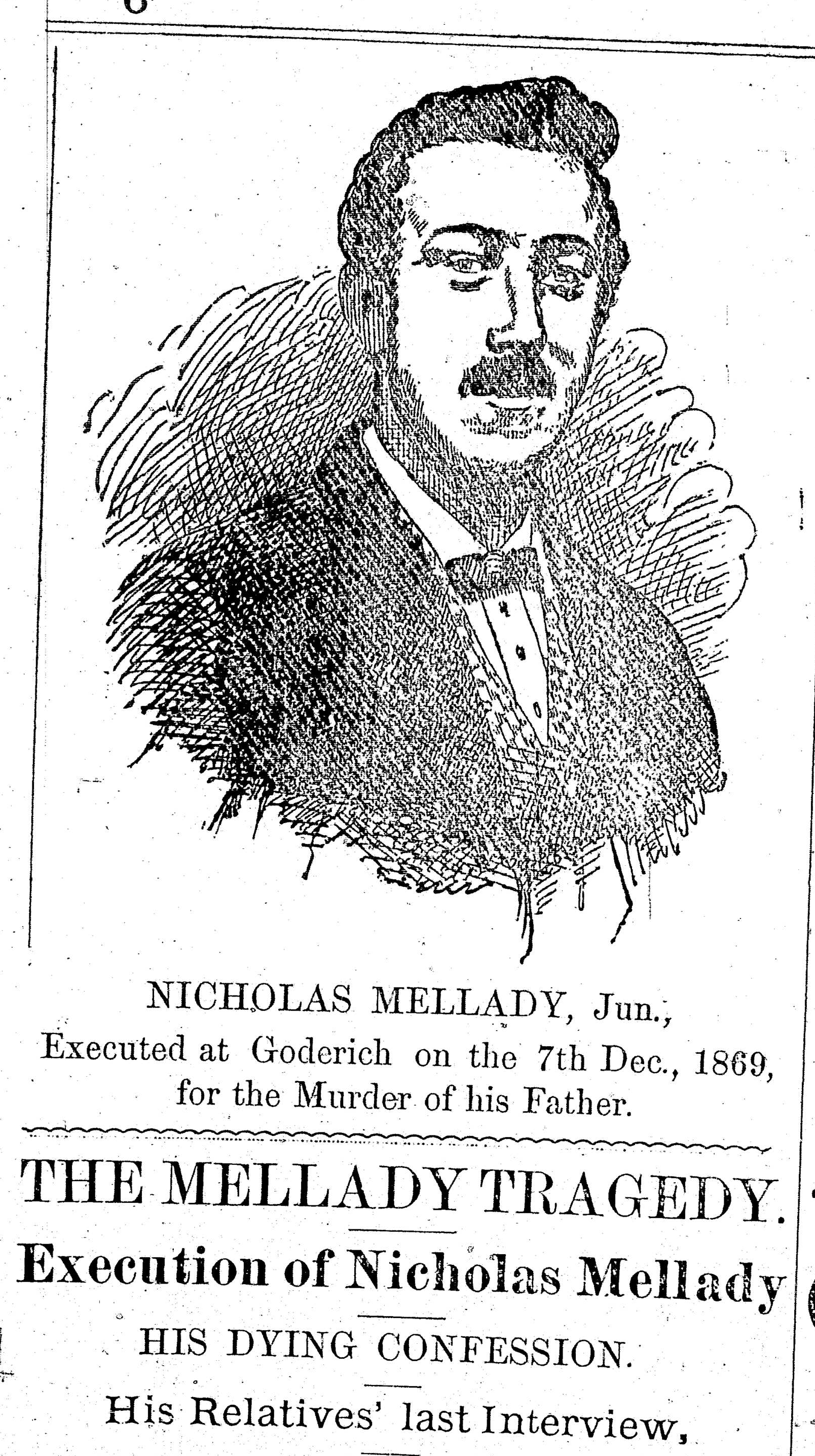
Black & white newspaper clipping. Print block image of an illustrated portrait of a mustached man in a suit. Text below: Nicholas Mellady, Executed at Goderich on the 7th Dec., 1869,<br />
for the Murder of his Father. THE MELLADY TRAGEDY.".<br />
Execution of Nicholas Mellady;HIS DYING CONFESSION.<br />
His Relatives' last Interview,"
From The Huron Expositor, 1869-12-11, pg 6. Access more online from the classroom or from home!
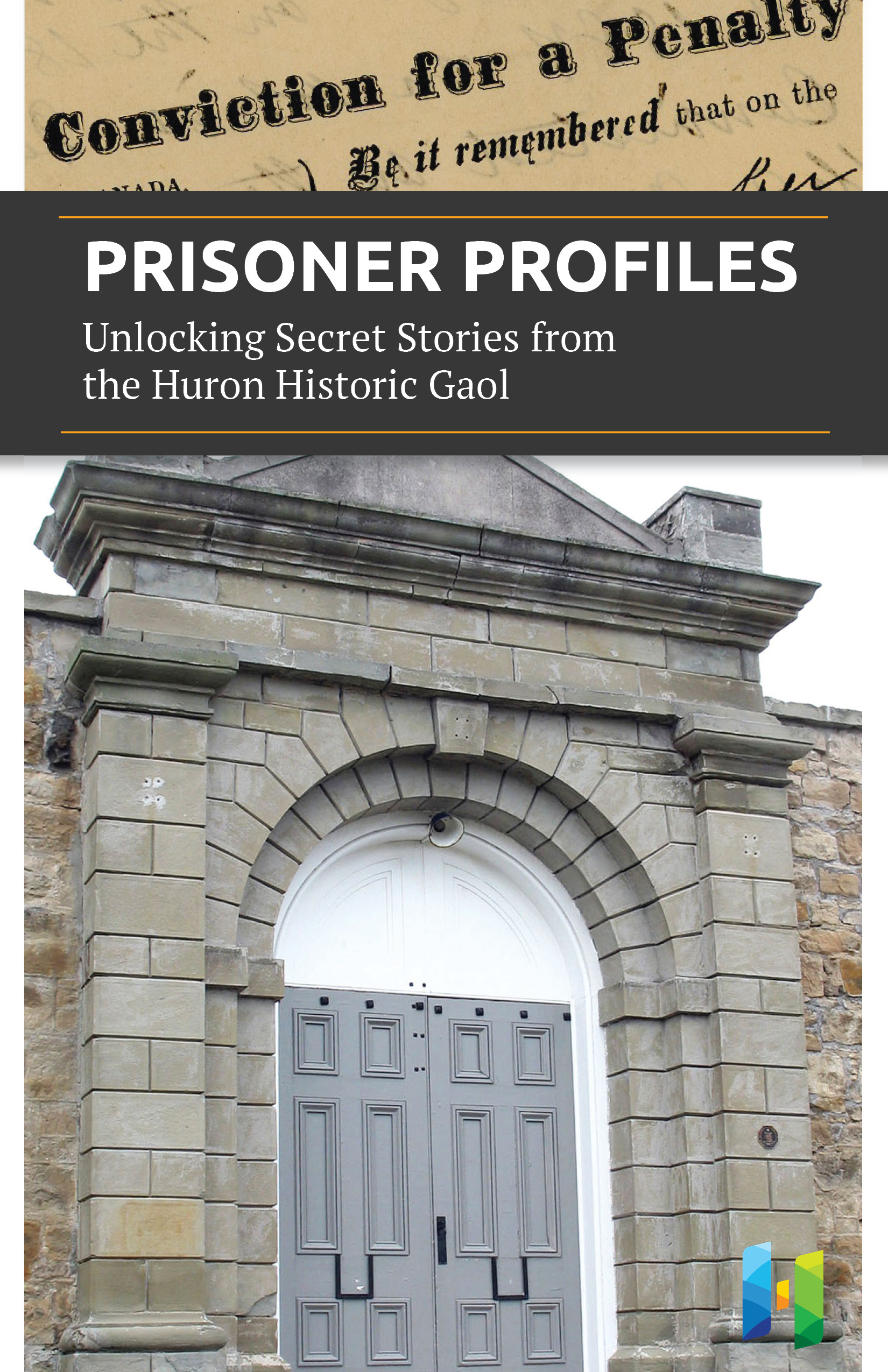
Prisoner Profiles
Prisoner Profiles is available from the gift shops at the Huron County Museum or Huron Historic Gaol, or borrow it for FREE from your local library!
The 12 Benefits of Membership…

The 12 Benefits of Membership…

It’s only 10 days before Christmas and my Museum membership gave to me…

1 chance to win: If you purchase a membership by Dec. 22, you will be entered into a draw for a private film screening for friends & family with popcorn bar in the Museum Theatre. Renewing members will receive two entries!

2 guest passes: Each membership purchase receives two guest passes so you can share you love of the Museum with friends or family.

3 weeks of day camp: Membership includes discounts off of program registration fees, including the Museum summer day camps. This is perfect for families looking to save money while accessing engaging programming for kids.

4 partner museum sites: A Huron County Museum membership not only gives you unlimited free regular admission to the Museum and Gaol, you also receive unlimited regular admission with our reciprocal partners at Bruce County Museum and Cultural Centre, Grey Roots Museum and Archives, Ken Seiling Waterloo Region Museum and Simcoe County Museum.

5 weeks of Ghost Tours: The Huron Historic Gaol’s popular Ghost Tours run every Friday through October and tickets are discounted for museum members!

6 months of Gaol access: The Huron Historic Gaol opens seasonally from May to November and members can visit as often as they like during the six months the site is open.

7 laps walking around the Museum: Enjoy safe and comfortable indoor walking at the Museum at no charge! Pick up a map at the front desk that lays out appropriate routes for walkers of all abilities. This winter, you can also participate in walking Scrabble and complimentary coffee socials for walkers! Watch for details coming soon.

8 gallery spaces: During regular hours, museum members have free unlimited access to the museum’s open gallery spaces, including permanent and temporary exhibits. Enjoy visiting your favourite artifacts on display, move the interactive models in the Neill Gallery or take part in drop-in activities like Make a Mess! 

9 weeks of Behind the Bars: Behind the Bars is an immersive evening tour experience held each July and August at the Huron Historic Gaol. The program gives visitors the opportunity to learn more about life at the Gaol and entry is FREE for members to enjoy!

10% off Gift Shop purchases: All members receive 10% discount off of all purchases in the Museum Gift Shop.

11 storefronts on Main Street Huron County: Go back in time by taking a stroll down Main Street Huron that features late 19th and early 20th century businesses and services that would have been found in local communities. And don’t forget to ring the bell in the 1913 steam locomotive!

12 months of Museum access: The Huron County Museum is open year round and your membership gives you unlimited regular admission 12 months of the year!

Is the Huron Historic Gaol haunted?

Is the Huron Historic Gaol haunted?

Staff are often asked if the Gaol is haunted, so museum assistant Talia Collins shares some staff experiences ahead of our Ghost Tours this fall and invites you to come and see for yourself! 

Is the Huron Historic Gaol haunted? Well, it depends on who you ask! Some Museum staff have had their fair share of spooky Gaol experiences.

One staff member who was working at the Gaol late for an event was cleaning up and heard a loud bang. When she went to go investigate, she found one of the heavy Gaol doors slammed closed on its own. Was it the wind? Or was it a ghost trying to say it was their time to roam the Gaol? After all, the living gets to wander during daylight, it’s only fair to trade off for the night. 

In addition, there have been multiple reports of the sounds of keys jangling or footsteps overhead when no one else is in the Gaol. Many visitors have also reported feeling watched in certain places of the site, mainly the second floor of the Gaol in the cell blocks and doctors’ rooms. Is it an old patient looking for treatment? An old guard jingling his keys as he patrols the cells? Or simply a trick of the mind?  

But of course if you want some spooky experiences of your own, or want to answer for yourself if the Gaol is haunted, Ghost Tours return this fall! Join us each Friday evening through October if you dare!

TICKETS: Purchase online or in-person at the Huron Historic Gaol during regular hours or operation. Please note that capacity is limited and annual ghost tours usually sell-out quickly; tickets must be purchased in advance. Spots on these guided tours are very limited because of space restrictions! This event is recommended for ages 12 and up at parents’ discretion. Subject matter may not be appropriate for all ages. Please note that some areas of the Gaol require stairs and there is no elevator on site. 

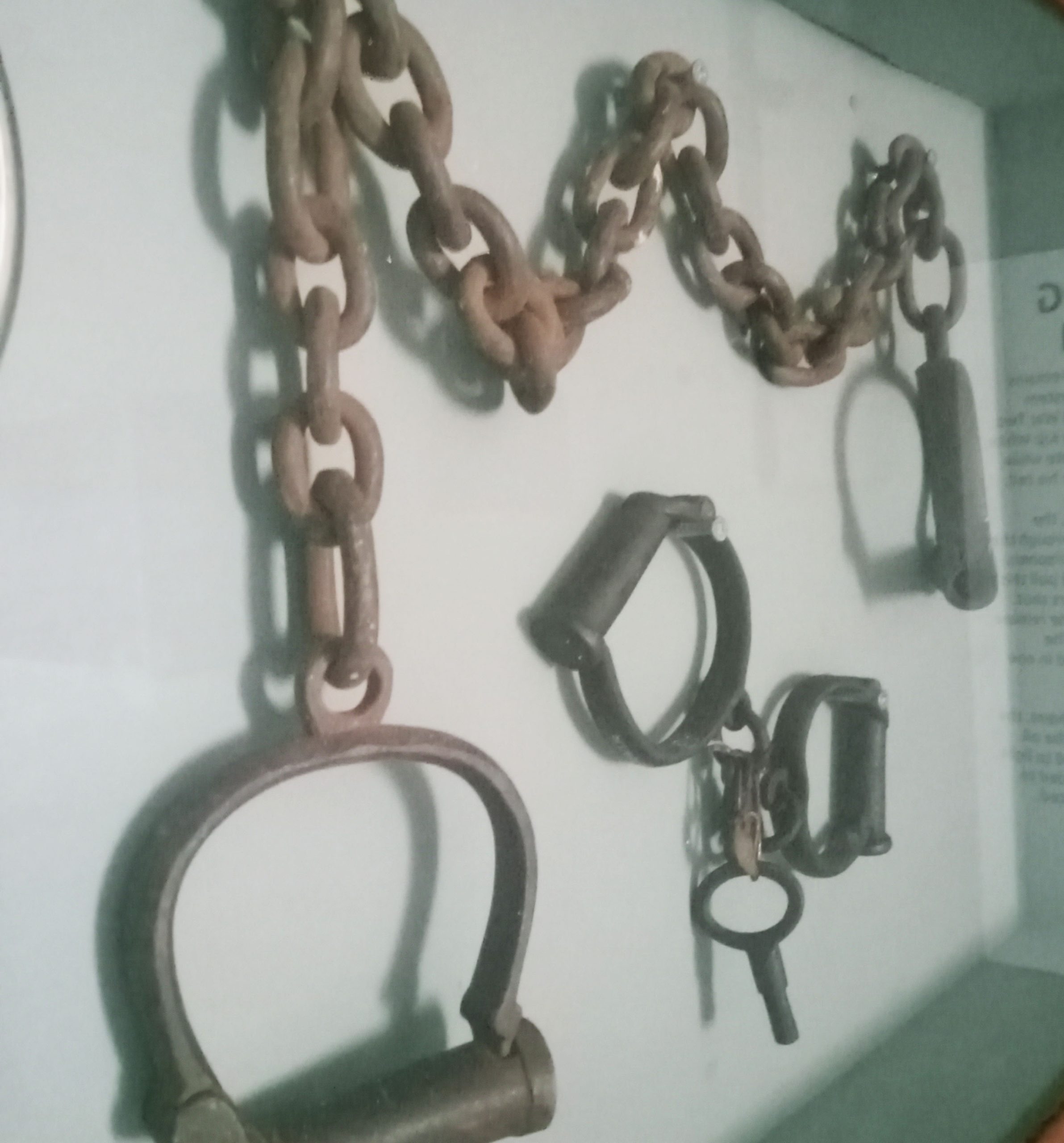
Image of keys and shackles on display at the Huron Historic Gaol

Shackles and keys on display in the Turnkey’s Office at the Gaol.

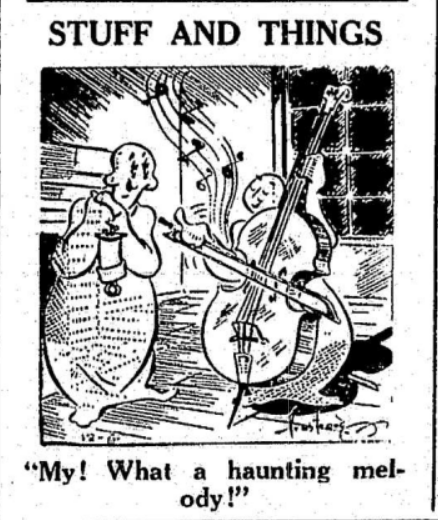
Comic of two ghosts, one listening to the other playing a cello, with the caption "My! What a haunting melody!". From the digitized newspaper collection.

A spooky comic published in The Seaforth News, 1946-07-18. From the Huron Historic Newspaper collection.

Recollections of a Registrar

Recollections of a Registrar

As the Huron County Museum & Historic Gaol’s Registrar, Patti Lamb, prepares to retire, she takes a look back at some of the memorable moments from her 29-year career.
 
Wow…29 years! For 29 years I have been enveloped in the fabric of this building we call the Huron County Museum. In September 1994, I surely could not have imagined that my part-time job on evenings and weekends (taken so a new Mom could get out of the house and enjoy adult interaction) would become a rewarding, fulfilling, and exciting 28-year full-time career in the museum field.

Each day has brought a smile to my face and as I reflect on the changes, the people that have come in and out of my life, the artifacts, and the work we do, I am overwhelmed with emotion. I’ve watched students grow and mature to fantastic professionals in a variety of occupations, many in the museum/history field.

There have been so many memorable moments for me. As a Registrar, I get to look at, hold, catalogue, and photograph the objects that come into the Museum.

Some of the highlights of my career include:

    • Cataloguing William “Tiger” Dunlop’s silver cup with an 1817 gold sovereign inlaid in it. The silver cup was left to Tiger’s sister Janet in his will and, having been passed down through generations, it finally made its way to the Museum.
    • Retrieval of a large oil painting dated 1861, of the Goderich Harbour by renowned Huron County artist William Nichol Cresswell.
    • Transfer of objects recovered from the SS Wexford, one of the cargo ships lost on Lake Huron during the Great Storm of 1913.
    • The discovery of studio backdrops that were once used by photographer Rueben R. Sallows at his studio in Goderich. R.R. Sallows was a brilliant photographer ahead of his time.
    • Rehousing of intricate sprig molds, molds, tools and kiln furniture, intact jugs, crocks, jars, flowerpots, and bowls from the Huron Pottery archaeological dig conducted by archaeologist David Newlands. The Huron Pottery in Egmondville was one of the oldest and longest running potteries in Ontario operating for nearly 60 years, from 1862 – 1910. The opportunity to discuss the dig and the artifacts with archaeologist and author David Newlands was very exciting.
    • Accessioning artifacts that belonged to Canadian short story writer Alice Munro. The artifacts included some personal items, books, and several writing awards including the Nobel Prize in Literature which she won in 2013. To be able to hold the Nobel Prize in my hands was nothing short of awe inspiring.

    As much as these artifacts are incredible and certainly historically significant both locally and nationally, it is the objects and stories of everyday people that I am most drawn to. Their photographs and prized possessions passed down through their families tell the tales of everyday life, of joy and celebrations, of sorrow and hardship, and give a glimpse of what life must have been like growing up, living, and working in Huron County. I’m truly honoured to have been a small part of their stories as we strive to share and preserve our Huron County histories with future generations.

    Image of Tiger Dunlop's cup

    Tiger Dunlop’s cup. 

    Image of Tiger Dunlop's cup

    Cresswell’s painting

    Image of Sallows photography studio back drop

    Mold for water vessel lid