The 12 Benefits of Membership…

The 12 Benefits of Membership…

It’s only 10 days before Christmas and my Museum membership gave to me…

1 chance to win: If you purchase a membership by Dec. 22, you will be entered into a draw for a private film screening for friends & family with popcorn bar in the Museum Theatre. Renewing members will receive two entries!

2 guest passes: Each membership purchase receives two guest passes so you can share you love of the Museum with friends or family.

3 weeks of day camp: Membership includes discounts off of program registration fees, including the Museum summer day camps. This is perfect for families looking to save money while accessing engaging programming for kids.

4 partner museum sites: A Huron County Museum membership not only gives you unlimited free regular admission to the Museum and Gaol, you also receive unlimited regular admission with our reciprocal partners at Bruce County Museum and Cultural Centre, Grey Roots Museum and Archives, Ken Seiling Waterloo Region Museum and Simcoe County Museum.

5 weeks of Ghost Tours: The Huron Historic Gaol’s popular Ghost Tours run every Friday through October and tickets are discounted for museum members!

6 months of Gaol access: The Huron Historic Gaol opens seasonally from May to November and members can visit as often as they like during the six months the site is open.

7 laps walking around the Museum: Enjoy safe and comfortable indoor walking at the Museum at no charge! Pick up a map at the front desk that lays out appropriate routes for walkers of all abilities. This winter, you can also participate in walking Scrabble and complimentary coffee socials for walkers! Watch for details coming soon.

8 gallery spaces: During regular hours, museum members have free unlimited access to the museum’s open gallery spaces, including permanent and temporary exhibits. Enjoy visiting your favourite artifacts on display, move the interactive models in the Neill Gallery or take part in drop-in activities like Make a Mess! 

9 weeks of Behind the Bars: Behind the Bars is an immersive evening tour experience held each July and August at the Huron Historic Gaol. The program gives visitors the opportunity to learn more about life at the Gaol and entry is FREE for members to enjoy!

10% off Gift Shop purchases: All members receive 10% discount off of all purchases in the Museum Gift Shop.

11 storefronts on Main Street Huron County: Go back in time by taking a stroll down Main Street Huron that features late 19th and early 20th century businesses and services that would have been found in local communities. And don’t forget to ring the bell in the 1913 steam locomotive!

12 months of Museum access: The Huron County Museum is open year round and your membership gives you unlimited regular admission 12 months of the year!

George Agnew Reid painting returns home to Huron with donation to Huron County Museum

George Agnew Reid painting returns home to Huron with donation to Huron County Museum

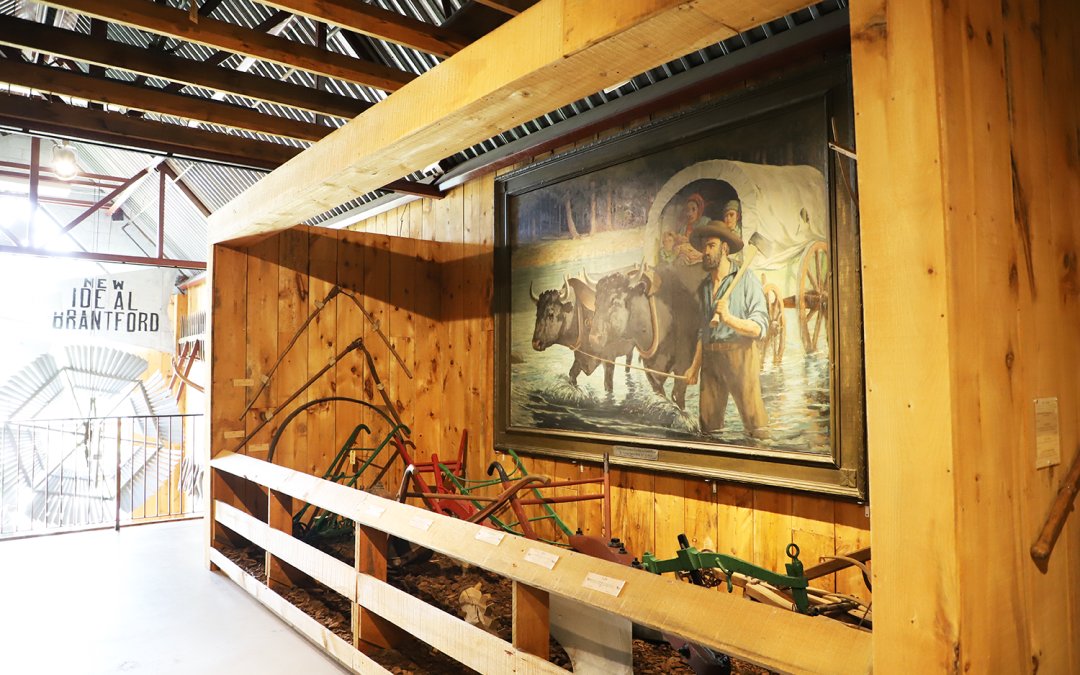
A George Agnew Reid painting has returned to Huron County thanks to a donation of the painting The Homeseekers Fording the Credit to the Huron County Museum.

Homeseekers Fording the Credit was recently donated to the Museum from the Perkins Bull Collection. Most of the collection’s archival holdings were donated to the Region of Peel Archives, who recognized the connection to Huron County and reached out to the Museum seeking a new home for the piece. The painting was received by the Museum in early October and is now on display in the upper Agricultural Hall.

George Agnew Reid was a Canadian artist, painter, and influential educator who is best known as a genre painter, depicting scenes from ordinary life which were largely inspired by his early memories of Huron County. Born in 1860 on his family’s farm in Wingham, Reid briefly apprenticed with an architect before studying at the Ontario School of Art, Toronto, in 1879. He then studied at the Pennsylvania Academy of the Fine Arts where he was a protégé of Thomas Eakins. He later became interested in mural painting, and in 1897, founded the Society of Mural Decorators in Toronto with Frederick Challener, William Cruickshank, and Edmund Wyly Grier. In 1903, with the help of others, he founded the Arts and Crafts Society of Canada, which became known as the Canadian Society of Applied Art in 1905.

In the 1930s, William Perkins Bull, a lawyer and financier, was injured in Chicago and came back to Toronto to recuperate. During this time, he amassed a large selection of Canadian art, including The Homeseekers Fording the Credit, which is based on one of Reid’s landmark works, The Homeseekers, an historical presentation of pioneering days that uses the Maitland River as its backdrop.

“Bull had, by the 1930s, begun a special Peel Memorial Collection at Brampton, to which Canadian artists were asked to contribute examples of their work painted in Peel County. Since The Homeseekers has a setting not unlike that of Peel County, Bull asked Reid to donate the original to this collection but since it was set into the wall of the artist’s studio-workshop, Reid decided that he could not part with it. Instead, he painted a replica.” – George Reid biography.

The Huron County Museum wishes to thank the Perkins Bull Collection for generously donating this painting to its collection, the Region of Peel Archives for coordinating this donation, and TOTAL Fine Arts for safely delivering the painting to Huron County.

Installed in the Museum’s permanent exhibit space, visitors can enjoy the painting during regular visits to the Museum. 

Is the Huron Historic Gaol haunted?

Is the Huron Historic Gaol haunted?

Staff are often asked if the Gaol is haunted, so museum assistant Talia Collins shares some staff experiences ahead of our Ghost Tours this fall and invites you to come and see for yourself! 

Is the Huron Historic Gaol haunted? Well, it depends on who you ask! Some Museum staff have had their fair share of spooky Gaol experiences.

One staff member who was working at the Gaol late for an event was cleaning up and heard a loud bang. When she went to go investigate, she found one of the heavy Gaol doors slammed closed on its own. Was it the wind? Or was it a ghost trying to say it was their time to roam the Gaol? After all, the living gets to wander during daylight, it’s only fair to trade off for the night. 

In addition, there have been multiple reports of the sounds of keys jangling or footsteps overhead when no one else is in the Gaol. Many visitors have also reported feeling watched in certain places of the site, mainly the second floor of the Gaol in the cell blocks and doctors’ rooms. Is it an old patient looking for treatment? An old guard jingling his keys as he patrols the cells? Or simply a trick of the mind?  

But of course if you want some spooky experiences of your own, or want to answer for yourself if the Gaol is haunted, Ghost Tours return this fall! Join us each Friday evening through October if you dare!

TICKETS: Purchase online or in-person at the Huron Historic Gaol during regular hours or operation. Please note that capacity is limited and annual ghost tours usually sell-out quickly; tickets must be purchased in advance. Spots on these guided tours are very limited because of space restrictions! This event is recommended for ages 12 and up at parents’ discretion. Subject matter may not be appropriate for all ages. Please note that some areas of the Gaol require stairs and there is no elevator on site. 

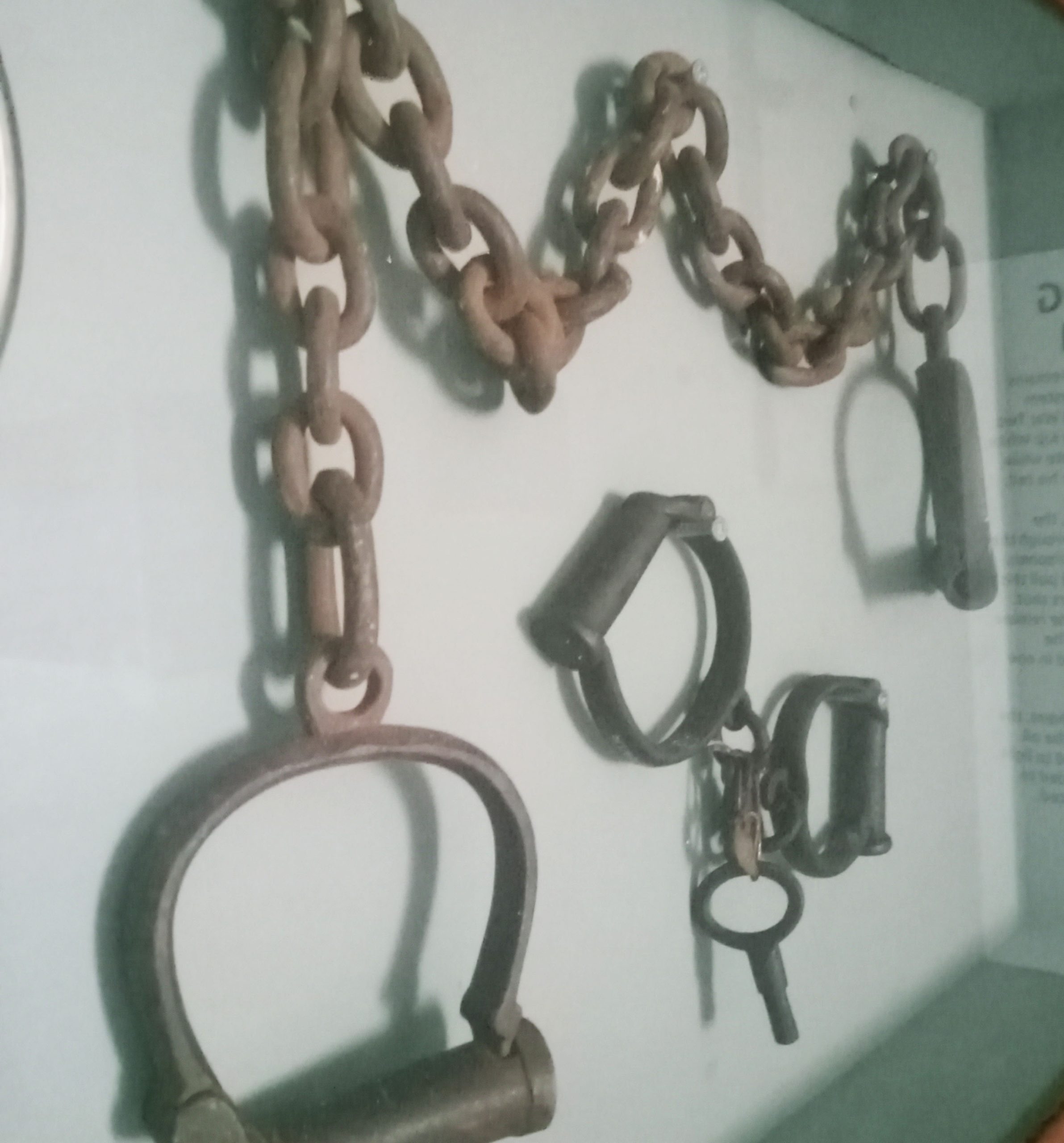
Image of keys and shackles on display at the Huron Historic Gaol

Shackles and keys on display in the Turnkey’s Office at the Gaol.

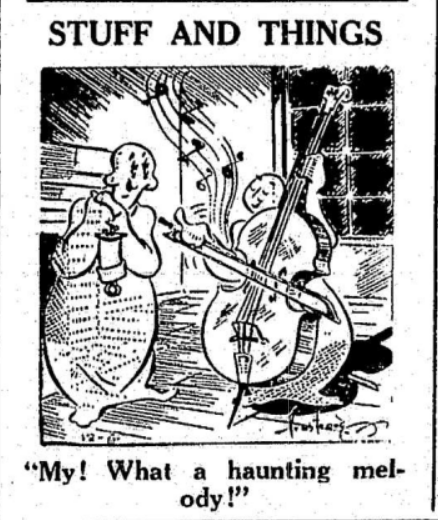
Comic of two ghosts, one listening to the other playing a cello, with the caption "My! What a haunting melody!". From the digitized newspaper collection.

A spooky comic published in The Seaforth News, 1946-07-18. From the Huron Historic Newspaper collection.

Recollections of a Registrar

Recollections of a Registrar

As the Huron County Museum & Historic Gaol’s Registrar, Patti Lamb, prepares to retire, she takes a look back at some of the memorable moments from her 29-year career.
 
Wow…29 years! For 29 years I have been enveloped in the fabric of this building we call the Huron County Museum. In September 1994, I surely could not have imagined that my part-time job on evenings and weekends (taken so a new Mom could get out of the house and enjoy adult interaction) would become a rewarding, fulfilling, and exciting 28-year full-time career in the museum field.

Each day has brought a smile to my face and as I reflect on the changes, the people that have come in and out of my life, the artifacts, and the work we do, I am overwhelmed with emotion. I’ve watched students grow and mature to fantastic professionals in a variety of occupations, many in the museum/history field.

There have been so many memorable moments for me. As a Registrar, I get to look at, hold, catalogue, and photograph the objects that come into the Museum.

Some of the highlights of my career include:

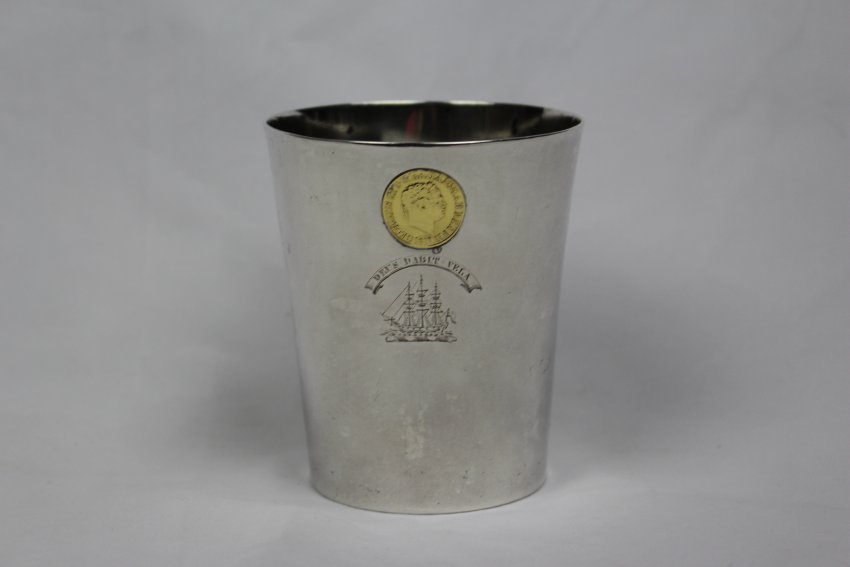
    • Cataloguing William “Tiger” Dunlop’s silver cup with an 1817 gold sovereign inlaid in it. The silver cup was left to Tiger’s sister Janet in his will and, having been passed down through generations, it finally made its way to the Museum.
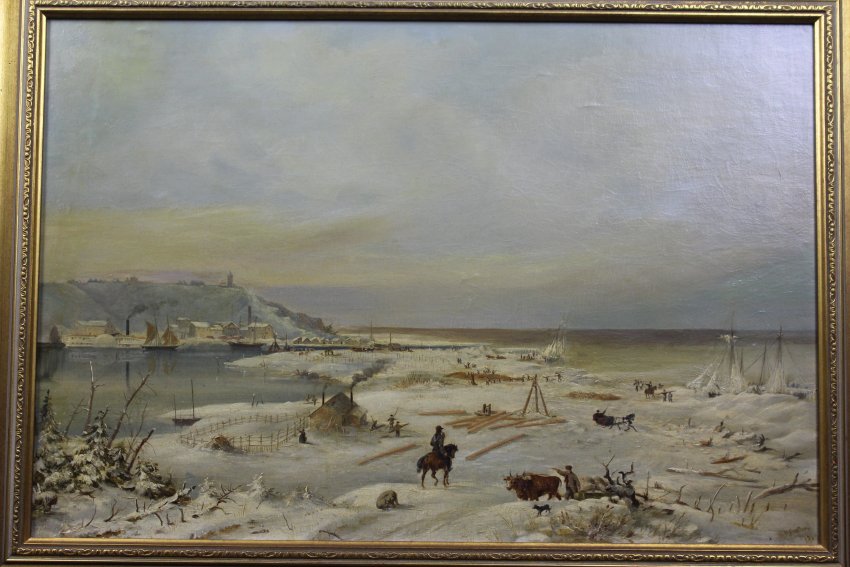
    • Retrieval of a large oil painting dated 1861, of the Goderich Harbour by renowned Huron County artist William Nichol Cresswell.
    • Transfer of objects recovered from the SS Wexford, one of the cargo ships lost on Lake Huron during the Great Storm of 1913.
    • The discovery of studio backdrops that were once used by photographer Rueben R. Sallows at his studio in Goderich. R.R. Sallows was a brilliant photographer ahead of his time.
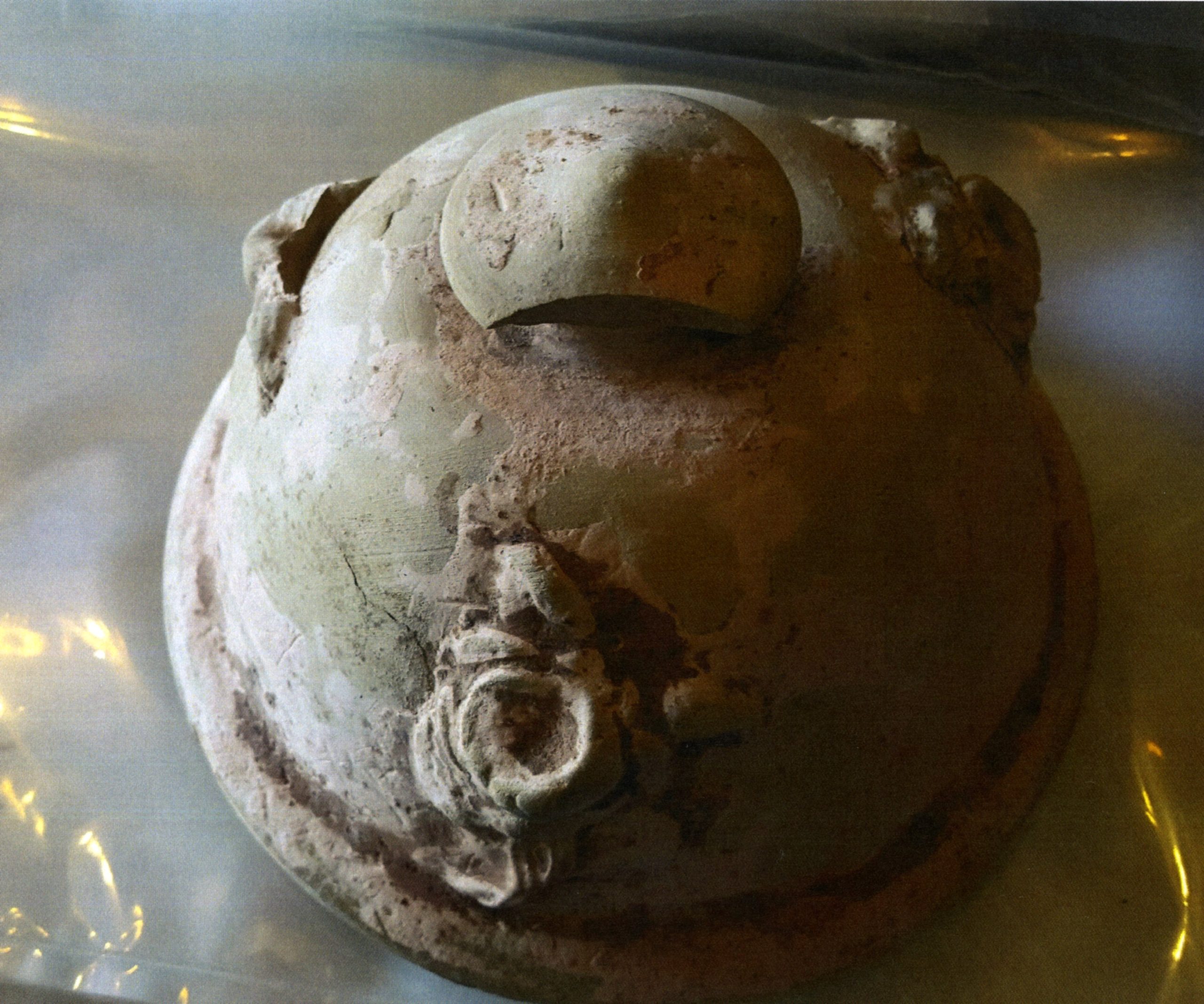
    • Rehousing of intricate sprig molds, molds, tools and kiln furniture, intact jugs, crocks, jars, flowerpots, and bowls from the Huron Pottery archaeological dig conducted by archaeologist David Newlands. The Huron Pottery in Egmondville was one of the oldest and longest running potteries in Ontario operating for nearly 60 years, from 1862 – 1910. The opportunity to discuss the dig and the artifacts with archaeologist and author David Newlands was very exciting.
    • Accessioning artifacts that belonged to Canadian short story writer Alice Munro. The artifacts included some personal items, books, and several writing awards including the Nobel Prize in Literature which she won in 2013. To be able to hold the Nobel Prize in my hands was nothing short of awe inspiring.

    As much as these artifacts are incredible and certainly historically significant both locally and nationally, it is the objects and stories of everyday people that I am most drawn to. Their photographs and prized possessions passed down through their families tell the tales of everyday life, of joy and celebrations, of sorrow and hardship, and give a glimpse of what life must have been like growing up, living, and working in Huron County. I’m truly honoured to have been a small part of their stories as we strive to share and preserve our Huron County histories with future generations.

    Image of Tiger Dunlop's cup

    Tiger Dunlop’s cup. 

    Image of Tiger Dunlop's cup

    Cresswell’s painting

    Image of Sallows photography studio back drop

    Mold for water vessel lid

    New Huron Historic Gaol exhibit shares historical data about prisoners

    New Huron Historic Gaol exhibit shares historical data about prisoners

    Written by museum assistant Kevin den Dunnen, who is working on exhibit research projects this summer.

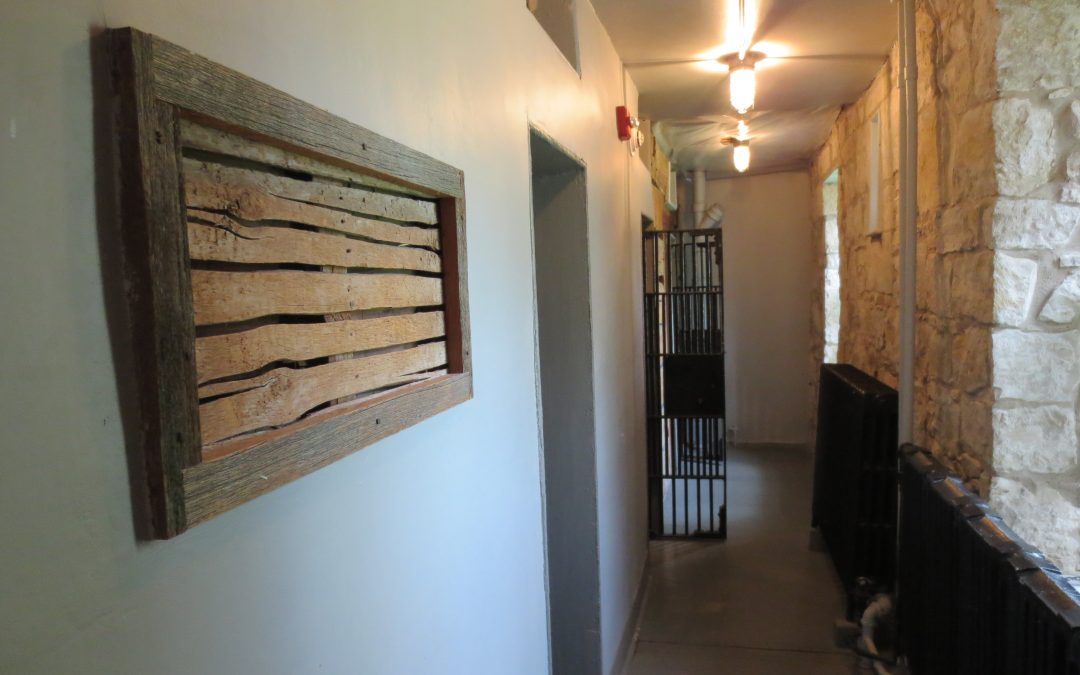
    Over 6,600 people came through the Huron County Gaol’s long and narrowing hallway between 1841 and 1922. For each entry into the Gaol, employees recorded information about that person such as the crime they committed, the institution they transferred to, their age, height, eye colour, relationship status, residence, religion, sentence length, etc. This registry is essentially a brief snippet into a person who, in many cases, would otherwise never have such detailed information about their lives presented for historical interpretation. A new exhibit at the Huron Historic Gaol presents an analysis of the people who came to the Gaol through the registry up until 1922. While the Gaol operated until 1972, due to privacy restrictions, staff can only access registry entries after they are 100 years old.

    Interpreting more than 6,600 distinct entries in the Gaol Registry presents a challenge to museum staff who must comb through this information to provide accurate data about the prisoners of the Gaol. As part of my programs at school, I interpreted quantitative data and presented visually engaging infographics for public audiences. It was during my employment at the Huron County Museum & Historic Gaol last summer that I recognized the Gaol Registry is compatible with business intelligence software I used in school. This allowed me to present the data as an interactive infographic, giving Museum staff the ability to easily analyze information such as the crimes committed, residence, and religion of prisoners at the Gaol. In this way, staff can answer questions such as the makeup of crime from differing communities in Huron County in a matter of minutes rather than hours.

    With so much information available, much of the information in the Gaol Registry did not make it into the new exhibit. For instance, the makeup of prisoner height is difficult to correlate into an overarching exhibit theme. In this blog, however, I can tell you that the most common height for male prisoners was 5’ 8” with 13.6%, while 5’ 6”, 5’ 7”, and 5’ 9” round out the top four and are each above 10% of the male prisoner population. For female prisoners, 5’ 5” was the most common height with 17.7%, while 5’ 2”, 5’ 4”, and 5’ 3” fill out the top four with each above 11% of the female prisoner population.

    The crime demographics for places of residence is another interesting data set that did not make it into the exhibit. For Goderich-based prisoners, drunkenness was the most common crime with vagrancy second. Prisoners registered from Wingham most commonly committed larceny with vagrancy second. Prisoners from Seaforth most often came in for vagrancy, followed closely by assault and then drunkenness. Prisoners from Exeter most often committed larceny, followed by assault and then vagrancy.

    Since Huron County was one of the last dry counties in Ontario, temperance, or the act of professing abstinence from alcohol, was commonly recorded by gaol staff. Some stories relating to temperance feature in the new exhibit, but it is possible to analyze this information further using business intelligence software. For instance, Clinton prisoners recorded one of the highest percentages of temperance. Almost 48% of prisoners from Clinton were temperate. We can analyze this data another step through gender. 85% of females from Clinton declared temperance. In comparison, Gaol staff recorded 34% of Goderich residents as temperate. 49% of female prisoners from Goderich were temperate. We can further interpret the Clinton dataset using religion. While almost 20% of all prisoners from Clinton were Methodist, 43% of temperate prisoners from Clinton were Methodist.

    The last information I will share with you in this post is marital status. 54% of prisoners who came through the Gaol’s long, narrowing hallway, were single, 40% of prisoners were married, and 6% were widowed. This information remains consistent within a few percentage points across residences like Goderich, Exeter, Lucknow, Seaforth, Wingham, and Clinton.

    These are but a few facts outlined in the registry and staff continue to use these details as they research prisoners and their lives at the Gaol.

    Want to learn more about the lives of prisoners from the Huron County Gaol? Come visit the new exhibit and speak with our staff about the Gaol Registry.


    Image of a clipping from the Goderich Signal published November, 1913

    From the Huron Historic Newspaper collection. Published in The Signal, 1913-11-6, Page 6 

    Image of a whisky jug from the Museum's collection

    The owners of this whisky jug came by boat to Goderich then walked through the Queens Bush to homestead near Teeswater and Langside. The jug was carried slung over a stick on the back of a man when he walked through the Queens bush to barn and house raisings. The MacDougall’s often went to raisings 50 miles away (Goderich) after clearing bush near Langside, Bruce County. Object ID: M9590109001