
National Day for Truth & Reconciliation

National Day for Truth & Reconciliation

Beginning in 2021, Canadians mark Sept. 30 as the National Day for Truth and Reconciliation to honour the children who never returned home from residential schools and the survivors. The Huron County Museum and Huron County Library also recognize this day as Orange Shirt Day, on which we acknowledge and remember the harm the residential school system caused to Indigenous children, their families and their communities. This post by summer Museum Assistant Robyn Weishar intends to inform readers of the origins of Orange Shirt Day and explores the history of Residential Schools in Canada.

It is important to start by acknowledging the Indigenous peoples who have lived on this land, and continue to do so today. The Huron County Museum and Historic Gaol recognizes that the land our historic sites reside on has a history that long predates the settlement of Goderich or Huron County. This area is the traditional territory of the Anishinaabe, Haudensoshaunee, and Neutral Peoples. In 2021, the Museum, along with the County of Huron, published a Land Acknowledgement Statement that recognizes “the First Peoples’ continued stewardship of the land and water…[and] the Upper Canada Treaties signed in regards to this land, which include Treaty #29 and Treaty #45 1/2, and our roles as treaty people, committed to moving forward in the spirit of reconciliation, gratitude, and respect with all First Nation, Métis and Inuit people.”

 Phyllis Webstad remembers as a six-year-old how joyous she was to begin school and to show off the new, bright orange shirt her grandmother bought her. The shirt was especially significant because Phyllis and her grandmother did not have a lot of money. When Phyllis arrived at the Mission school in British Columbia, she, like the majority of children who attended Residential Schools across the country, was stripped of her clothes and she never wore or saw her orange shirt again. The colour orange lost its excitement for Phyllis and the colour had now become associated with feeling worthless and insignificant. At 27, Phyllis began her healing journey from these experiences which ultimately led her start Orange Shirt Day. As the Founder and Ambassador of this day, Phyllis has fostered awareness about the impacts of Residential Schools through the telling of her story.  

Phyllis’ story is only one of many Indigenous children who endured the oppressive forces and abuse inflicted by the Canadian Government and the various Christian organizations who operated the schools. The purpose of these institutions were to “kill the Indian but save the child”; removing the children them from their spirituality/religions, their language, and their social practices, thus eradicating their sense of unity and self.

The first Boarding School in Canada was established in New France around 1620 and lasted in this form until the 1680s. Residential Schools, as we know them today, were in operation by the early 1700s.

Egerton Ryerson, who is considered to be one of the founding fathers of Canadian education, played a huge part in influencing the “Indian” Residential School system. Ryerson’s 1847 recommendation to “deal with” the Indigenous population was religious instruction and domestic education with a particular focus on agricultural training.

The introduction of the Indian Act (1876) was one of the first major developments towards the goal of assimilation by the state. A 1920 amendment to the Indian Act made attendance for school-aged children at state-sponsored schools mandatory; which was enforced by truant officers. It was within these Residential Schools where Indigenous children were robbed of their cultures and histories. These children lost more than the clothes off their backs like Phyllis Webstad, they lost their childhood and their innocence. Within the confines of the school walls the conditions were abysmal; the schools were underfunded and overcrowded, resulting in widespread and preventable diseases and deaths. Many school children were physically, emotionally, and sexually abused by members of the church clergy and various other staff.

The atrocities of the Residential School System are still felt today. The last federally funded facility was in operation in Saskatchewan until 1996. This fact is critical in the understanding of why working towards Truth and Reconciliation is so important. We must honour and recognize both the good and bad histories of Canada, and acknowledge the suffering many Indigenous families endured, and still battle with to this day.

On Sept. 30, Canadians are asked to wear orange to pay respect to the many lives lost and the many lives that have been negatively impacted by the Residential School system. We also respect the resilience and vibrancy of  Indigenous cultures across Canada. The work of Truth and Reconciliation is still ongoing, and requires action. We invite you to further your own understanding by exploring some of the resources linked below.

Further Reading

  • Huron County Library Staff have compiled a list of 100 books by Indigenous authors to help educate and better understand the history of Residential schools and their long-lasting impact on Indigenous people and communities.

Huron Hope School one of first to integrate intellectually disabled students

Written by Huron County Museum Assistant Harrison Lobb, Young Canada Works

“Mental retardation” was originally introduced as a medical term in 1961 for people with intellectual disabilities. Today, use of the term as a negative slur regarding the intellectually disabled has led to its discontinuation. Due to its historical use, it is employed in context within this post. Please note it is not intended to cause distress or harm.

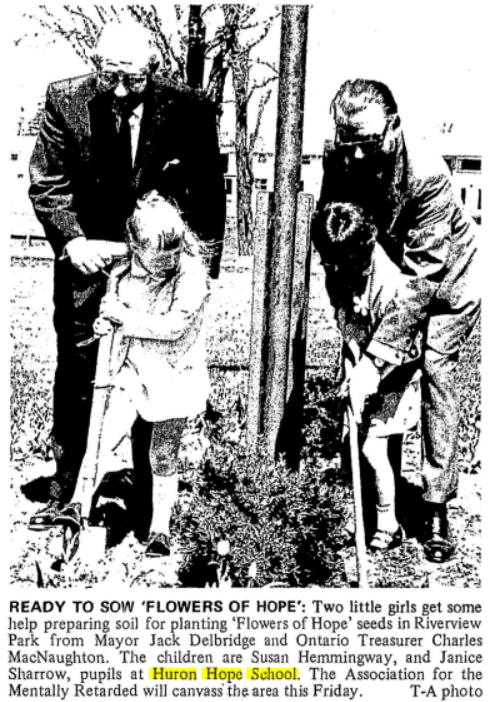
In Ontario in 1969, the schooling for children who were identified as intellectually disabled formally came under the care of the Board of Education. Prior to 1969, special needs education in the school system was denied to these children. Instead, various regional chapters of the Association For the Mentally Retarded were tasked with the difficulties of setting up their own schools in halls and church basements. These schools were entirely unsupported by the government and purely reliant on the goodwill and funding of everyday citizens. This unsustainable model finally came to an end in Huron County in September 1969 when two classrooms in Huron Park’s J.A.D. McCurdy School were chosen to house the Huron Hope School, a school for mentally challenged youth.

The Huron Hope School in Huron Park was one of the first four schools in Ontario to integrate intellectually disabled students with the general student body under one roof. While the challenged youth would remain segregated for their classroom studies, all children were integrated together on the playground, in the gymnasium, and in other school functions. This level of inclusivity was unheard of in Ontario until this point and Huron County shined as uniquely progressive for the time. New programming for special needs students also came with a refocused priority emphasizing the development of social skills, rather than academic knowledge. This meant much of a student’s time was spent outside the classroom participating in social activities like bowling, picnics, and swimming.

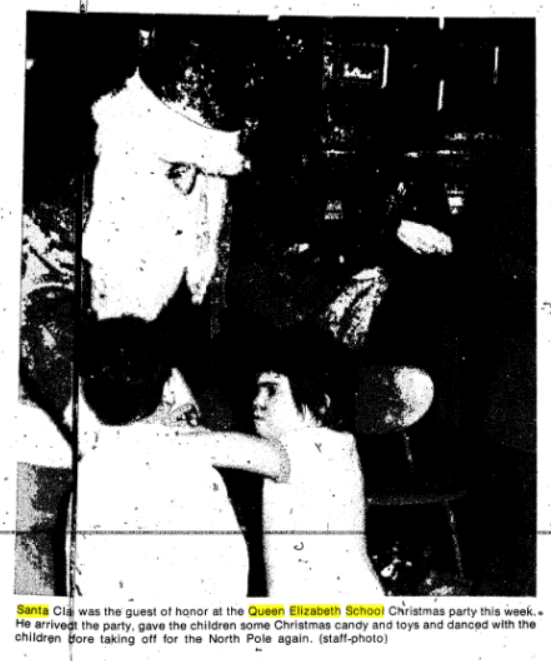
Thanks to the spearheading efforts of those such as the South Huron Association for the Mentally Retarded and selfless administrators like Bonnie Graham, who ran the Queen Elizabeth School for the Trainable Retarded in Goderich, what was once considered a unique situation in integrating and socializing children of different needs is today perceived as normal. We should not forget the actions of those who enabled this social progress that we often take for granted.

Newspaper clipping showing photo of two girls with shovels planting flowers at the Huron School of Hope
Newspaper clipping of a student from Queen Elizabeth School meeting Santa

Sources Consulted

Henderson Collection – Labour Day Celebrations

Henderson Collection – Labour Day Celebrations

Brooklyn Wright, Huron County Museum assistant, is working on the Henderson Photographic Collection this summer and highlighting some of the stories and images from the collection. Gordon Henderson was a Goderich-based photographer who produced black-and white photos using a variety of mediums, such as negatives, glass-plate negatives, and cellulose nitrate film. The collection housed at the Huron County Museum and contains more than 10,000 negatives and photographs taken by Mr. Henderson from the 1930s – 1970s. Included in the collection are class pictures, summer camp pictures, wedding pictures, advertising campaigns, pictures of local events, buildings, businesses, and much more.

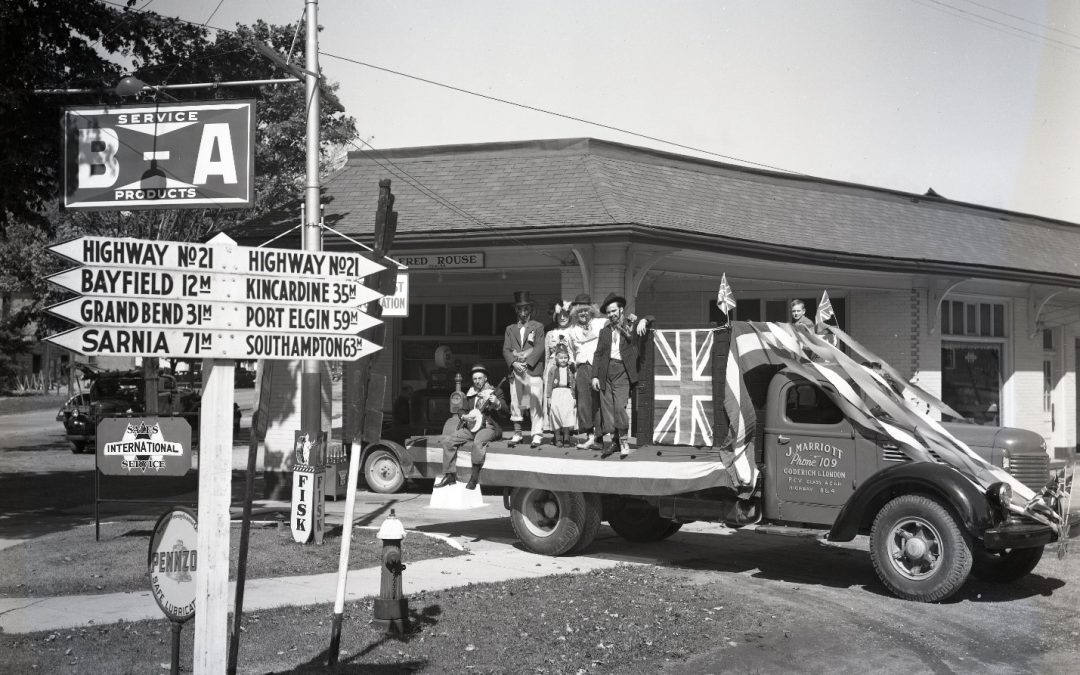
The second annual Goderich Labour Day Celebrations took place in and around the Goderich Square on Monday, Sept. 2, 1946. The celebrations were captured in part by the above image from the Henderson Collection, but the full extent of the festivities lasted all day, and a wide variety of events took place.

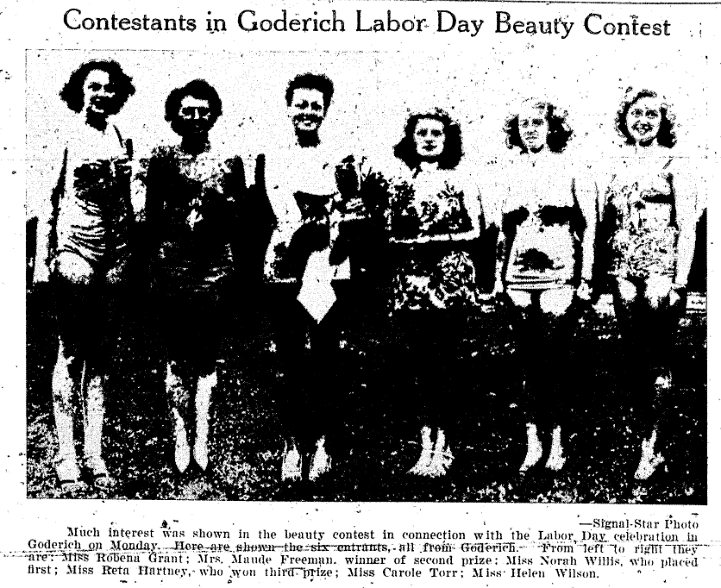
That morning, a parade was held, starting at Victoria Park and ending at the Square. The procession included many different community members, including labour unions, local businesses, bands, and the fire department. Goderich Bluewater Band, dressed as clowns, was one of the participating groups in the parade. Afterwards various contests took place; boys and girls races were held, as well as hurdle jumping, tug-of-war, a softball tournament and a beauty contest. There was also a speech by Col. Lambert, padre of the Christie Street Hospital in Toronto. He spoke to the crowd of his pride and gratefulness towards the soldiers of World War One and World War Two, but also to the working men and women who produced the firearms, minesweepers, parachutes, and other supplies needed for the war effort. The day was deemed a great success in the Goderich Signal-Star, with congratulations in order for the organizers, the local Trades and Labour Council.

What are your plans for this upcoming Labour Day?

Image from the digitized newspaper collection showing the contestants in the Goderich Labour Day Beauty Contest

The Goderich Signal-Star, 1946-09-05

School Style

School Style

By Robyn Weishar, Programs and Marketing Assistant

Back-to-school season is upon us! It can be an exciting time for many, and less exciting for those who favour warm weather and the freedom of summer. The very best part of going back to school for many is buying new supplies and new clothes! September is full of opportunities to start off on a new foot – or better yet, a new sole. Taking a glimpse back to the past, courtesy of the Museum’s extensive collection, we can observe some of the fashions students from Huron County were rocking back in their day. 

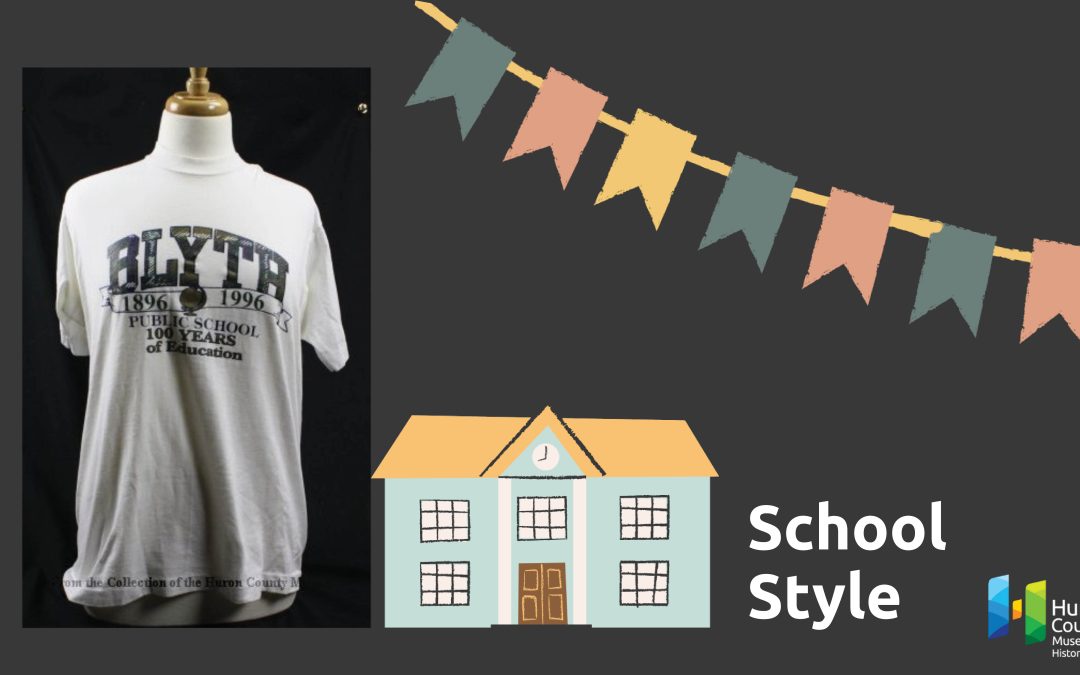
The above t-shirt is a commemorative clothing item to honour Blyth Public School’s “100 Years of Education.” This white cotton and polyester Fruit of the Loom t-shirt displays “Blyth” across the chest in blue, green, and white plaid. Below the emblem is a meridian with a globe in the centre, separating the years the school had been in operation: 1896-1996. (Object ID: 2018.0050.003)

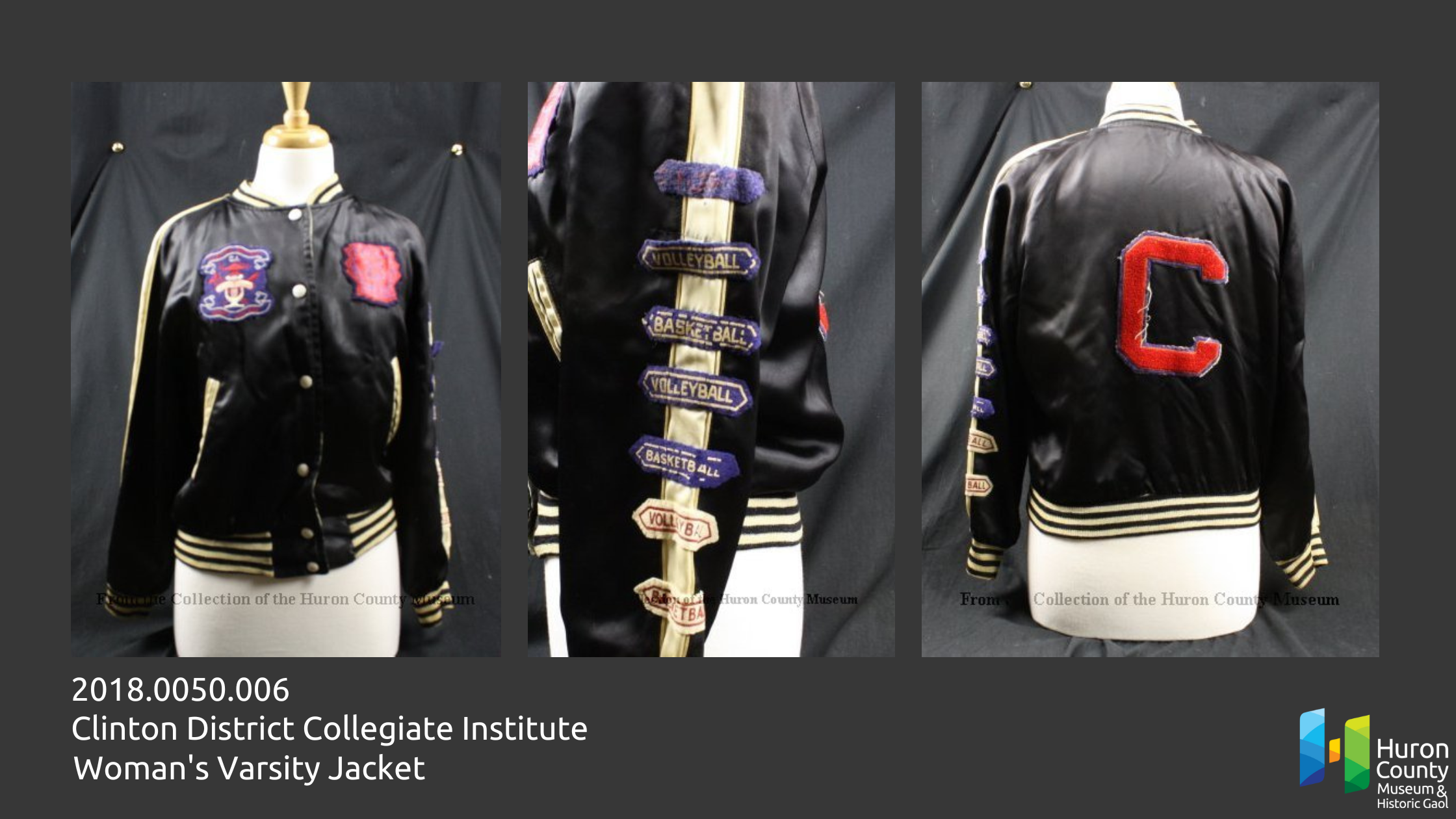
Three images showing different views of a Clinton District Collegiate women's varsity jacket from 1956

Shown above is a woman’s varsity jacket from Clinton District Collegiate Institute circa 1956-57. The jacket features the extracurricular activities the student would have participated in. Adorned on the left arm are seven patches with the respective activities. The first patch is believed to have said “music” prior to its deterioration. Following from top to bottom, the activities are; music, volleyball, and basketball, with volleyball and basketball alternating for the remainder of the patches with the final two being red and white as opposed to blue and white. (Object ID: 2018.0050.006)

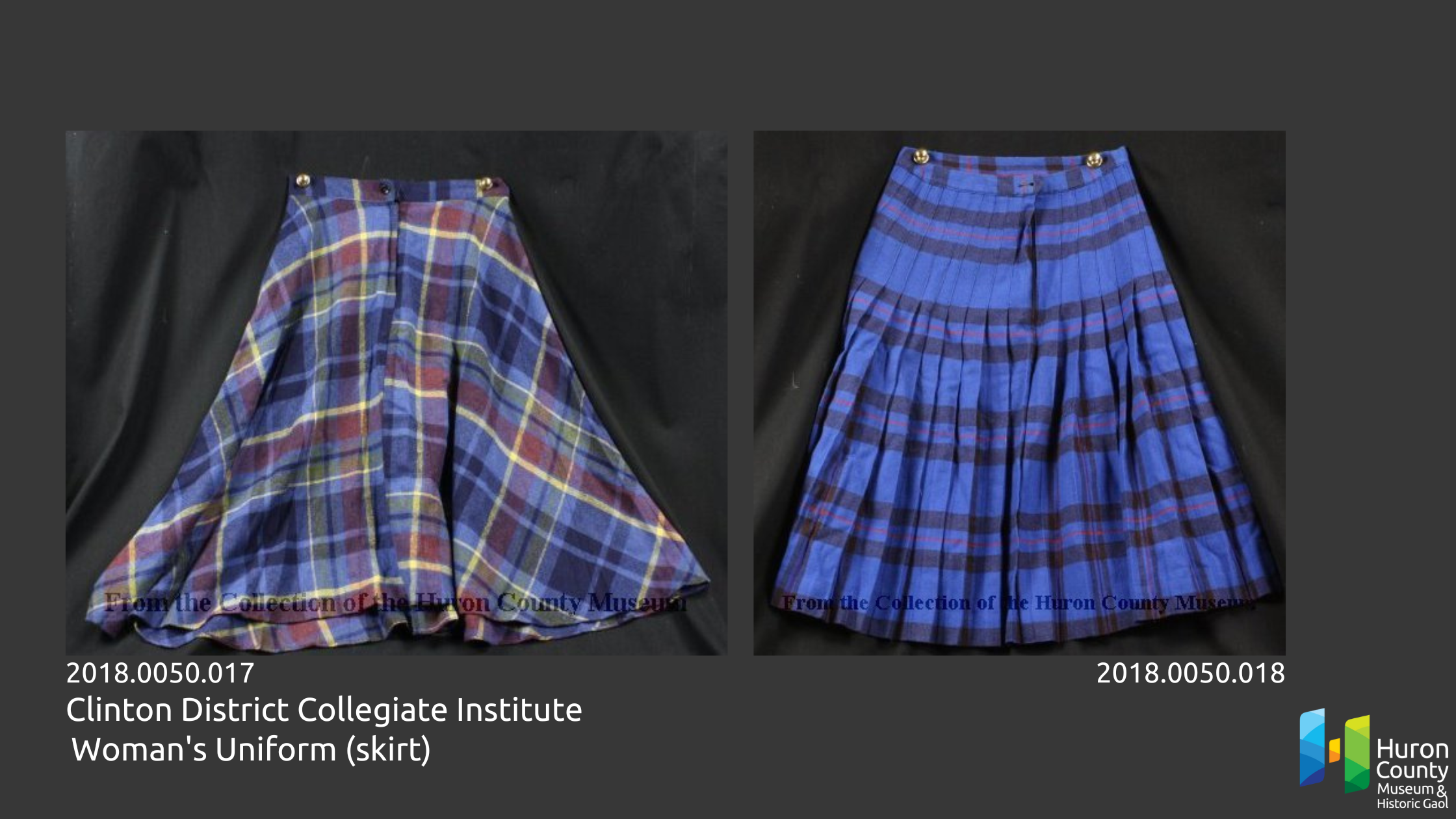
Image of two wool tartan skirts from the 1950s

The same student from the Clinton high school also donated her wool tartan skirts that were a part of a uniform. Though we do not have any blouses in our possession that would have gone with them, it may be assumed that a neutral coloured button-up blouse would have been paired. (Object IDs: 2018.0050.017 & 2018.0050.018)

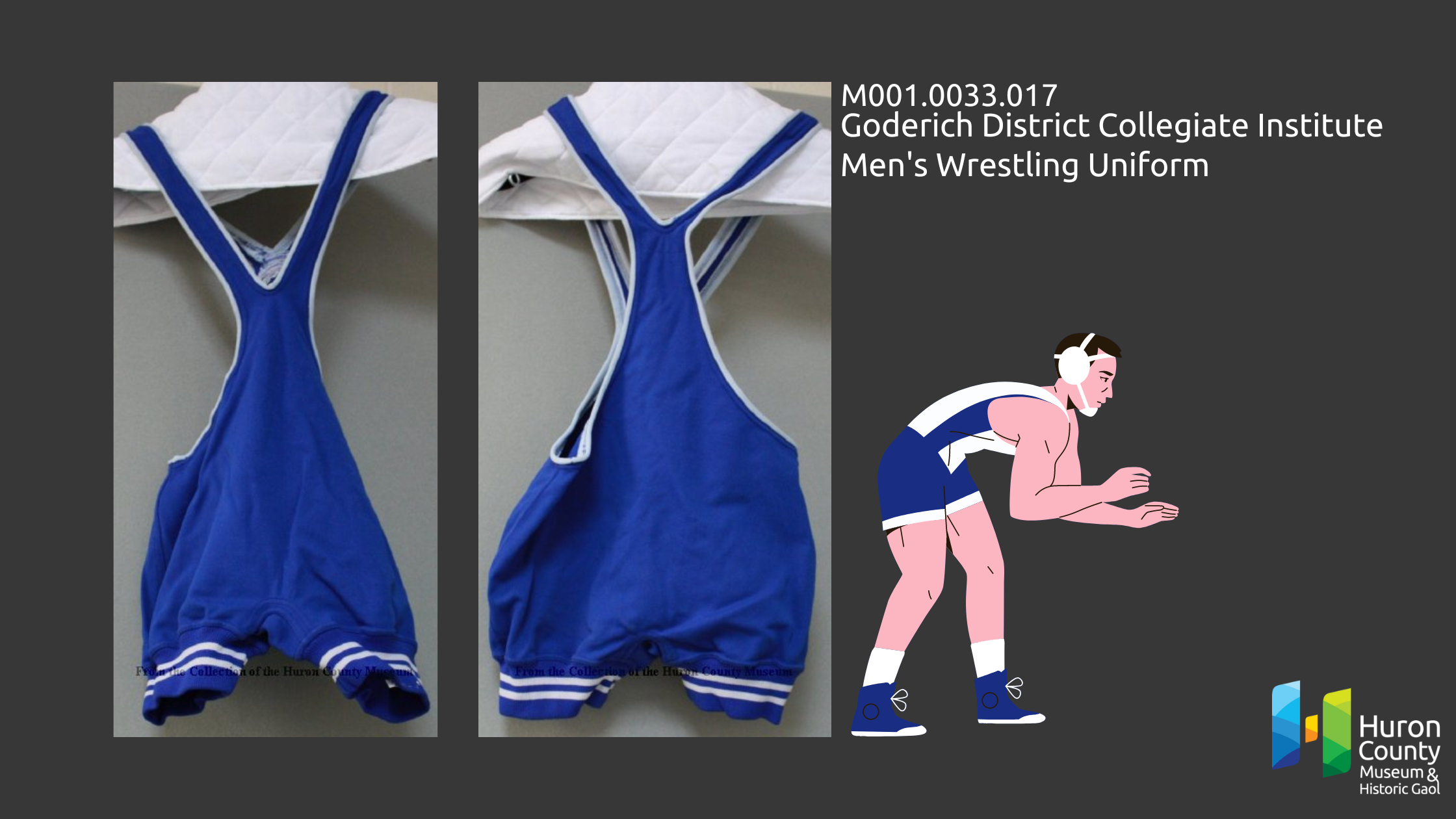
Two images of a Goderich District Collegiate Institute wrestling uniform with an illustration of a wrestler

For many athletes, a uniform is often what can set you and your opponents apart, whether it’s on the field, on the rink, or wherever else the sport takes place. One uniform that has stayed relatively the same over the years is that of wrestling. Shown above is wrestling attire belonging to a past member of the Goderich District Collegiate Institute’s wrestling team. The material used is nylon, however, overtime the elasticity has become stiff. The bright blue base of the uniform is complimented by white striping that outlines the edges of the garment. The date for this piece is not available. (Object ID: M001.0033.017)

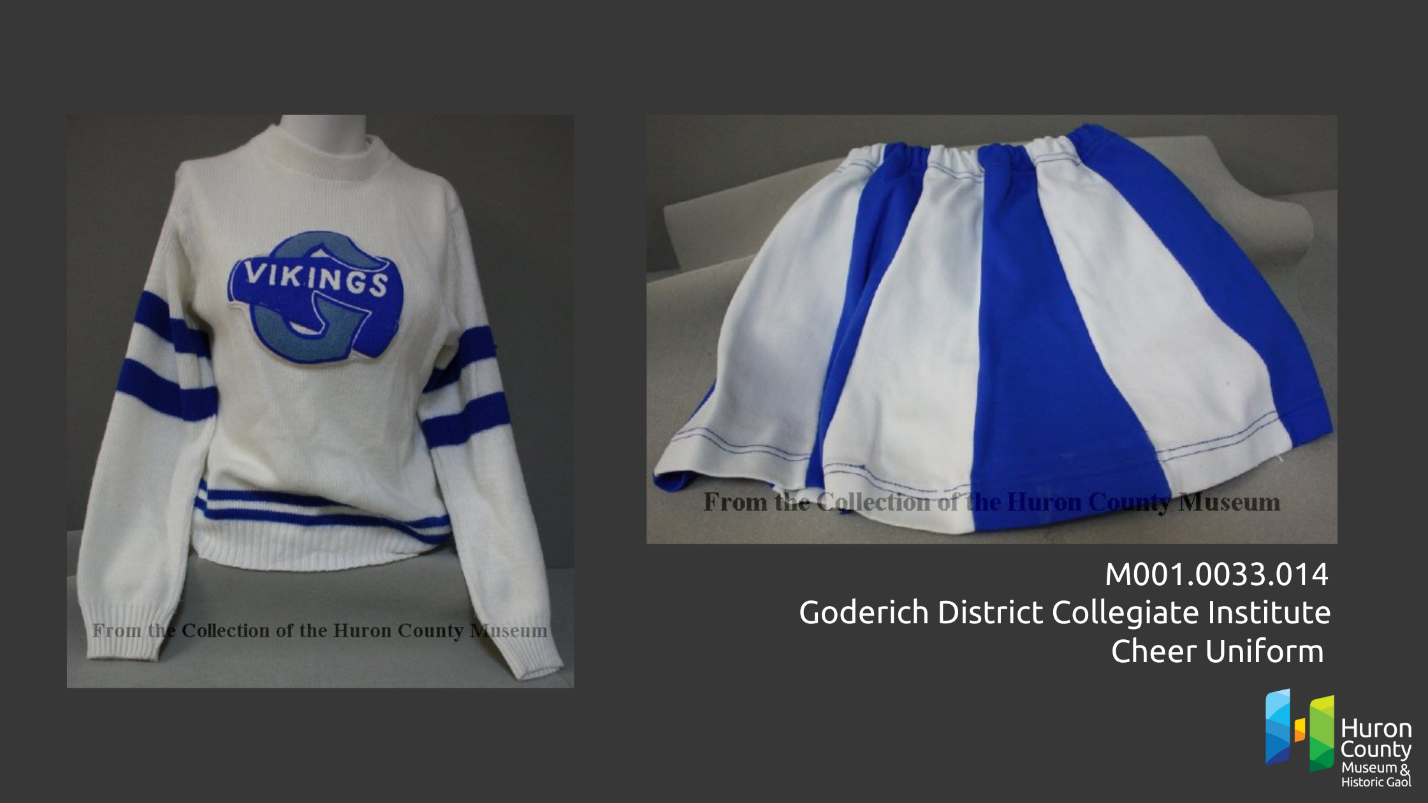
Two images of a top and skirt from a Goderich District Collegiate Institute cheerleader uniform

Uniforms are not just a way to distinguish members of the team, they’re also a great way to show off school pride! Goderich District Collegiate Institute students displayed their school spirit in a number of ways, although one particular style embodied exactly what it meant to have school pride – the cheerleading uniform. The skirt alternates blue and white paneling, with blue stitching appearing on the top and bottom hems. The top of the uniform is a white knitted sweater with blue accenting and the Viking crest. There is not a specific date for this uniform but it was likely used within the timeframe of the 1950s and 1960s. (Object ID: M001.0033.014)

It is always interesting to examine the past through various lenses and we are fortunate enough at the Huron County Museum to have a collection of student fashions spanning a number of decades. Take inspiration from these past uniforms of Huron County students when doing this year’s back-to-school shopping.

What fashions will you be rocking this school year?

Henderson Collection – Lawn bowling

Henderson Collection – Lawn bowling

Brooklyn Wright, Huron County Museum assistant, is working on the Henderson Photographic Collection this summer and highlighting some of the stories and images from the collection. Gordon Henderson was a Goderich-based photographer who produced black-and white photos using a variety of mediums, such as negatives, glass-plate negatives, and cellulose nitrate film. The collection housed at the Huron County Museum and contains more than 10,000 negatives and photographs taken by Mr. Henderson from the 1930s – 1970s. Included in the collection are class pictures, summer camp pictures, wedding pictures, advertising campaigns, pictures of local events, buildings, businesses, and much more.

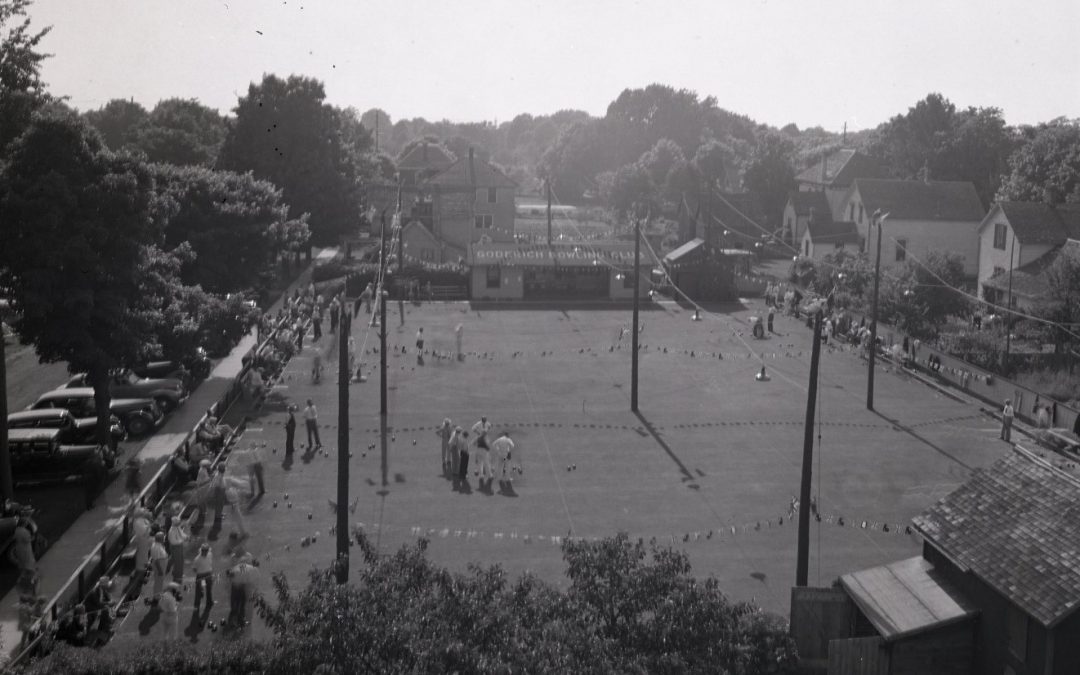
Have you ever gone bowling outdoors? The above image is part of the Henderson collection and shows a tournament held by the Goderich Lawn Bowling Club at the green on Picton Street. The Goderich Bowling Club, which was in full swing in this 1946 image, was active for well over 100 years before closing in 2014.

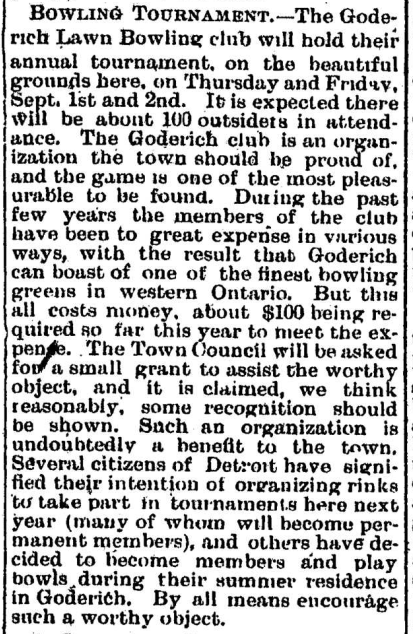
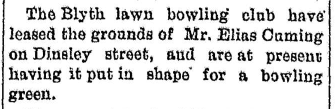
Lawn Bowling was a popular pastime in Huron County, and in addition to the Goderich club, both Clinton and Seaforth had lawn bowling clubs established before the turn of the 20th century. The Clinton Lawn Bowling Club, which opened in 1892, is celebrating its 130th year this season. Other towns were soon to follow suit, with Wingham gaining approval from the town council to start a club in 1901, and the Blyth Bowling Club leasing grounds on Dinsley Street to create a green in 1906.

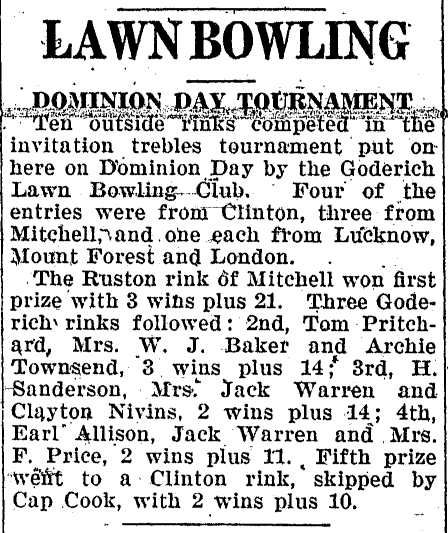
The Goderich Lawn Bowling Club hosted several events throughout its history, including annual tournaments and special events like the Dominion Day Tournament hosted the same year this photo was taken. During World War One, the club passed a motion allowing free access to the greens for all returning soldiers. The usual annual rate at that time was $5.

For more information about the history of lawn bowling in Huron County, including specific dates, players, and results of tournaments, check out the Digitized Newspaper Collection!  

Sources

The Goderich Signal-Star, 1946-07-04

The Goderich Star, 1898-08-26

The Wingham Advance-Times, 1906-05-24