New to the Collection: Civil War Letters

New to the Collection: Civil War Letters

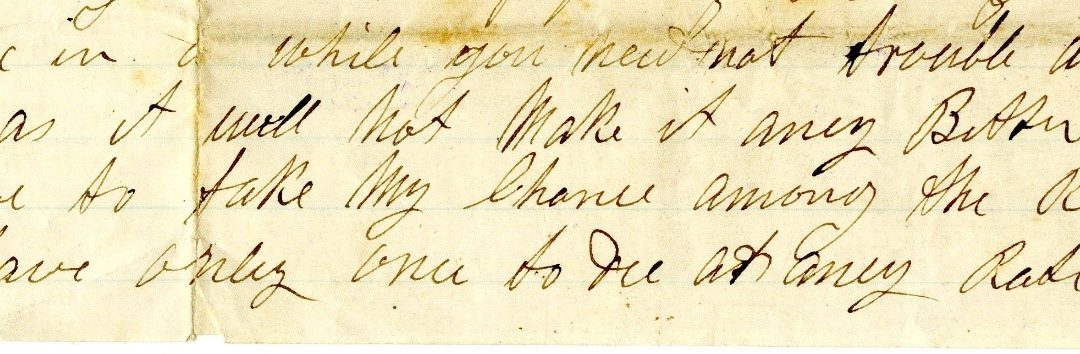
“I shall have to take my chance amongst the rest. I have only once to die at any rate.” – excerpt from a letter written by Joseph Hodskinson, March 29, 1862

The American Civil War doesn’t usually come to mind when thinking about Huron County history, but a recent donation to the Huron County Archives reveals the devastating impact the war had on a Brussels family.

Joseph Hodskinson immigrated to Canada from Scotland around 1851 with his wife Margaret and daughter Celina. The family settled in the Brussels area where Joseph worked as a farmer before he joined the Civil War. It remains unknown why Joseph chose to leave his family in Canada to join the fight in America, but what is known is he would never return home.

The American Civil War was fought between the Union (the North) and the Confederacy (the South – formed by states that had seceded) from April 12, 1861 – May 26, 1865. According to Wikipedia, “the central cause of the war was the dispute over whether slavery would be permitted to expand into the western territories, leading to more slave states, or be prevented from doing so, which was widely believed would place slavery on a course of ultimate extinction.” 
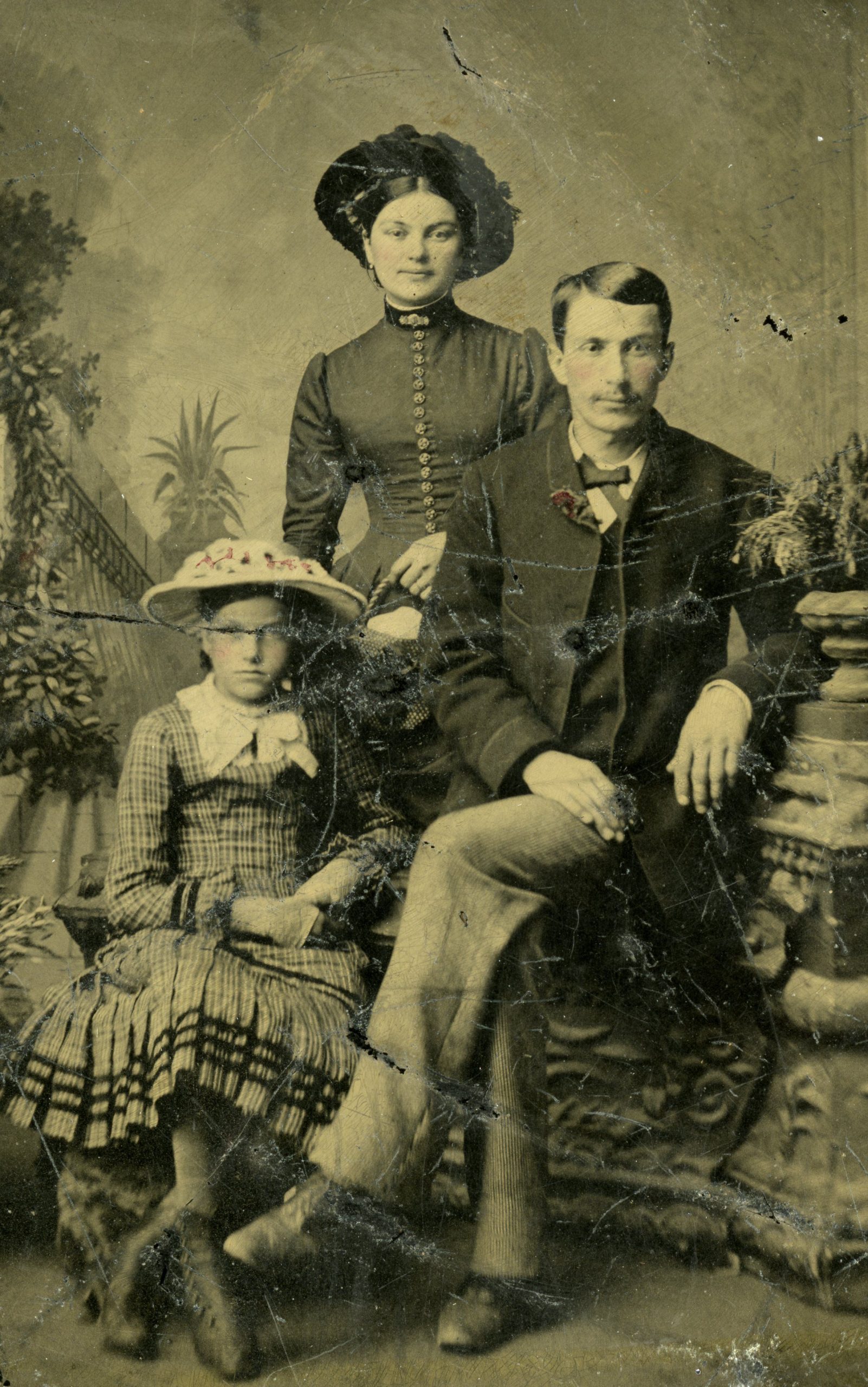
Historic image taken in a portrait studio of Joseph Hodskinson, his wife Margaret and young daughter Celina.
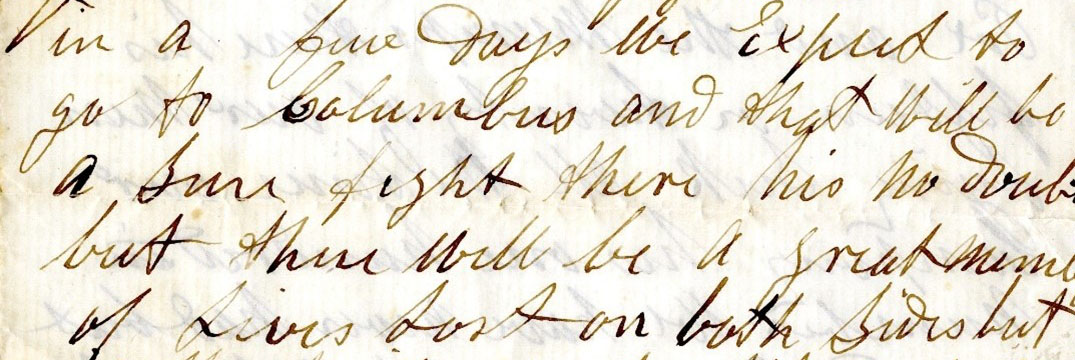
Photo of a section of an historic letter written from the American Civil War

“We expect to go to Columbus and that will be a sure fight. There is no doubt but there will be a great number of lives lost on both sides.” – excerpt of a letter written by Hodskinson on Jan. 24, 1862

Between 1862 and 1863, Joseph wrote several letters home to Margaret and Celina, describing the horrors of war. In the first winter of the war, in January 1862, he shares the great deal of sickness that hit the soldiers, including measles, small pox and mumps. In a letter home on March 1862, he describes three days of fighting at the Battle of Fort Donelson and noted that “It is the providence of the Lord that I am amongst those that was saved on the 13th Feb….the morning after the battle the field was a fearful sight. You might almost walk on dead bodies for a long distance.” A letter home on June 12, 1862, reveals that “We only have about 300 men remaining out of 1000 since I joined the army.”
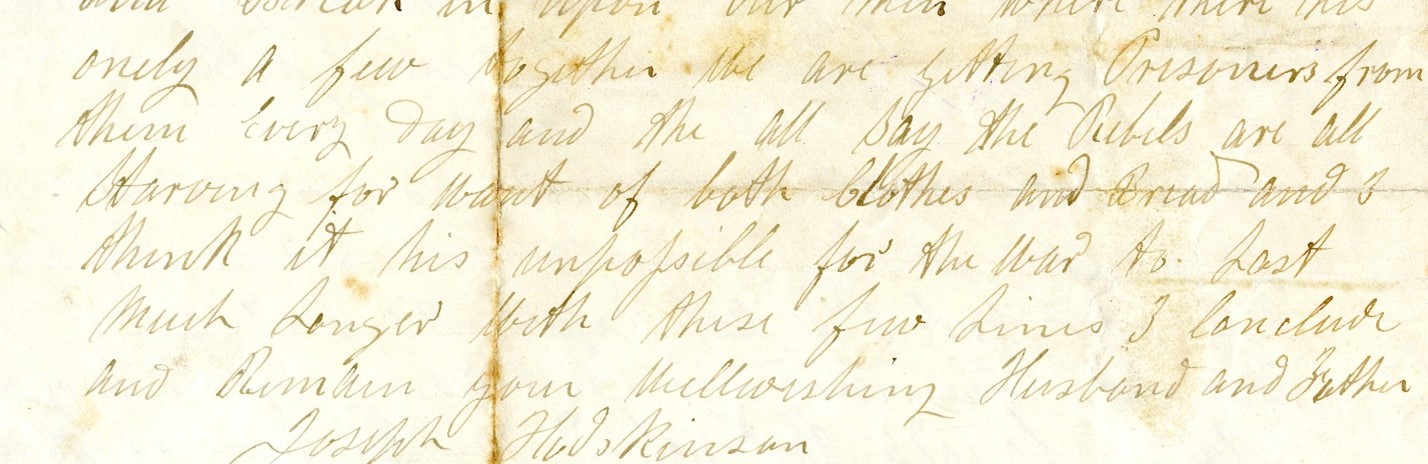
Photo of a section of an historic letter written from the American Civil War

We are getting prisoners from them every day and they all say the Rebels are all starving for want of both clothes and bread and I think it is impossible for the war to last much longer.” – excerpt from a letter dated Jan. 2, 1863

The war would continue for two more years, but Joseph would not see the end of the war, nor would he make his way home to his family in Brussels. He died later that year.
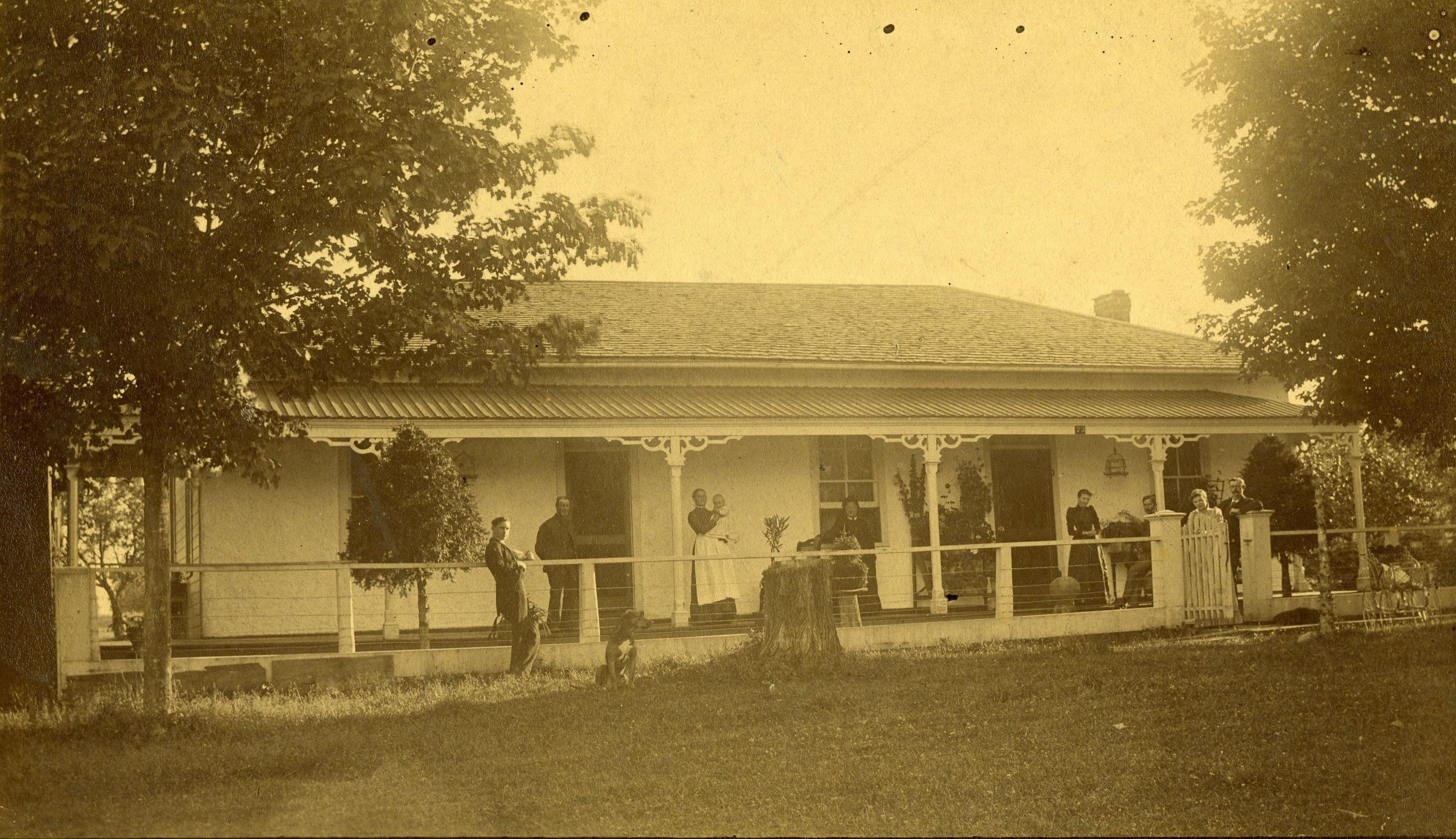
Historic image of the Ballatyne home on the bank of the Maitland River. There are a number of people standing on a wide front porch.

After Joseph’s death, Margaret and Celina remained in the Brussels area. Celina married Thomas Ballantyne in the fall of 1862 and the couple made their home on the bank of the Maitland River in the spring of 1863. The home is pictured above with the family sitting on the front porch around 1892. Shown here, from left to right, are Jack Ballantyne, Thomas Ballantyne, Celina Ballantyne holding Bill Strachan, Margaret Hodskinson, Annie and Alex Strachan, and Jenny and Joe Ballantyne.

Celina and Thomas had a daughter named Annie who married Alexander Strachan in Brussels in 1889. The couple owned a dry goods store in the village. 

The Huron County Museum would like to thank Ann Scott and Marion MacVannel for their recent donation of these letters and family photographs to the archival collection. Joseph was Ann’s three times great grandfather. If you are interested in learning more about our research services or making a donation to our collection, contact the Huron County Archives to arrange an appointment.
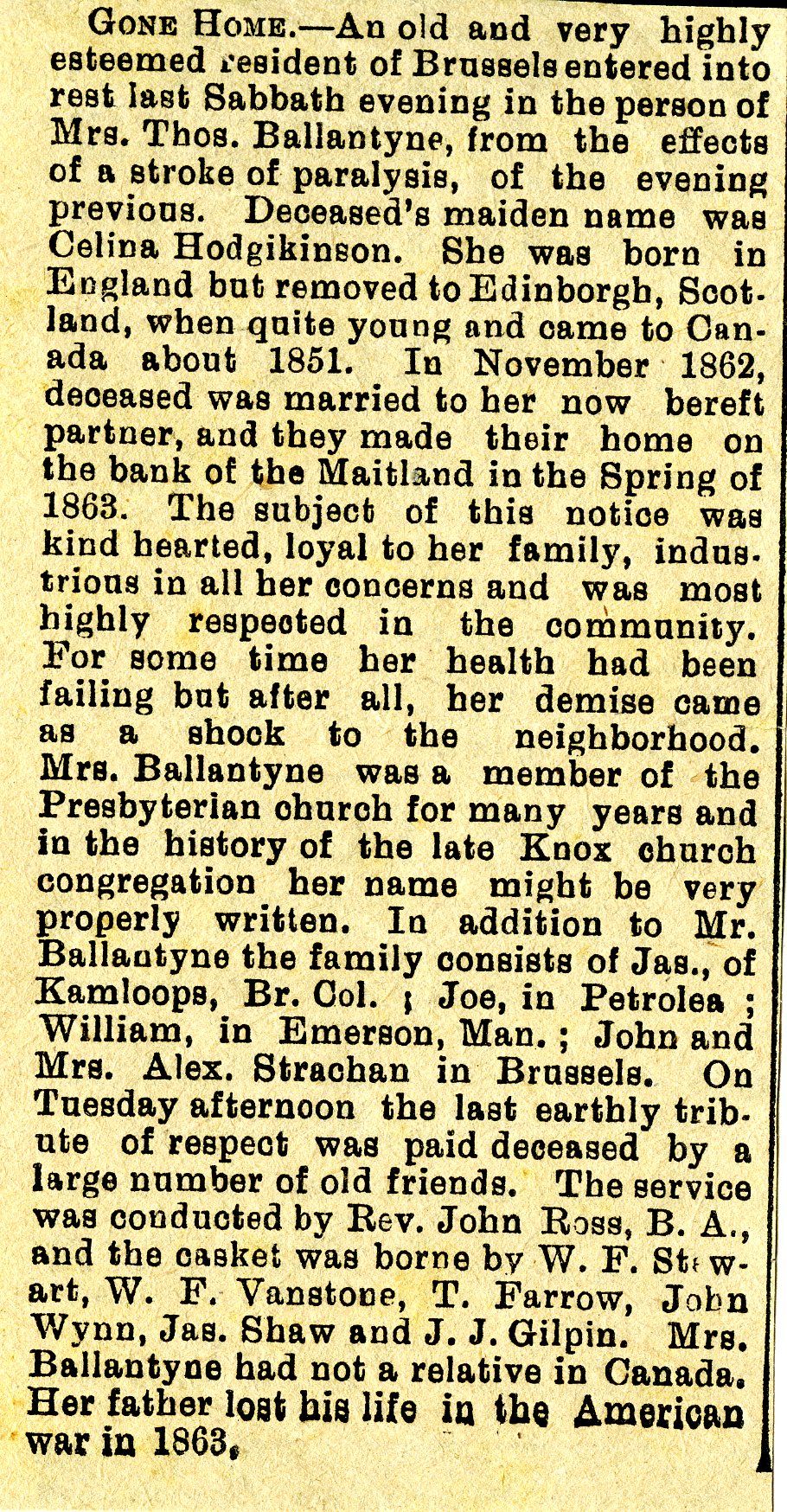
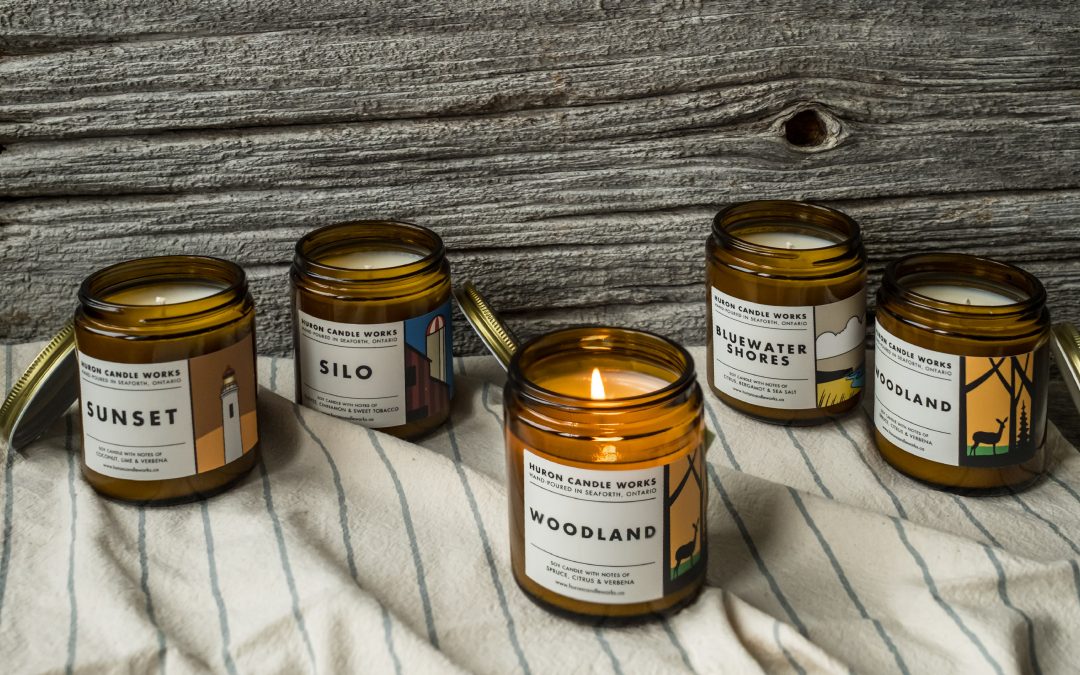
Image of a newspaper clipping of Celina Ballantyne's obituary
Meet the Maker: Huron Candle Works

Meet the Maker: Huron Candle Works

The Huron County Museum Gift Shop is adding to its selection of products made by area artists and makers and we are pleased to now carry the work of Huron Candle Works. Hand-poured in Seaforth, the candles celebrate the elements of Huron County: Bluewater Shores, Silo, Sunset, and Woodland. If you would like to pick up some of these candles, the Gift Shop is open during regular Museum hours and does not require admission to come in to shop and to support local! Learn more about Huron Candle Works below!

Who are you and what do you make?

We are Huron Candle Works, a home-based, two-person adventure to create and make beautifully-scented candles in Seaforth, ON. We make candles with fine fragrances that take time to curate and make for all who love them. We are all about unique, small and local.

How did you start making candles?

We have always loved the smell of gently layered fragrances that speak to us and our love of nature and storytelling. This has been a journey of inspiration and discovery. Knowing we would be moving to Huron County, our path began last year in our small downtown Toronto condo with non-stop street cars adding a background sound track to our scent tests! We spent months curating fragrances for our first release of four candles. We had friends and family do many blind smell tests to help fine-tune our choices.

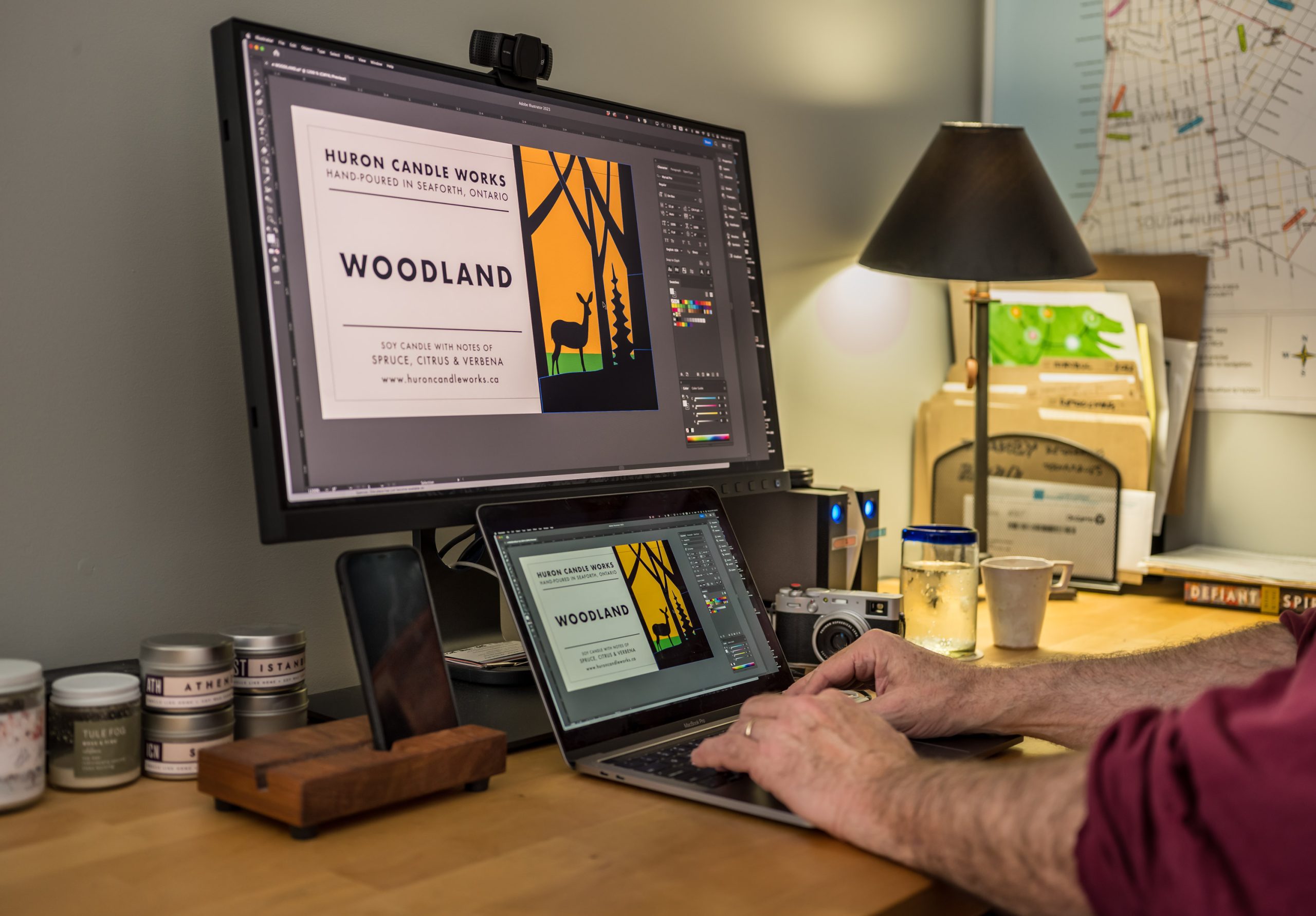
Photo of a computer screen with hands at a keyboard creating candle label design.

How would you describe your work?

Our candles are 100 per cent natural, clean-burning and sustainable soy wax. They burn long and clean and help to cleanse and gently scent the air in any room environment. They come in two sizes, 8 ounce clear or amber glass jars with screw-on metal lids, as well as four ounce metal tins, perfect for travel, study and a companion with a good book!

We both have artistic backgrounds. One of is a photographer and graphic designer, so the visual appearance of the labels is important from an aesthetic point of view and as a visual connection to elements found in Huron County. Our design aesthetic is like the land, simple, strong and memorable.

What inspires you?

For several years, we had been exploring Huron County as the place we would eventually move. Now here, we love the life, the people, the landscape, farming communities, and yes, even the winters!

The elements found throughout the county such as sunsets, golden fields, Lake Huron, woodlands, and rivers are just a few of the inspirations that we try to offer through scent. The sense of smell is such a visceral part of us all – and is our greatest challenge when trying to connect a representative scent with a physical thing. It has been fun to try to bottle the inspiration we feel into every candle with whom people can relate.

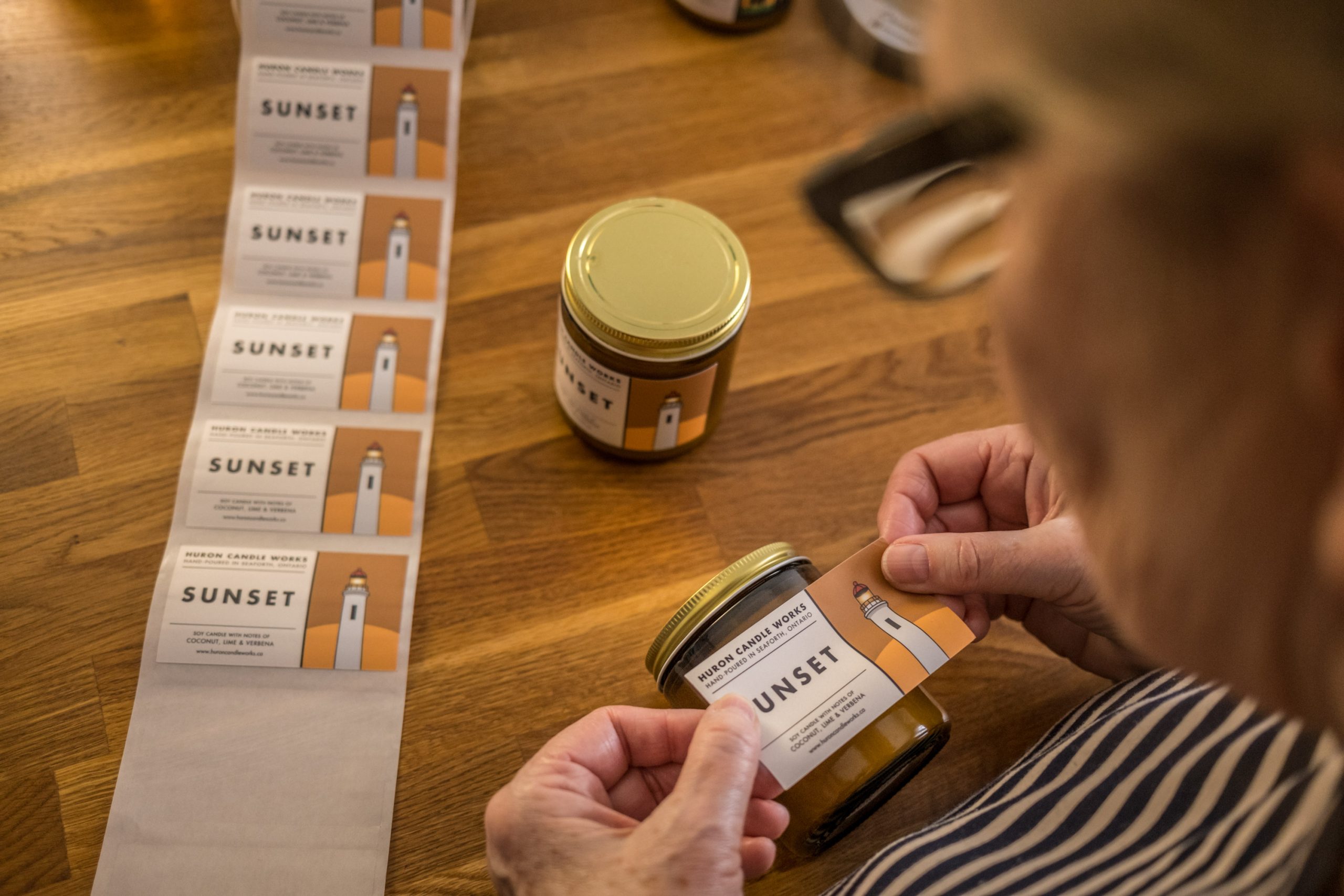
Photo of a roll of stickers and hands applying sticker label to candle jar

What do you like most about being a maker?

We are new to being makers and it has not been without a huge learning-curve and mistakes along the way! But as we see and hear from people who enjoy our candles, we still feel humbled and honoured. We are still at the early part of our journey and still feel it is a bit of a dream. A dream that brings us a smile and great satisfaction that we are connecting the land and people of the County to all who light up one of our Huron candles.

If someone likes your work and wants to see more, where can they find you (besides the Museum Gift Shop, of course!)?

We keep a small footprint. We are hyper local and want to keep it that way. We keep our social network tight, and can be found on Instagram at, @huroncandleworks where we have a fun and casual feed that is friendly, inclusive and interactive. We can also be found at our online store website, www.huroncandleworks.ca. As we slowly introduce new candles, checking in on the website will keep people current on what is being created.

In addition to a few local businesses, we can also be found at local community markets through the year. If you are out visiting a community market, please drop by and say, Hello!

Industry Gallery Redevelopment

Industry Gallery Redevelopment

As the Huron County Museum prepares to undergo renovations to its Industry Gallery, Senior Curator Elizabeth French-Gibson shares details about this exciting new project.

When you are visiting the Huron County Museum over the coming months, you will certainly see some changes to our exhibit spaces. We are excited about these changes and we hope you will be too! While we always strive to present a variety of Huron County stories in our temporary exhibit galleries each year, these changes are coming to our permanent exhibit spaces.

Beginning in 2019, the Museum’s Strategic Plan included a strategic direction to create dynamic exhibits that generate interest and attention. Hopefully you have already noticed some additions and changes to text panels, further graphics, updated colours, and display changes.

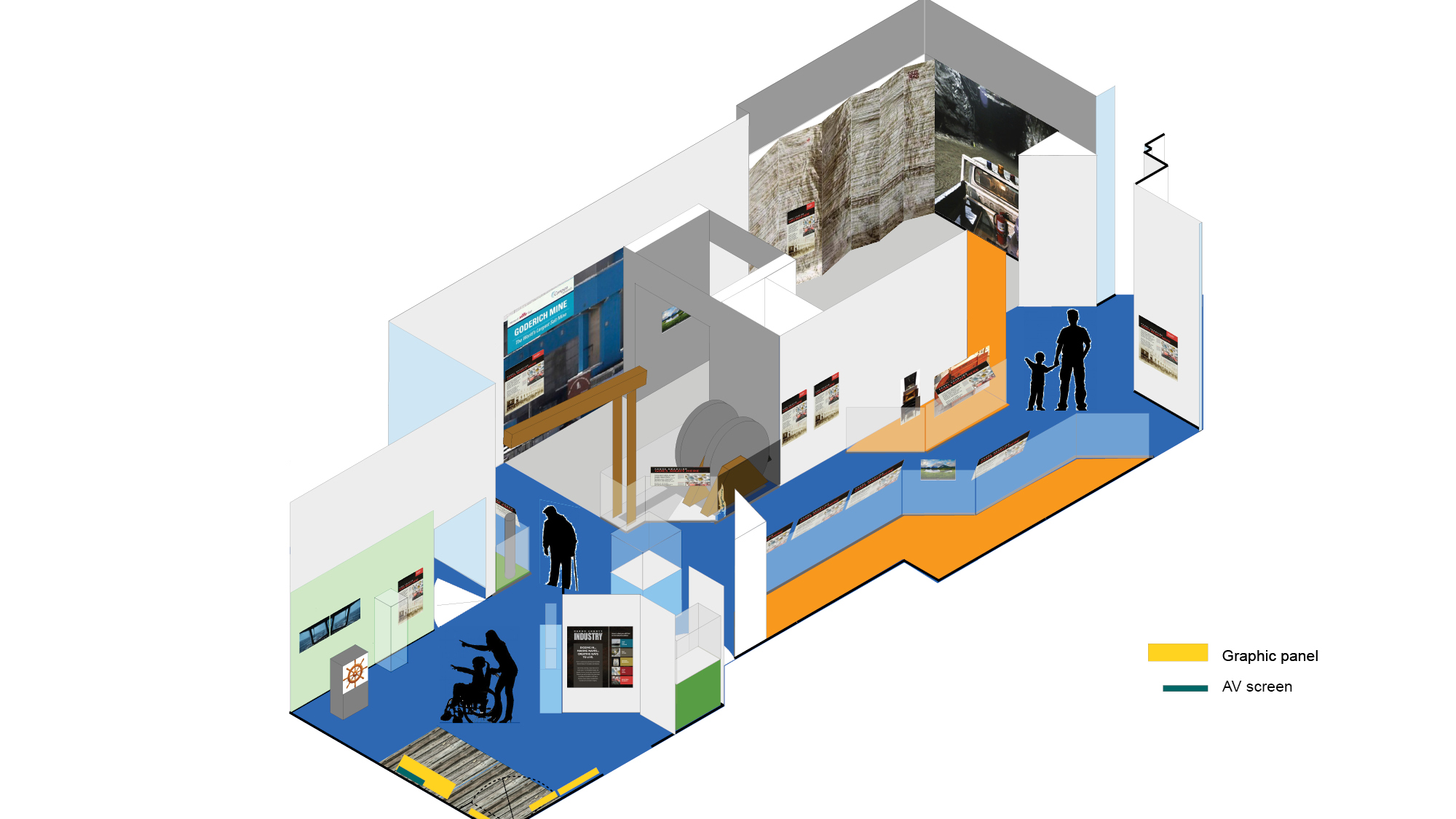
Throughout 2021 and 2022, staff have been in the process of planning a major redevelopment of one of our exhibition spaces, the Northwest/Industry Gallery, to better reflect the stories of industry from across Huron County.  This exhibit space is currently located on the upper floor of the old schoolhouse portion of the Museum. Some of you may remember that this is the exhibit gallery that was focused primarily on salt mining and the Great Storm of 1913.  It’s time for new and more diverse stories to be included in the space.

And these changes have started! The Northwest Gallery is currently closed to the public and is in the process of being fully dismantled. Construction work will begin in early December with the walls, ceiling, electrical, and flooring being completely refurbished. This work is expected to be completed in early 2023. Museum staff will then carry out the installation of a full new exhibit focusing on industries from across Huron County.

The “Big Idea” for the exhibit gallery will be “Places and Processes of Transformation!” The exhibit will focus on how the dynamic nature of industry has transformed Huron County and its people in many ways.

The final proposed interpretive plan for the proposed Industry Exhibit Gallery includes the following topics with thematic areas including clusters of 3D and 2D spaces, exhibits and activity sections:

  • The Lake and Harbour Industries – depicting human and environmental changes brought on by industry at Lake Huron.
  • Salt – depicting impact of Salt Industries in Huron County.
  • Natural Resources, Food and Drink – representing different relationships between Huron Industry and the natural environment
  • Industrial Diversity – showcasing the number and different types of industry in Huron County.
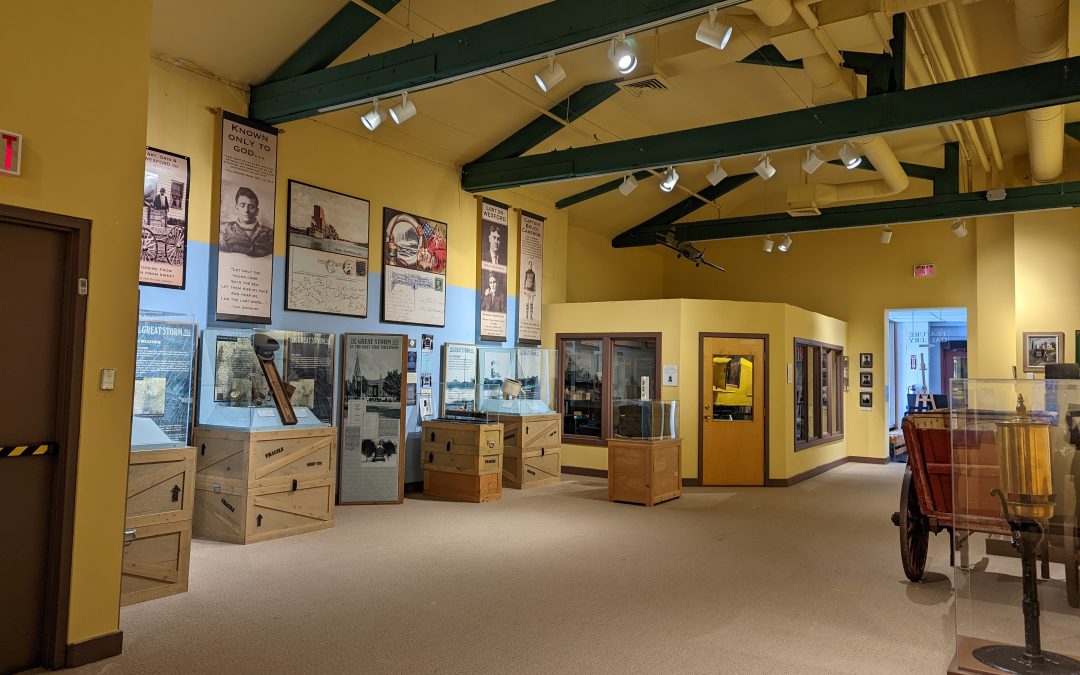
Illustration of the proposed redesign of the Museum's Industry Gallery

We have lots of planning left to do but the space design is complete, as shown in the illustration above, and work continues on the details that will go into the overall interpretive plan. So many industries, artifacts and photographs to choose from!

Artifacts and stories that were removed from the Gallery during the first stages of this redevelopment will be on display in the gallery across the hall upstairs to give visitors a final look at these stories over the coming months. During this time, staff will also be working on plans for rehousing these artifacts. They have had their time on display and will be moved to our main storage area for a well-deserved rest. While these stories were enjoyed by many visitors in the past, the new exhibit will provide a more diverse, county-wide story of our industrial history.

If you would like to be part of this exciting redevelopment and diversification, we encourage you to donate to this project. Your support will be allocated to our exhibitions and will enable the Museum to tell these expanded stories through a variety of interpretive methods in this space. Completing this project is an exciting next step for the Museum.

Donations can be made at the Huron County Museum during our regular business hours by cash, cheque or credit card.   More information on sponsorship opportunities can be found on the Museum’s website.  This Giving Tuesday, Nov. 29, the Museum’s Senior Curator would be happy to show you the work so far and how your donation will help.

Double, Double Toil and Trouble: The Tale of Maggie Pollock and the Huron County Witch Trial

Double, Double Toil and Trouble: The Tale of Maggie Pollock and the Huron County Witch Trial

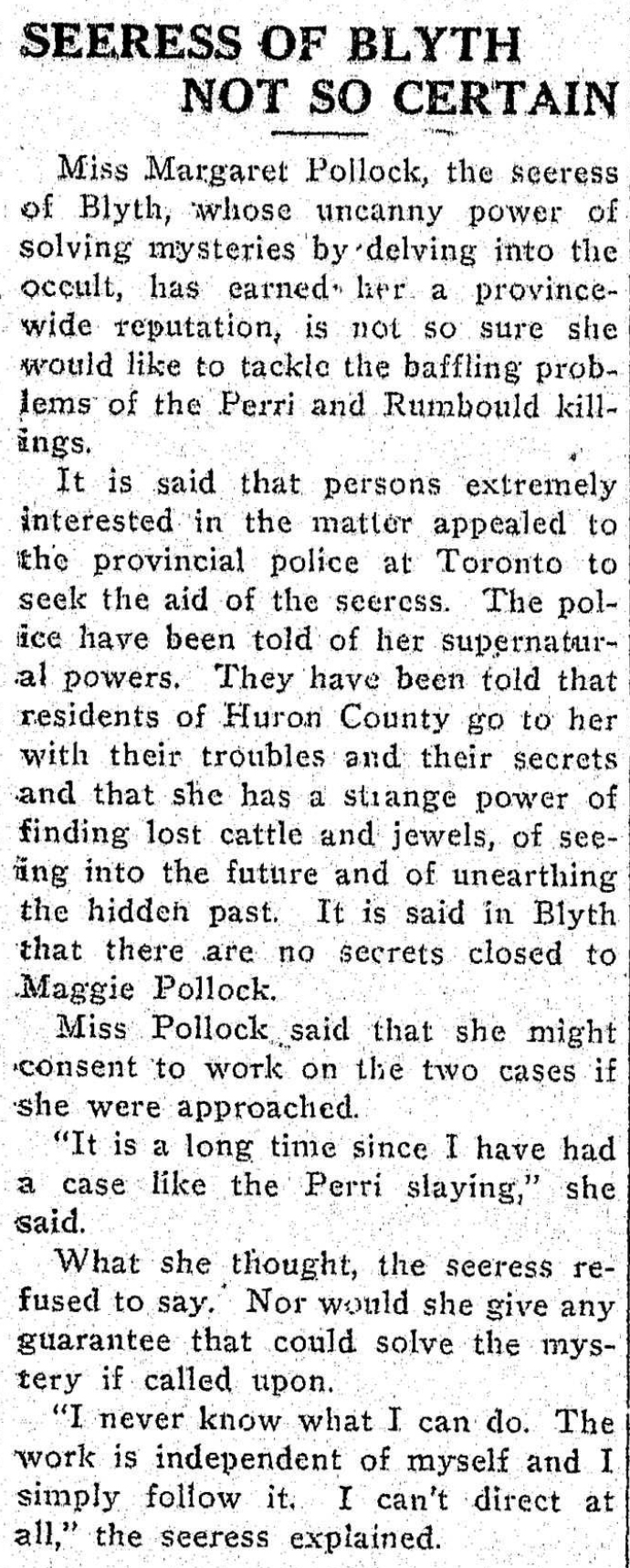
In time for Halloween, students Kyra Lewis & Mary Murdoch share the history of witches in North America and Huron County’s own witchcraft case: “the weirdest [case] that has come before the Ontario Courts in many years”.

Today, popular culture often suggests that the legal pursuit of witches was something that began and ended with the infamous Salem Witch Trials in Salem, MA, in the 1690s. However, that was far from the beginning or end of the story. In fact, Huron County had its own witchcraft case as recently as the 1920s: the case of Maggie Pollock of Morris Township.

Background: The History of Witchcraft Law in North America

The history of prosecuting witchcraft as a crime has a long history in North America preceding Miss Pollock’s case. Historic Haudenosaunee society viewed witchcraft as very serious offence. Because witchcraft could endanger anyone in the community, people took accusations of witchcraft very seriously. Practicing witchcraft also went against the core principles of unity and peace found in “The Great Law”. The Great Law refers to the guiding principles of life in the Haudenosaunee Confederacy. The first step was to determine if the person was guilty. If the Council found the accused to be guilty, the punishment was death. If the accused promised to change their ways, they would always be forgiven and spared.

By the time Europeans began settling in North America, widespread panic surrounding witchcraft had decreased in Europe. However, in the 13 American colonies, settlers were still paranoid about the possibility of witches living in their midst. Not Salem, but Windsor, CT, was actually the first place in the US where an execution of a person charged with witchcraft took place. In total, Connecticut accused 46 people of witchcraft between 1647 and 1697. Of the 46 accused, 11 were executed. There were also witchcraft trials in Virginia between 1626 and 1730, but no executions.

Massachusetts’ Salem Witch Trials began in June of 1692. Residents of Salem accused 150 men and women of witchcraft. Over a period of 11 months, the residents of Salem killed 19 people by hanging and tortured one man to death. Of the 20 people killed, six were men. Five more people would die in prison before the end of the trials.

In Canada, pretending to practice witchcraft was illegal until 2018 under section 365 of the Criminal Code of Canada. This section read:

Pretending to practise witchcraft, etc.

365 Every one who fraudulently

  • (a) pretends to exercise or to use any kind of witchcraft, sorcery, enchantment or conjuration,
  • (b) undertakes, for a consideration, to tell fortunes, or
  • (c) pretends from his skill in or knowledge of an occult or crafty science to discover where or in what manner anything that is supposed to have been stolen or lost may be found, is guilty of an offence punishable on summary conviction.

Note that the crime in question was pretending to practice witchcraft. The Criminal Code of Canada did not mention the practice of witchcraft itself. The law was implemented in 1892 and was based off of a previous 1735 British Statute which condemned “fraudulent” claims of occult powers. The statute attempted to remove earlier religious rhetoric prior to the 18th century, which presumed and enforced that witches were indeed a very justifiable and dangerous threat to humanity. Instead, the 1735 Statute suggested that claiming occult powers was inherently fraudulent, thus upholding the notion that witches were not real. Logistically it was intended to limit fraud, and preying on the naive and desperate, but much like earlier witchcraft laws it could be used to prosecute vulnerable or marginalized women.

Although not commonly used in the 20th and 21st centuries, the law against pretending to practice witchcraft remained in effect until 2018.  Maggie Pollock, a Huron County woman, was charged under the law in 1919 in “the weirdest [case] that has come before the Ontario Courts in many years”.

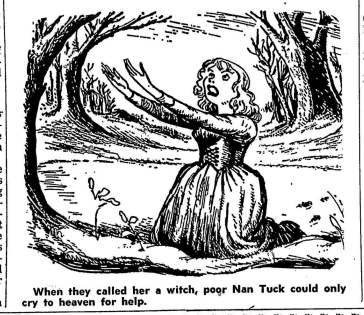
Illustration of a young woman being accused of witchcraft

The Huron Expositor, 1963

Newspaper clipping from WIngham Advance

The Wingham Advance, 1920-04-29

newspaper clipping from Wingham Advance Times

Wingham Advance Times, 1930-09-11

Morris Township’s Gifted Lady

Margaret Pollock, more often referred to as “Maggie” or “Miss Pollock”, was a woman born in Huron County on May 11, 1879.

She was of Irish descent and lived and worked on her brother’s farm as a housekeeper in Morris Township, near Blyth. Maggie claimed to be “possessed with a peculiar occult gift” that she used on several occasions to help neighbors locate lost or stolen items and property. Following a peculiar court case, Maggie’s “gifts” would earn her sudden celebrity not only in Huron County, but across the country.

From a young age, Maggie knew that she had a special gift. At 16, she realized that she had an ability to see and to hear things that others could not. While visiting a friend’s house in Boston, Maggie realized that she had seen the house and an elderly woman who lived there before. Around the turn of the century, Maggie experienced visions of two strange machines. The first Maggie thought was a chariot of angels at first glance, but then she noticed that the machine had wheels. It shocked Maggie when she saw the machine in the sky land right beside her and saw regular people disembark from it. Maggie saw the second strange machine when she was driving down the road and turned around to see a machine that ran like a train without a track behind her. This vision puzzled Maggie. It wasn’t until many years later that Maggie realized that she had seen an airplane and a car many years before the modern version of either was invented. While some might label Maggie’s gift as relating to the occult, Maggie claimed that her abilities were completely natural, without witchcraft or trickery involved. When Maggie’s neighbours came to her for help, Maggie never guaranteed results, but rather promised to do the best that she could to help them. When questioned about the things she saw, Maggie claimed that she had no powers of her own, but that her visions and insights were a God-given gift which she felt compelled to share when they came to her.

Huron County’s Witchcraft Case

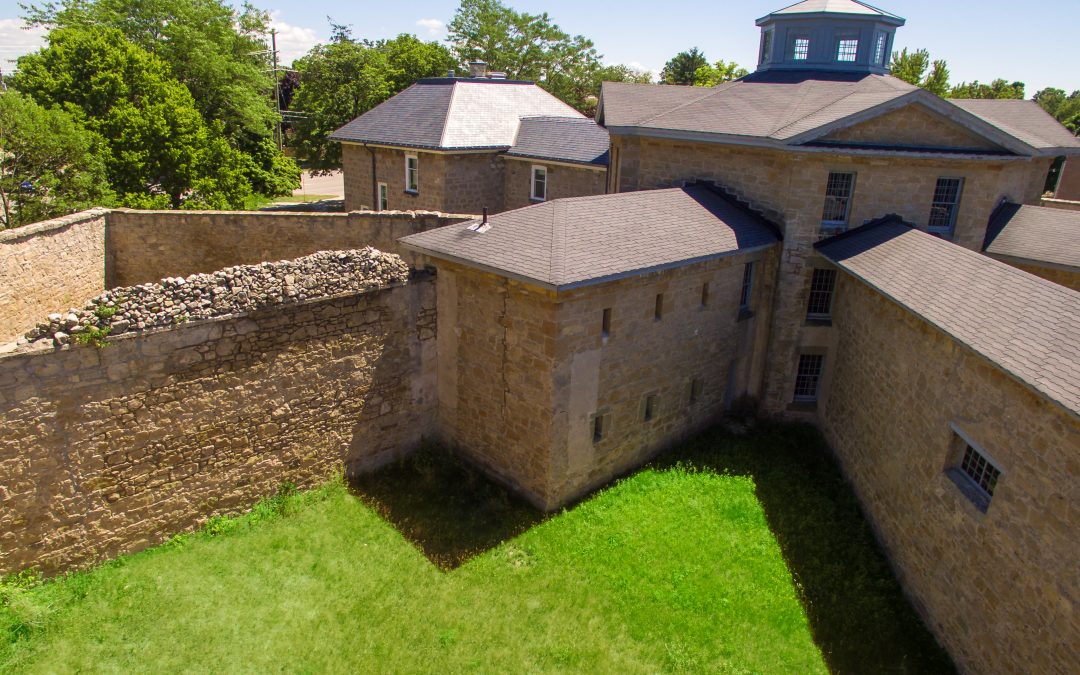
On June 30, 1919, Maggie was brought to the Huron County Gaol after she was accused of “Telling Fortunes,” which was illegal under section 365 of the Canadian Criminal Code. In Goderich, a farmer had testified that he had given Maggie 50 cents for a séance. He did this in an attempt to locate oats and grain which someone had stolen from him. It wasn’t revealed in court whether Maggie’s premonition actually resulted in recovering the oats and grain, but she saw a vision of the thief and was able to describe his horse. She appeared before Goderich Judge Henry Dickson, and the court decided that; “she did unlawfully pretend from her skill and knowledge in an occult and crafty science to discover when and in what manner certain goods and chattels, to wit, certain grain and oats, supposed to have been stolen from one, John Lienhardt.”

On Oct. 13, 1920, Maggie’s case was appealed to Osgoode Hall, one of the oldest and most distinguished legal associations in the country, by her counsel, Mr. C. Garrow. Osgoode upheld Judge Dickson’s conviction. According to the contemporary account of the Clinton News Record, “The judge admonished her that the practice must cease and has bound her over in bonds of $200 from herself and from her brother to refrain from pretensions of occult power and from practicing the occult science.” The court gave Maggie permission to offer her opinion about lost items, but not to claim that she had any special powers.

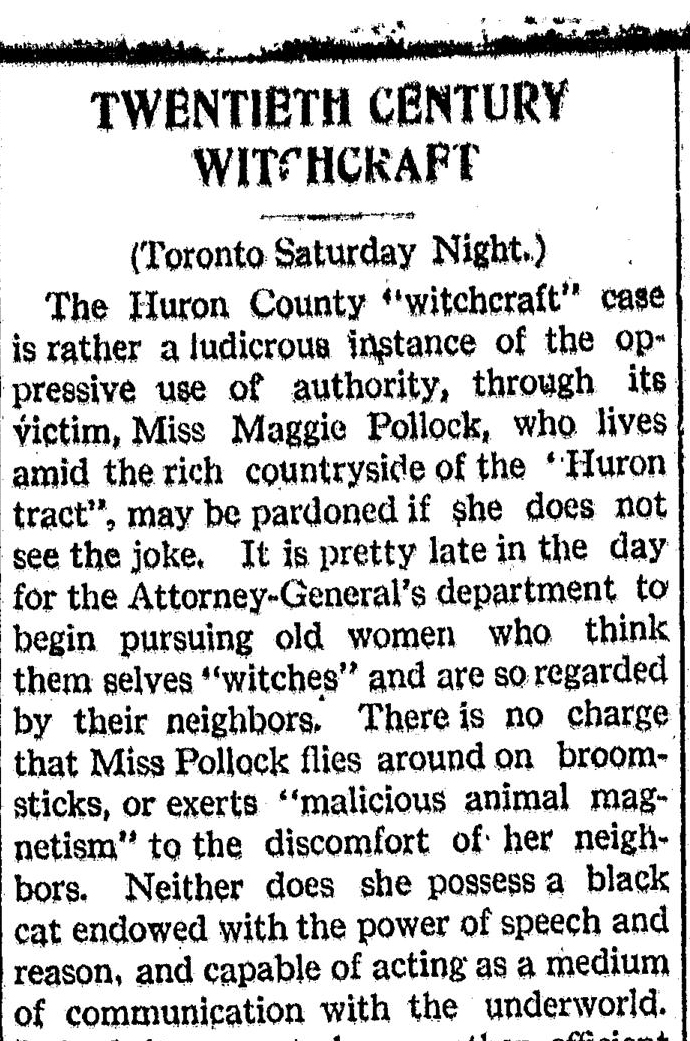
Members of the local community continued to support Maggie during her conviction and appeal, and her supporters were upset with her treatment in the legal system. The Toronto Saturday Night chastised the judges and those involved with the case for, “harrying a poor old woman.” A neighbour, Mrs. Sinclair, also testified at Osgoode Hall to corroborate the effectiveness of Maggie’s “gifts”. She stated that Maggie had successfully helped her to find a lost diamond ring. Maggie had claimed to do this by speaking with Sinclair’s deceased mother, and told Mrs. Sinclair that she had thrown out the ring with some dust. Maggie added that Mrs. Sinclair would find the ring when the snow melted. Despite this advice, Mrs. Sinclair and her husband decided to melt the snow. When this did not work, she sent a letter to Maggie detailing what she had done, and that she had not found the ring. Maggie replied that Mrs. Sinclair needed to be patient. Sure enough, the snow thawed weeks later, and the ring was there.

The Legend of Miss Maggie Pollock 

Considering a continued public fascination with witchcraft and the occult, it is no surprise that Maggie’s legal battle gained widespread recognition in 1920. It was notable to some that an older woman from Huron County could perform such “miracles,” while others were shocked that she could be accused of something as archaic as witchcraft. The Toronto Daily Star questioned the wisdom of the verdict: “There is a fairly widespread belief in the occult. It is growing. Why not cope with this sort of thing more intelligently than by merely putting the ban of the law upon it?” The same article suggested that rather than legal prosecution, a public test to determine the validity of Maggie’s gifts would be the superior solution: her powers could simply be disproved or verified to harmlessly help with more cases of missing valuables.

A large number of supporters did not doubt Maggie’s abilities. She received many visitors and letters from people as far away as Florida, Texas, Missouri, Nebraska, California and Vancouver. Her skills were also allegedly sought-after on the other side of the law. The police asked her to locate missing bodies of drowned persons several times: including a young boy who had drowned in Wingham and a man who fell through ice in New Hamburg. The Seaforth News reported that Maggie was also paid a visit by High Constable A.J. Wharton of London to discuss the escape of two murderers from London Jail in 1927.  

Maggie Pollock passed away in August of 1931, in her 70th year. The Seaforth News said of her, “[She] has honour in her own country, because her neighbours have always had the upmost faith in her and can relate scores of interesting stories.” She was fondly remembered as, “a well-known and highly respected resident of Morris Township.” Despite the verdict of the witchcraft case, Maggie was able to continue to help others with her gifts as she had wanted. Whether those gifts were real is still something up for debate. One thing is certain, Miss Maggie Pollock was one magical woman, one way or another.

Sources Consulted & Links to Learn More!

2022 Huron County Art Show Winners Announced

2022 Huron County Art Show Winners Announced

The County of Huron and the Huron County Museum are pleased to announce the winners of the 2022 Huron County Art Show:

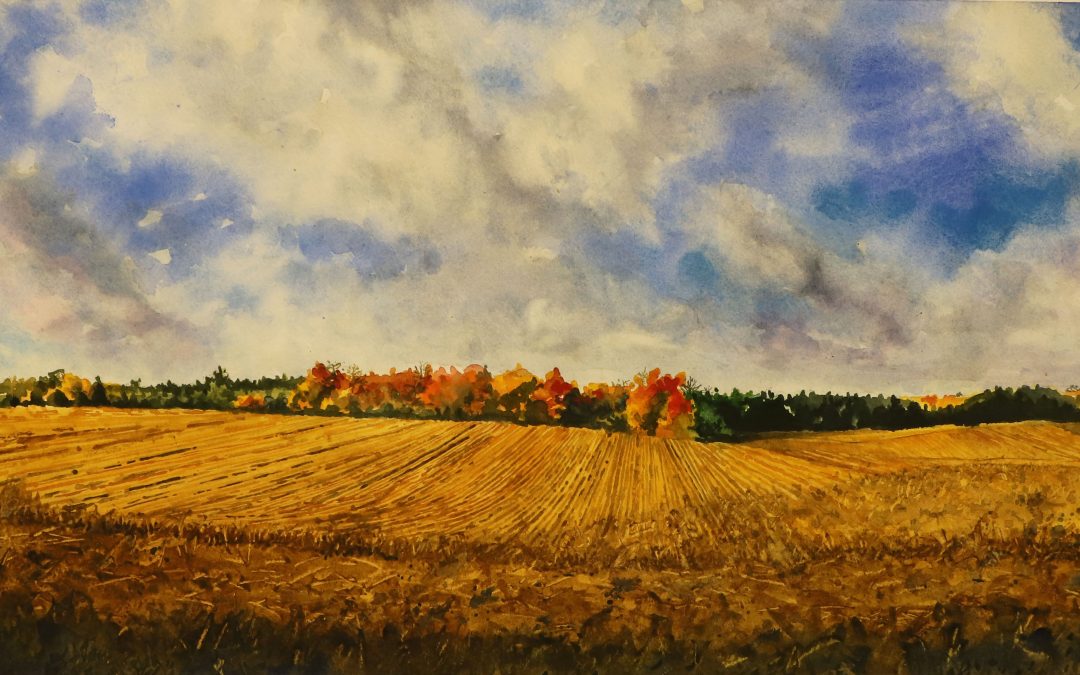
  • 1st prize – Harvest Landscape Huron County, Roman Turczyn
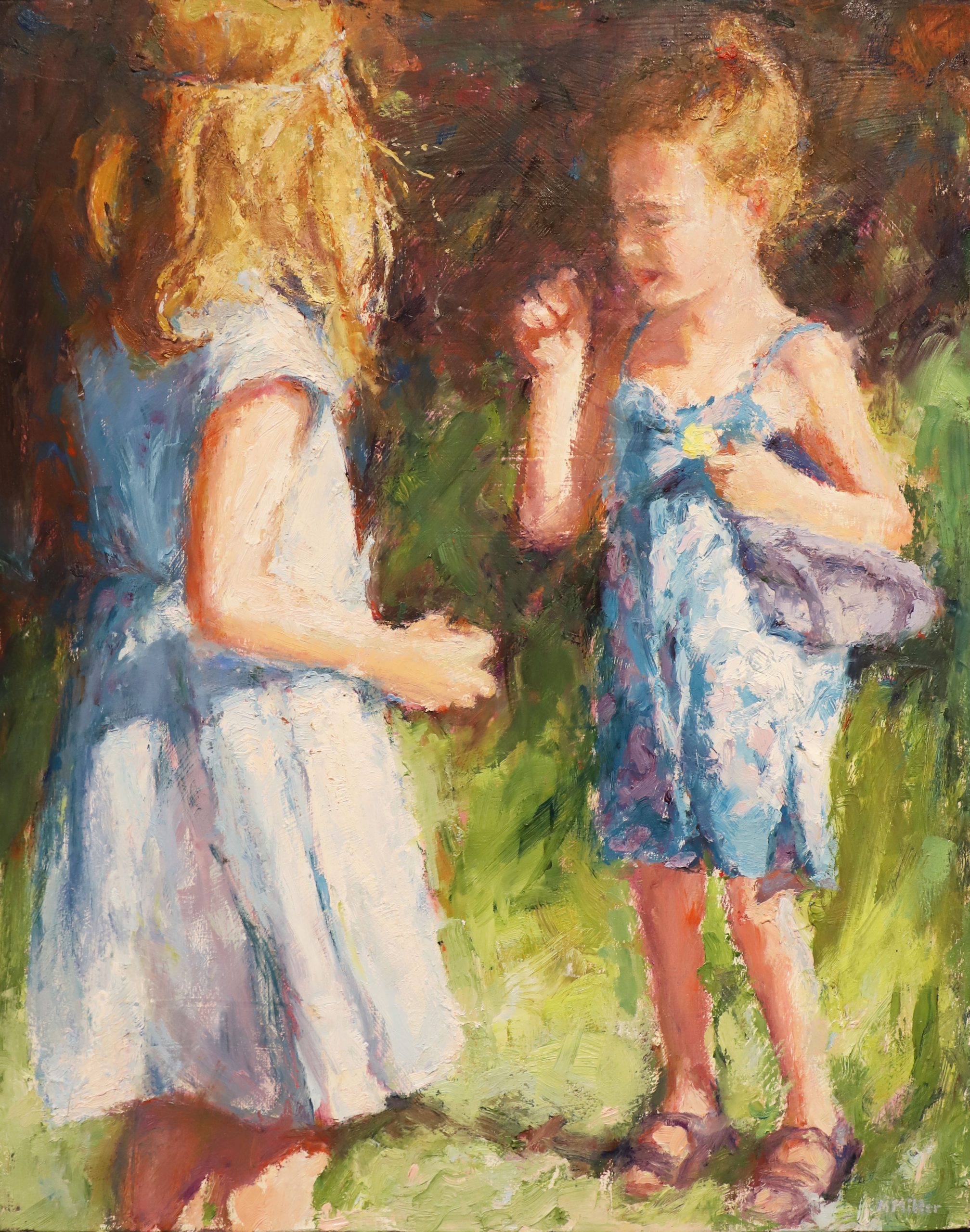
  • 2nd prize – With Wonder, Michele Miller 

Honourable Mentions:

  • Spring on the Maitland – Anita Wood
  • Lucknow Road – Kaaren Batten
  • Memories of Huron – Sharron Rogers
  • razing landscapes #91 – Kelly Stevenson
  • Hop on the Bus, Gus – Jerry McDonnell
  • Untitled – Don MacGillivray

The two winning artworks will become part of the Huron County Art Bank with a purchase award from the County of Huron.  Artworks in the Art Bank remain on display in various County buildings. To date there are 52 artworks that are part of this special collection.


The 20th year for the art show, the exhibit features 31 artworks by artists from across Huron County.  The 2022 Huron County Art Show & Sale is on display at the Huron County Museum in Goderich from Oct. 16 to Dec. 17, 2022.

Visitors to the exhibit are invited to submit their vote for their favourite artwork with a special ballot available at the Museum.

The special exhibit is open to the public during Museum hours Tuesday to Saturday 10 am to 4:30 pm, extended hours Thursday 10 am to 8 pm, and Sunday 1 pm to 4:30 pm.  Regular admission rates apply.  Admission is free to the Museum for members and Huron County Library card holders.