by Sinead Cox | Mar 18, 2020 | Blog, Investigating Huron County History
Beth Knazook, Special Project Coordinator for Huron’s digitized newspaper project reviews the bitter rivalry between Huron’s first newspaper editors. You can search the newspapers yourself for free at https://www.huroncountymuseum.ca/digitized-newspapers/
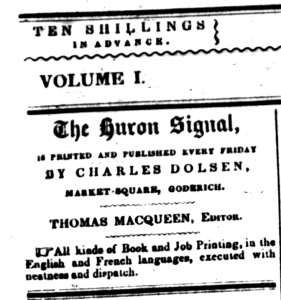 The Signal was the first newspaper printed in Huron County, beginning on February 4, 1848. Published in Goderich by Charles Dolsen, and edited by Thomas Macqueen (or “McQueen”), it promised to deliver “as many Essays and as much knowledge on all subjects of practical importance, as our space and time will reasonably allow,” Huron Signal (February 4, 1848), 2.
Macqueen was born in Ayrshire, Scotland, where he gained some fame as a poet and an accomplished lecturer. He immigrated to Canada and lived with his sister in Renfrew, Ontario, where he worked briefly as editor of The Bathurst Courier (Perth) before moving to Goderich to take up the position of editor for the Huron Signal. Instead of focusing only on local news, Macqueen brought literature, political, and cultural news from afar to the Western frontier of Canada. In its first issue, he ran articles detailing the history of Cortez’s conquest of Mexico, a travel account of Smyrna, and tales of “The Bushman” living in the Australian outback. He covered scientific news as well, re-printing snippets from other papers containing new information about exciting discoveries like electricity. He also included his own poetry, and encouraged others to contribute poems and songs.
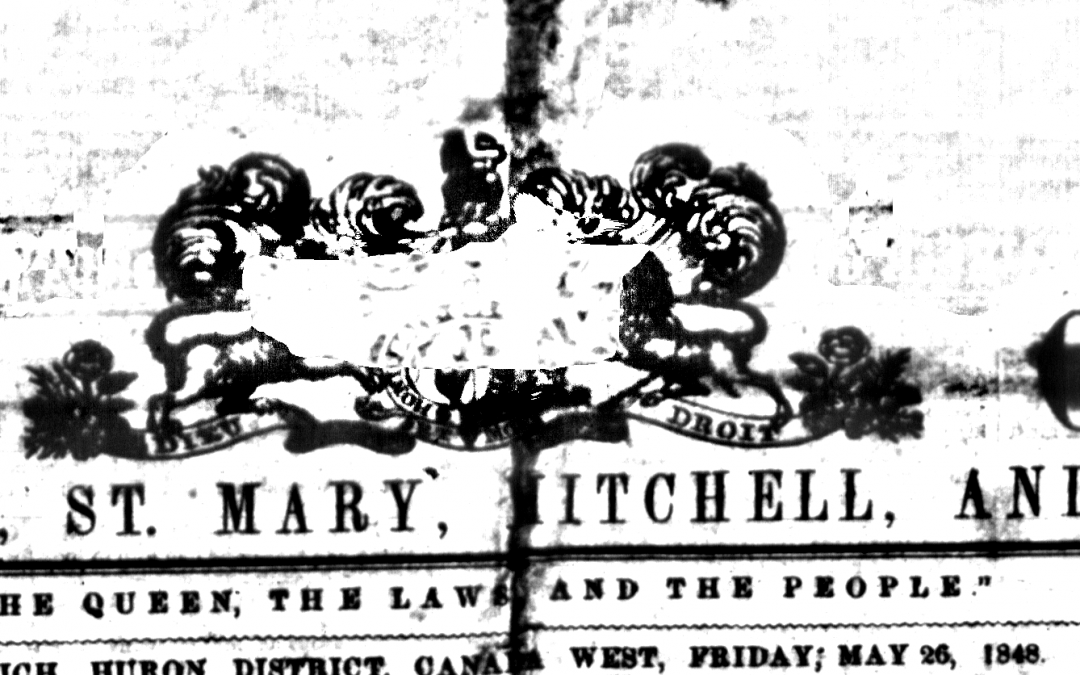
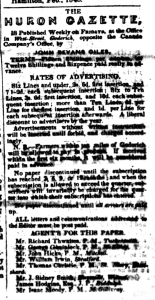 The Huron Gazette began publishing a few weeks later, on February 25, 1848, offering a conservative counterpoint to the Huron Signal’s liberal voice. There are fewer surviving copies of the Gazette from which to piece together the history and contents of the paper, but it seems to have been more practical in its aims. Local advertisements appeared alongside snippets of home and foreign news, dispatches from British Parliament, and editorials – with some entertaining fictional stories thrown in the mix. By late May, the paper had become so popular that editor John Beverley Giles considered either using larger paper sheets or going to a semi-weekly delivery to fit in more content. “We thank our kind supports for the patronage that has demanded from us this alteration, and we think it will evidence to the Province in general the enterprise and intelligence of the Huron Tract,” Huron Gazette (May 26, 1848), 2.
Perhaps a rivalry between the editors of these two papers was inevitable given their political leanings, but Mr. Giles appears to have had a particular talent for provoking the Signal’s Thomas Macqueen. His commentary in the Gazette frequently took the form of very personal attacks, which in turn provoked exasperated and increasingly angry responses in the Signal. Accusations made about the conduct of Mr. Macqueen on the occasion of the annual Agricultural Society’s Show in 1848 prompted several surprised and supportive letters to the editor condemning the malicious gossip in the Gazette.
Thomas Macqueen’s frustration with the Gazette seems to have reached its limit when he declared “We think Mr. Giles is unfortunate in every thing he takes in hand, and still more unfortunate when he tries the pen. His paper will soon be unable to contain his answers to the remonstrances of those he has offended by his impudence. We think he should give it up, —or if not, he should cease to be guided or counselled by those reckless inexperienced characters who are driving him to misery and disgrace for their own vain and selfish purposes, and who lately forced him to insult the respectable community of Goderich under the designation of ‘bare-footed boys and slip-shod girls,’” Huron Signal (May 12, 1849), 2.
Not many issues of the Huron Gazette have survived to explain Mr. Giles’ side of the story, but we do know that in June of 1849, Mr. Macqueen’s predictions about the Gazette’s impending doom were proven right. Mr. Giles abandoned the editorship of the Gazette, although the paper survived a little while longer under editor(s) who seem to have wanted to keep their names hidden. The Huron Signal reported at one point that “nobody is the Editor of it, and nobody will take the responsibility of it. It is not read by 50 men in the District of Huron, and of that fifty, there are not five who attach the slightest credit to any of its statements,” Huron Signal (June 22, 1849), 2. When the Gazette ceased publication in 1849, Mr. Giles left town – but not the newspaper business. He would take up the editorship of the St. Catharines Constitutional, hopefully with better results.

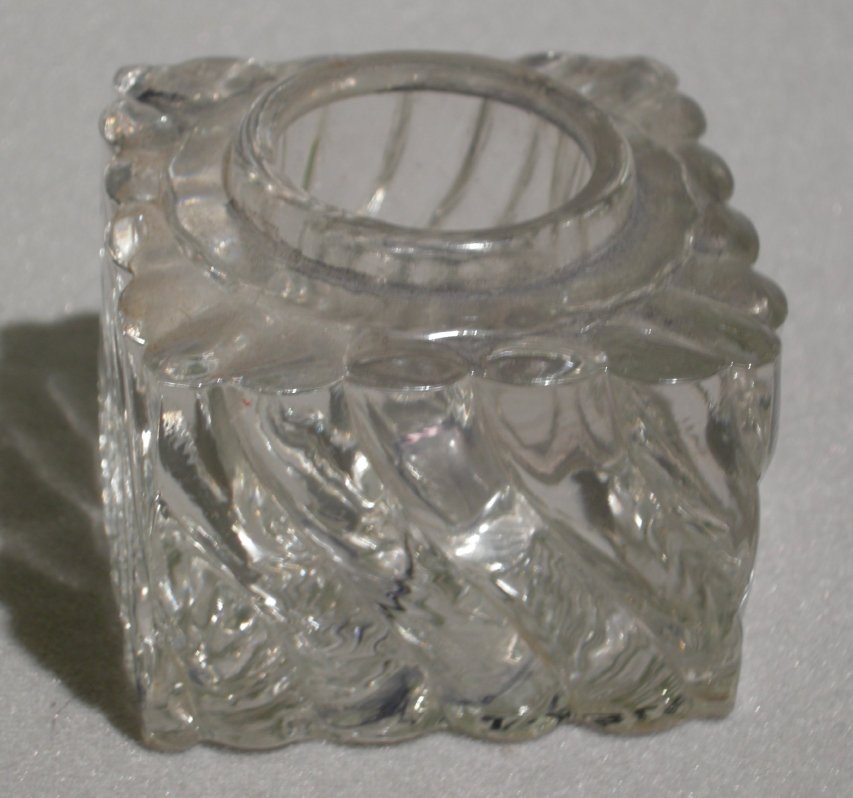
Inkwell used by Thomas McQueen. 1978.10.1. Collection of the Huron County Museum.
Macqueen edited the Signal until his death in 1861 at the age of 57, at which point J.W. Miller took over as editor while the publishing side was managed by Macqueen’s son-in-law, T. J. Moorhouse. The paper was then sold to William T. Cox, who ran it until 1870, and from there it changed hands many more times over the years. The Huron Signal survives today in the form of the Goderich Signal Star. Over the course of the paper’s long history, there has been a lot more (friendly) competition in the Huron County weekly news business.
by Sinead Cox | Oct 20, 2016 | Huron Historic Gaol, Investigating Huron County History
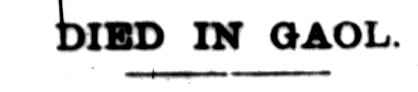
“Is this place haunted?”: it’s one of the most common questions fielded by front desk staff at the Huron Historic Gaol. I’ve never set eyes on a ghost myself, but at least fifty-eight prisoners at the Huron Gaol died during their imprisonment. The jail’s four-cell-block design was intended for short stays—prisoners with multi-year sentences received transfers to larger institutions like Kingston Penitentiary—but for some Huron County inmates, theirs was indeed a death sentence in practice. Whether or not prisoners choose to revisit the grounds as ghosts, the recently launched online repository of Huron County newspapers has made it a little easier to research and shed light on their lives and deaths inside the Huron jail.

The Signal, 1911-6-15, pg 1
Infamously, three men—all under the age of thirty—hanged for murder at the Huron jail in Goderich: William Mahon in 1861, Nicholas Melady in 1869 (Canada’s final public hanging) and Edward Jardine in 1911. Although these are perhaps the best remembered demises at the jail, executions were rare and not representative of the fifty-eight known inmate deaths that took place here before 1913, the vast majority of which were the result of natural causes like old age and disease. The average age of deceased prisoners was sixty-three. The oldest inmate to die in the jail with a recorded age—often merely an estimate by the gaoler or gaol surgeon—was approximately ninety; the youngest fatality was a two-month old infant named Robert Vanhorn who had been committed with his young, unmarried mother in 1879.

The Signal, 1884-2-29, pg 2
Most of the inmates who died in the jail were in fact not criminals at all, but elderly persons committed as ‘vagrants’ because they were homeless, or too frail and sick to provide for themselves. Some were itinerants, but many were long-term Huron County residents without friends and family able to support them in their old age. Unmarried, widowed or childless labourers and domestics were especially vulnerable, as well as early settlers whose closest relatives still remained in the old country. When Seaforth servant Margaret Ainley died in the jail of typhoid fever in 1883, The Huron Signal reported that “her relatives live in England.” Eighty-one-year-old Matthew Shepherd, a native of Scotland and a veteran non-commissioned officer of Her Majesty’s 93rd Foot, had seen service in the West Indies as well as British North America; the veteran soldier was a resident of Ashfield Township for three decades when he died in jail, but “had no direct relatives in this country” according to a June, 1891 obituary in The Signal. Both Ainley and Shepherd’s committals had been for vagrancy.
Other prisoners suffered from mental illness, dementia or serious health problems that their families could not cope with. Seventeen-year-old Patrick Kelleher, for example, had exhibited symptoms of mental illness or developmental issues since his childhood. His parents were newly arrived Irish emigrants in the summer of 1883, when the strain of caring for him evidently became too difficult and he was committed to the Huron jail for insanity. Patrick died there of a seizure in January, 1884 while still awaiting transfer to the Provincial Asylum.

The Exeter Times, 1875-12-30, pg 1
Without a safety net of organized social services, responsibility for Ontario’s rural poor fell to local municipalities in the nineteenth century. Sometimes the needy received assistance in their own communities and homes, but the gaol was one of the earliest municipal buildings with a full-time staff, and provided a convenient location for local governments to clothe, feed and supervise these ‘wards of the county.’
Starting in the late 1870s, Joseph “Big Joe” Williamson faced repeated committals to the Huron jail for vagrancy-a common pattern for homeless prisoners who had nowhere to go when their sentences ended. A Huron Tract ‘pioneer,’ seventy-four-year-old Williamson was a former contractor and once-prominent figure in local politics—so gifted at storytelling that he was called ‘Huron’s bard’. He petitioned County Council’s gaol & courthouse committee to transfer him to a hospital in December, 1883. The committee subsequently recommended that he be removed to the Middlesex County Poor House, but instead “Big Joe” died of heart disease at the Huron Jail on January 14th, 1884. The Huron Signal’s obituary deemed Williamson’s fate a “misspent life…after a tendency to drink and a liking for conviviality brought him down to penury.”

The Huron Signal, 1884-3-21, pg 4
In the absence of a House of Refuge in Huron County, the jail became a de facto poorhouse, hospital, lying-in-hospital for unwed mothers and long-term care home. The jail staff*—consisting in the nineteenth-century of the gaoler, the matron (his wife or eldest daughter), the turnkey, gaol surgeon, and any servants or family members who lived on site—provided frontline care to the old and sick in addition to their duties of managing the gaol and guarding actual criminals. In 1884, when William Burgess, an inmate from Brussels with cancer in his leg, lay slowly dying in his jail cell, Jailor William Dickson and turnkey Robert Henderson took turns keeping a nightly vigil on the ward he occupied with another sick inmate. This cell-mate, Johnny Moosehead, had actually helped to nurse Burgess himself before he became too ill with erysipelas. Fellow inmates quite often helped the gaol staff provide the constant care needed for elderly or dying prisoners. In the case of George Whittaker, a seventy-year-old Brussels ‘lunatic’ who died in July 1881 of self-inflicted injuries, the gaoler also charged the man’s ward-mates to help provide vigilance against self-harm—unfortunately to little avail.
A formal coroner’s inquest with a jury of prisoners and citizens was mandatory for every inmate death. After the death of ninety-year-old ‘indigent’ Hugh Hall in April 1887, friends of his from the Clinton area sent a hearse to Goderich to claim the body for a proper funeral, but a holiday delayed the inquest and the hearse had to return to Clinton empty until the coroner and jury could be assembled. The ‘usual verdict’ of these inquests was ‘natural causes’; over a dozen inmates had their cause of death simply recorded as some variation of ‘old age’ or ‘senile decay’. Testimony at these inquests, however, afforded the gaol staff, including the gaoler, matron and gaol surgeon, an opportunity to decry the gaol’s tragic inadequacy as a home for the insane or terminally ill.

The Signal, 1891-10-16, pg 1


The plight of the jail’s long-term residents did not go completely unnoticed or forgotten by the rest of the county, as gaol staff, inquest juries, newspaper editors, and successive jail and courthouse committees demanded better care for Huron’s poor. Public reports of the Gaol and Court House Committee had recommended transferring both Matthew Shepherd and William Burgess to a poor house before their deaths. An 1884 editorial in the Huron Signal called for County Council to be ‘indicted for murder’ for neglecting to build a House of Refuge to shelter the poor in Huron County after decades of discussion. In October, 1891 the same newspaper ran an exposé on the lives of the old and sick inside the jail, describing the circumstances of each individual inmate, and lamenting the injustice that these individuals would soon perish in jail. For at least three of the prisoners profiled in that piece, this sad prophecy swiftly came to pass: octogenarian Mary Brady would die after being bedridden with a broken arm only a few months later, the blind and ill John McCann would pass away in less than a year, and John Morrow—committed 25 times for vagrancy before his death—died of heart failure exacerbated by choking in 1893.
The Signal article pronounced that the vagrants of the Huron County Jail were doomed to a ‘criminal’s funeral’-but what this entailed varied case by case. Although their fates may have been sadly predictable, the final resting place of the jail’s dead is sometimes unclear. Some, like Hugh Hall, had friends, neighbours, clubs or family members who claimed their loved ones’ bodies and paid funeral expenses; this appears to be the case for all three executed men. Despite reported rumours that victim Lizzie Anderson’s mother had asked for his body to inter beside her daughter’s, hanged murderer Edward Jardine, for example, received burial at Colborne Cemetery per his request. If no claimants came forward for a deceased ‘vagrant’, however, interment became more uncertain. The Exeter Times reported at least one prisoner, James Stinson of Hay Township, as being buried in a ‘Potter’s field’ in 1878-referring to an unmarked grave or ‘pauper’ section of a cemetery.

The Huron Signal, 1887-06-03, pg 4
By the 1880s regional Anatomy Inspectors were responsible for ensuring that unclaimed bodies were not buried at all, but instead sent to medical colleges for dissection and research. In 1895, Colborne Township’s Elizabeth Sheppard perished at the jail of ‘senile decay’; according to the Wingham Times, Goderich undertaker and county Anatomy Inspector William Brophey was preparing Sheppard’s body for conveyance “to Toronto for some use in the colleges,” when at the last moment a brother materialised to retrieve her for burial in Goderich.

The Exeter Advocate, 1894-06-07, pg 8
Instances of cadavers from the Huron County Jail successfully reaching Toronto medical students are unconfirmed***, but this would have followed the law. Huron County finally successfully constructed a House of Refuge in Tuckersmith Township in the 1890s, which has since evolved into the Huronview home for the aged. Today there is a monument to the residents buried there, but at the turn-of-the-century these interments at the House’s farm property were actually in conflict with legislation. By 1903, Keeper Daniel French had to be publicly reminded of the laws respecting the disposal of bodies at government institutions—all cadavers were supposed to be transferred to the regional Inspector of Anatomy within twenty-four hours if no ‘bona fide friends’ appeared to claim a corpse. French was liable for a $20 fine, but the current Huron County Warden advised him to continue burials. Local jailers, however, may have been more law-abiding.
Knowing that most deaths at the Huron Historic Gaol were due to long and lonely incarcerations caused by old age and infirmity, it’s hard to imagine many of these men and women returning to haunt the narrow corridors. They served virtual life sentences as an unfortunate consequence of poverty and isolation, and any added time in the afterlife seems undeserved. I don’t know if you can find the ghosts of the likes of Mary Brady or William Burgess stalking the courtyards after dark, but the reports of inmate interments we do have indicate that you can find the jail’s dead in cemeteries across Huron County, including those located in Hensall, Clinton, Seaforth, Brucefield, St. Columban, Goderich, Blyth, Dungannon, and Colborne. At the very least, the jail provides another place to remember and reflect upon the lives of the others, whose graves are unmarked and unknown.
*Living onsite meant that gaoler, matron and family members also sometimes breathed their last on site, including former matron Ann Robertson, Gaoler Edward Campaigne, and two young daughters of Jailer Joseph Griffin
***Since this post was published, further research using The Brussels Post newspapers has confirmed that at least two Huron inmates were sent to medical colleges for study: Mary Brady and William Shaw. Shaw’s son had requested that his father be buried in Howick Township, but couldn’t provide the funds himself.
Research for this blog post used historical newspapers made available via Huron County’s Newspaper Digitization project, as well as the gaol registry 1841-1911 and transcribed coroner’s reports available at the Huron County Archives Reading Room, Huron County Museum.
Start searching through online historical newspapers today to learn more secrets of Huron’s past!

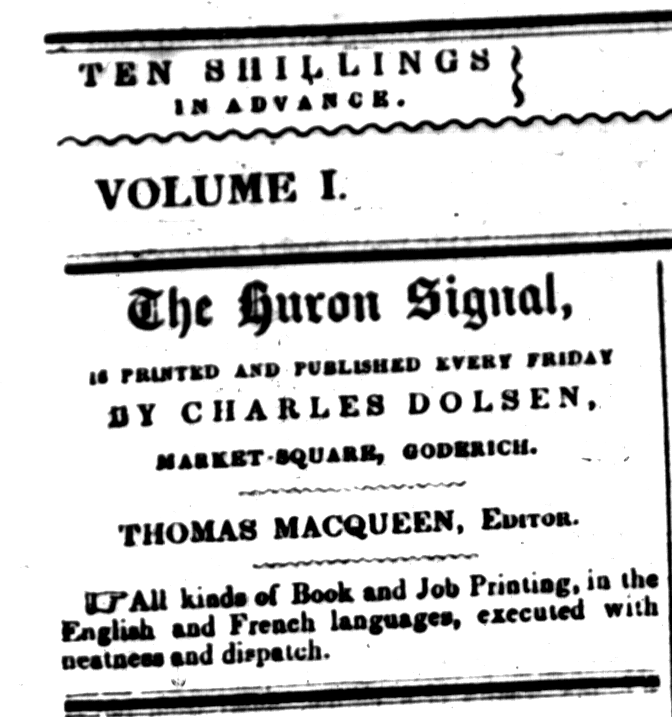 The Signal was the first newspaper printed in Huron County, beginning on February 4, 1848. Published in Goderich by Charles Dolsen, and edited by Thomas Macqueen (or “McQueen”), it promised to deliver “as many Essays and as much knowledge on all subjects of practical importance, as our space and time will reasonably allow,” Huron Signal (February 4, 1848), 2.
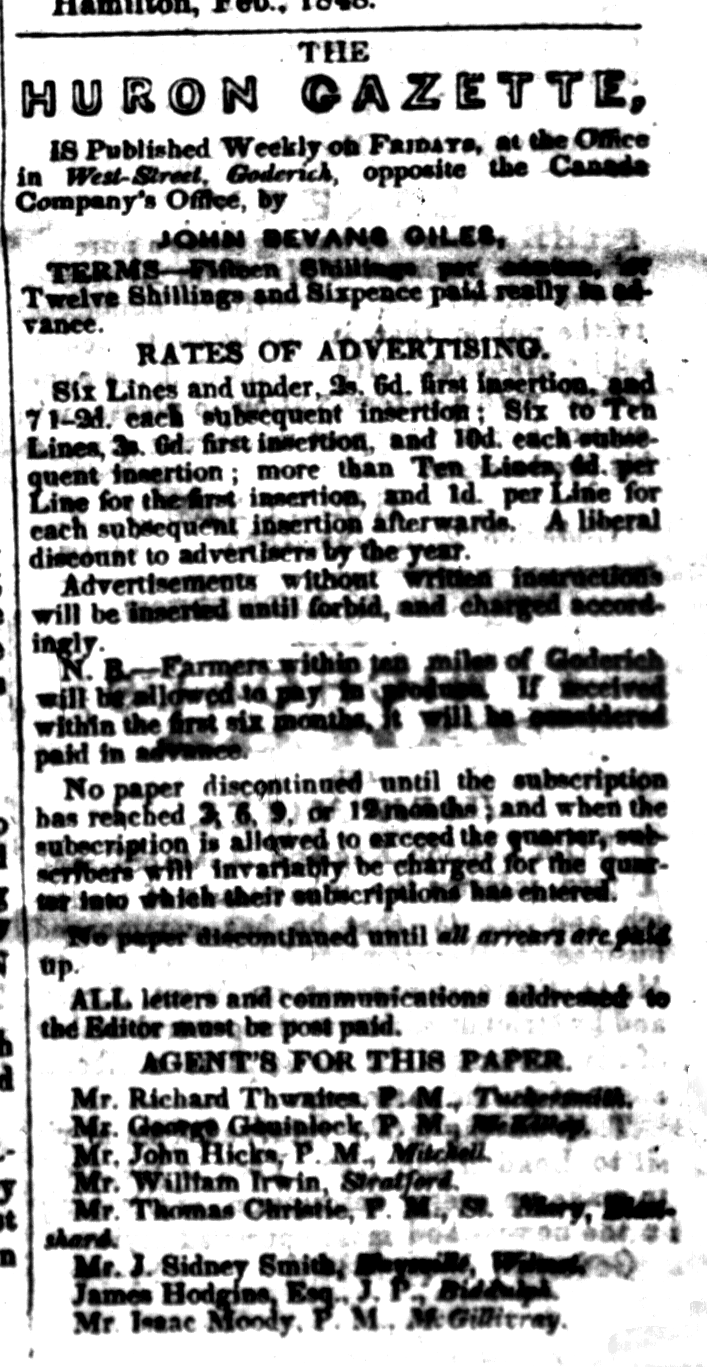 The Huron Gazette began publishing a few weeks later, on February 25, 1848, offering a conservative counterpoint to the Huron Signal’s liberal voice. There are fewer surviving copies of the Gazette from which to piece together the history and contents of the paper, but it seems to have been more practical in its aims. Local advertisements appeared alongside snippets of home and foreign news, dispatches from British Parliament, and editorials – with some entertaining fictional stories thrown in the mix. By late May, the paper had become so popular that editor John Beverley Giles considered either using larger paper sheets or going to a semi-weekly delivery to fit in more content. “We thank our kind supports for the patronage that has demanded from us this alteration, and we think it will evidence to the Province in general the enterprise and intelligence of the Huron Tract,” Huron Gazette (May 26, 1848), 2.